
After the Two Tickets: What Actually Happens at Japanese Train Gates
A simple guide to what your fare ticket, express ticket, and transfer gates are really checking in Japan.
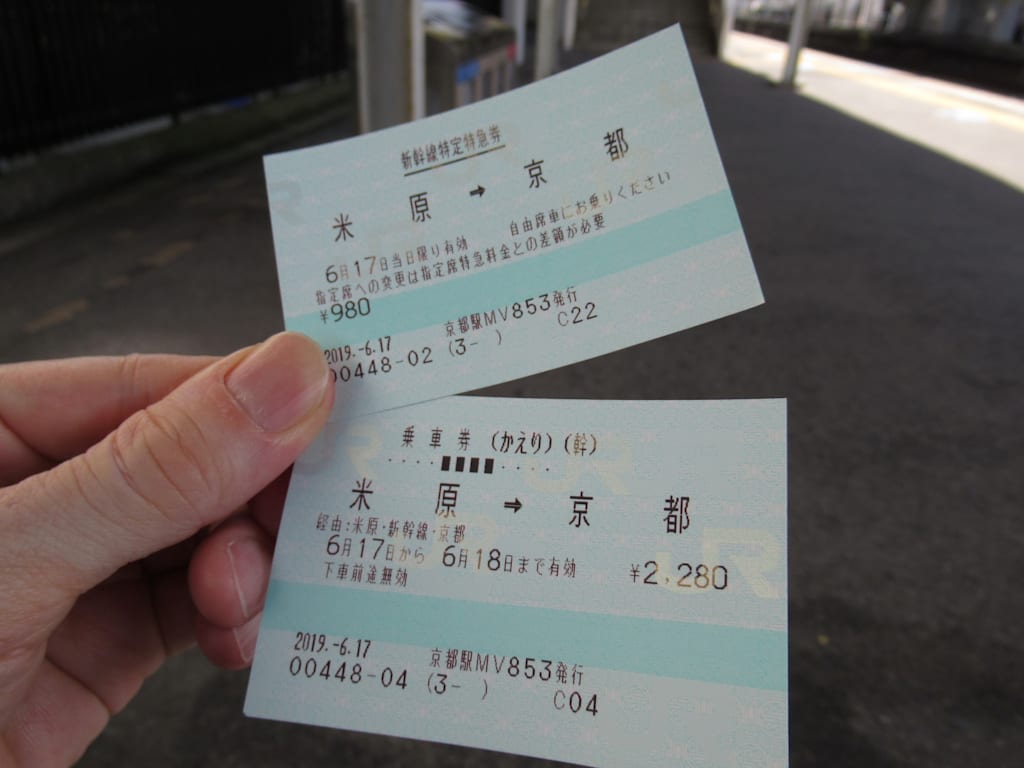
If you have already discovered that Japanese train travel sometimes gives you two separate tickets, the next question usually comes right away: what are you supposed to do with them?
For many travelers, buying the tickets is only half of the mystery. You may be holding one small paper ticket for the basic fare and another for a limited express train, a reserved seat, or a Shinkansen journey. Both look official. Both have dates, station names, prices, and numbers printed on them. Then you arrive at the ticket gate and face a narrow slot that seems to ask a simple question: which one goes in?
The answer is not always the same in every situation, but the idea behind it is surprisingly logical. Japanese rail tickets are often divided by what they pay for. One ticket may prove that you paid to travel from one area to another. The other may prove that you paid for a faster train, a specific seat, or a special service. At the gate, the railway system is trying to confirm both parts of your journey.
The Basic Fare Ticket Is the Foundation
The basic fare ticket is the part that covers distance. In simple terms, it says, “This passenger has paid to travel from here to there.” If you are taking an ordinary local or rapid train, this may be the only ticket you need. In many cities, an IC card such as Suica, PASMO, or ICOCA does this job automatically. You tap in, ride, and tap out.
But on longer journeys, especially when paper tickets are involved, the basic fare ticket still matters. It is the foundation of the trip. Without it, the railway has no proof that you paid for the actual distance between your departure and arrival stations.
This is why the basic fare ticket often remains important even when you also have a Shinkansen ticket or a limited express ticket. The second ticket does not always replace the first. It adds another layer of permission.
The Second Ticket Pays for the Special Train
The second ticket is usually connected to the type of service you are using. In Japan, faster or more comfortable trains often require an extra charge. This may be a limited express charge, a Shinkansen charge, or a reserved seat charge.
Think of it like paying for two separate things: the right to travel along the route, and the right to use a particular train service. A local train and a Shinkansen may both move you between cities, but they are not priced in the same way. The Shinkansen is faster, uses special platforms, and may include reserved seating. That extra value is shown on the second ticket.
This is why two tickets can both be valid at the same time. One answers the question “Where are you going?” The other answers “What kind of train are you using?”
At Many Gates, You Insert Both Tickets Together
Here is the part that surprises many visitors: at some Shinkansen or limited express gates, you may be expected to insert both paper tickets into the gate at the same time. The machine reads them together, checks whether they match your journey, and returns whichever ticket you still need.
This can feel strange if you come from a country where one ticket equals one journey. It may also feel risky the first time. What if the machine eats the wrong ticket? What if you insert them in the wrong order?
In many cases, the gate is designed for this. If both tickets are required, inserting them together is normal. The machine may return one or both tickets depending on where you are in the journey. At a transfer gate, it may return the ticket you need for the next part. At your final destination, it may keep the ticket because the trip is finished.
Still, railway systems in Japan can vary by company, region, and route. If you are unsure, look for signs near the gate or ask station staff. A simple “Which ticket?” while showing both tickets is often enough. Staff at major stations are used to helping travelers with this exact problem.
Transfer Gates Are Where Things Get Interesting
The most confusing moment often happens when you move between a regular train area and a Shinkansen area. These areas may be inside the same station, but they can have separate gates. You may have already entered the station using a basic fare ticket or an IC card. Then, before boarding the Shinkansen, you pass through another gate that checks your Shinkansen ticket.
This is where travelers sometimes feel that they are being checked twice. In a sense, they are. The first gate confirms entry into the railway network. The second confirms entry into the special train service.
At some transfer gates, paper tickets and IC cards can interact in ways that feel complicated. For example, if part of your journey uses an IC card and another part uses a Shinkansen ticket, the correct method may depend on how the ticket was purchased and which railway company is involved. Online reservations can also change the process.
The best general rule is this: do not force the system. If a gate does not accept your ticket combination, do not panic. Keep the tickets, step aside, and ask a station attendant. Japanese stations usually have staffed gates near the automatic gates for exactly these situations.
Why the Gate Sometimes Keeps Your Ticket
Another small shock for travelers is that the gate may not return a ticket. This is usually normal. If you have reached the end of the journey covered by that ticket, the machine may collect it.
For example, a basic fare ticket is often taken at your final exit station. A limited express or Shinkansen ticket may be collected when that part of the trip is complete. If a ticket is returned, it usually means you still need it for another gate or another part of the journey.
This is one reason you should not throw away any ticket until you have fully exited the station at your destination. Even if a ticket seems already used, it may still be needed at a transfer gate or exit gate.
IC Cards Make This Easier, But Not Always Simple
IC cards make urban train travel feel beautifully simple. Tap in, tap out, and let the system calculate the fare. For short city trips, this is usually the easiest way to travel.
But IC cards do not completely remove the logic of separate fares and extra charges. On some long-distance or premium services, you may still need a separate ticket, reservation, or online setup. Some services allow IC card integration, but the details depend on the route, railway company, and reservation method.
This is why visitors sometimes feel confused: Japan has very advanced ticketing, but it is not one single system. It is a network of systems that cooperate. Most of the time, they cooperate smoothly. But the traveler still has to know whether they are using an ordinary train, a limited express train, or the Shinkansen.
The Practical Rule for Travelers
If you are holding two tickets, do not assume one of them is a mistake. Keep both. When you reach a gate for a Shinkansen or limited express service, check whether the gate accepts multiple tickets. If it does, insert both together. If the machine returns a ticket, take it and keep it until you exit completely. If anything feels unclear, use the staffed gate.
This may sound like a lot, but in practice it becomes simple after one or two trips. The Japanese ticket system is not trying to make travel harder. It is trying to separate different parts of a journey clearly: distance, speed, seat, and service.
Once you understand that, the two-ticket mystery becomes less mysterious. Those small pieces of paper are not duplicates. They are a map of what you paid for. One gets you there. The other explains how.
About the Creator
Enjoyed the story? Support the Creator.
Subscribe for free to receive all their stories in your feed.
Comments
There are no comments for this story
Be the first to respond and start the conversation.