


Egypt, officially the Arab Republic of Egypt, is a country spanning the northeast corner of Africa and the southwest corner of Asia via the Sinai Peninsula.
Abu Simbel Temples
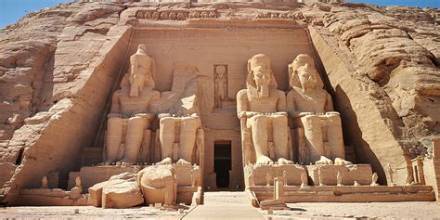
The Abu Simbel Temples are a remarkable ancient site built during the reign of Ramses II in the 13th century BCE. This complex consists of two massive rock-cut temples, one dedicated to Ramses II and the other to his queen, Nefertari, showcasing impressive architectural and artistic achievements. The larger temple features four colossal statues of Ramses II, each standing about 20 meters tall. The site was designed to impress and demonstrate Ramses II's power, aligning with the sun during the equinox. In the 1960s, the temples were relocated to avoid flooding from the Aswan High Dam, a UNESCO World Heritage effort.
Al-Azhar Park
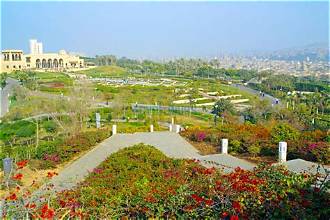
Al-Azhar Park is a prominent public park in Cairo known for its lush gardens and stunning views of the historic city. Spanning 30 hectares, it serves as a green oasis amidst the urban landscape, offering visitors a blend of nature, history, and culture. Visitors can enjoy rolling hills, fountains, and restaurants with views of the Citadel and the old city. It is listed among the world's sixty great public spaces, highlighting its importance as a cultural landmark.
Cairo Tower
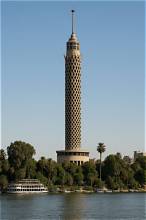
Cairo Tower, standing at 187 meters, is an iconic landmark in Egypt, offering panoramic views of the city and the Nile River. Designed to resemble a lotus plant, it symbolizes Egypt's post-1950s era of independence and modernization. Visitors can enjoy stunning views from the circular observation deck, best visited in the late morning or afternoon for clarity.
Egyptian Museum
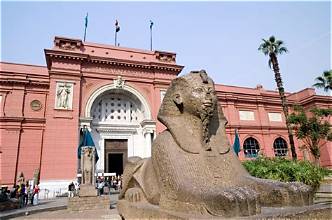
The Museum of Ancient Egypt, commonly known as the Egyptian Museum, is located in Cairo and is the oldest archaeological museum in the Middle East, housing the largest collection of Pharaonic antiquities in the world. The museum is situated in Tahrir Square, Cairo, and was established in 1901. It exhibits over 150,000 artifacts, showcasing various Pharaonic eras. The museum is the first national museum established in the Middle East, reflecting the rich history of Egyptian civilization.
Giza Necropolis
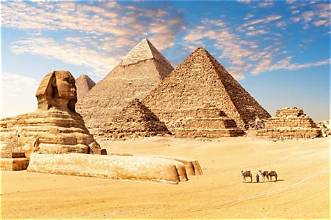
The Giza Necropolis, located on the Giza Plateau near Cairo, is home to some of the most iconic structures of ancient Egypt, including the Great Pyramid of Giza, the Sphinx, and several smaller pyramids. These monumental constructions served as tombs for pharaohs and reflect the advanced engineering and architectural skills of the ancient Egyptians. It is situated on the west bank of the Nile River. The site was included among the Seven Wonders of the Ancient World, showcasing the grandeur of ancient Egyptian civilization.
The Great Sphinx of Giza
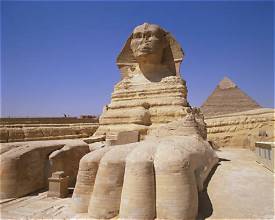
The Great Sphinx of Giza is a monumental limestone statue located near the Great Pyramid in Egypt, believed to have been constructed during the Fourth Dynasty, around 2500 BC. It is one of the largest and oldest statues in the world, symbolizing ancient Egyptian civilization and often associated with the pharaoh Khafre.
Khan el-Khalili
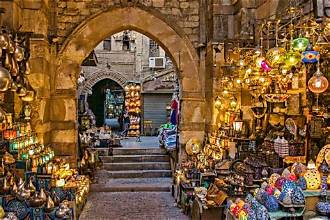
Khan el-Khalili is one of the oldest and most famous bazaars in Cairo, Egypt, established in 1382 during the Mamluk era. It serves as a vibrant marketplace known for its rich history, handmade crafts, and traditional Egyptian culture. The market showcases a blend of Egyptian history, culture, and commerce. Visitors can find handmade crafts, jewelry, spices, and souvenirs.
Library of Alexandria
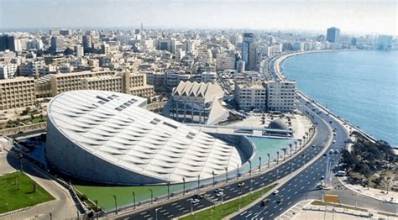
The Library of Alexandria, established in the 3rd century BCE in Egypt, was one of the largest and most significant libraries of the ancient world, aiming to collect all human knowledge. It was part of a larger institution known as the Mouseion, dedicated to the Muses and the arts.
The present-day Library of Alexandria, known as the Bibliotheca Alexandrina, is a modern cultural and educational center located in Alexandria, Egypt. Opened in 2002, it serves as a tribute to the ancient Library of Alexandria, which was one of the largest and most significant libraries of the ancient world. It houses millions of books, various museums, a planetarium, and research centers, making it a hub for education and culture.
Luxor Temple
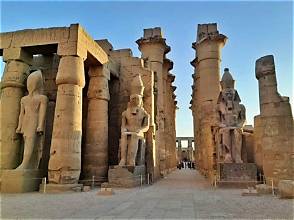
Luxor Temple, located on the east bank of the Nile in Luxor (ancient Thebes), was constructed around 1400 BC during the reign of Amenhotep III. It served as a significant ceremonial center, symbolizing the divine authority of the pharaohs and their connection to the gods. The temple served as a ceremonial and spiritual heart of Thebes, where the pharaoh was ritually reborn as divine. It features massive statues, obelisks, and intricate carvings, showcasing ancient Egyptian artistry. The temple is part of the greater Theban landscape, which includes Karnak Temple and the Valley of the Kings, attracting millions of tourists annually.
Mosque of Mohammad Ali
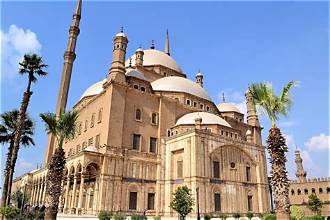
The Mosque of Muhammad Ali, also known as the Alabaster Mosque, is a prominent mosque located within the Citadel of Cairo, Egypt. Commissioned by Muhammad Ali Pasha, its construction began in 1830 and was completed in 1857, showcasing Ottoman architectural influences and symbolizing modernization in Egypt. The mosque features Ottoman-style architecture, particularly noted for its large dome and minarets.
St. Catherine's Monastery
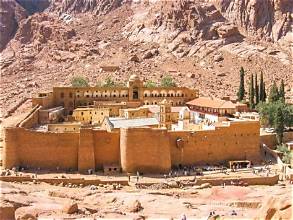
St. Catherine's Monastery, located at the foot of Mount Sinai, is one of the oldest continuously inhabited Christian monasteries in the world, built between 548 and 565 AD. It is renowned for its historical significance and houses important religious artifacts, including the Burning Bush and a vast collection of early Christian manuscripts. The monastery is a UNESCO World Heritage Site, recognized for its unique architecture and historical value. It contains the world's finest collection of early Christian icons and the second-largest cache of early Christian manuscripts, including the Codex Sinaiticus.
Valley of the Kings
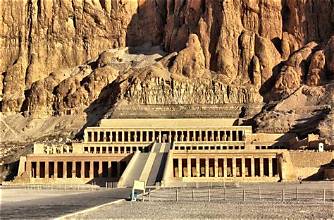
The Valley of the Kings is a significant archaeological site serving as the burial ground for pharaohs from the Eighteenth, Nineteenth, and Twentieth Dynasties during the New Kingdom period (c. 1550–1069 BC). It gained fame after the discovery of Tutankhamun's tomb in 1922 and was designated a UNESCO World Heritage Site in 1979. It is situated on the west bank of the Nile River, near Luxor, Egypt. The valley contains elaborate tombs featuring intricate wall paintings and inscriptions that reflect ancient Egyptian beliefs.
About the Creator
Rasma Raisters
My passions are writing and creating poetry. I write for several sites online and have four themed blogs on Wordpress. Please follow me on Twitter.
Enjoyed the story? Support the Creator.
Subscribe for free to receive all their stories in your feed. You could also become a paid subscriber, letting them know you appreciate their work.
Comments
There are no comments for this story
Be the first to respond and start the conversation.