
Will the United States Alternative Protein Ingredients Market Reach US$ 23.44 Billion by 2034 as Health, Sustainability, and Food Innovation Transform the Protein Industry?
Growing consumer demand for plant-based nutrition, rising environmental awareness, advancements in fermentation technology, and strong food-tech investment are accelerating growth in the U.S. alternative protein ingredients market.

The American food industry is undergoing one of the most significant transformations in its history. As consumers become increasingly conscious of health, sustainability, and ethical sourcing, traditional protein sources are facing growing competition from innovative alternatives designed to deliver comparable nutrition while reducing environmental impact.
At the center of this evolution is the alternative protein ingredients market. Once limited primarily to niche vegetarian products, alternative proteins have now become critical components in mainstream food manufacturing, sports nutrition, dietary supplements, animal feed, and functional food applications.
Food manufacturers, retailers, and restaurant chains are investing heavily in protein innovation as consumer preferences continue shifting toward healthier and more environmentally responsible eating habits. Technological breakthroughs in protein extraction, fermentation, cellular agriculture, and biotechnology are enabling the development of ingredients that closely replicate the taste, texture, and nutritional value of conventional animal proteins.
As flexitarian diets become increasingly common and sustainability concerns intensify, alternative protein ingredients are emerging as one of the fastest-growing segments within the broader food industry.
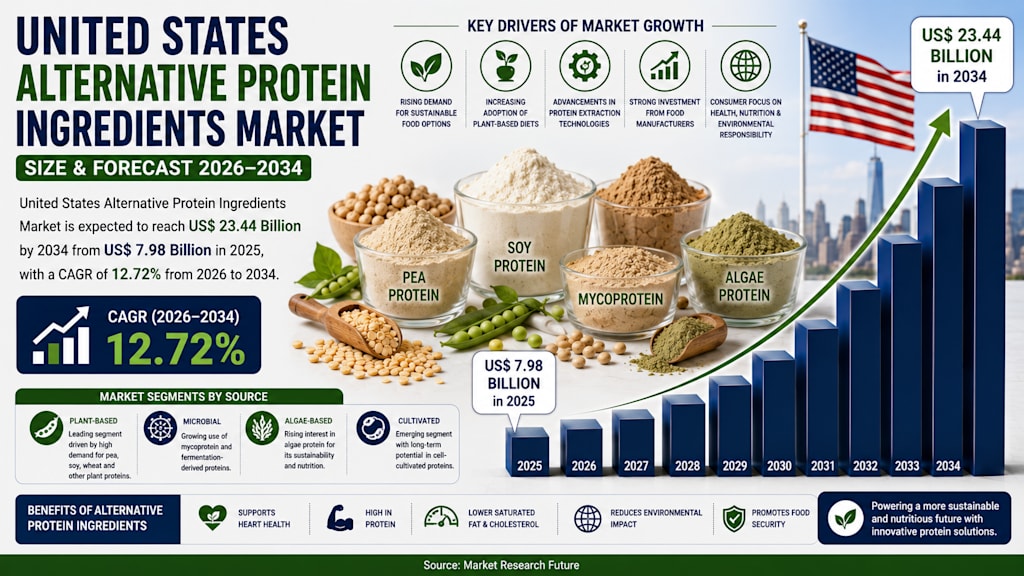
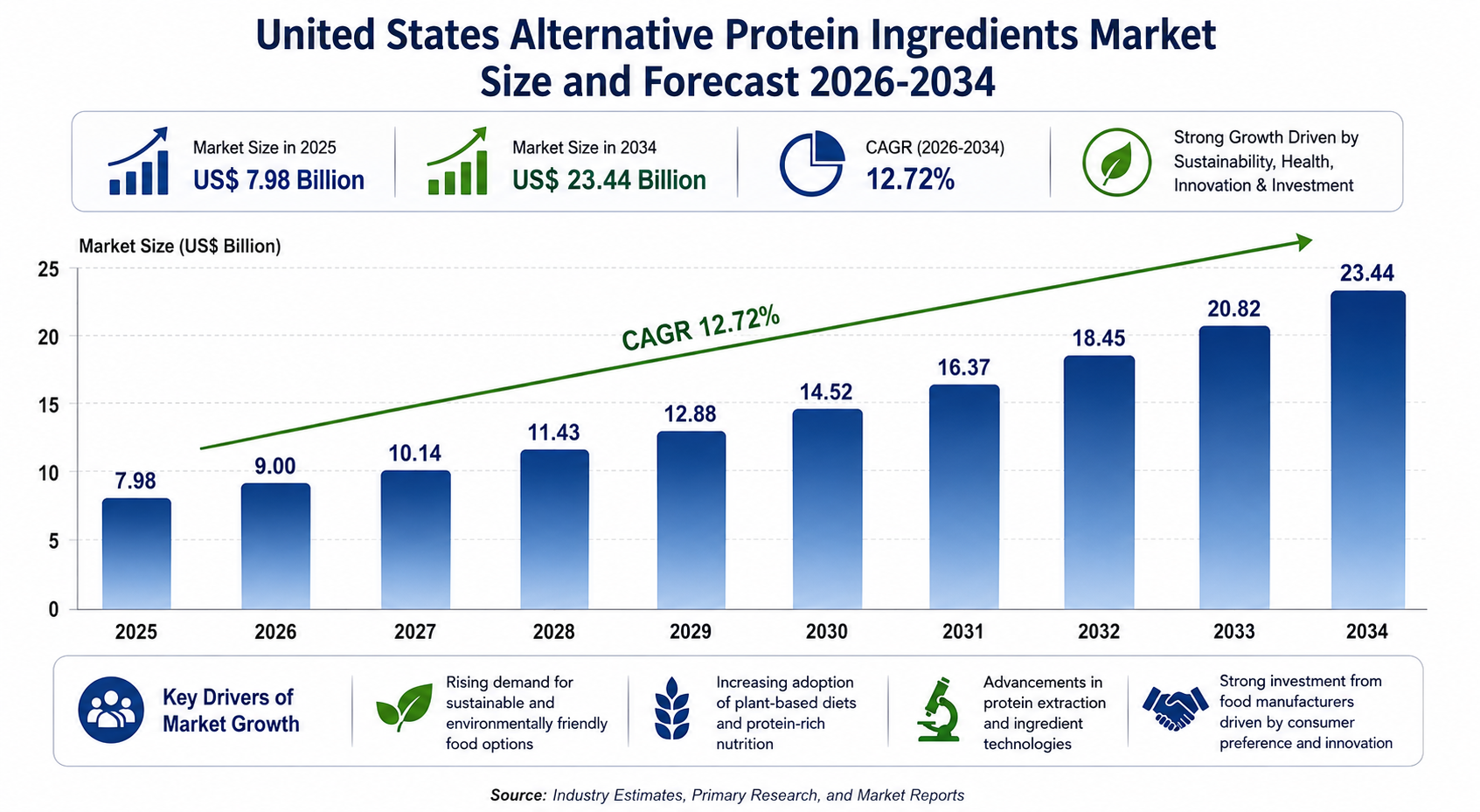
According to Renub Research, the United States Alternative Protein Ingredients Market is projected to grow from US$ 7.98 billion in 2025 to US$ 23.44 billion by 2034, registering a CAGR of 12.72% during 2026–2034. Rising demand for sustainable food solutions, increasing adoption of plant-based diets, technological advancements in protein production, and growing investment in food innovation are expected to drive substantial market expansion.
Alternative Proteins Are Redefining the Future of Food
Alternative protein ingredients refer to non-traditional protein sources that either replace or complement animal-derived proteins.
These ingredients include plant proteins, microbial proteins, insect proteins, algal proteins, fermented proteins, and emerging cell-based protein technologies.
They are increasingly used in plant-based meat alternatives, dairy substitutes, bakery products, functional beverages, nutritional supplements, sports nutrition products, and animal feed applications.
Unlike conventional livestock production, many alternative protein systems require significantly fewer natural resources while generating lower greenhouse gas emissions.
As food manufacturers seek solutions that align with changing consumer expectations, alternative proteins are becoming central to product innovation and long-term sustainability strategies.
Their growing importance reflects a broader shift toward more resilient and environmentally conscious food systems.
Health and Wellness Trends Continue Driving Demand
One of the strongest growth drivers within the alternative protein ingredients market is increasing consumer focus on health and wellness.
Consumers are paying closer attention to nutrition labels, ingredient quality, and long-term health outcomes.
Alternative proteins, particularly plant-based varieties, often offer lower saturated fat levels, reduced cholesterol content, and improved nutrient profiles compared with many conventional animal proteins.
Health-conscious consumers increasingly seek products that support weight management, cardiovascular health, digestive wellness, and active lifestyles.
The growing popularity of high-protein diets has further accelerated demand for innovative protein ingredients.
From protein bars and shakes to plant-based dairy products and meal replacements, alternative proteins are becoming an integral part of modern nutrition strategies.
As consumers continue prioritizing healthier lifestyles, demand for protein-rich functional foods is expected to expand significantly.
Flexitarian Diets Are Transforming Consumer Behavior
The rise of flexitarian eating patterns is reshaping food consumption across the United States.
Unlike strict vegetarian or vegan diets, flexitarian consumers reduce animal product consumption without eliminating it entirely.
This dietary approach appeals to consumers seeking greater flexibility while improving health and reducing environmental impact.
As a result, demand for high-quality alternative proteins has increased substantially.
Many consumers now incorporate plant-based meals into their weekly routines while continuing to consume traditional animal products in moderation.
Food manufacturers have responded by developing products that deliver familiar taste and texture experiences using alternative ingredients.
The continued growth of flexitarian lifestyles is expected to remain one of the most important drivers of market expansion.
Sustainability Has Become a Major Purchasing Factor
Environmental sustainability plays a critical role in the growing adoption of alternative proteins.
Consumers increasingly recognize the environmental challenges associated with conventional livestock production, including greenhouse gas emissions, land use, and water consumption.
Alternative protein ingredients offer a more sustainable solution by requiring fewer natural resources while generating significantly lower environmental impacts.
Plant-based proteins, microbial proteins, and algal proteins are particularly attractive because of their favorable sustainability profiles.
Retailers, food manufacturers, and institutional buyers are increasingly incorporating sustainability metrics into procurement decisions.
As climate concerns continue influencing purchasing behavior, alternative protein ingredients are expected to become increasingly important within food supply chains.
Corporate Sustainability Goals Support Industry Growth
Major food companies are actively pursuing sustainability objectives that encourage the adoption of alternative proteins.
Many organizations have established environmental targets related to carbon emissions, resource efficiency, and sustainable sourcing.
Alternative protein ingredients help companies achieve these goals while responding to changing consumer expectations.
Large-scale investments in plant-based foods, fermentation technologies, and alternative ingredient platforms demonstrate strong industry commitment to long-term growth.
As sustainability reporting and environmental accountability become increasingly important, demand for eco-friendly protein solutions is expected to strengthen further.
Technological Innovation Is Accelerating Market Development
Technology remains one of the most powerful forces driving growth within the alternative protein sector.
Advancements in food science, biotechnology, fermentation, and ingredient processing have dramatically improved product quality and functionality.
Modern protein extraction methods enable manufacturers to produce ingredients with enhanced solubility, texture, flavor, and nutritional performance.
These improvements make alternative proteins increasingly competitive with traditional animal-derived ingredients.
Ongoing research and development activities continue expanding the range of available protein sources and applications.
Innovation is expected to remain a central driver of market expansion throughout the forecast period.
Precision Fermentation Is Creating New Opportunities
Precision fermentation represents one of the most exciting areas of innovation within the alternative protein industry.
This technology uses microorganisms to produce highly functional proteins that closely replicate animal-derived proteins.
Precision fermentation enables the production of dairy proteins, egg proteins, and specialty ingredients without relying on traditional livestock systems.
These products offer opportunities to create familiar food experiences while significantly reducing environmental impact.
As production technologies mature and scale improves, precision fermentation is expected to play an increasingly important role in the future of food manufacturing.
Plant-Based Proteins Continue Leading the Market
Plant-based proteins remain the dominant segment within the U.S. alternative protein ingredients market.
Sources such as soy, pea, wheat, rice, chickpea, oats, lupine, almond, and potato proteins are widely used across numerous applications.
These ingredients offer versatility, scalability, and broad consumer acceptance.
Plant proteins are increasingly incorporated into meat alternatives, dairy substitutes, nutritional supplements, baked goods, and functional beverages.
Ongoing improvements in processing technologies have significantly enhanced taste, texture, and nutritional quality.
As consumer awareness continues growing, plant-based proteins are expected to maintain their leadership position within the market.
Pea Protein Emerges as a Key Ingredient
Among plant-based proteins, pea protein has gained exceptional popularity.
Consumers appreciate its allergen-friendly profile, strong nutritional value, and compatibility with clean-label formulations.
Manufacturers frequently use pea protein in plant-based meats, dairy alternatives, protein powders, and sports nutrition products.
Its neutral flavor and functional properties make it highly versatile across multiple food categories.
Growing demand for soy alternatives has further strengthened the position of pea protein within the market.
Soy Protein Remains an Industry Staple
Soy protein continues serving as one of the most established alternative protein ingredients.
Its complete amino acid profile, affordability, and functional versatility have made it a cornerstone of plant-based food manufacturing.
Soy remains widely used in meat substitutes, dairy alternatives, nutritional beverages, and prepared foods.
Although consumer preferences have diversified, soy protein continues playing a critical role in supporting market growth.
Microbial Proteins Gain Commercial Momentum
Microbial proteins are rapidly emerging as a promising category within the alternative protein landscape.
These proteins are produced using microorganisms such as algae, bacteria, fungi, and yeast.
Microbial production systems offer significant sustainability advantages while enabling efficient protein generation.
Advances in fermentation technology have accelerated commercialization efforts and improved product quality.
As consumers and manufacturers seek highly sustainable protein solutions, microbial proteins are expected to experience substantial growth.
Insect Proteins Enter New Markets
Insect-based proteins represent another innovative segment within the alternative protein industry.
Although consumer adoption remains relatively limited compared with plant-based proteins, insect ingredients are gaining traction in animal feed and pet food applications.
In April 2024, French insect protein producer InnovaFeed launched its first U.S. pilot plant in Illinois in partnership with ADM, significantly expanding domestic production capacity for insect-derived feed ingredients.
These developments highlight growing confidence in insect proteins as sustainable nutrient sources.
Animal Feed Creates Significant Growth Opportunities
Alternative protein ingredients are becoming increasingly important within animal nutrition.
Livestock, aquaculture, and pet food producers seek sustainable protein sources that reduce dependence on conventional feed ingredients.
Insect proteins, microbial proteins, and specialized plant proteins offer attractive alternatives.
As sustainability considerations become more important throughout agricultural supply chains, demand for innovative feed ingredients is expected to rise substantially.
California Leads Alternative Protein Innovation
California remains the most influential market for alternative protein ingredients in the United States.
The state benefits from a robust food-tech ecosystem, substantial venture capital investment, and strong consumer interest in health and sustainability.
Many leading alternative protein companies maintain research, development, and commercialization operations within California.
The state's commitment to environmental responsibility further supports adoption of sustainable food technologies.
California continues shaping national trends across plant-based foods, fermentation technologies, and cellular agriculture.
Florida Experiences Growing Consumer Adoption
Florida's expanding population and health-focused consumer base are driving increasing demand for alternative proteins.
Consumers actively seek functional foods, nutritional supplements, and protein-rich beverages that align with active lifestyles.
The state's retail infrastructure provides broad access to innovative protein products.
As health and wellness trends continue strengthening, Florida is expected to remain an important growth market.
New York Drives Premium Alternative Protein Demand
New York remains a major market for alternative protein ingredients due to its diverse population, strong sustainability culture, and sophisticated food industry.
Consumers frequently adopt emerging food trends and demonstrate strong interest in premium health-oriented products.
The state's extensive restaurant and retail sectors contribute significantly to category growth.
Academic institutions and food innovation centers also support ongoing research and development activities.
Texas Emerges as a Strategic Growth Region
Texas is becoming an increasingly important market for alternative proteins.
Although traditional meat consumption remains strong, consumer interest in plant-based nutrition continues growing rapidly.
Major metropolitan areas such as Austin, Dallas, and Houston have become centers of food innovation and health-conscious consumption.
The state's expanding food manufacturing sector further supports ingredient adoption and commercialization efforts.
High Production Costs Remain a Challenge
Despite impressive growth prospects, alternative protein ingredients continue facing cost-related challenges.
Advanced processing technologies, fermentation infrastructure, specialized crops, and ingredient purification systems often require substantial investment.
These factors contribute to higher production costs compared with many conventional protein sources.
Limited manufacturing scale and supply chain constraints can further increase expenses.
Reducing production costs remains essential for achieving broader market penetration and mainstream consumer adoption.
Taste and Texture Still Influence Consumer Acceptance
Sensory performance remains one of the industry's most important challenges.
Consumers frequently compare alternative proteins directly with traditional animal products, creating high expectations regarding flavor, texture, and overall eating experience.
Certain plant proteins may exhibit off-notes or functional limitations that require sophisticated formulation techniques.
Improving taste and texture continues to be a major focus of research and development efforts across the industry.
Successfully addressing these challenges will remain critical for long-term market success.
Strategic Investments Continue Accelerating Industry Growth
The alternative protein industry continues attracting significant investment and strategic partnerships.
In January 2024, Ynsect became the first company to receive authorization from the Association of American Feed Control Officials to commercialize its defatted mealworm protein for dog food applications in the United States.
Earlier, in October 2023, Tyson Foods partnered with Protix and invested in large-scale insect protein production facilities designed to convert food manufacturing byproducts into sustainable protein ingredients.
These developments underscore growing confidence in the future potential of alternative proteins.
Final Thoughts
The United States alternative protein ingredients market is entering a period of extraordinary growth fueled by changing consumer preferences, sustainability concerns, technological innovation, and increasing demand for healthier food options.
Alternative proteins are no longer niche ingredients. They are rapidly becoming essential components of modern food systems that prioritize nutrition, environmental responsibility, and supply chain resilience.
While challenges related to production costs and consumer acceptance remain important considerations, ongoing technological advancements and strong industry investment continue creating significant opportunities.
With the market projected to grow from US$ 7.98 billion in 2025 to US$ 23.44 billion by 2034, alternative protein ingredients are poised to play a transformative role in shaping the future of food production and consumption across the United States.
About the Creator
Enjoyed the story? Support the Creator.
Subscribe for free to receive all their stories in your feed.
Comments
There are no comments for this story
Be the first to respond and start the conversation.