
Will the United Kingdom Feed Additives Market Reach US$ 3.28 Billion by 2034 as Sustainable Livestock Farming and Antibiotic-Free Production Accelerate Demand?
Rising demand for high-quality animal protein, stricter animal welfare regulations, expanding poultry and aquaculture industries, and growing focus on sustainable agriculture are driving growth in the UK feed additives market.

The United Kingdom livestock industry is undergoing a significant transformation as producers seek more efficient, sustainable, and welfare-focused methods of animal production. With growing consumer demand for high-quality meat, dairy, eggs, and aquaculture products, farmers are increasingly relying on advanced nutritional solutions to improve animal health, productivity, and environmental performance.
Feed additives have become indispensable components of modern animal agriculture. These specialized ingredients enhance nutrient absorption, support digestive health, strengthen immunity, improve feed efficiency, and help producers achieve better production outcomes while complying with increasingly stringent regulatory standards.
The UK's shift toward antibiotic-free livestock production, combined with rising sustainability expectations and technological advancements in nutrition science, has accelerated the adoption of innovative feed additive solutions. From probiotics and enzymes to amino acids and phytogenic compounds, additives are helping reshape the future of animal farming across the country.
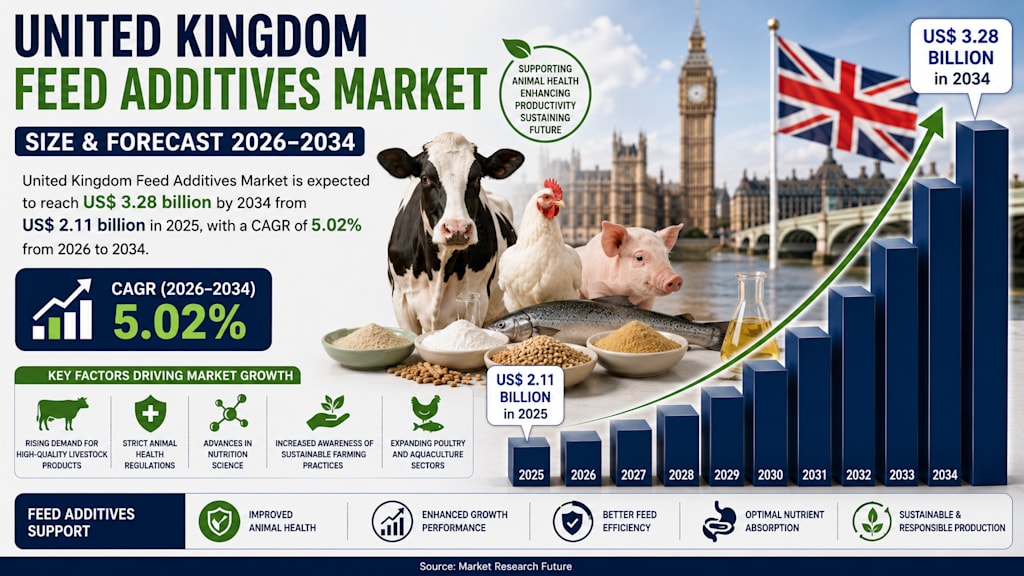
According to Renub Research, the United Kingdom Feed Additives Market is projected to grow from US$ 2.11 billion in 2025 to US$ 3.28 billion by 2034, registering a CAGR of 5.02% during 2026–2034. Increasing demand for premium livestock products, sustainable farming practices, and advanced animal nutrition solutions will continue driving market expansion.
Feed Additives Have Become Essential for Modern Animal Agriculture
Feed additives are nutritional and functional ingredients incorporated into animal feed to enhance health, growth performance, feed utilization, and overall productivity.
These additives include vitamins, minerals, amino acids, enzymes, probiotics, prebiotics, antioxidants, binders, and specialty compounds that support animal wellbeing.
Modern livestock production relies heavily on feed additives to improve nutrient absorption, strengthen immune systems, optimize feed conversion ratios, and maintain consistent production performance.
As farming operations become increasingly sophisticated, feed additives are no longer optional supplements but essential tools supporting profitability, sustainability, and compliance.
Their importance continues growing as producers seek efficient methods for meeting rising food demand while reducing environmental impact.
Rising Demand for High-Quality Animal Products Supports Growth
Consumer demand for premium meat, dairy, and egg products continues influencing the UK feed additives industry.
Consumers increasingly expect food products that are nutritious, ethically produced, traceable, and aligned with modern animal welfare standards.
To meet these expectations, livestock producers are investing in nutritional solutions that enhance animal health and production efficiency.
Feed additives help improve weight gain, reproductive performance, product quality, and overall livestock productivity.
As consumer awareness regarding food quality continues increasing, producers are placing greater emphasis on advanced nutrition programs.
This trend is expected to remain a major driver of market growth throughout the forecast period.
Antibiotic-Free Livestock Production Is Transforming the Industry
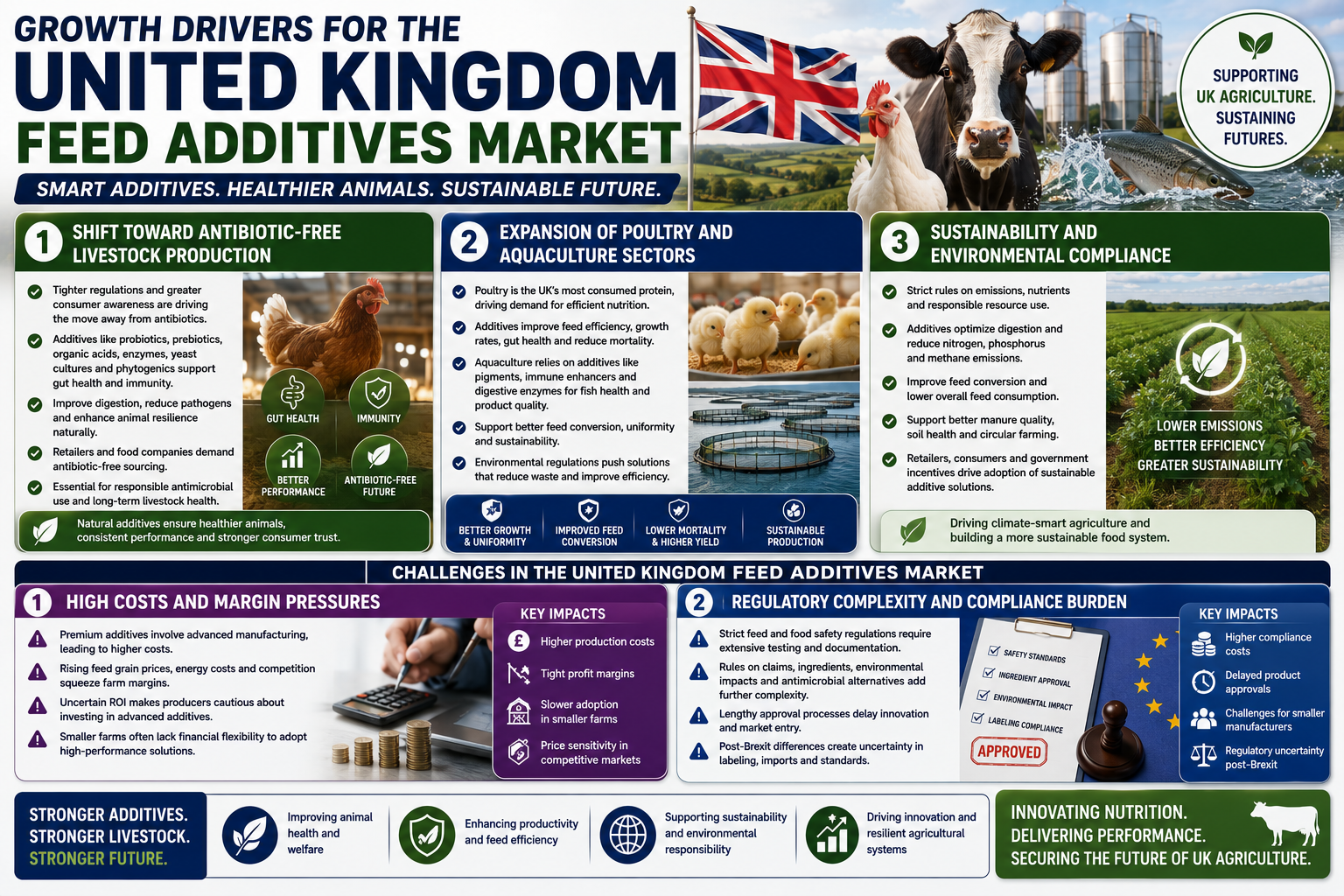
One of the most significant developments shaping the UK feed additives market is the transition toward antibiotic-free livestock production.
Regulatory pressure, consumer expectations, and industry commitments to responsible antimicrobial use have encouraged producers to reduce reliance on antibiotic growth promoters.
As a result, demand for natural alternatives has increased substantially.
Probiotics, prebiotics, enzymes, organic acids, yeast cultures, and phytogenic additives are increasingly used to maintain gut health, strengthen immunity, and support efficient nutrient utilization.
These solutions help reduce disease risks while preserving productivity.
The movement toward antibiotic-free production is expected to remain one of the strongest long-term growth drivers within the market.
Animal Welfare Standards Encourage Nutritional Innovation
The United Kingdom maintains some of the world's highest animal welfare standards.
Compliance with these standards requires producers to prioritize animal health, comfort, and wellbeing.
Feed additives contribute significantly by supporting digestive function, reducing nutritional deficiencies, and improving resilience against disease.
Healthier animals generally experience lower stress levels and achieve better performance outcomes.
Manufacturers continue developing specialized additive solutions designed to address welfare-related challenges while supporting sustainable production objectives.
The growing emphasis on welfare-focused agriculture continues creating opportunities for innovation across the industry.
Poultry Industry Drives Significant Demand
The poultry sector remains one of the largest consumers of feed additives within the UK.
Poultry continues to be the country's most widely consumed animal protein, creating strong demand for efficient and cost-effective production systems.
Feed additives such as amino acids, enzymes, vitamins, minerals, and probiotics play essential roles in maximizing growth rates and feed conversion efficiency.
Producers rely on these solutions to improve flock health, maintain productivity, and reduce production costs.
As poultry consumption continues increasing, demand for advanced nutritional technologies is expected to remain strong.
Aquaculture Expansion Creates New Opportunities
The rapid growth of aquaculture is generating significant opportunities within the feed additives market.
The UK's salmon and trout farming industries depend heavily on specialized nutritional formulations to support fish health and production performance.
Aquaculture feed additives include pigments, digestive enzymes, immune-support compounds, antioxidants, and specialized nutrient blends.
These products help improve feed efficiency, reduce mortality rates, and enhance product quality.
As global seafood demand continues rising, aquaculture producers are expected to increase investments in advanced nutrition solutions.
This trend is likely to strengthen long-term market growth.
Sustainability Has Become a Core Industry Priority
Environmental sustainability has emerged as one of the most influential factors shaping the future of UK agriculture.
Farmers face increasing pressure to reduce emissions, improve resource efficiency, and minimize environmental impacts.
Feed additives play an important role in supporting these objectives.
Products such as digestive enzymes, enhanced mineral formulations, and methane-reducing compounds improve nutrient utilization while reducing waste output.
Better feed conversion efficiency also lowers overall feed consumption, reducing resource requirements throughout the production process.
The industry's transition toward climate-smart agriculture is expected to further accelerate additive adoption.
Environmental Compliance Drives Adoption
Regulatory requirements related to emissions, nutrient management, and sustainability continue encouraging additive usage.
Feed additives help reduce nitrogen and phosphorus excretion, improve manure quality, and support compliance with environmental regulations.
Livestock producers increasingly rely on nutritional technologies to meet sustainability targets while maintaining profitability.
Government incentives and sustainability certification programs further encourage investment in environmentally responsible production methods.
As climate commitments become increasingly important, feed additives will play a vital role in helping producers achieve environmental objectives.
Precision Nutrition Improves Productivity
Technological advancements in feed formulation are transforming animal nutrition strategies.
Precision nutrition approaches allow producers to tailor feed formulations based on species, production stage, health status, and environmental conditions.
Feed additives enhance these strategies by delivering targeted nutritional and functional benefits.
Advanced analytics, digital monitoring systems, and precision farming technologies are improving decision-making across livestock operations.
As producers seek greater efficiency and performance optimization, demand for specialized additives is expected to increase.
Vitamins Continue Supporting Animal Health
Vitamins remain among the most important feed additive categories.
They play critical roles in growth, reproduction, immunity, metabolism, and overall animal wellbeing.
Deficiencies can significantly impact productivity and health outcomes.
Vitamin supplementation helps ensure balanced nutrition across poultry, ruminant, swine, and aquaculture production systems.
Growing awareness regarding preventative health management continues supporting demand for vitamin-based feed additives.
The segment is expected to remain a key contributor to market revenues.
Amino Acids Enhance Feed Efficiency
Amino acids represent another vital component of modern animal nutrition.
These nutrients support muscle development, growth performance, and efficient protein utilization.
Supplementation enables producers to formulate more precise diets while reducing dependence on expensive protein sources.
Improved amino acid balance contributes to better feed conversion ratios and lower production costs.
As feed efficiency becomes increasingly important, amino acid demand is expected to remain strong across multiple livestock sectors.
Enzymes Improve Digestive Performance
Enzyme additives have become increasingly popular because of their ability to improve nutrient digestibility.
These products help animals extract greater nutritional value from feed ingredients, reducing waste and improving performance.
Enzymes are particularly valuable in poultry and swine production systems where feed efficiency is a major economic consideration.
Improved digestion contributes to better growth rates, lower feed costs, and reduced environmental impact.
The continued focus on sustainability and efficiency is expected to support long-term growth within the enzyme segment.
Probiotics and Prebiotics Gain Momentum
Probiotics and prebiotics have emerged as leading alternatives to antibiotic growth promoters.
These additives help maintain healthy gut microbiota, strengthen immune function, and improve digestive health.
As antibiotic-free production becomes increasingly important, demand for microbiome-support solutions continues expanding.
Consumers and retailers often favor products derived from livestock raised using natural health management approaches.
The growing emphasis on preventive health strategies is expected to strengthen adoption across multiple animal categories.
Ruminant Sector Benefits from Advanced Nutrition
Ruminant producers increasingly utilize feed additives to improve milk production, reproductive performance, and feed efficiency.
Dairy and beef operations rely on nutritional solutions that support rumen health and nutrient utilization.
Methane-reducing additives are also attracting attention as producers seek ways to lower greenhouse gas emissions.
The integration of advanced nutritional technologies is helping improve both productivity and sustainability within the ruminant sector.
Swine Industry Supports Market Expansion
The swine sector continues contributing to feed additive demand.
Producers increasingly focus on improving feed efficiency, disease resistance, and growth performance.
Feed additives help address challenges associated with intensive production systems while supporting animal welfare objectives.
Specialized nutritional programs designed for piglets, growers, and breeding animals continue driving innovation.
The segment remains an important part of the broader market landscape.
London Serves as a Strategic Industry Hub
Although London is not a major livestock production center, it plays a critical strategic role within the feed additives industry.
The city hosts corporate headquarters, financial institutions, research organizations, and regulatory bodies that influence market development.
Many global feed additive companies coordinate UK operations through London-based offices.
The city's biotechnology ecosystem also contributes to research and innovation in animal nutrition technologies.
Manchester Strengthens Distribution and Innovation
Manchester serves as an important commercial and logistics center for the UK feed additives market.
Its proximity to northern livestock regions and strong transportation infrastructure support efficient product distribution.
The city also benefits from academic institutions engaged in animal nutrition and biotechnology research.
Growing demand from poultry, dairy, and beef producers continues supporting market activity in the region.
Birmingham Benefits from Central Location
Birmingham's strategic location makes it a major distribution hub for feed additives.
The city connects producers, suppliers, and agricultural businesses throughout the Midlands.
Strong transportation networks facilitate efficient supply chain operations.
The region's significant poultry, dairy, and pig farming activities contribute to consistent demand for nutritional solutions.
Leeds Supports Northern Agricultural Development
Leeds plays an increasingly important role within the feed additives market due to its proximity to key livestock-producing regions.
The city's agricultural economy benefits from dairy, beef, and poultry production.
Research institutions and technical advisory services support innovation and adoption of advanced feed technologies.
Leeds continues contributing to market growth through distribution, education, and technical expertise.
High Costs Create Adoption Challenges
Despite strong growth prospects, cost remains a major challenge.
Premium additives such as probiotics, enzymes, and organic minerals often require sophisticated production processes that increase prices.
Farmers already face pressure from rising feed costs, energy expenses, and fluctuating commodity prices.
Smaller farming operations may struggle to justify investments unless benefits are clearly measurable.
Addressing affordability concerns will remain important for expanding market penetration.
Regulatory Complexity Increases Compliance Burdens
The feed additives industry operates within a highly regulated environment.
Manufacturers must comply with strict safety standards, ingredient approvals, documentation requirements, and labeling regulations.
Regulatory approval processes can be lengthy and costly, slowing innovation and increasing operational expenses.
Post-Brexit regulatory developments have introduced additional complexities related to trade and compliance.
Navigating these requirements remains a significant challenge for both domestic and international suppliers.
Industry Innovation Continues Accelerating
Innovation remains a central theme within the market.
In February 2023, Evonik introduced PhytriCare IM, its first plant-based feed additive formulated from flavonoid-rich plant extracts known for anti-inflammatory properties.
Similarly, in March 2024, Devenish Nutrition Group completed a major strategic transaction involving its North American operations as part of efforts to strengthen its focus on core European and international markets.
These developments highlight the industry's commitment to innovation, sustainability, and long-term growth.
Final Thoughts
The United Kingdom feed additives market is entering a new phase of growth driven by sustainable agriculture, antibiotic-free livestock production, and increasing demand for high-quality animal products.
Feed additives have become critical tools for improving productivity, supporting animal health, enhancing welfare standards, and reducing environmental impact.
While challenges related to cost pressures and regulatory complexity remain significant, ongoing technological innovation and changing industry priorities continue creating new opportunities.
With the market projected to grow from US$ 2.11 billion in 2025 to US$ 3.28 billion by 2034, the UK feed additives industry is well positioned to play a vital role in the future of sustainable and efficient animal agriculture.
About the Creator
Enjoyed the story? Support the Creator.
Subscribe for free to receive all their stories in your feed.
Comments
There are no comments for this story
Be the first to respond and start the conversation.