
Will the UAE Dairy Market Reach US$ 6.34 Billion by 2034 as Health-Conscious Consumers and Food Security Initiatives Fuel Growth?
Rising demand for premium dairy products, increasing health awareness, expanding retail infrastructure, and government-backed food security programs are driving steady growth in the UAE dairy market.

The United Arab Emirates dairy industry has become one of the most dynamic segments within the country's food and beverage sector. Driven by population growth, rising disposable incomes, increasing health consciousness, and evolving dietary habits, dairy products continue to play an essential role in the daily lives of consumers across the Emirates.
From liquid milk and yogurt to cheese, butter, cream, and ice cream, dairy products are deeply integrated into the UAE's multicultural food culture. The country's diverse population, consisting of local residents and expatriates from around the world, has created demand for a wide range of dairy offerings that cater to different tastes, nutritional preferences, and cultural traditions.
Despite climatic challenges that limit domestic agricultural production, the UAE has successfully developed a sophisticated dairy ecosystem supported by advanced farming technologies, efficient cold-chain logistics, strong retail infrastructure, and strategic import partnerships. At the same time, government initiatives focused on food security are encouraging investments in local dairy production and technological innovation.
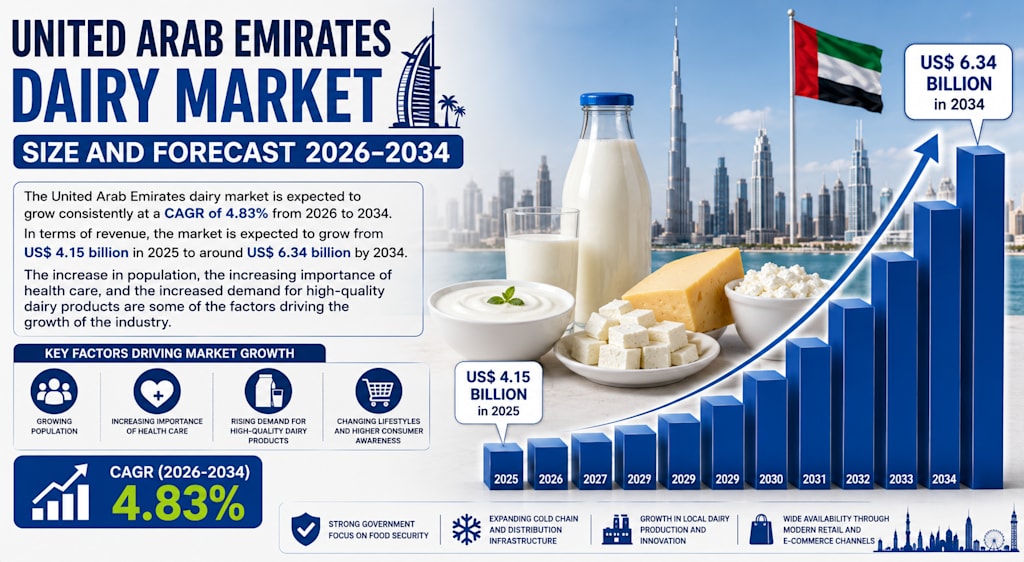
According to Renub Research, the United Arab Emirates Dairy Market is projected to grow from US$ 4.15 billion in 2025 to US$ 6.34 billion by 2034, registering a CAGR of 4.83% during 2026–2034. Population growth, rising health awareness, increasing demand for premium dairy products, and continuous innovation are expected to support long-term market expansion.
Dairy Products Remain Essential in Daily Nutrition
Dairy products continue to occupy an important position within the UAE's food consumption patterns.
Milk, yogurt, cheese, butter, cream, and dairy-based beverages are consumed regularly across households, restaurants, cafés, hotels, and institutional settings.
Consumers value dairy products because they provide essential nutrients such as calcium, protein, vitamins, and minerals that support overall health and wellbeing.
The UAE's multicultural population contributes significantly to product diversity, with consumers demanding everything from traditional Middle Eastern dairy products to European cheeses, South Asian dairy specialties, and premium international offerings.
As awareness of nutrition continues growing, dairy consumption is expected to remain strong throughout the forecast period.
Health and Wellness Trends Drive Market Growth
One of the strongest drivers of the UAE dairy market is the growing focus on health and wellness.
Consumers are increasingly seeking products that contribute to healthier lifestyles while delivering nutritional benefits.
This shift has accelerated demand for probiotic yogurt, fortified milk, reduced-fat dairy products, high-protein offerings, and low-sugar alternatives.
Fitness-conscious consumers are particularly attracted to products that support muscle development, digestive health, and overall wellbeing.
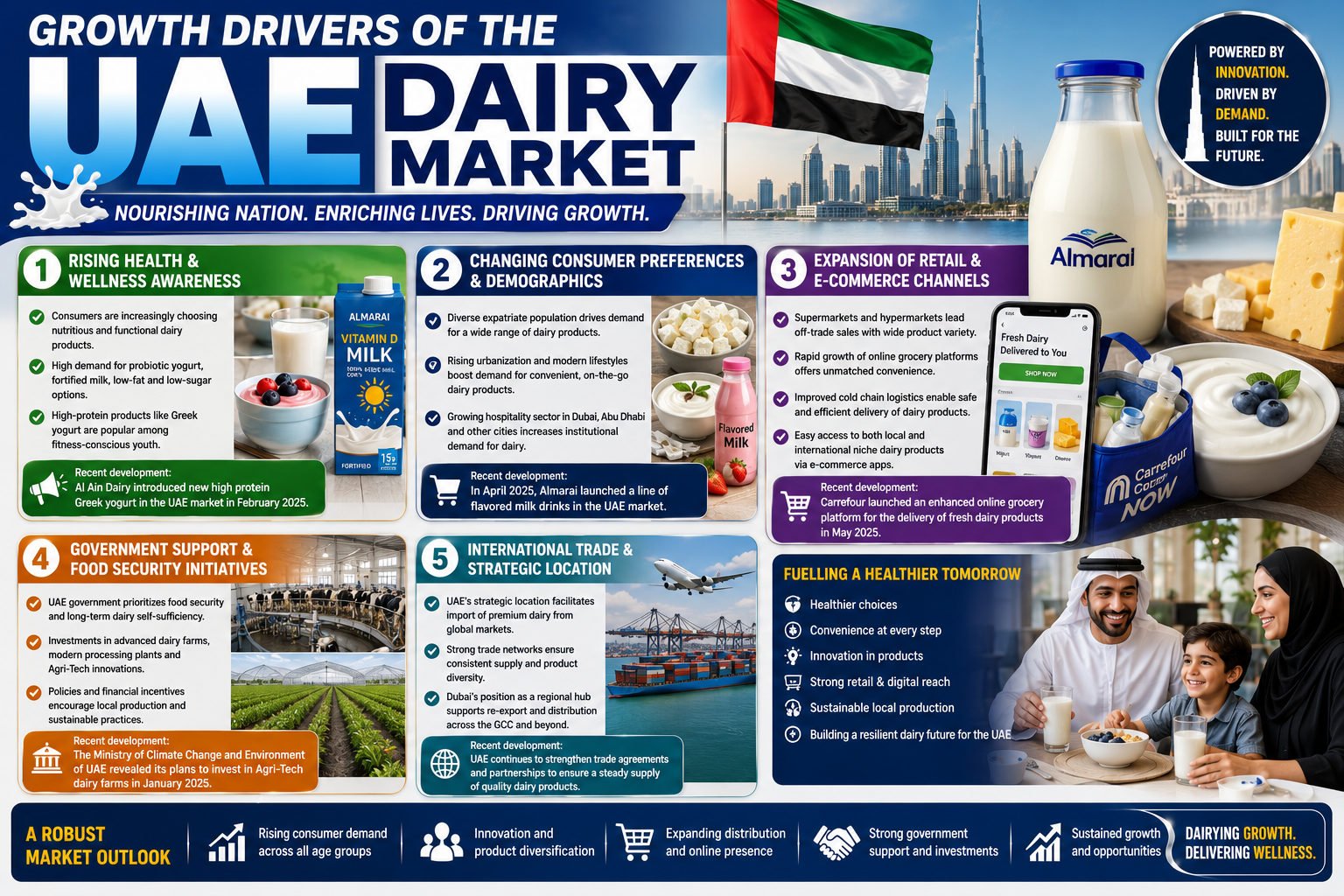
In February 2025, Al Ain Dairy introduced a high-protein Greek yogurt product designed to meet growing consumer demand for functional dairy products.
The continued rise of wellness-focused consumption is expected to remain a major growth catalyst.
Functional Dairy Products Gain Popularity
Consumers increasingly view dairy products as functional foods rather than simply everyday staples.
Probiotic yogurts, fortified milk, vitamin-enriched beverages, and protein-rich products have become particularly attractive among health-conscious buyers.
Digestive health, immunity support, and nutritional enhancement are key considerations influencing purchasing decisions.
The popularity of Greek yogurt, protein shakes, and functional dairy snacks demonstrates how consumer expectations are evolving.
Manufacturers continue investing in research and development to create products that address specific health needs while maintaining taste and convenience.
This trend is creating significant opportunities for premium dairy segments.
Diverse Population Creates Broad Product Demand
The UAE's highly diverse population plays a critical role in shaping dairy consumption patterns.
Expatriates from Europe, Asia, the Middle East, and Africa contribute to demand for a wide variety of dairy products.
Consumers seek products that reflect their cultural preferences and culinary traditions.
For example, European consumers often prefer specialty cheeses and premium butter products, while South Asian communities generate strong demand for paneer, ghee, and yogurt-based products.
This diversity encourages manufacturers and retailers to maintain broad product portfolios capable of serving multiple demographic groups.
As the population continues expanding, product diversification will remain essential.
Urbanization Supports Convenience-Oriented Consumption
Rapid urbanization and modern lifestyles are increasing demand for convenient dairy products.
Consumers increasingly seek portable, ready-to-consume products that fit into busy daily routines.
Single-serve yogurt cups, flavored milk beverages, dairy snacks, and convenient packaging formats are becoming increasingly popular.
Urban consumers value products that combine nutrition, convenience, and portability.
The growth of modern retail channels and on-the-go consumption habits continues supporting market expansion.
Manufacturers are responding by introducing innovative packaging solutions and convenience-focused product lines.
Retail Modernization Expands Market Accessibility
The modernization of retail infrastructure has significantly improved access to dairy products across the UAE.
Supermarkets, hypermarkets, convenience stores, and specialty retailers offer consumers a wide range of local and imported dairy products.
Advanced refrigeration systems and efficient inventory management ensure product quality and freshness.
Large retail chains also provide opportunities for manufacturers to introduce new products and expand brand visibility.
The increasing availability of premium and specialty dairy products has contributed to market growth across multiple categories.
As retail networks continue expanding, consumer access to dairy products is expected to improve further.
E-Commerce Is Transforming Dairy Distribution
Online grocery platforms are becoming increasingly important within the UAE dairy market.
Consumers appreciate the convenience of home delivery, subscription services, and access to a broader range of products.
Improved cold-chain logistics have enhanced the reliability of online dairy distribution.
Digital platforms also make it easier for consumers to discover niche products and premium international brands.
In May 2025, Carrefour enhanced its online grocery platform to improve the delivery of fresh dairy products throughout the UAE.
The continued expansion of e-commerce is expected to strengthen market accessibility and consumer convenience.
Government Food Security Initiatives Support Growth
Food security remains a strategic priority for the UAE government.
Given the country's reliance on food imports, authorities have implemented initiatives aimed at strengthening domestic agricultural production and improving long-term supply chain resilience.
Investments in advanced dairy farms, climate-controlled facilities, and agricultural technology are helping increase local production capacity.
Government support programs encourage dairy producers to adopt innovative technologies that improve efficiency and sustainability.
In January 2025, the Ministry of Climate Change and Environment announced plans to invest in agri-tech dairy farming initiatives designed to strengthen food security and domestic production capabilities.
These efforts are expected to support long-term industry growth.
Strategic Location Strengthens International Supply
The UAE's strategic geographic location enhances its ability to import premium dairy products from around the world.
The country's advanced logistics infrastructure supports efficient distribution of dairy products sourced from Europe, Oceania, Asia, and neighboring Middle Eastern markets.
Strong trade relationships ensure consistent product availability despite local production constraints.
In March 2025, Fonterra expanded its export partnerships within the UAE to increase the availability of premium dairy products.
These international connections allow consumers to access a diverse range of high-quality dairy offerings while supporting market development.
Product Innovation Continues Accelerating
Innovation remains a defining characteristic of the UAE dairy industry.
Manufacturers are continuously introducing new products that reflect changing consumer preferences.
Plant-based dairy alternatives, organic dairy products, flavored milk beverages, high-protein products, and camel milk innovations are gaining popularity.
Premiumization is also becoming increasingly important as consumers seek products that offer enhanced quality, nutrition, and unique experiences.
In April 2025, Almarai launched a new range of flavored milk beverages targeting evolving consumer preferences in the UAE market.
Continuous innovation is expected to remain a key competitive differentiator.
Liquid Milk Remains the Largest Segment
Liquid milk continues to represent one of the most important categories within the UAE dairy market.
Consumers use milk daily for beverages, cooking, breakfast cereals, and nutritional supplementation.
Both fresh milk and long-life milk products enjoy strong demand.
Growing awareness of nutrition has increased interest in fortified, lactose-free, organic, and low-fat milk varieties.
The segment benefits from widespread household consumption and broad retail availability.
As health awareness increases, premium milk products are expected to experience particularly strong growth.
Yoghurt Benefits from Health-Focused Consumption
Yoghurt remains one of the most popular dairy products in the UAE.
Consumers appreciate yogurt for its digestive benefits, nutritional value, and refreshing characteristics, particularly during the region's hot climate.
Traditional products such as laban continue to enjoy widespread popularity.
The increasing focus on probiotics and gut health has further strengthened demand.
Manufacturers continue introducing new flavors, packaging formats, and functional ingredients to attract consumers.
The yoghurt segment is expected to remain a major contributor to market growth.
Butter Market Continues Expanding
The UAE butter market benefits from strong demand across households, bakeries, restaurants, and hotels.
Butter remains a key ingredient in baking, cooking, and food preparation.
The expansion of the hospitality industry and growing popularity of international cuisines continue supporting consumption.
Premium imported butter products are particularly attractive among affluent consumers and professional foodservice operators.
While plant-based alternatives are gaining visibility, traditional butter remains the preferred choice for many consumers.
Ice Cream Market Benefits from Climate and Tourism
Ice cream represents one of the most dynamic categories within the UAE dairy market.
The country's warm climate naturally supports strong year-round demand for frozen desserts.
Tourism activity further contributes to market growth, as visitors frequently consume ice cream through hotels, restaurants, cafés, and entertainment venues.
Consumers increasingly seek premium flavors, artisanal products, and healthier alternatives with reduced sugar content.
In October 2024, Pure Ice Cream announced a major investment in a new manufacturing facility at Dubai Industrial City aimed at significantly increasing production capacity.
Such investments highlight the strong growth potential of the segment.
Supermarkets and Hypermarkets Dominate Distribution
Supermarkets and hypermarkets remain the leading distribution channels within the UAE dairy market.
Consumers appreciate these retail formats because they offer extensive product variety, competitive pricing, and convenient shopping experiences.
Advanced refrigeration infrastructure ensures product freshness and quality.
Retailers also serve as important platforms for launching new products and promoting premium brands.
Private-label dairy offerings are becoming increasingly popular due to their value-oriented positioning.
This channel is expected to maintain its dominant market position throughout the forecast period.
Dubai Leads Dairy Consumption
Dubai represents the largest dairy market within the UAE.
Its large expatriate population, thriving hospitality industry, and high disposable incomes support substantial dairy consumption.
Consumers increasingly seek premium, lactose-free, organic, and health-focused dairy products.
The city's status as a tourism and business hub further contributes to demand across retail and foodservice channels.
Dubai is expected to remain the country's most influential dairy market.
Abu Dhabi Continues Expanding
Abu Dhabi remains another key growth center for dairy consumption.
Population growth, rising incomes, and increasing health awareness continue supporting market expansion.
Consumers increasingly favor probiotic yogurts, plant-based alternatives, and functional dairy products.
In March 2025, Al Ain Dairy introduced new probiotic yogurt drinks within the Abu Dhabi market.
The city's strong economic development continues creating favorable conditions for industry growth.
Sharjah Emerges as a Growing Market
Sharjah is experiencing steady dairy market growth driven by population expansion and changing consumer preferences.
Demand for milk, yogurt, cheese, and health-oriented dairy products continues increasing.
Consumers increasingly seek reduced-fat, lactose-free, and alternative dairy products.
The expansion of retail infrastructure and improved product availability support continued market development.
Sharjah is expected to remain an important contributor to the overall UAE dairy industry.
Harsh Climate Creates Production Challenges
Despite positive growth prospects, the UAE dairy market faces several challenges.
The country's extreme temperatures and limited water resources create difficulties for domestic dairy farming.
Maintaining livestock health and productivity requires significant investment in cooling systems, imported feed, and advanced technologies.
These factors contribute to higher production costs compared with many international competitors.
Addressing environmental challenges remains essential for improving domestic production capacity.
Import Dependence Intensifies Competition
The UAE continues relying heavily on imported dairy products to meet consumer demand.
While imports ensure product variety and supply stability, they also intensify competition for local producers.
International brands often benefit from lower production costs and strong brand recognition.
Local manufacturers must compete through innovation, quality improvements, and efficient operations.
Balancing import availability with domestic production growth remains an important strategic challenge.
Final Thoughts
The UAE dairy market continues demonstrating strong growth potential driven by health-conscious consumers, population expansion, retail modernization, and government food security initiatives.
Demand for functional dairy products, premium offerings, organic alternatives, and convenient consumption formats continues reshaping the industry.
While climatic challenges and import dependence remain important considerations, technological advancements and strategic investments are helping strengthen the market's long-term outlook.
With the UAE dairy market projected to grow from US$ 4.15 billion in 2025 to US$ 6.34 billion by 2034, the sector is well positioned to benefit from evolving consumer preferences and the country's commitment to sustainable food security and nutritional wellbeing.
About the Creator
Enjoyed the story? Support the Creator.
Subscribe for free to receive all their stories in your feed.
Comments
There are no comments for this story
Be the first to respond and start the conversation.