
Will the North America Processed Meat Market Reach US$ 41.4 Billion by 2034 as Convenience, Premiumization, and High-Protein Diets Drive Consumer Demand?
Rising demand for ready-to-eat foods, growing popularity of protein-rich snacks, expanding retail distribution, and innovation in clean-label processed meats are fueling steady growth across North America.

The North American food industry continues to evolve as consumers increasingly prioritize convenience, nutrition, and variety in their daily food choices. Among the sectors benefiting from these changing preferences is the processed meat industry, which remains a vital component of the region's food ecosystem.
Processed meat products have long been staples in households, restaurants, convenience stores, and institutional foodservice channels. From bacon and sausages to deli meats, jerky, and ready-to-cook meal solutions, these products offer consumers practical ways to incorporate protein into busy lifestyles.
While health concerns and the rise of plant-based alternatives have introduced new competitive pressures, the processed meat industry has responded with innovation focused on cleaner labels, premium ingredients, reduced sodium formulations, and enhanced flavor experiences. Manufacturers are increasingly adapting to modern consumer expectations while preserving the convenience and taste that continue to drive category demand.
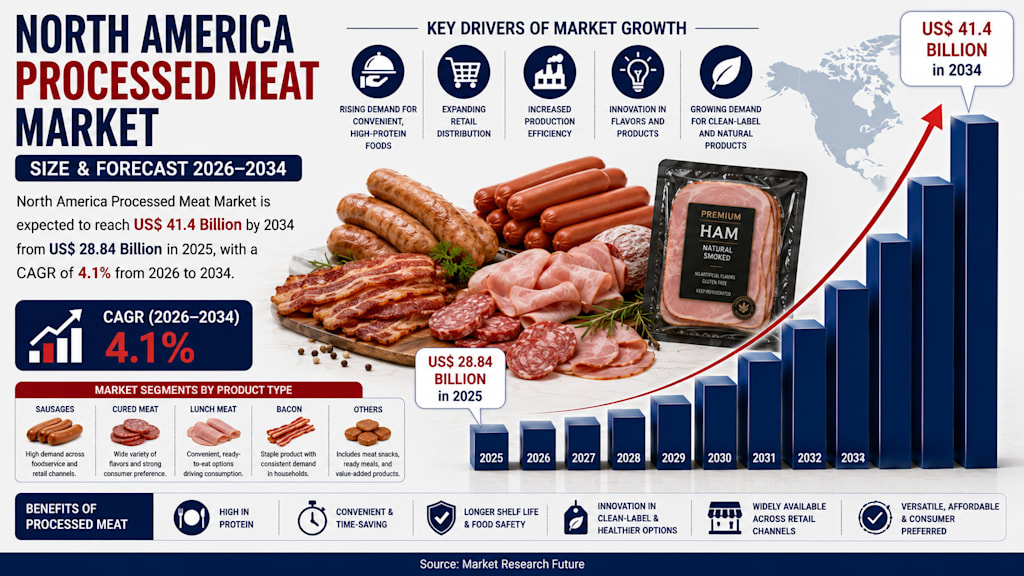
According to Renub Research, the North America Processed Meat Market is projected to grow from US$ 28.84 billion in 2025 to US$ 41.4 billion by 2034, expanding at a CAGR of 4.1% during 2026–2034. Rising demand for convenient protein-rich foods, expanding retail availability, product innovation, and investments in processing infrastructure are expected to support long-term market growth.
Processed Meat Remains a Core Part of North American Diets
Processed meat refers to meat products that have been preserved or enhanced through methods such as curing, smoking, salting, fermentation, cooking, or the addition of preservatives.
These processing methods help improve shelf life, maintain food safety, enhance flavor, and create convenient meal solutions.
Common products include bacon, sausages, hot dogs, ham, deli meats, jerky, canned meats, and ready-to-eat or ready-to-cook offerings.
Consumers value processed meat products because they provide convenience, versatility, and reliable sources of protein.
The category continues to play an important role in retail grocery stores, restaurants, cafeterias, quick-service establishments, and home kitchens throughout North America.
Despite evolving dietary preferences, processed meats remain deeply embedded within consumer eating habits and foodservice operations.
Convenience Continues Driving Consumer Demand
One of the strongest growth drivers for the North America processed meat market is convenience.
Modern consumers increasingly seek food products that save time and simplify meal preparation.
Busy work schedules, urban lifestyles, and growing demand for ready-to-eat options have increased reliance on convenient protein solutions.
Processed meats provide practical meal components that require little preparation while offering consistent flavor and nutritional value.
Products such as sliced deli meats, pre-cooked sausages, bacon, and ready-to-cook meal kits help consumers prepare meals quickly without sacrificing quality.
As convenience remains a defining characteristic of modern food consumption, processed meat products are expected to maintain strong consumer appeal.
High-Protein Diets Support Market Growth
Protein consumption has become a major focus among health-conscious consumers.
Many individuals actively seek protein-rich foods to support fitness goals, weight management, muscle maintenance, and overall wellness.
Processed meat products continue benefiting from this trend due to their high protein content and portability.
Protein-focused dietary approaches such as low-carbohydrate, ketogenic, and high-protein eating plans have further strengthened demand.
Consumers increasingly view meat snacks, jerky products, and protein-rich convenience foods as practical solutions for maintaining nutritional goals throughout the day.
This shift toward protein-centric eating habits continues supporting long-term market expansion.
Meat Snacks Are Becoming a Major Growth Category
Among the fastest-growing segments within the processed meat market are portable meat snacks.
Consumers increasingly seek convenient snack options that provide both nutrition and satiety.
Products such as beef jerky, meat sticks, turkey snacks, and high-protein snack packs have gained popularity among busy professionals, athletes, students, and travelers.
Manufacturers are responding with cleaner ingredient lists, innovative seasonings, and premium meat sources.
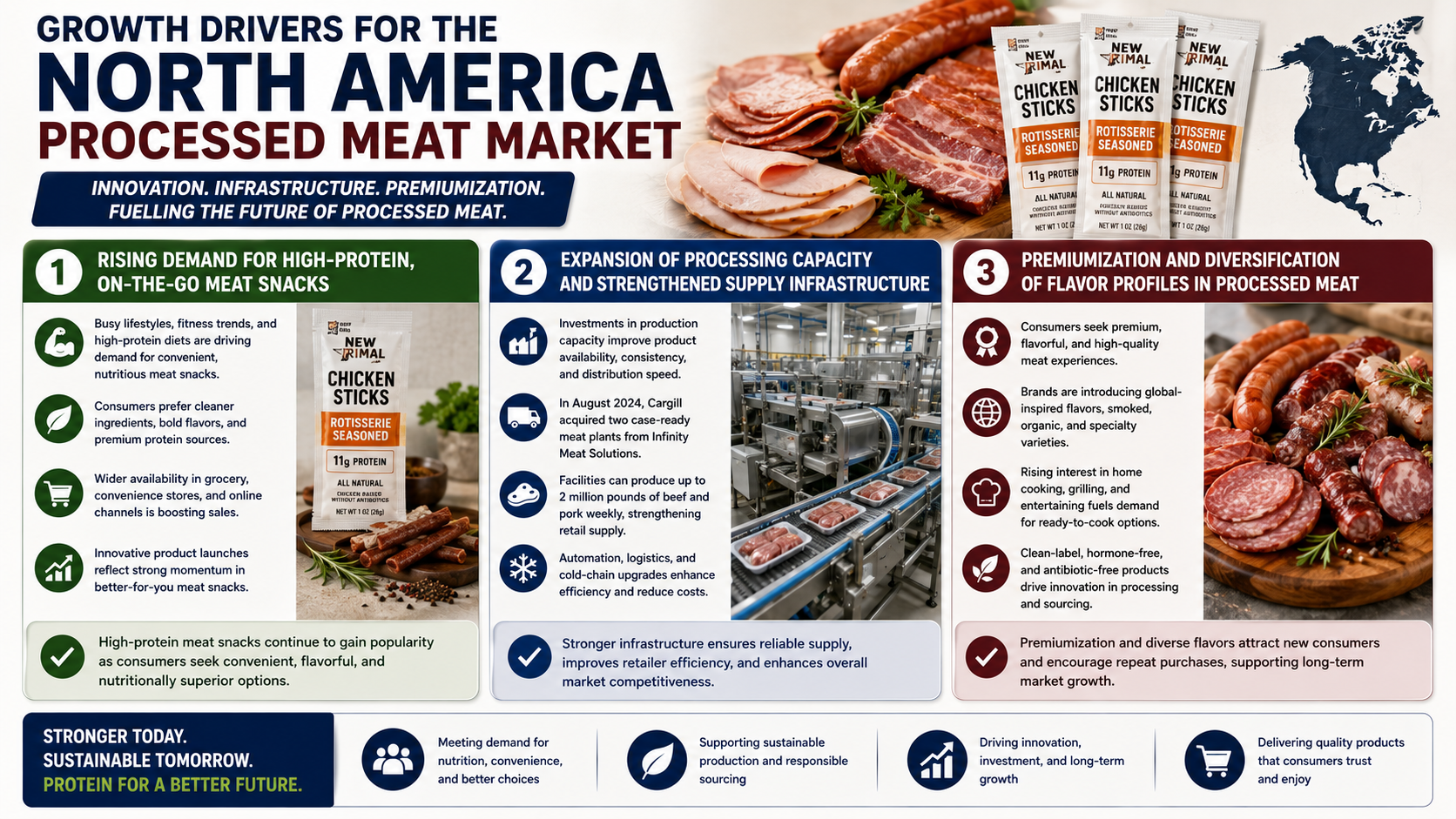
In May 2025, New Primal introduced Rotisserie-Seasoned Chicken Sticks made with all-natural ingredients, highlighting growing demand for healthier meat snack alternatives.
As consumers continue prioritizing protein-rich snacking, this category is expected to contribute significantly to market growth.
Premiumization Is Reshaping Consumer Preferences
Premiumization has emerged as a major trend across the processed meat industry.
Consumers increasingly seek products that deliver superior quality, unique flavors, and enhanced eating experiences.
Premium offerings often emphasize artisanal production methods, specialty cuts, natural ingredients, and distinctive flavor profiles.
Craft sausages, gourmet jerky, smoked meats, and premium deli products are gaining popularity among consumers willing to pay more for quality.
Manufacturers are introducing products featuring global flavors, regional seasonings, and premium sourcing claims to differentiate themselves in competitive markets.
The premiumization trend continues creating opportunities for innovation and higher-margin product development.
Flavor Innovation Expands Consumer Appeal
Flavor innovation remains one of the most important competitive strategies within the processed meat market.
Consumers increasingly seek new culinary experiences and bold taste profiles.
Manufacturers are introducing globally inspired flavors, spicy varieties, smoked formulations, and gourmet seasoning blends.
These innovations help attract younger consumers while encouraging repeat purchases among existing customers.
The popularity of ethnic cuisine and adventurous eating habits continues supporting demand for more diverse product offerings.
As consumer tastes evolve, flavor development will remain a key driver of category growth.
Clean-Label Products Gain Importance
Health-conscious consumers are increasingly paying attention to ingredient lists and food transparency.
As a result, clean-label processed meat products have become a major area of focus for manufacturers.
Consumers seek products containing fewer artificial ingredients, preservatives, and additives while maintaining flavor and shelf stability.
Companies are reformulating products to reduce sodium levels, eliminate unnecessary additives, and emphasize natural ingredients.
This trend reflects broader changes throughout the food industry as consumers prioritize transparency and perceived product quality.
Clean-label innovation is expected to remain a critical growth strategy.
Processing Capacity Expansion Supports Supply Growth
Investments in processing infrastructure continue strengthening the North American processed meat industry.
Major manufacturers are expanding production capabilities to meet growing demand while improving efficiency and consistency.
A significant development occurred in August 2024 when Cargill acquired two case-ready meat plants from Infinity Meat Solutions located in Rhode Island and Pennsylvania.
These facilities are capable of producing up to 2 million pounds of beef and pork products per week, enhancing supply capabilities for retailers throughout the United States.
Such investments help improve product availability, support retail partners, and strengthen overall market competitiveness.
Automation Improves Operational Efficiency
Advanced manufacturing technologies are becoming increasingly important throughout the processed meat sector.
Automation systems help manufacturers improve production efficiency, reduce labor dependency, and enhance product consistency.
Modern facilities utilize automated slicing, packaging, quality control, and inventory management systems.
These technologies support greater production capacity while helping companies manage rising operational costs.
As labor shortages continue affecting food manufacturing industries, automation investments are expected to accelerate further.
Cold-Chain Infrastructure Strengthens Distribution
Efficient cold-chain logistics remain essential to the success of the processed meat market.
Advancements in refrigerated transportation, storage technologies, and supply chain management have significantly improved product distribution.
Strong cold-chain infrastructure helps maintain freshness, safety, and quality while extending geographic reach.
Retailers benefit from more reliable inventory management, while consumers gain access to a broader range of products.
Continued investment in logistics and cold storage facilities will remain critical to supporting future growth.
Poultry Segment Gains Momentum
Poultry-based processed meat products are experiencing strong growth across North America.
Consumers increasingly view poultry as a leaner and healthier protein source compared with certain red meat alternatives.
Processed poultry products such as chicken sausages, turkey deli meats, and chicken-based snacks are becoming more popular.
Manufacturers continue introducing innovative poultry products that align with health-conscious consumption trends.
The poultry segment is expected to remain one of the most dynamic areas within the market.
Beef Products Maintain Strong Consumer Demand
Beef continues serving as one of the most important processed meat categories.
Beef jerky, deli meats, bacon alternatives, and ready-to-cook beef products maintain strong popularity among consumers.
Premium beef products in particular have benefited from growing demand for high-quality protein options.
The continued popularity of grilling, outdoor cooking, and protein-focused diets supports demand for beef-based processed foods.
Pork Remains a Market Staple
Pork-based processed meats continue playing a major role throughout North America.
Products such as bacon, ham, sausages, and hot dogs remain deeply integrated into consumer eating habits.
Manufacturers continue innovating within the category by introducing premium formulations, reduced-sodium options, and specialty flavors.
Despite increasing competition from alternative proteins, pork products remain among the most widely consumed processed meat offerings.
Retail Channels Continue Expanding Market Reach
Retail distribution remains a crucial driver of processed meat sales.
Supermarkets and hypermarkets represent the largest sales channel, offering extensive product selections and promotional opportunities.
Convenience stores also play an increasingly important role due to growing demand for grab-and-go snacks and meal solutions.
Online grocery platforms are further expanding consumer access to processed meat products.
The continued growth of omnichannel retailing is expected to strengthen market penetration across diverse consumer groups.
United States Dominates Regional Market
The United States accounts for the largest share of the North American processed meat market.
Strong consumer demand, advanced processing infrastructure, and extensive retail networks support continued market growth.
American consumers regularly purchase deli meats, bacon, sausages, jerky, and ready-to-eat products across multiple occasions.
The country also serves as a center for product innovation and manufacturing investment.
Premiumization trends and strong demand for protein-rich foods continue supporting expansion within the U.S. market.
Canada Benefits from Premium Product Demand
Canada’s processed meat market continues growing due to strong demand for convenience foods and premium meat products.
Consumers increasingly seek products featuring cleaner labels, reduced sodium content, and improved nutritional profiles.
The country's well-developed retail infrastructure supports broad product availability.
Canadian producers are also responding to growing interest in sustainability, animal welfare, and responsible sourcing practices.
These factors continue strengthening long-term market prospects.
Mexico Emerges as a Rapidly Growing Market
Mexico is experiencing strong growth within the processed meat sector.
Urbanization, rising disposable incomes, and expanding supermarket networks are increasing demand for packaged meat products.
Traditional products such as chorizo, ham, sausages, and canned meats remain popular among consumers.
The growth of quick-service restaurants, food delivery services, and convenience-focused lifestyles further supports market expansion.
Continuous product innovation is expected to maintain momentum in the Mexican market.
Health Concerns Present Ongoing Challenges
Despite strong market demand, health concerns remain a significant challenge.
Research linking excessive processed meat consumption to certain chronic health conditions has influenced consumer perceptions.
Many consumers are actively reducing sodium intake and seeking minimally processed food options.
Manufacturers face increasing pressure to improve nutritional profiles while maintaining taste and shelf stability.
Addressing health concerns through product reformulation and transparent communication remains critical for long-term success.
Supply Chain and Cost Pressures Continue
The processed meat industry also faces challenges related to supply-chain volatility and rising operational costs.
Fluctuating livestock prices, labor shortages, transportation expenses, and energy costs can significantly affect profitability.
Regulatory requirements related to food safety, environmental performance, and labor standards add further complexity.
Manufacturers continue investing in automation, diversified sourcing strategies, and supply-chain resilience to manage these pressures effectively.
Recent Product Launches Highlight Market Innovation
The industry continues demonstrating strong innovation through new product introductions.
In September 2025, Carnal launched Beef Sticks and Umami Cut Beef Jerky featuring premium beef cuts combined with aged soy, fermented black garlic, and black truffles.
During the same month, YouTube creator MrBeast partnered with Jack Link’s to introduce a range of beef and turkey snack products aimed at younger consumers.
Additionally, Slim Jim collaborated with Buffalo Wild Wings to launch Buffalo Style and Hot Chicken Sticks designed for portable snacking occasions.
These launches demonstrate the industry's commitment to innovation, flavor diversification, and consumer engagement.
Final Thoughts
The North America processed meat market continues evolving in response to changing consumer preferences, technological advancements, and growing demand for convenient protein-rich foods.
Manufacturers are successfully balancing traditional consumer expectations with modern trends focused on clean-label products, premium experiences, nutritional improvements, and innovative flavors.
Although health concerns and supply-chain challenges remain important considerations, ongoing investments in processing infrastructure, product development, and distribution capabilities continue supporting market expansion.
With the market projected to grow from US$ 28.84 billion in 2025 to US$ 41.4 billion by 2034, the North American processed meat industry remains well positioned to capitalize on demand for convenience, protein, and culinary innovation across the region.
About the Creator
Enjoyed the story? Support the Creator.
Subscribe for free to receive all their stories in your feed.
Comments
There are no comments for this story
Be the first to respond and start the conversation.