
Will the Global Shrimp Market Reach US$ 103.41 Billion by 2034 as Demand for High-Protein Seafood Continues to Rise?
Rising seafood consumption, expanding aquaculture production, growing international trade, and increasing demand for convenient protein-rich foods are fueling growth in the global shrimp industry.

Shrimp has evolved from being a specialty seafood product into one of the most consumed seafood categories worldwide. Valued for its delicate flavor, high nutritional content, versatility, and convenience, shrimp has become a staple ingredient across restaurants, retail stores, foodservice chains, and household kitchens.
From Asian stir-fries and Mediterranean seafood dishes to American shrimp cocktails and Latin American specialties, shrimp enjoys widespread popularity across global cuisines. Growing consumer interest in healthy eating habits and protein-rich diets has further strengthened demand.
Advancements in aquaculture production, cold chain logistics, seafood processing, and international trade have significantly improved shrimp availability across both developed and emerging markets.
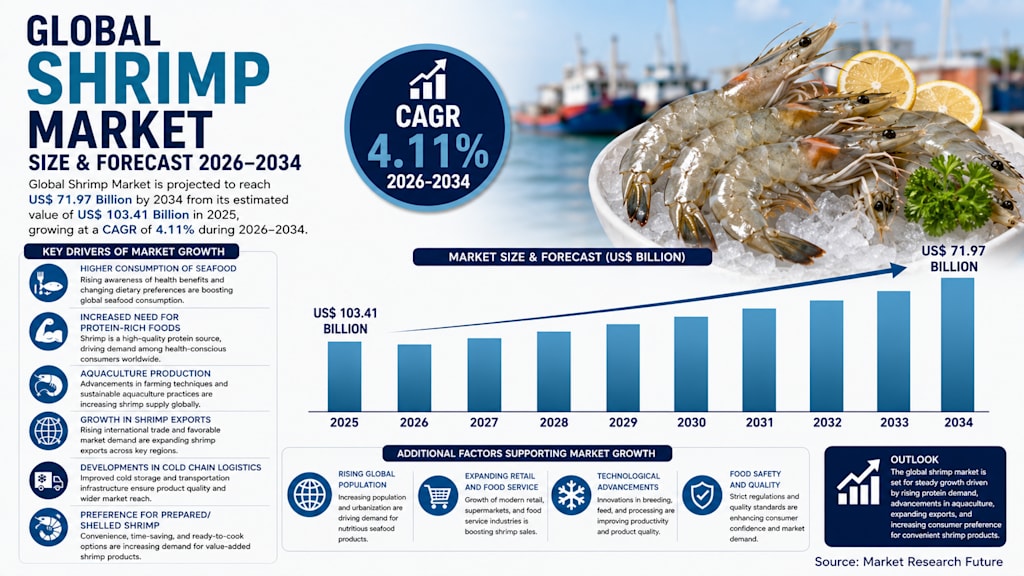
According to Renub Research, the Global Shrimp Market is expected to grow from US$ 71.97 billion in 2025 to US$ 103.41 billion by 2034, registering a CAGR of 4.11% during 2026–2034. Rising seafood consumption, increasing aquaculture production, growing exports, and expanding demand for processed shrimp products continue to support long-term market growth.
Shrimp Continues to Gain Popularity Worldwide
Shrimp is among the most widely consumed seafood products globally due to its nutritional profile, culinary flexibility, and ease of preparation.
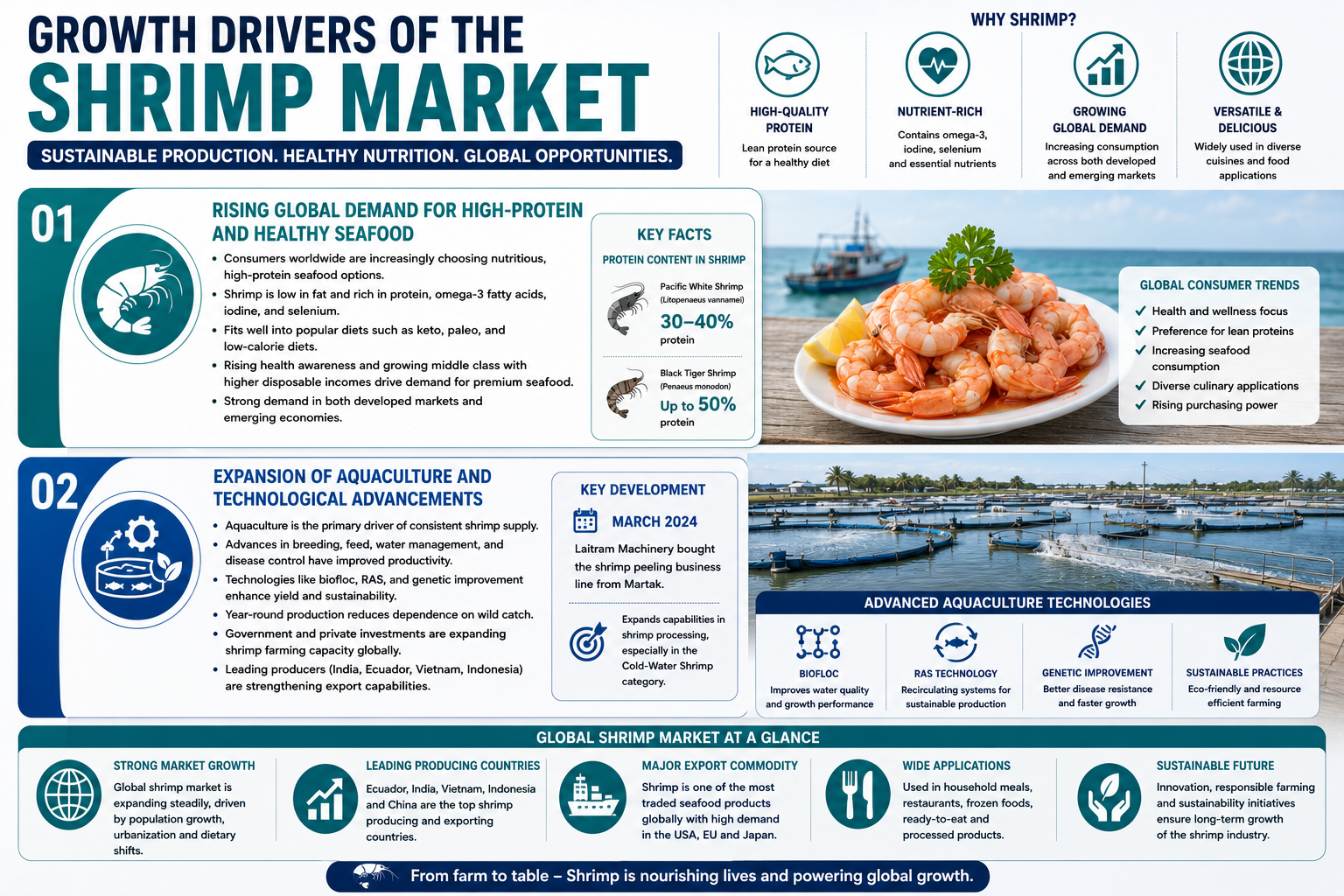
Rich in protein, omega-3 fatty acids, selenium, iodine, vitamins, and essential minerals, shrimp appeals to health-conscious consumers seeking nutritious meal options.
Unlike many other protein sources, shrimp contains relatively low levels of fat while delivering substantial nutritional benefits.
Consumers increasingly appreciate its versatility in a wide range of cooking methods including grilling, frying, boiling, steaming, baking, sautéing, and roasting.
Its compatibility with multiple cuisines and cooking styles has helped make shrimp a favorite among both home cooks and professional chefs.
As global dietary preferences continue shifting toward healthier foods, shrimp remains well positioned for sustained demand growth.
Growing Demand for High-Protein Diets Fuels Market Expansion
One of the strongest drivers behind the growth of the shrimp market is the increasing popularity of high-protein diets.
Consumers worldwide are becoming more aware of the role protein plays in weight management, muscle development, overall wellness, and healthy aging.
Shrimp offers a lean source of protein while delivering important nutrients without excessive calories or saturated fats.
The popularity of dietary approaches such as ketogenic, paleo, low-carbohydrate, and high-protein diets has further increased shrimp consumption.
Health-conscious consumers increasingly view seafood as a healthier alternative to certain red meat products.
As nutritional awareness continues to expand, demand for shrimp as a premium protein source is expected to rise steadily.
Aquaculture Expansion Is Transforming Global Supply
Aquaculture has become one of the most important contributors to shrimp market growth.
Historically, shrimp supply depended heavily on wild-caught harvests, which often faced limitations due to seasonal availability and environmental factors.
Today, shrimp farming has become the primary source of global shrimp production.
Advancements in aquaculture technologies have improved productivity, sustainability, and consistency across shrimp farming operations.
Innovations including biofloc systems, recirculating aquaculture systems (RAS), improved feed formulations, selective breeding programs, and enhanced disease management practices have significantly increased yields.
Major shrimp-producing nations such as India, Ecuador, Vietnam, Indonesia, and China continue expanding production capacity to meet growing global demand.
As aquaculture technology advances further, production efficiency is expected to improve while supporting long-term industry growth.
Technological Innovation Improves Production Efficiency
Modern shrimp farming increasingly relies on technology to improve output and sustainability.
Farm operators are utilizing advanced monitoring systems, automated feeding technologies, water quality management tools, and data analytics to optimize production.
Genetic improvement programs have also contributed to stronger disease resistance and faster growth rates among farmed shrimp species.
These innovations help reduce production risks while improving profitability for farmers.
Technology-driven improvements are becoming increasingly important as producers seek to meet rising demand while minimizing environmental impacts.
Continued investment in aquaculture innovation will remain a key factor supporting future market expansion.
International Seafood Trade Drives Market Growth
Shrimp is among the most heavily traded seafood products globally.
Strong international demand has created extensive trade networks connecting shrimp-producing countries with major consumer markets.
Countries such as India, Ecuador, Vietnam, Indonesia, and Thailand play critical roles in supplying shrimp to North America, Europe, Asia-Pacific, and the Middle East.
Globalization has expanded access to seafood products, allowing consumers to enjoy shrimp year-round regardless of geographic location.
Trade agreements, logistics improvements, and advances in refrigeration technology have further strengthened international seafood commerce.
As global demand for seafood continues increasing, shrimp exports are expected to remain a major growth engine for the industry.
Frozen and Processed Shrimp Gain Consumer Preference
Consumer lifestyles are changing rapidly, creating strong demand for convenient meal solutions.
Frozen, ready-to-cook, peeled, deveined, cooked, and breaded shrimp products have become increasingly popular among busy households.
These products offer convenience while maintaining quality, flavor, and nutritional value.
Advances in freezing technologies, including individually quick frozen (IQF) processing, have significantly improved product quality and shelf life.
Consumers can now access restaurant-quality seafood products through retail channels and online grocery platforms.
The continued growth of convenience foods is expected to support strong demand for value-added shrimp products throughout the forecast period.
Hospitality and Foodservice Industries Strengthen Demand
Restaurants, hotels, catering companies, cruise lines, and quick-service restaurant chains remain major consumers of shrimp products.
Shrimp's versatility allows chefs to incorporate it into a wide range of menu offerings.
Seafood appetizers, grilled shrimp dishes, pasta meals, sushi products, curries, and premium seafood platters continue driving demand within the foodservice sector.
As tourism and hospitality industries recover and expand globally, shrimp consumption through commercial foodservice channels is expected to increase significantly.
The growing popularity of international cuisines is also encouraging broader adoption of shrimp-based menu items.
L. Vannamei Dominates Global Production
Pacific white shrimp, scientifically known as Litopenaeus vannamei, remains the dominant species within the global shrimp industry.
Its popularity stems from rapid growth rates, strong adaptability, disease resistance, and economic production advantages.
Major shrimp-producing countries including India, Ecuador, Vietnam, Indonesia, and China rely heavily on L. vannamei farming.
Consumers appreciate its mild flavor, tender texture, and versatility across various culinary applications.
Advancements in intensive farming techniques continue improving production efficiency for this species.
As demand increases globally, L. vannamei is expected to maintain its leadership position within the market.
Premium Demand Supports Growth of Giant Tiger Prawns
Penaeus monodon, commonly known as the giant tiger prawn, represents a premium segment within the shrimp market.
Known for its large size, distinctive flavor, and superior texture, this species commands higher prices in international markets.
Consumers in Japan, Europe, and the Middle East often prefer giant tiger prawns for premium seafood dishes.
Countries including India, Bangladesh, Thailand, Vietnam, and Indonesia remain important producers.
Although cultivation can be more challenging than other shrimp varieties, improvements in hatchery management and farming practices continue supporting production growth.
Breaded Shrimp Becomes a Popular Convenience Product
Breaded shrimp has emerged as one of the fastest-growing processed seafood categories.
These products appeal to consumers seeking convenient, ready-to-cook meal options that deliver restaurant-style experiences at home.
Breaded shrimp is particularly popular within North America and Europe, where frozen food consumption remains high.
Fast-food chains, casual dining restaurants, and retail outlets continue expanding their breaded seafood offerings.
Urbanization, busy lifestyles, and growing demand for convenience foods are expected to support continued growth within this segment.
Cooked Shrimp Market Continues Expanding
Pre-cooked shrimp products are also experiencing strong growth.
Consumers appreciate the convenience of products that require minimal preparation while maintaining food safety and quality standards.
Cooked shrimp is widely used in salads, sandwiches, sushi, pasta dishes, appetizers, and ready-to-eat meals.
Increasing demand for healthy meal solutions and time-saving food products continues driving adoption.
Advancements in processing and freezing technologies further enhance product freshness and consumer satisfaction.
The cooked shrimp segment is expected to remain a major contributor to industry growth.
Disease Outbreaks Present Significant Challenges
Despite strong growth prospects, shrimp producers face several challenges.
Disease outbreaks remain one of the most serious threats to shrimp farming operations worldwide.
Conditions such as Early Mortality Syndrome (EMS), White Spot Syndrome Virus (WSSV), and Acute Hepatopancreatic Necrosis Disease (AHPND) can cause substantial production losses.
These diseases often lead to reduced yields, financial losses, and supply disruptions.
Producers continue investing in improved biosecurity measures, disease monitoring systems, and genetic advancements to minimize risks.
Maintaining healthy shrimp populations remains essential for sustaining industry growth.
Environmental Concerns Require Sustainable Solutions
Environmental sustainability has become a major focus within the shrimp industry.
Concerns regarding coastal ecosystem degradation, water pollution, mangrove deforestation, and excessive antibiotic usage have attracted increased regulatory scrutiny.
Consumers, governments, and environmental organizations are encouraging more responsible aquaculture practices.
Sustainable farming certifications and traceability programs are becoming increasingly important within global seafood markets.
Companies that prioritize environmental stewardship may gain competitive advantages as sustainability expectations continue to rise.
Price Volatility and Trade Barriers Create Uncertainty
The shrimp market is also vulnerable to fluctuations in feed costs, fuel prices, transportation expenses, and international trade policies.
Tariffs, anti-dumping measures, food safety regulations, and geopolitical tensions can impact export opportunities and pricing dynamics.
Maintaining cold chain logistics throughout international transportation processes adds complexity and operational costs.
Global economic conditions can also influence seafood demand, particularly within hospitality and foodservice channels.
Managing these risks effectively remains essential for long-term industry success.
United States Leads Global Consumption
The United States remains one of the world's largest shrimp-consuming markets.
Shrimp consistently ranks among the most popular seafood choices for American consumers.
Strong demand is supported by growing interest in healthy eating, convenience foods, and seafood-based diets.
The country imports significant volumes of shrimp from major producing nations including India, Ecuador, Vietnam, and Indonesia.
In July 2025, Prime Shrimp introduced its innovative Prime Shrimp Burgers, featuring shrimp-based frozen patties designed for both foodservice and retail markets.
Continued innovation and evolving consumer preferences are expected to support market growth in the United States.
India Strengthens Its Position in Global Trade
India remains one of the world's leading shrimp producers and exporters.
The country's shrimp farming industry has expanded rapidly, particularly in coastal states such as Andhra Pradesh, Gujarat, and Tamil Nadu.
Strong export demand from the United States, Europe, and Japan continues supporting production growth.
Domestic consumption is also increasing due to urbanization, rising incomes, changing dietary habits, and improved seafood accessibility.
In March 2025, the Marine Products Export Development Authority (MPEDA) introduced the SHAPHARI certification logo and Aqua Trace GIS platform to strengthen the global reputation and traceability of Indian shrimp exports.
India is expected to remain a critical player in the future growth of the global shrimp industry.
Final Thoughts
The global shrimp market continues to benefit from rising seafood consumption, increasing demand for protein-rich foods, expanding aquaculture production, and growing international trade.
Technological innovation, improved cold chain infrastructure, and consumer preference for convenient seafood products are creating new growth opportunities across the value chain.
While challenges related to disease management, sustainability, trade policies, and price volatility remain, industry participants are actively investing in solutions that enhance resilience and efficiency.
With the market projected to grow from US$ 71.97 billion in 2025 to US$ 103.41 billion by 2034, shrimp is expected to remain one of the most important and widely consumed seafood products worldwide, offering significant opportunities for producers, processors, exporters, and retailers alike.
About the Creator
Enjoyed the story? Support the Creator.
Subscribe for free to receive all their stories in your feed.
Comments
There are no comments for this story
Be the first to respond and start the conversation.