
Will the Global Oral Care Market Reach US$ 72.34 Billion by 2034 as Consumers Prioritize Preventive Dental Health?
Rising awareness of oral hygiene, smart dental technologies, premium products, and preventive healthcare is transforming the global oral care industry.

Oral health has become an increasingly important component of overall wellness as consumers around the world recognize the connection between healthy teeth, healthy gums, and long-term health outcomes. What was once viewed primarily as a daily hygiene routine has evolved into a comprehensive healthcare category encompassing preventive care, advanced technologies, cosmetic enhancements, and specialized treatments.
Today, consumers are investing in a wide range of oral care products including toothpaste, toothbrushes, mouthwash, dental floss, whitening products, water flossers, electric toothbrushes, and gum care solutions. Increased awareness regarding the relationship between oral health and chronic diseases such as diabetes and cardiovascular conditions has further strengthened demand for preventive oral care products.
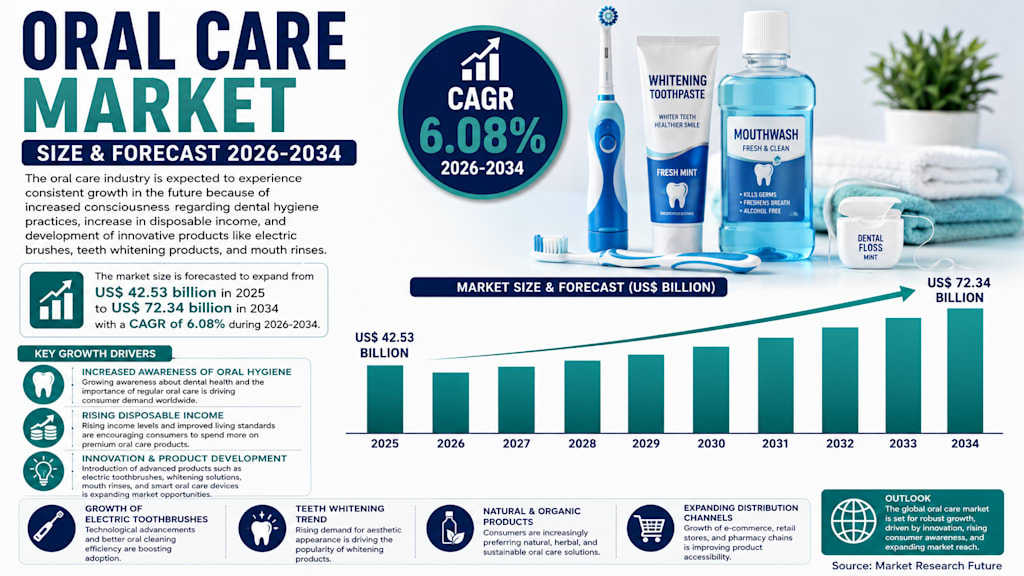
According to Renub Research, the global Oral Care Market is projected to grow from US$ 42.53 billion in 2025 to US$ 72.34 billion by 2034, expanding at a CAGR of 6.08% between 2026 and 2034. This growth is being driven by rising awareness of dental hygiene, growing disposable incomes, technological innovation, and increasing consumer demand for premium oral care solutions.
Oral Hygiene Awareness Is Reaching New Heights
One of the strongest drivers behind market growth is the increasing awareness regarding the importance of oral hygiene and preventive healthcare.
Consumers today are more informed than ever before about the consequences of poor oral health. Cavities, gum disease, tooth loss, bad breath, and oral infections are increasingly recognized as preventable conditions that can affect overall well-being.
Scientific studies highlighting the connection between oral health and systemic conditions such as heart disease, diabetes, and respiratory infections have encouraged consumers to adopt more consistent oral hygiene practices.
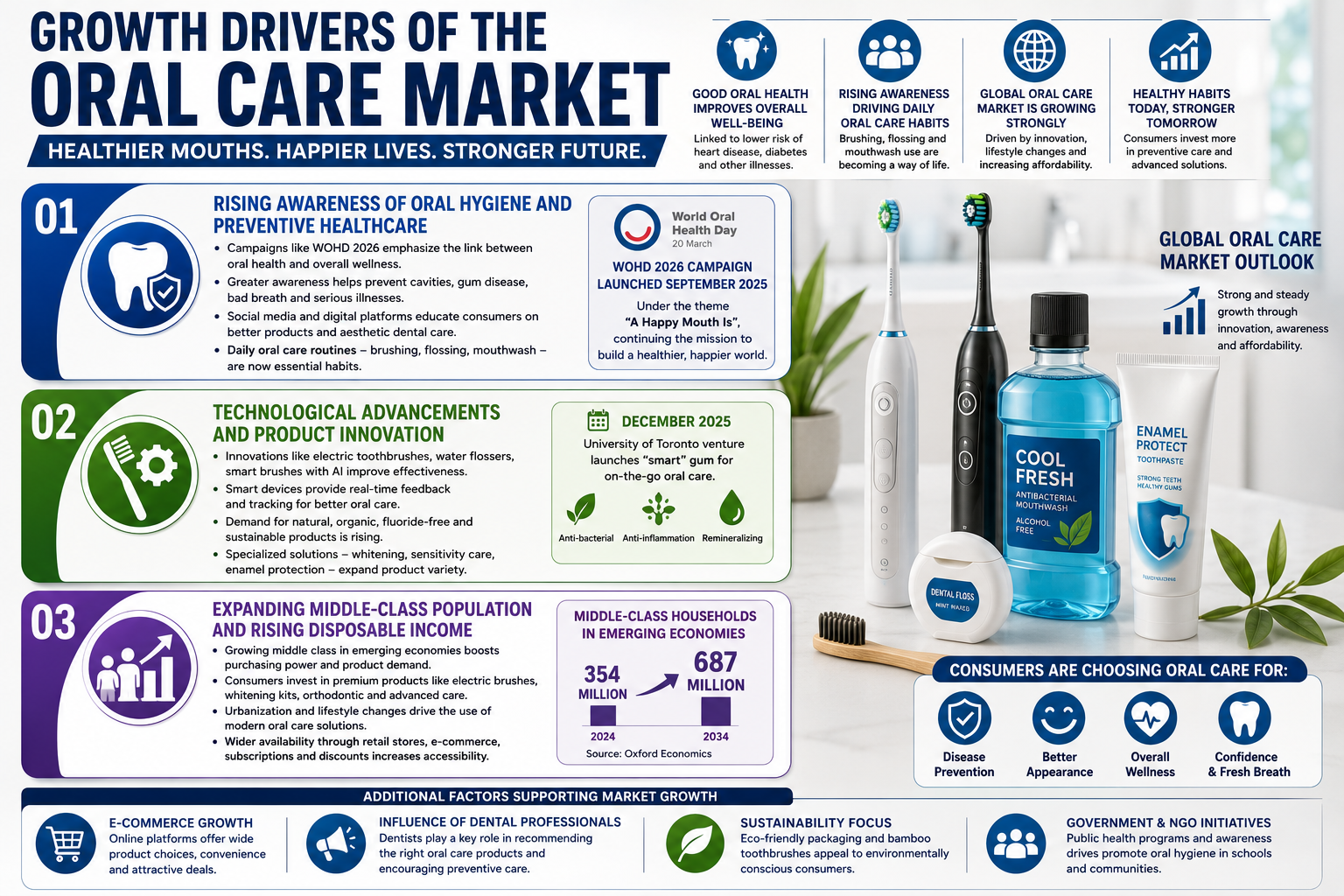
Public awareness campaigns have also played a significant role in educating consumers. For example, the World Oral Health Day 2026 campaign continued promoting the message that maintaining a healthy mouth contributes to healthier and happier lives.
As awareness grows globally, consumers are becoming more proactive about oral care, leading to increased demand for both basic and advanced products.
Preventive Healthcare Is Reshaping Consumer Behavior
Preventive healthcare has become one of the most influential trends across the broader healthcare industry, and oral care is benefiting significantly from this shift.
Rather than seeking treatment only after problems arise, consumers are increasingly investing in products and services designed to prevent dental issues before they occur.
Daily brushing, flossing, mouth rinsing, and regular dental checkups are becoming more widely adopted as preventive measures. Consumers understand that maintaining oral health can help reduce long-term treatment costs and improve overall quality of life.
Healthcare professionals and dental organizations continue to emphasize prevention as the most effective approach to maintaining healthy teeth and gums.
This preventive mindset is expected to remain a major growth driver throughout the forecast period.
Technological Innovation Is Transforming Oral Care
Technology has dramatically changed the way consumers approach oral hygiene.
Modern oral care products are becoming increasingly sophisticated, offering enhanced functionality, convenience, and effectiveness. Electric toothbrushes, sonic toothbrushes, water flossers, AI-powered smart toothbrushes, and Bluetooth-connected devices are reshaping the market.
Smart toothbrushes can monitor brushing habits, provide real-time feedback, and help users improve their oral hygiene routines through mobile applications and data analytics.
Manufacturers are also developing advanced toothpastes designed for specific concerns such as enamel protection, gum health, sensitivity relief, cavity prevention, and teeth whitening.
In December 2025, a startup originating from the University of Toronto launched a smart dental gum designed to support oral hygiene while away from home. The product incorporates antibacterial, anti-inflammatory, and remineralizing agents that help maintain oral health without requiring a toothbrush.
As technology continues to evolve, innovation will remain one of the most important competitive factors within the oral care industry.
Natural and Sustainable Products Are Gaining Popularity
Consumer preferences are shifting toward products that emphasize natural ingredients and environmental sustainability.
Many consumers are becoming more cautious about chemical ingredients commonly found in traditional oral care products. This has increased demand for fluoride-free, paraben-free, herbal, and organic formulations.
Products featuring natural ingredients, plant-based extracts, and environmentally friendly packaging are becoming increasingly popular among health-conscious shoppers.
Sustainability concerns are also driving growth in eco-friendly alternatives such as bamboo toothbrushes, biodegradable accessories, recyclable packaging, and refillable product formats.
Brands that successfully combine product performance with environmental responsibility are attracting growing consumer loyalty.
The sustainability trend is expected to play an increasingly important role in shaping future product development strategies.
Rising Disposable Income Is Supporting Premium Product Adoption
Economic development and rising household incomes are creating new opportunities for oral care manufacturers worldwide.
As middle-class populations expand across emerging economies, consumers are gaining greater purchasing power and becoming more willing to invest in premium healthcare products.
According to Oxford Economics, the number of middle-class households in emerging economies is expected to increase from 354 million in 2024 to 687 million by 2034. This demographic shift will significantly expand the customer base for advanced oral care products.
Consumers are increasingly purchasing premium electric toothbrushes, whitening kits, water flossers, orthodontic solutions, and specialized oral care treatments.
Improved living standards are also encouraging greater focus on personal grooming, appearance, and preventive healthcare.
These factors are expected to contribute substantially to market growth over the coming decade.
E-Commerce Is Expanding Product Accessibility
The growth of online retail channels has transformed how consumers purchase oral care products.
Digital platforms provide convenient access to a wide variety of products while enabling consumers to compare brands, prices, ingredients, and customer reviews.
Subscription services have become particularly popular for products such as toothbrush replacement heads, toothpaste, and oral hygiene kits. These services offer convenience while encouraging regular product replacement and consistent oral care habits.
Online channels also allow manufacturers to reach consumers in regions where traditional retail distribution may be limited.
As internet penetration and smartphone adoption continue to rise globally, e-commerce will remain an important growth channel for oral care brands.
Toothbrushes and Accessories Remain Core Market Segments
The toothbrush and accessories category remains one of the largest segments within the oral care industry.
This category includes manual toothbrushes, electric toothbrushes, replacement brush heads, interdental brushes, tongue cleaners, and related accessories.
Consumer awareness regarding the importance of replacing toothbrushes regularly continues to support demand. At the same time, technological innovation is creating additional growth opportunities.
Smart toothbrushes equipped with AI capabilities, ultrasonic cleaning technology, and ergonomic designs are attracting increasing consumer interest.
The growing popularity of sustainable toothbrush alternatives is further strengthening this segment's long-term growth prospects.
Dental Accessories Are Becoming Increasingly Important
The dental accessories and ancillaries segment is experiencing strong growth as consumers adopt more comprehensive oral hygiene routines.
Products such as dental floss, water flossers, mouth guards, whitening strips, orthodontic wax, retainers, and denture accessories are becoming increasingly popular.
Consumers are recognizing that brushing alone may not be sufficient for maintaining optimal oral health.
Advancements in home dental care solutions and increasing awareness regarding gum health are contributing to stronger demand for these products.
The growing use of orthodontic treatments and cosmetic dentistry is also supporting market expansion within this category.
Adult Oral Care Represents the Largest Consumer Segment
Adults continue to account for the largest share of oral care product consumption globally.
Adult consumers seek products designed to address issues such as plaque control, gum disease prevention, sensitivity management, enamel protection, whitening, and bad breath.
Lifestyle factors including smoking, dietary habits, stress, and aging contribute to a variety of oral health concerns that drive demand for specialized products.
The increasing popularity of cosmetic dentistry and teeth whitening treatments has further strengthened demand for premium oral care solutions among adult consumers.
As consumers place greater emphasis on appearance and wellness, adult-focused products are expected to remain a major revenue contributor.
Kids' Oral Care Market Continues to Expand
The kids' oral care segment is also experiencing significant growth.
Parents are becoming increasingly aware of the importance of establishing healthy oral hygiene habits during childhood. As a result, demand for child-specific toothbrushes, toothpaste, mouthwash, and floss products continues to rise.
Manufacturers are developing products with child-friendly flavors, colorful packaging, cartoon characters, and gentle formulations that encourage consistent use.
School-based dental education programs and pediatric healthcare initiatives are also helping raise awareness regarding childhood oral health.
The emphasis on prevention during early childhood is expected to support long-term growth within this segment.
High Costs Remain a Challenge
Despite strong growth prospects, the oral care market faces several challenges.
Advanced products such as electric toothbrushes, water flossers, whitening systems, and professional dental treatments can be expensive, limiting adoption among price-sensitive consumers.
In many developing regions, affordability remains a significant barrier to accessing premium oral care solutions.
Economic uncertainty and inflation may also influence purchasing decisions, leading some consumers to prioritize basic oral care products over advanced alternatives.
Manufacturers must balance innovation and affordability to maximize market penetration.
Limited Awareness and Dental Access Affect Growth
In certain regions, lack of oral health education and limited access to dental services continue to hinder market development.
Many rural and underserved communities face shortages of dental professionals and healthcare infrastructure. Cultural beliefs, limited awareness, and financial constraints can further reduce adoption of preventive oral care practices.
Expanding education initiatives and improving healthcare access will be critical for unlocking future growth opportunities in these markets.
United States Leads Global Market Development
The United States remains one of the most advanced and influential oral care markets globally.
High consumer awareness, strong purchasing power, widespread dental insurance coverage, and rapid adoption of advanced technologies support market growth.
Consumers increasingly seek premium products including smart toothbrushes, whitening solutions, and natural oral care formulations.
In October 2024, Royal Philips partnered with Aspen Dental to make Philips Sonicare products available across more than 1,100 dental offices throughout the United States. The collaboration included advanced electric toothbrushes, cordless power flossers, and whitening solutions.
The U.S. market continues to serve as a major driver of innovation and product development within the global oral care industry.
Final Thoughts
The global oral care market is entering a period of sustained expansion driven by increasing awareness of oral hygiene, preventive healthcare adoption, technological innovation, and rising consumer spending.
As consumers become more proactive about maintaining oral health and improving overall wellness, demand for both traditional and advanced oral care products will continue to rise.
Manufacturers that focus on innovation, sustainability, affordability, and consumer education will be best positioned to capitalize on emerging opportunities.
With the market projected to grow from US$ 42.53 billion in 2025 to US$ 72.34 billion by 2034, the future of the oral care industry appears exceptionally promising as oral health becomes an increasingly important part of global healthcare priorities.
About the Creator
Enjoyed the story? Support the Creator.
Subscribe for free to receive all their stories in your feed.
Comments
There are no comments for this story
Be the first to respond and start the conversation.