
Will the Dental Diagnostics and Surgical Equipment Market Reach US$ 16.86 Billion by 2034 as Advanced Technology Transforms Oral Healthcare?
Rising oral disease prevalence, cosmetic dentistry demand, digital imaging innovation, and minimally invasive procedures are accelerating market growth worldwide.

Oral health has become an increasingly important component of overall healthcare worldwide. As awareness of dental hygiene grows and patients seek more advanced treatment options, dental professionals are investing heavily in sophisticated diagnostic and surgical technologies that improve treatment outcomes and patient experiences.
Modern dentistry has evolved far beyond traditional examinations and procedures. Today's dental clinics utilize digital imaging systems, cone beam computed tomography (CBCT), intraoral scanners, CAD/CAM technologies, lasers, and advanced surgical instruments that enable highly accurate diagnoses and minimally invasive treatments.
These technological advancements are transforming how dental professionals diagnose oral diseases, plan treatments, and perform complex procedures. At the same time, increasing demand for cosmetic dentistry and preventive dental care is creating significant opportunities for equipment manufacturers.
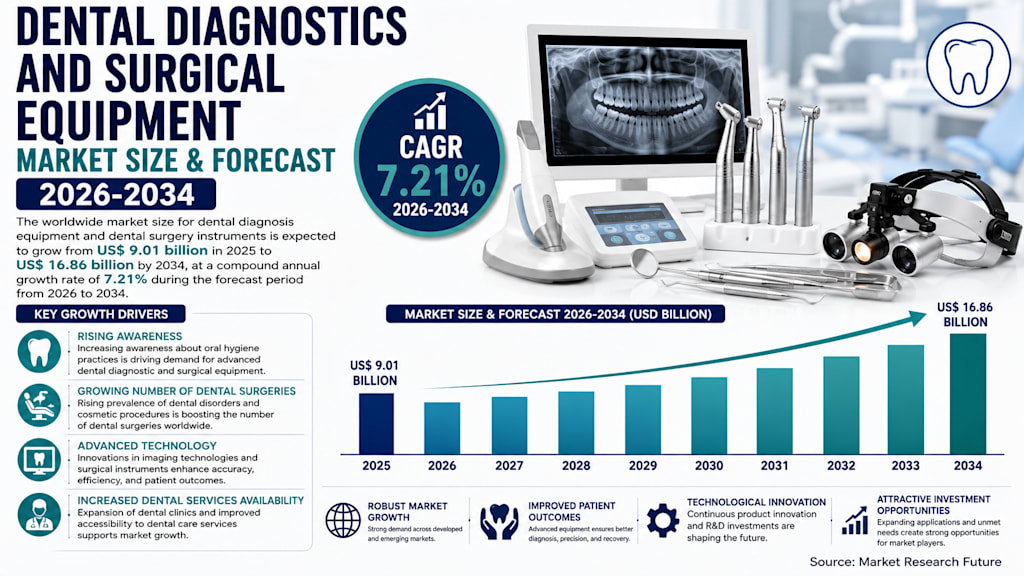
According to Renub Research, the global Dental Diagnostics and Surgical Equipment Market is projected to grow from US$ 9.01 billion in 2025 to US$ 16.86 billion by 2034, expanding at a CAGR of 7.21% between 2026 and 2034. The market's growth is being driven by increasing awareness of oral health, rising dental disease prevalence, growing demand for cosmetic procedures, and continuous technological innovation.
Rising Oral Diseases Are Driving Demand for Advanced Dental Equipment
One of the primary factors fueling market growth is the increasing prevalence of oral diseases worldwide.
Dental caries, periodontal diseases, tooth loss, oral infections, and other dental conditions continue to affect billions of people globally. Poor dietary habits, excessive sugar consumption, smoking, inadequate oral hygiene, and aging populations contribute significantly to the growing burden of oral diseases.
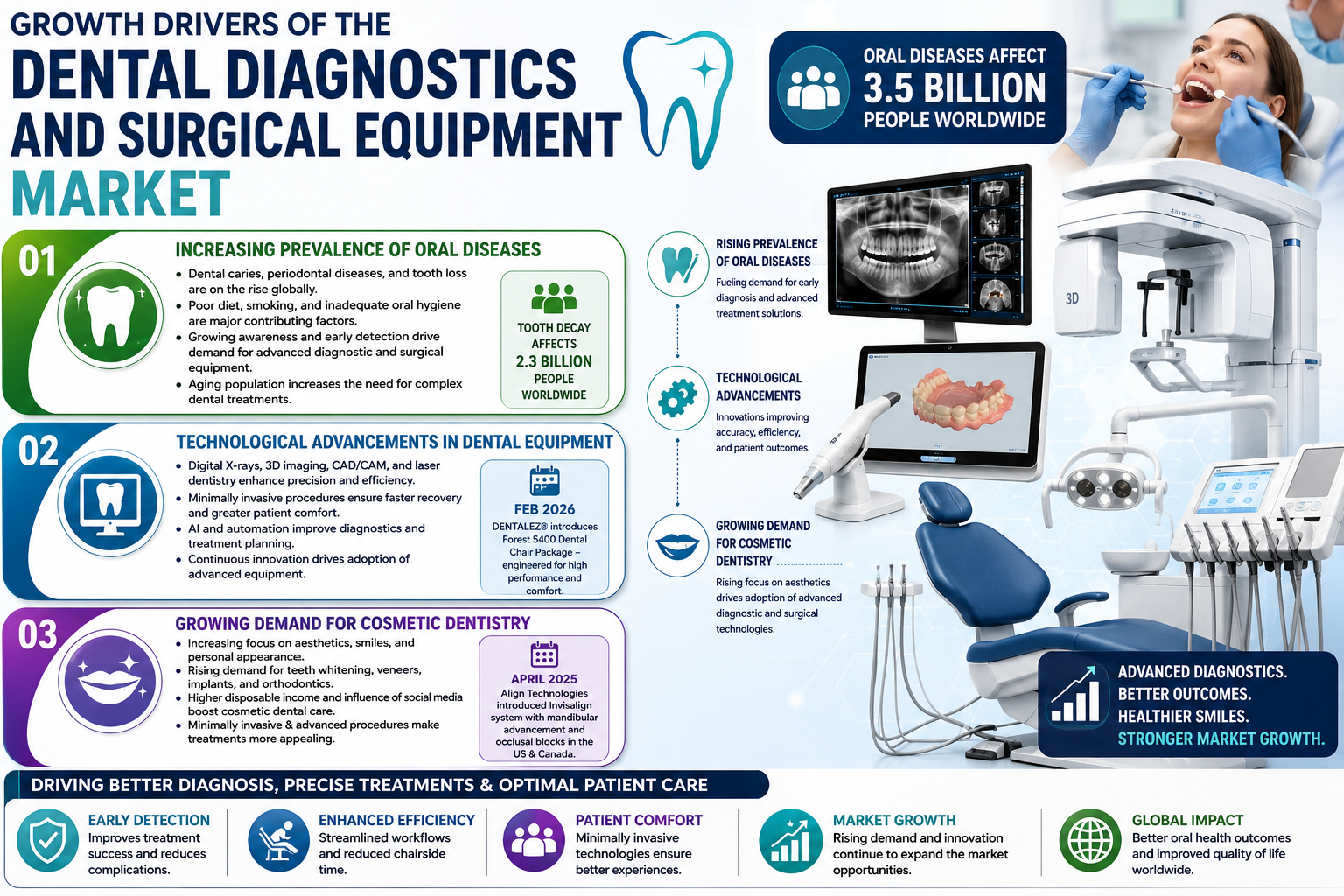
According to industry data, oral diseases affect approximately 3.5 billion people globally, while around 2.3 billion individuals suffer from tooth decay in their permanent teeth. These staggering numbers highlight the urgent need for improved diagnostic and treatment solutions.
As awareness regarding oral health increases, more patients are seeking preventive care and early intervention. This trend is encouraging dental clinics and hospitals to invest in advanced diagnostic technologies capable of detecting issues before they become severe.
Early diagnosis not only improves patient outcomes but also reduces long-term treatment costs, making advanced equipment increasingly valuable to healthcare providers.
Technology Is Revolutionizing Modern Dentistry
Technological innovation has become one of the strongest growth drivers within the dental diagnostics and surgical equipment industry.
The introduction of digital X-rays, 3D imaging systems, CAD/CAM technologies, intraoral scanners, artificial intelligence, and laser-based treatment solutions has significantly improved the efficiency and accuracy of dental procedures.
Modern diagnostic systems provide highly detailed images that allow dentists to identify oral health problems with exceptional precision. These technologies help create more accurate treatment plans while reducing diagnostic errors.
Digital technologies also streamline clinical workflows, reduce procedure times, and improve patient comfort. As a result, both healthcare providers and patients increasingly prefer technologically advanced treatment environments.
Artificial intelligence is emerging as a particularly promising development. AI-powered diagnostic tools assist dentists in analyzing images, identifying abnormalities, and supporting treatment planning with greater efficiency.
As technology continues to evolve, adoption rates are expected to increase across both developed and emerging healthcare markets.
Cosmetic Dentistry Is Creating New Opportunities
The growing popularity of cosmetic dentistry is another major factor contributing to market expansion.
Consumers today place greater emphasis on appearance and smile aesthetics than ever before. Social media influence, rising disposable incomes, and increasing awareness of cosmetic treatment options have encouraged more patients to pursue elective dental procedures.
Popular cosmetic treatments include teeth whitening, veneers, orthodontics, smile makeovers, and dental implants.
These procedures often require advanced diagnostic imaging and specialized surgical equipment to achieve optimal results. Accurate treatment planning and minimally invasive techniques are particularly important within cosmetic dentistry.
In April 2025, Align Technology introduced the Invisalign system featuring mandibular advancement and occlusal blocks in the United States and Canada, highlighting ongoing innovation within the cosmetic dentistry sector.
As patient demand for aesthetic improvements continues to rise, investment in advanced dental technologies is expected to increase accordingly.
Minimally Invasive Procedures Are Becoming the Preferred Choice
Patients today increasingly prefer minimally invasive dental treatments that reduce discomfort, recovery times, and procedural risks.
Advanced dental technologies enable practitioners to perform procedures with greater precision while minimizing tissue damage.
Laser dentistry has emerged as a leading example of this trend. Dental lasers are widely used for gum reshaping, lesion removal, periodontal treatments, teeth whitening, and various soft tissue procedures.
Compared with traditional techniques, laser-based treatments often involve less bleeding, reduced pain, faster healing, and improved patient satisfaction.
The growing popularity of minimally invasive procedures is encouraging clinics to adopt advanced surgical equipment capable of delivering superior outcomes.
As patient expectations continue to evolve, demand for technologies that enhance comfort and efficiency is expected to remain strong.
Dental Chairs Continue to Serve as Essential Infrastructure
Dental chairs remain one of the most important equipment categories within modern dental practices.
Today's dental chairs are significantly more sophisticated than earlier generations. Modern systems feature ergonomic designs, integrated lighting, advanced delivery systems, digital controls, and enhanced patient comfort features.
Efficient dental chairs improve workflow efficiency while supporting both diagnostic and surgical procedures.
The growing number of dental clinics worldwide is contributing directly to increased demand for technologically advanced chair systems.
In February 2026, DENTALEZ introduced the Forest 5400 Dental Chair Package, designed to provide enhanced performance, engineering quality, and patient comfort.
As clinics continue upgrading their facilities, demand for advanced chair systems is expected to remain strong.
Dental Laser Equipment Is Experiencing Rapid Growth
Dental soft tissue laser equipment represents one of the fastest-growing segments within the market.
These devices allow dentists to perform highly precise procedures while minimizing discomfort for patients. Applications include gum contouring, periodontal therapy, lesion removal, and cosmetic enhancements.
Patients increasingly favor laser treatments because they typically involve less pain and shorter recovery periods compared with conventional procedures.
Technological advancements have also improved laser safety, efficiency, and treatment effectiveness.
Although laser systems often require significant investment, their clinical benefits continue to drive adoption among dental professionals worldwide.
CBCT Imaging Is Enhancing Diagnostic Precision
Cone Beam Computed Tomography (CBCT) systems have become essential tools for modern dental diagnostics.
Unlike traditional two-dimensional imaging methods, CBCT technology produces detailed three-dimensional images of teeth, bones, nerves, and surrounding structures.
These systems are widely used for dental implants, orthodontics, oral surgery, and complex treatment planning.
CBCT imaging significantly improves diagnostic accuracy while reducing procedural risks and enhancing treatment outcomes.
Advancements in software integration, imaging speed, and radiation reduction continue to improve the value proposition of CBCT systems.
As demand for precision dentistry increases, CBCT equipment is expected to remain a critical growth segment.
High Equipment Costs Remain a Significant Challenge
Despite strong growth prospects, the industry faces several important challenges.
One of the most significant barriers is the high cost associated with advanced dental technologies. Equipment such as CBCT systems, digital scanners, laser devices, and CAD/CAM systems often require substantial capital investment.
Smaller clinics and practices may struggle to afford these technologies, particularly in developing regions where financial resources are more limited.
Beyond initial acquisition costs, maintenance expenses, software upgrades, and staff training requirements further increase financial burdens.
These factors can slow technology adoption and contribute to disparities in healthcare access.
Shortage of Skilled Professionals Limits Adoption
The shortage of qualified dental professionals capable of operating advanced technologies represents another challenge.
Modern diagnostic and surgical systems require specialized knowledge and ongoing training. Continuous technological advancements make professional development increasingly important.
Many developing countries face shortages of trained dental specialists, limiting their ability to fully utilize sophisticated equipment.
Addressing this issue will require greater investment in dental education, professional training programs, and continuing education initiatives.
Expanding workforce capabilities will be essential for maximizing the benefits of technological innovation.
Dental Clinics Represent the Largest End Users
Dental clinics account for the largest share of demand within the dental diagnostics and surgical equipment market.
The increasing number of private clinics worldwide is contributing significantly to equipment purchases. Clinics require advanced technologies to deliver preventive, restorative, orthodontic, cosmetic, and surgical services efficiently.
Competition among providers is also encouraging investment in modern equipment that enhances patient experiences and treatment outcomes.
Technology adoption enables clinics to improve productivity, attract new patients, and differentiate themselves in increasingly competitive markets.
As dental service demand continues growing, clinics are expected to remain the dominant end-user segment.
The United States Leads Global Market Development
The United States represents the largest and most technologically advanced dental diagnostics and surgical equipment market globally.
Strong healthcare infrastructure, high patient awareness, widespread insurance coverage, and rapid adoption of advanced technologies contribute to market leadership.
Dental clinics and specialty practices across the country actively invest in digital imaging systems, CAD/CAM technologies, laser equipment, and advanced surgical solutions.
Demand for cosmetic dentistry, orthodontics, and minimally invasive procedures further supports equipment adoption.
The presence of major manufacturers and ongoing research and development activities continues driving innovation within the U.S. market.
Emerging Markets Present Significant Opportunities
Countries such as India and Saudi Arabia are experiencing rapid growth in dental healthcare infrastructure and equipment demand.
India benefits from rising healthcare awareness, increasing dental tourism, urbanization, and expanding private dental services. The growing popularity of cosmetic dentistry is further accelerating equipment adoption.
Saudi Arabia is witnessing increasing investment in healthcare modernization and dental care services. Rising disposable incomes and growing awareness regarding oral health are encouraging greater utilization of advanced technologies.
These emerging markets offer substantial opportunities for manufacturers seeking long-term growth.
Final Thoughts
The global Dental Diagnostics and Surgical Equipment Market is entering a period of sustained expansion driven by increasing oral disease prevalence, technological innovation, cosmetic dentistry demand, and growing awareness of preventive healthcare.
Advanced imaging systems, digital technologies, laser devices, and minimally invasive surgical tools are transforming dental care by improving diagnostic accuracy, treatment efficiency, and patient outcomes.
Although challenges such as high equipment costs and workforce shortages remain, ongoing investments in healthcare infrastructure and technological development continue to create significant growth opportunities.
With the market projected to grow from US$ 9.01 billion in 2025 to US$ 16.86 billion by 2034, companies that focus on innovation, accessibility, training, and patient-centered solutions will be best positioned to capitalize on the future of modern dentistry.
About the Creator
Enjoyed the story? Support the Creator.
Subscribe for free to receive all their stories in your feed.
Comments
There are no comments for this story
Be the first to respond and start the conversation.