
Will Saudi Arabia’s Wine Market Reach US$ 8.17 Billion by 2034 as Premium Non-Alcoholic Beverages Redefine Luxury Hospitality?
Rising demand for alcohol-free premium beverages, Vision 2030 tourism initiatives, luxury hospitality expansion, and changing consumer preferences are driving growth in Saudi Arabia’s evolving wine market.

Saudi Arabia is witnessing a remarkable transformation across its tourism, hospitality, and consumer sectors as the Kingdom advances toward its Vision 2030 economic diversification goals. As international tourism expands and luxury hospitality projects reshape the country's landscape, demand for premium beverage experiences is growing rapidly.
Within this evolving environment, the Saudi Arabia wine market is developing in a unique manner. Unlike conventional wine markets around the world, growth in Saudi Arabia is primarily driven by non-alcoholic wine products that align with the country's cultural values, legal framework, and consumer preferences. These beverages offer sophisticated alternatives that replicate the flavors, aromas, and experiences associated with traditional wines while remaining alcohol-free.
Luxury hotels, fine-dining establishments, international hospitality brands, corporate events, and affluent consumers are increasingly embracing premium non-alcoholic wines as part of modern lifestyle experiences. As a result, the market is creating new opportunities for global beverage manufacturers and hospitality providers.
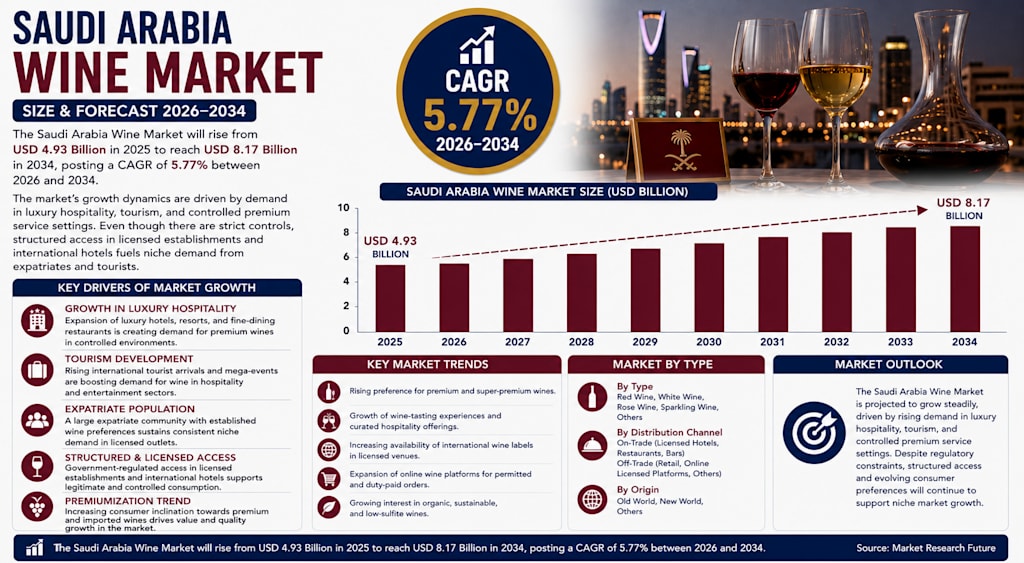
According to Renub Research, the Saudi Arabia Wine Market is projected to grow from US$ 4.93 billion in 2025 to US$ 8.17 billion by 2034, registering a CAGR of 5.77% during 2026–2034. The growth is primarily supported by expanding tourism activities, luxury hospitality investments, premium non-alcoholic beverage demand, and changing consumer lifestyles.
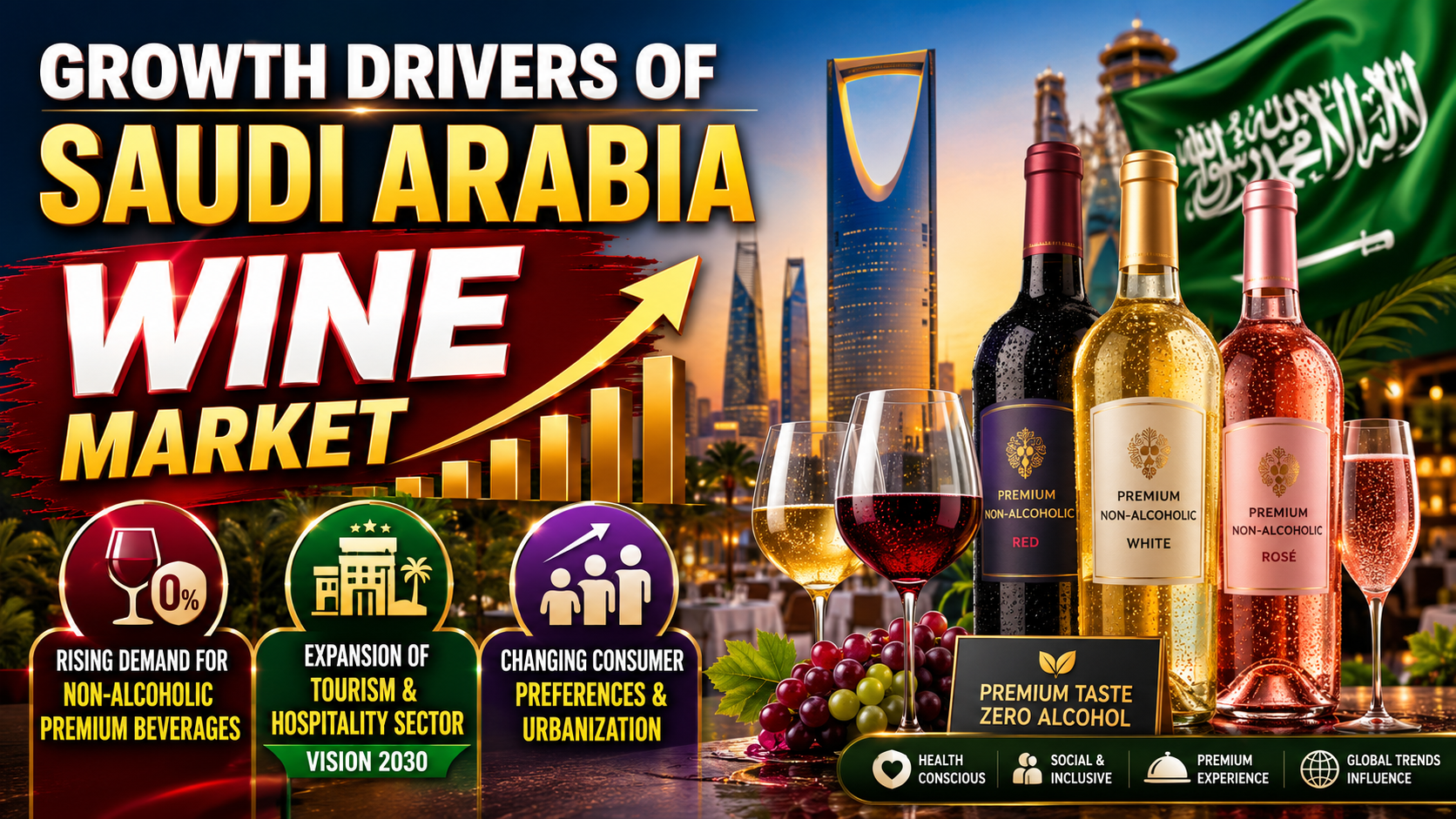
Understanding Saudi Arabia’s Unique Wine Market
Wine traditionally refers to beverages produced through the fermentation of grapes and other fruits. Globally, wine is associated with fine dining, celebrations, luxury experiences, and gastronomy.
In Saudi Arabia, however, the market has evolved differently due to strict regulations regarding alcoholic beverages.
As a result, the market is largely centered around premium non-alcoholic wine alternatives that provide consumers with sophisticated beverage experiences without alcohol content.
These products include alcohol-free red wines, white wines, rosé wines, sparkling wines, and specialty blends designed to replicate traditional wine profiles.
Their growing popularity reflects broader consumer trends favoring wellness, moderation, premium experiences, and international dining culture.
Today, non-alcoholic wine products are becoming increasingly visible across luxury hospitality venues, fine restaurants, premium retail stores, and international tourism destinations throughout the Kingdom.
Rising Demand for Premium Non-Alcoholic Beverages
One of the most significant drivers of market growth is the increasing popularity of premium alcohol-free beverages.
Consumers are becoming more health-conscious and increasingly seek products that offer sophisticated flavors while supporting wellness-focused lifestyles.
Non-alcoholic wines provide an attractive solution by delivering the sensory experience of wine without alcohol consumption.
Younger consumers, professionals, expatriates, and affluent households are particularly receptive to these products.
Premium positioning, elegant packaging, and improved production techniques have elevated the appeal of non-alcoholic wines beyond simple beverage substitutes.
As consumer awareness grows, demand for high-quality alcohol-free alternatives is expected to accelerate significantly.
Global Beverage Companies Are Expanding Investments
International beverage manufacturers are increasingly recognizing the potential of the Middle Eastern non-alcoholic beverage market.
Global brands continue investing in product innovation, advanced de-alcoholization technologies, and premium beverage portfolios designed specifically for regional markets.
In March 2025, Pernod Ricard launched a premium non-alcoholic beverage portfolio targeting markets including Saudi Arabia, the UAE, and Kuwait.
Such investments reflect growing confidence in the long-term potential of alcohol-free premium beverages throughout the Gulf region.
As competition intensifies, consumers are expected to benefit from broader product selections and enhanced quality standards.
Vision 2030 Is Transforming Tourism and Hospitality
Saudi Arabia’s Vision 2030 initiative continues to reshape the country's tourism and hospitality sectors.
Massive investments are being directed toward luxury hotels, entertainment districts, cultural attractions, beach resorts, conference facilities, and tourism infrastructure.
These developments are attracting increasing numbers of international visitors, business travelers, and expatriates.
Premium hospitality venues often seek beverage offerings that reflect global standards while remaining compliant with local regulations.
Non-alcoholic wines fit naturally within this framework, enabling hotels and restaurants to deliver sophisticated dining experiences.
As tourism continues expanding, demand for premium beverage products is expected to rise accordingly.
Tourism Growth Creates New Consumption Opportunities
Tourism has become one of Saudi Arabia's fastest-growing industries.
Government campaigns and strategic investments are helping position the Kingdom as a major global tourism destination.
According to official tourism data, the Saudi Summer campaign attracted more than 32 million domestic and international visitors, representing substantial growth compared with previous years.
Tourists increasingly seek world-class hospitality experiences that include premium food and beverage offerings.
Luxury resorts, international hotel brands, gourmet restaurants, and entertainment venues are responding by expanding their beverage selections.
This trend is creating important opportunities for premium non-alcoholic wine suppliers.
Urbanization and Lifestyle Changes Influence Consumption
Saudi Arabia's urban population has grown steadily over the past decade.
Large metropolitan areas such as Riyadh, Jeddah, Dammam, and Dhahran continue experiencing rapid economic and demographic expansion.
Urban consumers are generally more exposed to global food and beverage trends through international travel, social media, digital platforms, and modern retail environments.
These influences have increased interest in premium beverages that offer sophistication and novelty.
Younger consumers in particular are increasingly drawn toward products associated with wellness, lifestyle enhancement, and contemporary dining experiences.
Non-alcoholic wines align closely with these preferences.
Health and Wellness Trends Support Market Expansion
Health-conscious consumption has become an increasingly important factor across global beverage markets.
Consumers are paying greater attention to calorie intake, sugar levels, alcohol avoidance, and overall wellness.
Non-alcoholic wines provide an appealing alternative for consumers seeking premium beverages without the health concerns associated with alcohol consumption.
These products are often positioned as healthier lifestyle choices that complement balanced diets and social occasions.
The combination of wellness trends and premium experiences is helping strengthen market demand throughout Saudi Arabia.
Sparkling Wine Segment Gains Popularity
Sparkling non-alcoholic wines have emerged as one of the most dynamic categories within the Saudi market.
These beverages are frequently consumed during celebrations, weddings, corporate functions, hospitality events, and special occasions.
Consumers appreciate their festive character, elegant presentation, and premium image.
Luxury hotels and fine-dining establishments often feature sparkling alternatives as part of sophisticated beverage menus.
Product innovation, improved flavor profiles, and attractive packaging continue driving consumer interest.
As hospitality and tourism activities expand, sparkling wine alternatives are expected to experience strong growth.
Red Wine Alternatives Appeal to Premium Consumers
Non-alcoholic red wines represent another important market segment.
These beverages aim to replicate the rich flavors, aromas, tannins, and complexity associated with traditional red wines.
Consumers often pair red wine alternatives with gourmet meals and fine-dining experiences.
Expatriates, international visitors, and affluent urban consumers represent key target demographics.
Advancements in beverage technology have significantly improved flavor authenticity, making premium alcohol-free red wines increasingly attractive.
As awareness continues growing, the segment is expected to maintain steady expansion.
White Wine Products Benefit from Climate Preferences
White non-alcoholic wines enjoy particular popularity in Saudi Arabia due to the country's warm climate.
Consumers often prefer refreshing beverages that can be served chilled and paired with lighter meals.
White wine alternatives complement seafood, salads, Mediterranean cuisine, and international dining experiences.
Luxury hospitality establishments frequently include white wine options as part of their beverage portfolios.
Their refreshing taste profiles and broad food compatibility continue supporting segment growth.
Rosé Wines Attract Younger Demographics
Rosé wine alternatives are becoming increasingly popular among younger consumers and lifestyle-focused audiences.
Their vibrant appearance, refreshing flavors, and social-media appeal make them particularly attractive within premium hospitality environments.
Luxury resorts, upscale restaurants, and modern cafés frequently incorporate rosé alternatives into their offerings.
Manufacturers continue introducing innovative packaging and fruit-inspired flavor profiles to attract new consumers.
While still a niche category, rosé products are experiencing consistent growth.
Offline Channels Continue Dominating Distribution
Offline retail remains the primary distribution channel for non-alcoholic wines in Saudi Arabia.
Consumers often prefer purchasing premium beverages through supermarkets, hypermarkets, specialty retailers, gourmet stores, and hospitality venues where they can evaluate products directly.
Hotels, restaurants, and catering providers play especially important roles in driving product awareness and consumption.
Promotional activities, tasting events, and in-store merchandising help educate consumers about premium non-alcoholic wine options.
Although e-commerce is growing, offline channels remain dominant throughout the market.
Riyadh Leads Market Development
Riyadh represents the largest market for premium non-alcoholic wines in Saudi Arabia.
As the country's political, economic, and business center, Riyadh hosts a large concentration of multinational companies, expatriates, luxury hotels, and affluent consumers.
The city's rapidly growing entertainment sector and hospitality industry are creating strong demand for sophisticated beverage experiences.
Five-star hotels, premium restaurants, and upscale retail stores increasingly feature non-alcoholic wine products.
Vision 2030 investments continue strengthening Riyadh's position as the country's leading consumer market.
Jeddah Benefits from Tourism Expansion
Jeddah remains one of Saudi Arabia's most important hospitality and tourism destinations.
Its coastal location, luxury resorts, international visitor base, and vibrant dining scene contribute significantly to market growth.
Demand for sparkling, white, and rosé wine alternatives is particularly strong within hospitality venues.
The city's role as a gateway for international visitors continues supporting premium beverage consumption.
Dammam and Dhahran Create Corporate Demand
Dammam and Dhahran represent important regional markets due to their strong connections with the energy industry and international business communities.
Large expatriate populations and multinational corporate activities support demand for premium non-alcoholic beverages.
Hotels, luxury restaurants, and corporate hospitality venues play key roles in market development.
These cities continue benefiting from economic diversification and rising consumer spending.
Cultural and Regulatory Challenges Remain Significant
Despite favorable growth prospects, the market faces several challenges.
Saudi Arabia's strict regulations regarding alcoholic beverages fundamentally shape market dynamics.
Companies must carefully position products within cultural and legal boundaries while emphasizing wellness, hospitality, and premium experiences rather than traditional wine culture.
Consumer education also remains important, as awareness of non-alcoholic wine categories is still developing among many local consumers.
Successfully addressing these challenges will be essential for sustained market growth.
Competition Intensifies Among Global Brands
The increasing attractiveness of the Saudi market is encouraging more beverage companies to enter the segment.
Manufacturers compete through product quality, flavor innovation, premium branding, packaging design, and hospitality partnerships.
Investment in research and development continues improving product authenticity and consumer acceptance.
Brands that successfully combine quality, innovation, and cultural relevance are expected to strengthen their market positions over the coming years.
Final Thoughts
Saudi Arabia's wine market is evolving in a unique direction, driven not by traditional alcohol consumption but by the rapid rise of premium non-alcoholic alternatives.
Tourism expansion, luxury hospitality investments, urbanization, changing consumer lifestyles, and growing wellness awareness are creating significant opportunities across the industry.
While cultural and regulatory considerations continue shaping market development, innovation within the non-alcoholic beverage category is opening new avenues for growth.
With the market projected to increase from US$ 4.93 billion in 2025 to US$ 8.17 billion by 2034, Saudi Arabia's premium non-alcoholic wine sector is positioned to become one of the most dynamic beverage categories in the Kingdom's evolving consumer landscape.
About the Creator
Enjoyed the story? Support the Creator.
Subscribe for free to receive all their stories in your feed.
Comments
There are no comments for this story
Be the first to respond and start the conversation.