
Will Saudi Arabia’s Whiskey Market Reach US$ 1.63 Billion by 2034 as Luxury Tourism and Premium Hospitality Expand?
Vision 2030 tourism investments, luxury hospitality growth, rising expatriate communities, and international business travel are creating niche opportunities in Saudi Arabia’s highly regulated whiskey market.

Saudi Arabia is undergoing one of the most significant economic transformations in its history. Through Vision 2030, the Kingdom is diversifying its economy beyond oil by investing heavily in tourism, hospitality, entertainment, infrastructure, and international business development. As a result, niche consumer markets traditionally associated with international tourism and luxury hospitality are gradually attracting attention.
One such niche segment is the whiskey market. While Saudi Arabia maintains some of the world's strictest regulations regarding alcohol consumption, demand exists within tightly controlled and legally authorized environments serving diplomats, expatriates, foreign business executives, and international visitors.
Whiskey remains one of the most recognized premium alcoholic beverages globally, valued for its craftsmanship, heritage, aging process, and luxury appeal. Although domestic consumption remains highly restricted, premium hospitality venues, diplomatic compounds, and select international channels continue to generate limited but notable demand.
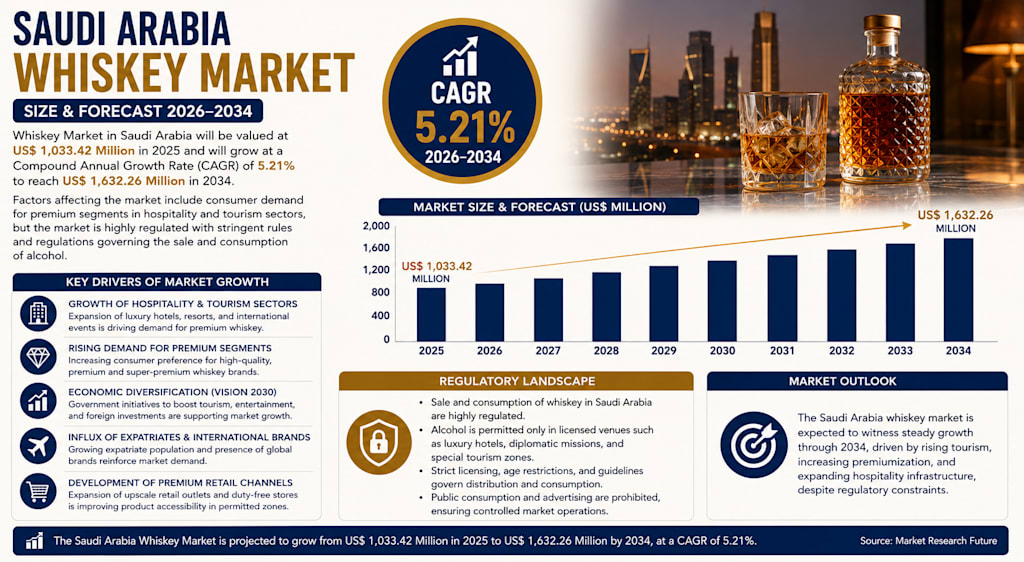
According to Renub Research, the Saudi Arabia Whiskey Market is expected to grow from US$ 1,033.42 million in 2025 to US$ 1,632.26 million by 2034, expanding at a CAGR of 5.21% during the forecast period. Growth is being supported by the expansion of luxury tourism, premium hospitality projects, international business activity, and controlled retail channels.

Understanding Saudi Arabia’s Unique Whiskey Market
Unlike most global whiskey markets, Saudi Arabia operates under a highly regulated framework that strictly controls alcohol consumption and distribution.
Alcohol is not freely available through traditional retail channels. Instead, demand is concentrated within highly specific and legally permitted environments that serve international communities and authorized visitors.
This makes Saudi Arabia's whiskey market unique compared to other countries where whiskey consumption is driven by mainstream consumer demand.
The market largely revolves around premium hospitality establishments, diplomatic missions, international business communities, and specialized distribution channels operating within regulatory boundaries.
Despite these limitations, the country's increasing global integration and growing tourism ambitions are creating carefully structured opportunities within the premium beverage segment.
Luxury Tourism Expansion Supports Market Growth
One of the strongest drivers behind the Saudi Arabia whiskey market is the rapid expansion of luxury tourism.
Vision 2030 has transformed tourism into a major pillar of the Saudi economy. Large-scale developments such as NEOM, The Red Sea Project, Qiddiya, Diriyah Gate, and numerous luxury resort initiatives aim to position Saudi Arabia as a leading global tourism destination.
These projects are designed to attract affluent international travelers who expect world-class hospitality experiences similar to those offered by leading global tourism destinations.
Premium hotels, luxury resorts, and international hospitality brands often cater to guests accustomed to premium food and beverage offerings within legally approved environments.
As luxury tourism infrastructure continues to expand, demand for premium hospitality services is expected to contribute positively to the whiskey market. According to tourism statistics, Saudi Arabia welcomed more than 122 million tourists during 2025, reflecting the rapid growth of the sector.
Vision 2030 Is Reshaping the Hospitality Industry
Saudi Arabia's Vision 2030 initiative has become a key catalyst for hospitality sector development.
The government continues investing billions of dollars in tourism infrastructure, entertainment venues, airports, transportation networks, hotels, and international events.
In one notable development, a US-Saudi investment initiative announced plans to build 50 hotels across the Kingdom by 2029, adding between 5,000 and 7,000 hotel rooms in major cities including Riyadh, Jeddah, and Dammam.
These investments are strengthening Saudi Arabia's ability to host international visitors, corporate travelers, and global events.
As premium hospitality standards continue rising, niche demand for internationally recognized luxury products such as whiskey may continue expanding within authorized environments.
Rising Expatriate Population Drives Demand
Saudi Arabia hosts a substantial expatriate workforce across numerous industries including oil and gas, finance, construction, healthcare, engineering, and technology.
Many expatriates originate from countries where whiskey consumption is culturally accepted and widely practiced.
While local regulations remain strict, expatriates working within diplomatic compounds, international communities, and authorized hospitality environments contribute significantly to market demand.
The country's continued economic diversification is attracting additional international talent, increasing the size of the expatriate population.
As foreign investment and multinational business activity expand, expatriate-driven demand is expected to remain an important contributor to market growth.
International Business Travel Creates Opportunities
Saudi Arabia's emergence as a global business hub is generating increased international travel activity.
Major projects, foreign direct investment initiatives, global conferences, and multinational corporate partnerships continue attracting business travelers from around the world.
International executives and corporate visitors often utilize premium hospitality services during their stay.
Luxury hotels, executive lounges, and specialized hospitality venues serving foreign guests represent key consumption channels for premium whiskey products.
The Kingdom's growing role in global commerce and investment is expected to strengthen this demand segment over the coming years.
Controlled Retail Channels Support Market Activity
Controlled retail and duty-free channels represent another important driver of market growth.
As international air travel increases, airports such as Riyadh, Jeddah, and Dammam continue expanding their infrastructure and services.
Duty-free retail operations serve eligible international travelers while complying with regulatory requirements.
These channels provide access to globally recognized whiskey brands within tightly regulated environments.
Modern airport development and growing passenger traffic create opportunities for premium beverage sales among international travelers.
Reports indicating future expansion of controlled alcohol retail channels further highlight evolving market dynamics.
Premium Whiskey Continues to Dominate Consumer Preferences
Premium whiskey remains one of the most important segments within Saudi Arabia's niche market.
Consumers within authorized environments typically seek high-quality products associated with heritage, craftsmanship, and global brand recognition.
Premium whiskey brands benefit from strong reputations, established quality standards, and widespread international appeal.
Luxury hotels, executive hospitality venues, and diplomatic circles frequently prioritize premium offerings to meet the expectations of international guests.
As luxury tourism and business travel continue expanding, demand for premium whiskey products is expected to remain strong.
Super Premium Whiskey Targets Elite Consumers
The super premium whiskey segment caters to a highly specialized audience.
This category includes rare, aged, limited-edition, and luxury whiskey brands positioned as status symbols and exclusive experiences.
Demand primarily originates from diplomats, high-net-worth individuals, senior executives, and affluent international travelers.
Consumption occurs almost exclusively within private settings, luxury hospitality environments, and diplomatic facilities.
Although the customer base remains limited, super premium whiskey generates significant value due to its high pricing and luxury positioning.
Growing interest in luxury experiences may continue supporting this segment's development.
Scotch Whiskey Holds Strong Brand Recognition
Scotch whiskey remains one of the most recognized and respected categories within the Saudi market.
Its reputation for quality, tradition, and craftsmanship has made it a preferred choice among international consumers.
Luxury hotels and premium hospitality establishments frequently feature Scotch whiskey due to strong brand awareness and global consumer familiarity.
The wide variety of flavor profiles available across single malts, blended Scotch, and premium expressions further strengthens its appeal.
Among expatriates and international visitors, Scotch continues to enjoy a particularly strong reputation.
American Whiskey Gains Popularity
American whiskey, including bourbon and Tennessee whiskey, has also established a presence within the market.
Known for its smoother, sweeter flavor profiles, American whiskey appeals to many international consumers and hospitality operators.
Its popularity among North American expatriates and business travelers contributes to steady demand within authorized channels.
Global marketing efforts and strong brand recognition continue supporting the segment's visibility.
As luxury hospitality offerings become more diverse, American whiskey is expected to remain an important category.
Offline Distribution Dominates Sales
Due to regulatory restrictions, offline channels remain the dominant distribution method in Saudi Arabia's whiskey market.
Sales occur primarily through highly controlled environments such as diplomatic compounds, authorized hospitality venues, luxury hotels, private clubs, and select duty-free channels.
Traditional retail stores and conventional alcohol sales networks are not available.
As a result, hospitality establishments play a critical role in maintaining market activity.
The continued expansion of premium tourism infrastructure is expected to strengthen the importance of these offline channels.
Riyadh Emerges as a Key Market Hub
Riyadh remains one of the most significant centers for whiskey consumption within Saudi Arabia's authorized market framework.
As the Kingdom's political, financial, and business capital, Riyadh hosts numerous multinational corporations, government institutions, diplomatic missions, and international organizations.
The city's expanding luxury hospitality sector supports demand from foreign executives, diplomats, and international visitors.
Vision 2030 investments continue driving hotel construction, conference facilities, and tourism development throughout Riyadh.
These factors position the city as an important contributor to market growth.
Jeddah Benefits from Tourism and International Connectivity
Jeddah plays a unique role due to its status as a major commercial center and gateway to Saudi Arabia.
The city welcomes substantial numbers of international visitors, business travelers, and religious tourists.
Luxury hotels, waterfront developments, and hospitality projects continue expanding as part of broader tourism development efforts.
The growth of premium hospitality infrastructure contributes to demand within legally authorized consumption environments.
Jeddah's international orientation makes it one of the Kingdom's most important hospitality markets.
Dammam and Dhahran Support Business-Driven Demand
Dammam and Dhahran contribute to market activity through their strong links to the energy industry.
These cities host major oil and gas operations, multinational corporations, and large expatriate communities.
International business activity generates demand for premium hospitality services catering to foreign professionals and executives.
Although the market remains highly regulated, these economic centers continue supporting niche consumption within approved environments.
Their importance is expected to grow alongside ongoing industrial and energy sector investments.
Strict Regulations Remain the Biggest Challenge
Despite positive growth prospects, regulatory restrictions remain the most significant challenge facing the Saudi Arabia whiskey market.
Alcohol consumption, distribution, marketing, and retailing are subject to strict legal controls.
These regulations significantly limit consumer access and prevent widespread commercial expansion.
Unlike most international markets, demand is confined to a relatively small and specialized audience.
Any market growth must occur within carefully regulated frameworks that comply with national laws and cultural expectations.
Cultural Factors Limit Domestic Consumption
Cultural and social norms also create limitations for market expansion.
Alcohol consumption is not part of mainstream Saudi culture, resulting in a relatively small domestic consumer base.
Most demand originates from expatriates, diplomats, international visitors, and hospitality operators rather than local consumers.
Advertising and promotional activities related to alcoholic beverages also face significant restrictions.
These factors reduce opportunities for mass-market development and keep the industry focused on niche segments.
Competitive Landscape Remains Premium-Focused
Competition within the Saudi whiskey market centers primarily on internationally recognized premium brands.
Leading producers focus on maintaining strong relationships with hospitality operators, luxury hotels, and authorized distribution channels.
Brand reputation, heritage, product quality, and exclusivity remain important competitive differentiators.
As premium tourism continues expanding, suppliers are expected to emphasize luxury positioning and premium experiences rather than volume-driven growth strategies.
Final Thoughts
Saudi Arabia's whiskey market occupies a unique position within the global alcoholic beverage industry. While strict regulations and cultural factors limit mainstream consumption, growing tourism, luxury hospitality development, international business activity, and expatriate demand continue creating opportunities within authorized channels.
Vision 2030 initiatives are transforming Saudi Arabia into a major global destination for tourism, investment, and business, indirectly supporting demand for premium hospitality services and internationally recognized luxury products.
Although regulatory constraints will continue shaping the market's evolution, the sector is expected to benefit from ongoing investments in hospitality infrastructure, premium tourism projects, and international connectivity.
With the market projected to grow from US$ 1,033.42 million in 2025 to US$ 1,632.26 million by 2034, Saudi Arabia's whiskey market is poised for steady growth within its highly specialized and carefully regulated environment.
About the Creator
Enjoyed the story? Support the Creator.
Subscribe for free to receive all their stories in your feed.
Comments
There are no comments for this story
Be the first to respond and start the conversation.