
Will Russia’s Wine Market Reach US$ 16.41 Billion by 2034 as Premiumization and Domestic Vineyard Expansion Reshape the Industry?
Rising consumer interest in premium wines, expanding domestic wine production, growing wine culture, and supportive government initiatives are driving steady growth in Russia’s evolving wine market.

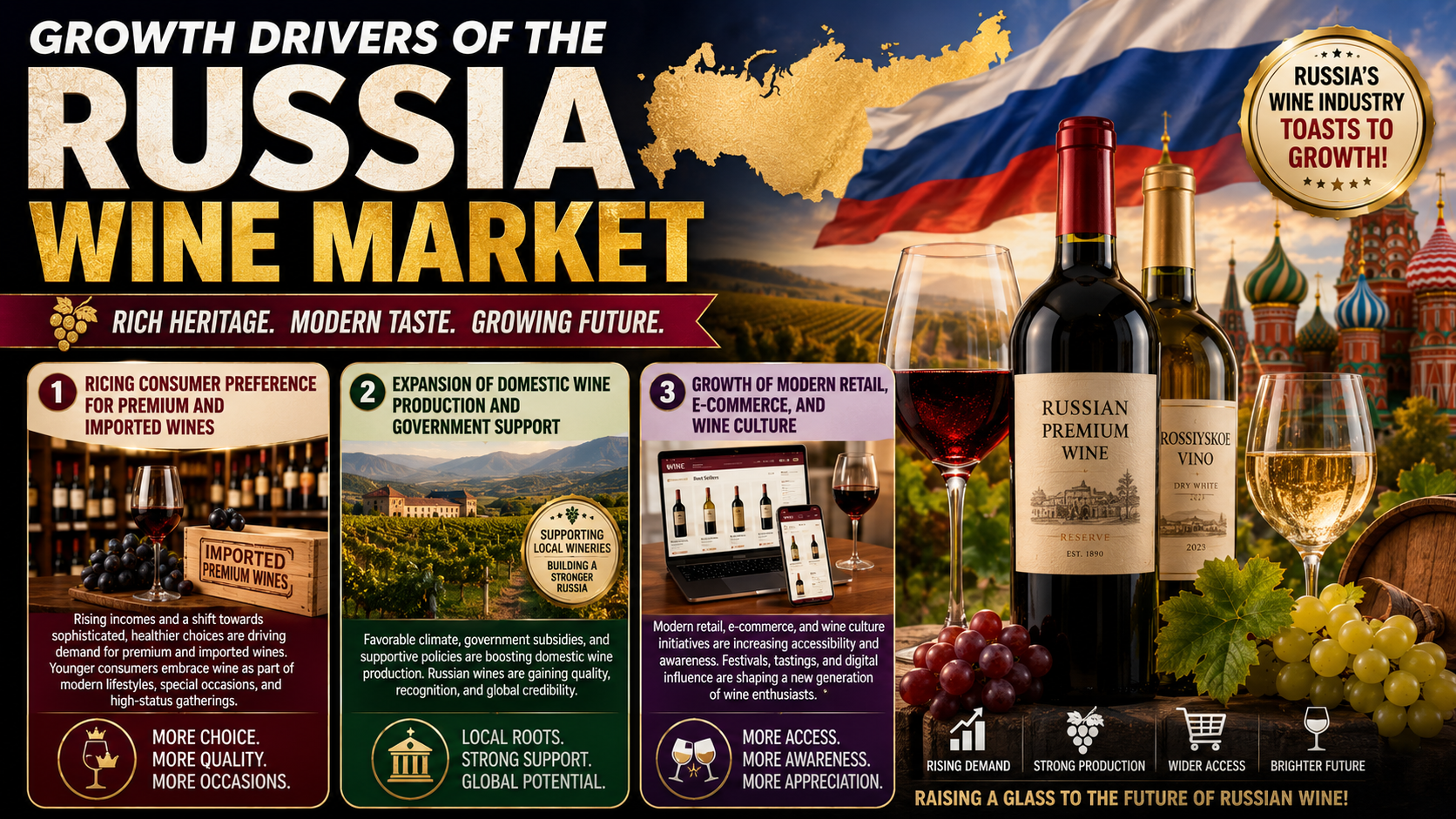
The Russian wine industry is undergoing a significant transformation as consumers increasingly embrace wine as part of their lifestyle, dining culture, and social experiences. Traditionally dominated by spirits consumption, Russia has witnessed a gradual shift toward wine, driven by changing consumer preferences, rising disposable incomes, urbanization, and growing appreciation for premium alcoholic beverages.
Domestic wine production has also expanded substantially over the past decade. Investments in vineyards, modern winemaking technologies, and government support have strengthened the competitiveness of Russian wine producers. Regions such as Krasnodar Krai, Crimea, Dagestan, and Rostov have emerged as important wine-producing centers, helping reduce reliance on imports while elevating the reputation of locally produced wines.
At the same time, wine tourism, retail modernization, and consumer education initiatives are contributing to a more sophisticated wine culture throughout the country. As consumers become increasingly knowledgeable about wine varieties, production methods, and regional origins, demand for premium and specialty wines continues to rise.
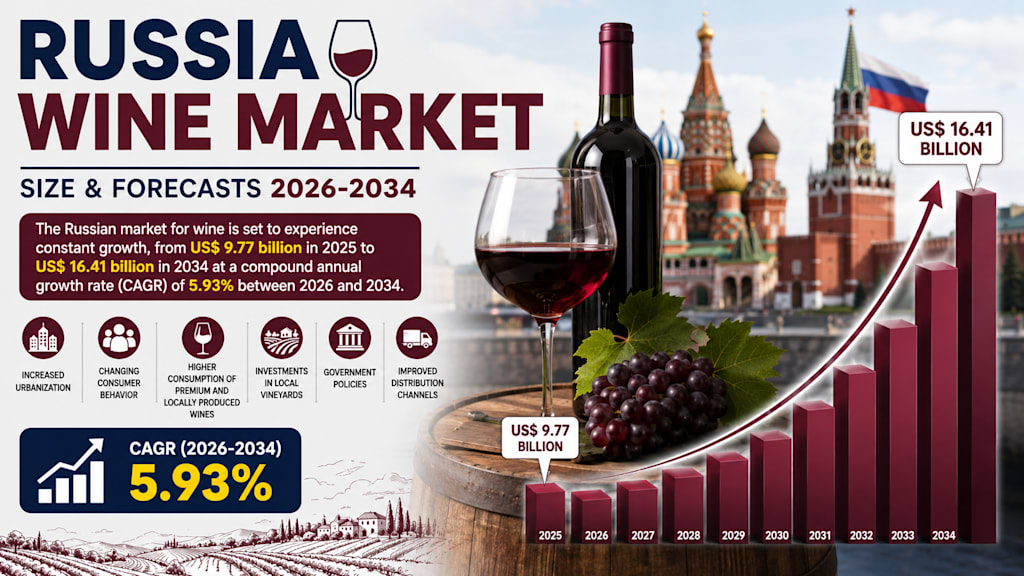
According to Renub Research, the Russia Wine Market is expected to grow from US$ 9.77 billion in 2025 to US$ 16.41 billion by 2034, expanding at a CAGR of 5.93% during 2026–2034. Growth is being supported by rising urbanization, premiumization trends, expanding domestic wine production, and improvements in retail and distribution infrastructure.
Wine Consumption Continues to Evolve in Russia
Wine has become increasingly integrated into Russian social and culinary traditions.
Consumers are gradually moving away from heavy spirits consumption and incorporating wine into everyday dining, celebrations, business gatherings, and social events.
Wine is commonly paired with Russian cuisine, including meat dishes, seafood, cheeses, and traditional regional specialties.
Growing exposure to international food culture, travel experiences, and digital media has further increased consumer awareness of wine varieties and consumption occasions.
As a result, wine is increasingly viewed not only as an alcoholic beverage but also as a lifestyle product associated with sophistication, quality, and cultural appreciation.
This evolution in consumer behavior continues supporting market expansion across multiple segments.
Domestic Vineyard Expansion Strengthens Production
One of the most important developments within the Russian wine industry has been the expansion of domestic vineyards.
Russia has significantly increased its vineyard acreage in recent years, reflecting long-term commitments to strengthening local wine production.
The country currently has more than 110,000 hectares planted with grapes, including approximately 86,400 hectares of fruit-bearing vineyards. Additional vineyard expansion is planned across key wine-producing regions.
Regions such as Krasnodar, Crimea, Dagestan, and the Chechen Republic offer favorable climatic conditions that support grape cultivation and high-quality wine production.
Investment in vineyard development not only increases domestic output but also helps establish a distinctive Russian wine identity.
These efforts are expected to play a critical role in supporting future market growth.
Government Support Encourages Industry Development
Government initiatives have contributed significantly to the growth of Russia’s wine sector.
Authorities have implemented various measures aimed at supporting domestic agriculture, encouraging local grape cultivation, and strengthening national wine production capabilities.
Policies promoting the use of locally grown grape varieties have helped increase demand for Russian wines while encouraging investment in vineyard infrastructure.
Financial incentives, subsidies, and agricultural development programs have further supported modernization efforts across the industry.
The government's strategy of increasing self-sufficiency within agricultural sectors continues benefiting domestic wine producers.
These initiatives are expected to enhance competitiveness and support long-term industry resilience.
Premiumization Is Changing Consumer Preferences
Premiumization has emerged as one of the strongest trends within the Russian wine market.
Consumers are increasingly willing to spend more on high-quality wines that offer superior taste, craftsmanship, and authenticity.
As disposable incomes rise and consumer education improves, premium wines are becoming more accessible to broader demographic groups.
Urban consumers, particularly in major cities such as Moscow and Saint Petersburg, increasingly view wine as a sophisticated alternative to traditional alcoholic beverages.
Premium wine consumption is often associated with fine dining, social gatherings, celebrations, and professional events.
This trend is creating opportunities for both domestic and imported wine producers.
Imported Wines Continue to Attract Interest
While domestic production is expanding, imported wines remain highly important within the Russian market.
Consumers continue to seek wines from established producing regions such as France, Italy, Spain, Georgia, and other international markets.
Imported products often benefit from strong brand recognition, heritage, and perceived quality.
Georgia became one of the leading suppliers of still and fortified wines to Russia, highlighting the continuing importance of international trade relationships.
The availability of imported wines broadens consumer choice and contributes to overall market sophistication.
As wine culture develops, demand for both imported and domestic premium products is expected to remain strong.
Wine Culture Gains Momentum
Wine appreciation is becoming increasingly widespread throughout Russia.
Wine festivals, tasting events, sommelier programs, educational workshops, and wine tourism initiatives are helping consumers develop deeper knowledge of wine products.
In November 2024, the Russian Wine Forum brought together industry participants, policymakers, and producers to discuss the future of the domestic wine sector.
Similarly, wine exhibitions and educational events continue promoting awareness of Russian wine regions and production techniques.
These initiatives encourage experimentation, increase consumer confidence, and strengthen demand for premium products.
As wine culture matures, market growth is expected to accelerate further.
Wine Tourism Creates New Opportunities
Wine tourism has become an increasingly attractive segment within the Russian wine industry.
Many wine-producing regions are investing in visitor experiences, tasting rooms, vineyard tours, culinary programs, and hospitality services.
These activities create additional revenue streams while helping consumers connect directly with wine producers.
Wine tourism also promotes regional development by attracting visitors, supporting local businesses, and strengthening brand awareness.
Industry stakeholders increasingly recognize tourism as an important tool for enhancing the visibility and reputation of Russian wines.
Continued investment in tourism infrastructure is expected to generate new growth opportunities.
Modern Retail Networks Improve Accessibility
The expansion of organized retail has significantly improved consumer access to wine products.
Supermarkets, hypermarkets, specialty wine retailers, and premium alcohol stores offer broader product selections than ever before.
Consumers can now explore a wide variety of domestic and imported wines across different price points and categories.
Retailers increasingly invest in staff training, product education, tasting events, and customer engagement initiatives.
Improved accessibility has contributed to greater consumer confidence and increased wine purchasing activity.
Modern retail channels remain an essential component of market growth.
Sparkling Wine Remains a Popular Category
Sparkling wine occupies a special place within Russian culture.
Traditionally associated with celebrations, holidays, weddings, and special occasions, sparkling wines continue to enjoy strong consumer demand.
Domestic producers have strengthened their presence in this segment by offering high-quality products at competitive prices.
At the same time, imported sparkling wines from France, Spain, Italy, and other countries maintain strong appeal among affluent consumers.
In February 2024, Abrau-Durso introduced a premium sparkling wine called Cuvée Alexander II, showcasing the growing sophistication of Russia’s sparkling wine industry.
As premium celebrations and hospitality experiences continue growing, sparkling wine demand is expected to remain robust.
Red Wine Dominates Market Consumption
Red wine represents the largest segment within the Russian wine market.
Consumers appreciate red wine for its rich flavor profiles, compatibility with traditional cuisine, and perceived health benefits when consumed in moderation.
Domestic production of grape varieties such as Cabernet Sauvignon and Merlot has improved significantly.
Imported red wines also continue attracting strong demand among urban consumers seeking premium experiences.
The popularity of meat-based dishes within Russian cuisine further supports red wine consumption.
As consumer sophistication increases, demand for high-quality red wines is expected to remain strong.
Rosé Wine Experiences Rapid Growth
Rosé wine has emerged as one of the fastest-growing categories in Russia.
Younger consumers and female demographics increasingly favor rosé wines because of their refreshing taste, versatility, and contemporary image.
Rosé wines are commonly associated with casual dining, social gatherings, and summer occasions.
Domestic producers are expanding their rosé portfolios while experimenting with local grape varieties and innovative production techniques.
Marketing campaigns emphasizing lifestyle, elegance, and food pairing versatility continue supporting category growth.
As consumer preferences diversify, rosé wines are expected to gain further market share.
Dessert Wines Appeal to Niche Consumers
Dessert wines represent a specialized segment within the Russian wine market.
These products are often associated with gourmet dining experiences, luxury consumption, and traditional winemaking heritage.
Regions such as Crimea and the Black Sea area have long-standing traditions of producing fortified and dessert wines.
Consumers typically enjoy these wines alongside desserts or as after-dinner beverages.
Although the segment remains relatively niche, growing interest in gourmet food and premium culinary experiences supports steady demand.
Offline Distribution Maintains Dominance
Offline channels remain the primary method of wine distribution in Russia.
Consumers often prefer purchasing wine in physical retail locations where they can receive expert recommendations and evaluate products directly.
Supermarkets, hypermarkets, specialty stores, restaurants, hotels, and duty-free outlets continue accounting for the majority of sales.
Regulatory restrictions on online alcohol sales have helped maintain the dominance of traditional retail channels.
Retail modernization initiatives are improving inventory management, customer service, and product availability.
Offline distribution is expected to remain highly important throughout the forecast period.
Moscow Leads Wine Consumption
Moscow represents the largest and most influential wine market in Russia.
The city's large population, high disposable incomes, vibrant hospitality sector, and international orientation support strong demand for premium wines.
Consumers in Moscow tend to be early adopters of emerging wine trends and premium product categories.
Restaurants, luxury hotels, wine bars, and specialty retailers contribute significantly to market activity.
As Russia's economic center, Moscow continues playing a critical role in shaping national consumption patterns.
Saint Petersburg Supports Premium Growth
Saint Petersburg is another major contributor to Russia’s wine industry.
The city's strong tourism sector, cultural significance, and affluent consumer base support demand for premium and imported wines.
Wine-focused dining experiences, hospitality venues, and educational events are particularly popular among residents and visitors.
Saint Petersburg continues serving as an important market for premiumization and consumer experimentation.
Economic Volatility Remains a Challenge
Despite positive growth prospects, the Russian wine market faces challenges related to economic uncertainty.
Exchange rate fluctuations, inflation, and changing trade relationships can affect both production costs and consumer purchasing power.
Imported wines are particularly vulnerable to currency volatility and trade restrictions.
Economic pressures may encourage some consumers to shift toward lower-priced alternatives.
Maintaining affordability while preserving product quality remains an ongoing challenge for industry participants.
Regulations and Excise Duties Impact Industry Operations
Government regulations continue influencing market dynamics.
Alcohol producers and distributors must comply with taxation requirements, certification procedures, labeling standards, and marketing restrictions.
High excise duties can increase production and distribution costs, affecting profitability across the value chain.
Advertising limitations may also restrict consumer outreach opportunities.
While these regulations support public health objectives, they can create operational challenges for market participants.
Final Thoughts
Russia’s wine market is entering a promising period of growth supported by changing consumer preferences, domestic vineyard expansion, premiumization trends, and increasing appreciation for wine culture.
Investments in local production, wine tourism, retail modernization, and consumer education are strengthening the industry's long-term foundation.
Although challenges related to regulation, taxation, economic volatility, and geopolitical uncertainty remain significant, the market continues demonstrating resilience and adaptability.
With the Russia wine market projected to grow from US$ 9.77 billion in 2025 to US$ 16.41 billion by 2034, the industry is well positioned to capitalize on rising consumer sophistication and the growing appeal of both domestic and international wines.
About the Creator
Enjoyed the story? Support the Creator.
Subscribe for free to receive all their stories in your feed.
Comments
There are no comments for this story
Be the first to respond and start the conversation.