
Will Russia’s Tequila Market Reach US$ 173.29 Million by 2034 as Premium Spirits and Cocktail Culture Gain Momentum?
Growing demand for imported premium spirits, expanding nightlife culture, rising cocktail consumption, and changing consumer preferences are driving steady growth in Russia’s tequila market.

Russia’s alcoholic beverage landscape has undergone significant changes over the past decade as consumers increasingly seek premium drinking experiences and diversify beyond traditional spirits. While vodka remains deeply embedded in Russian culture, growing exposure to international lifestyles, global travel, and evolving consumer preferences have encouraged the adoption of new beverage categories.
Among these emerging categories, tequila has steadily gained popularity across major Russian cities. Once considered a niche imported spirit, tequila is now finding broader acceptance among urban consumers, hospitality venues, premium bars, restaurants, and younger demographics seeking unique and sophisticated drinking experiences.
The growing popularity of cocktail culture, nightlife entertainment, and international dining concepts has further strengthened tequila's position within Russia’s premium spirits segment. As consumers become more adventurous and knowledgeable about imported alcoholic beverages, tequila continues to benefit from rising demand across multiple market segments.
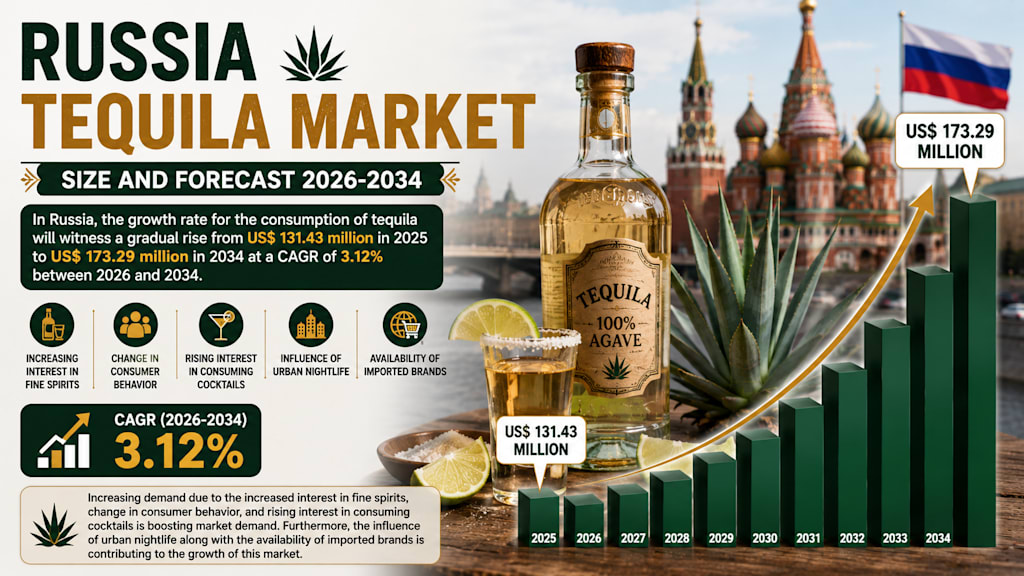
According to Renub Research, the Russia Tequila Market is expected to grow from US$ 131.43 million in 2025 to US$ 173.29 million by 2034, registering a CAGR of 3.12% during 2026–2034. Rising interest in premium imported spirits, urban nightlife expansion, and growing cocktail consumption continue to support market growth.
Tequila Is Becoming More Popular Among Russian Consumers
Tequila has gradually evolved from a specialty imported spirit into a recognized premium beverage within Russia.
Produced from the blue agave plant and traditionally associated with Mexico, tequila is available in several varieties including Blanco, Reposado, Añejo, and Extra Añejo.
Consumers appreciate tequila for its distinctive flavor profile, versatility, and premium image.
Traditionally consumed as shots or paired with salt and lime, tequila has increasingly become an important ingredient in modern cocktails served throughout Russia's hospitality sector.
Its association with international culture, social occasions, and upscale nightlife has strengthened its appeal among younger generations and urban professionals.
As awareness of tequila categories and production methods continues to grow, demand is expected to expand further.
Premiumization Is Driving Market Growth
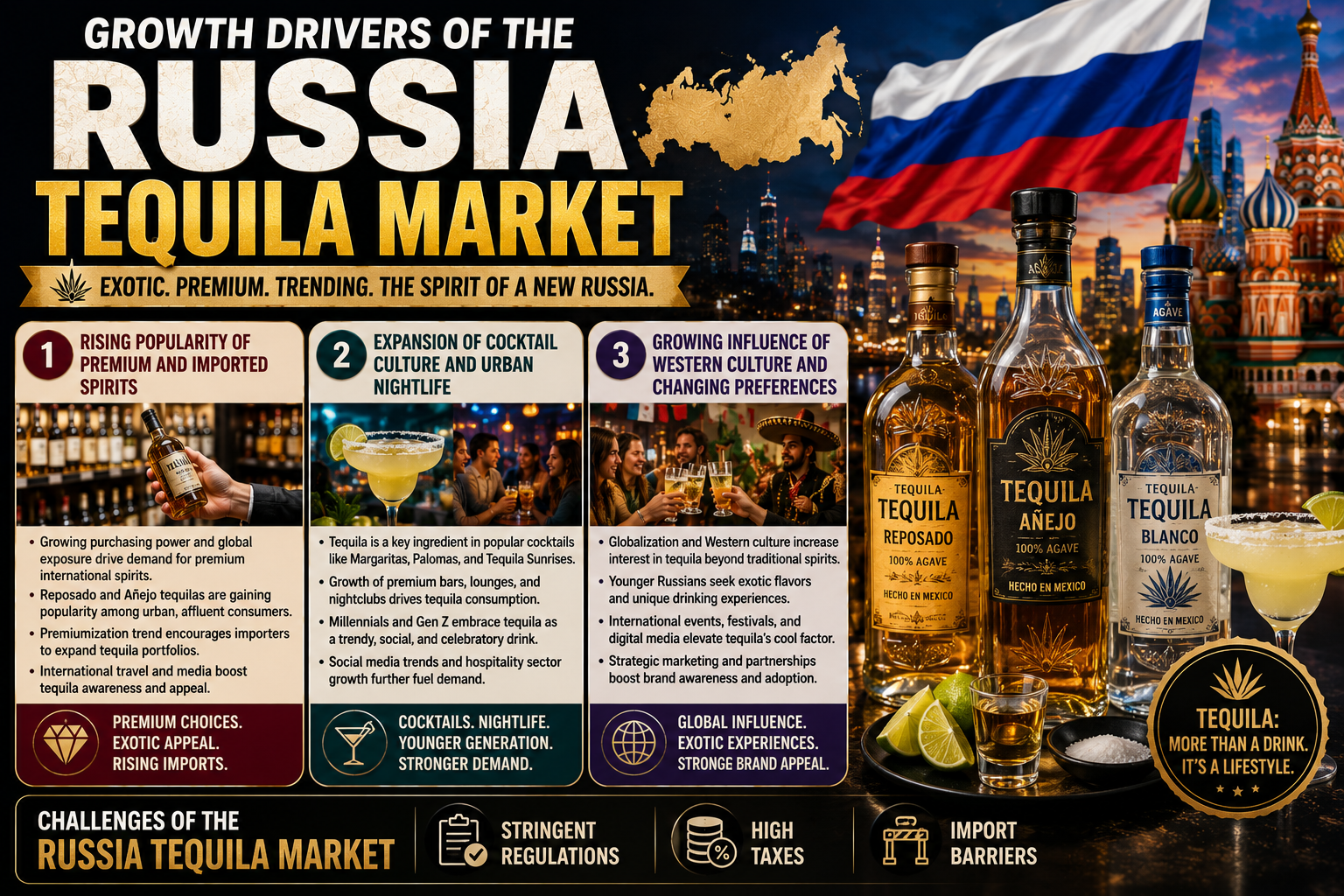
One of the most significant drivers of Russia’s tequila market is the growing consumer preference for premium alcoholic beverages.
As disposable incomes rise and consumers become more knowledgeable about international spirits, demand for high-quality imported products continues increasing.
Many Russian consumers increasingly seek beverages that offer authenticity, craftsmanship, and exclusivity.
Premium tequila products such as Reposado, Añejo, and Extra Añejo have gained particular popularity among affluent consumers and spirit enthusiasts.
These products are often positioned as luxury beverages suitable for sophisticated social occasions and fine dining experiences.
The premiumization trend continues encouraging importers and distributors to expand their tequila portfolios to meet evolving consumer expectations.
Urban Consumers Are Embracing International Spirits
Major Russian cities have become key drivers of tequila consumption.
Urban consumers tend to be more exposed to international travel, foreign cuisines, global media, and international lifestyle trends.
These influences have encouraged experimentation with a wider variety of alcoholic beverages beyond traditional spirits.
Moscow and Saint Petersburg in particular have emerged as important markets for imported tequila products.
Consumers in these cities increasingly view tequila as a fashionable and cosmopolitan beverage that reflects global drinking trends.
As urban populations continue expanding and consumer sophistication increases, tequila is expected to strengthen its presence within Russia’s alcoholic beverage sector.
Cocktail Culture Is Transforming Consumption Patterns
The rapid growth of cocktail culture has become one of the strongest catalysts supporting tequila demand.
Russian consumers increasingly enjoy cocktails in bars, lounges, restaurants, hotels, and entertainment venues.
Tequila serves as a key ingredient in many globally recognized cocktails including Margaritas, Palomas, Tequila Sunrises, and numerous contemporary mixology creations.
Bartenders and hospitality professionals continue developing innovative tequila-based cocktails that appeal to adventurous consumers.
The increasing popularity of craft cocktails has elevated tequila from a niche spirit to a mainstream premium beverage category.
As cocktail culture continues expanding, tequila consumption is expected to benefit significantly.
Expanding Nightlife Supports Market Development
Russia’s nightlife industry continues creating important growth opportunities for tequila brands.
Major cities feature vibrant hospitality sectors that include bars, clubs, restaurants, lounges, and entertainment venues catering to young professionals and affluent consumers.
These establishments frequently promote tequila through cocktail menus, tasting events, and premium beverage experiences.
Consumers often associate tequila with social gatherings, celebrations, and nightlife activities.
The expansion of urban entertainment districts continues increasing exposure to tequila products among new consumer groups.
As nightlife culture evolves, demand for premium imported spirits is expected to remain strong.
Western Cultural Influence Shapes Consumer Preferences
Globalization continues influencing alcohol consumption patterns throughout Russia.
Younger consumers increasingly adopt international drinking habits through social media, travel experiences, entertainment content, and exposure to foreign cuisines.
Tequila benefits from its strong association with contemporary global culture and premium lifestyle experiences.
International celebrations, themed events, music festivals, and restaurant concepts often feature tequila as a prominent beverage choice.
The spirit's reputation as a trendy and versatile drink resonates strongly with younger demographics.
These cultural influences continue supporting long-term market expansion.
Blanco Tequila Maintains Broad Consumer Appeal
Blanco tequila remains one of the most widely consumed tequila categories in Russia.
Known for its fresh, crisp flavor profile and strong agave character, Blanco tequila appeals to both new and experienced consumers.
Its versatility makes it particularly popular within cocktail applications.
Because it is generally more affordable than aged varieties, Blanco tequila serves as an accessible entry point for consumers exploring the category.
Bars and restaurants frequently utilize Blanco tequila in signature cocktails and classic mixed drinks.
Its strong position within the market is expected to continue throughout the forecast period.
Añejo Tequila Benefits From Premiumization
Añejo tequila has emerged as one of the fastest-growing premium segments within Russia.
Aged in oak barrels for at least one year, Añejo tequila develops complex flavors featuring notes of vanilla, caramel, oak, and spice.
Many consumers compare premium Añejo tequila to aged whiskey and cognac due to its sophistication and depth.
As Russian consumers increasingly seek luxury beverage experiences, Añejo tequila is attracting greater attention among affluent buyers.
Specialized tastings, premium bars, and luxury hospitality venues are helping increase awareness of this category.
The premiumization trend is expected to continue supporting segment growth.
100% Agave Tequila Gains Recognition
The 100% agave tequila category is becoming increasingly popular among quality-conscious consumers.
Unlike mixto tequila, which may contain added sugars, 100% agave tequila is produced exclusively from blue agave.
Consumers often perceive these products as more authentic, premium, and natural.
Growing interest in product transparency, craftsmanship, and ingredient quality is supporting demand for pure agave tequila varieties.
Educational campaigns, tasting programs, and enhanced product labeling are helping consumers better understand category distinctions.
As awareness improves, demand for premium 100% agave products is expected to rise.
Premium Tequila Continues Expanding
Premium tequila represents one of the most attractive growth opportunities within the Russian market.
Consumers increasingly associate premium spirits with status, sophistication, and elevated drinking experiences.
Luxury restaurants, upscale bars, boutique hotels, and exclusive nightlife venues frequently showcase premium tequila brands.
Brand storytelling, heritage marketing, artisanal production techniques, and premium packaging further enhance consumer appeal.
As disposable incomes rise and premium consumption trends strengthen, this segment is expected to maintain strong momentum.
Liquor Stores Play a Critical Distribution Role
Liquor stores remain among the most important distribution channels for tequila in Russia.
Consumers often prefer purchasing imported spirits through specialized retailers where they can access expert recommendations and broader product selections.
Premium tequila brands benefit from prominent shelf placement, in-store promotions, tasting events, and educational initiatives.
Modern retail formats have significantly improved product availability in major urban centers.
As consumer awareness grows, liquor stores will continue serving as key drivers of category expansion.
Off-Trade Channels Support Accessibility
Off-trade channels including supermarkets, hypermarkets, discount stores, and specialty retailers continue supporting market growth.
These outlets provide consumers with convenient access to a wide variety of tequila brands and product categories.
Retailers increasingly expand premium alcohol offerings to accommodate evolving consumer preferences.
Promotional campaigns, loyalty programs, and educational materials further encourage trial and repeat purchases.
The continued modernization of retail infrastructure is expected to strengthen tequila accessibility throughout Russia.
Moscow Remains the Largest Tequila Market
Moscow represents the most important regional market for tequila within Russia.
As the country’s financial, business, and cultural center, Moscow hosts a large concentration of affluent consumers, international restaurants, luxury hotels, and nightlife venues.
The city's cosmopolitan atmosphere encourages experimentation with imported alcoholic beverages.
Consumers in Moscow are often early adopters of global beverage trends and premium drinking experiences.
Strong hospitality activity continues supporting tequila consumption across multiple channels.
Saint Petersburg Supports Premium Spirit Demand
Saint Petersburg has also emerged as a significant market for tequila.
The city's tourism industry, cultural diversity, and vibrant restaurant scene create favorable conditions for imported spirits.
Consumers increasingly seek premium beverages that complement international dining experiences.
Bars and cocktail venues play a particularly important role in promoting tequila consumption throughout the city.
Saint Petersburg remains one of Russia’s most dynamic markets for premium alcohol products.
Central District Leads Regional Consumption
The Central Federal District, which includes Moscow and surrounding regions, accounts for a significant share of tequila demand.
Higher income levels, strong urbanization, and well-developed retail infrastructure contribute to market growth.
Consumers within the region demonstrate strong interest in imported spirits and premium beverage experiences.
The concentration of hospitality venues and entertainment facilities further strengthens tequila consumption.
The region is expected to remain the country's largest tequila market.
Volga and Urals Districts Offer Growth Opportunities
The Volga and Urals districts are emerging as promising growth regions.
Cities such as Kazan, Nizhny Novgorod, Yekaterinburg, and Chelyabinsk are experiencing rising demand for international alcoholic beverages.
Urbanization, growing disposable incomes, and expanding hospitality sectors are contributing to market development.
Although tequila remains less established than traditional spirits in these regions, increasing consumer curiosity continues creating opportunities for growth.
Regulatory Challenges Affect Market Expansion
Despite favorable demand trends, regulatory barriers remain a significant challenge.
Tequila imports are subject to customs duties, certification requirements, licensing procedures, and regulatory compliance standards.
These factors increase operational costs and may limit affordability for some consumers.
Advertising restrictions also make it more difficult for brands to build awareness and expand market presence.
Navigating regulatory requirements remains an ongoing challenge for importers and distributors.
Competition From Traditional Spirits Remains Intense
Vodka continues dominating Russia’s alcoholic beverage market.
Its deep cultural significance, affordability, and widespread availability create strong competition for imported spirits such as tequila.
Consumers may also choose whiskey, cognac, rum, and other premium beverages when seeking alternatives.
To succeed, tequila brands must continue differentiating themselves through quality, authenticity, cocktail versatility, and premium positioning.
Building long-term consumer loyalty will remain essential for sustaining growth.
Final Thoughts
Russia’s tequila market is gradually expanding as consumers embrace premium imported spirits, cocktail culture, and international drinking trends.
The growing popularity of nightlife experiences, urban entertainment, and luxury hospitality venues continues creating favorable conditions for market development.
While challenges related to regulations, import costs, economic volatility, and competition from traditional spirits remain significant, tequila’s premium image and versatility position it well for future growth.
With the market projected to increase from US$ 131.43 million in 2025 to US$ 173.29 million by 2034, Russia’s tequila industry is expected to benefit from rising consumer sophistication and the continued evolution of the country’s premium beverage landscape.
About the Creator
Enjoyed the story? Support the Creator.
Subscribe for free to receive all their stories in your feed.
Comments
There are no comments for this story
Be the first to respond and start the conversation.