
Will Russia’s Food Service Market Reach US$ 367.21 Billion by 2034 as Urbanization and Digital Dining Transform Consumer Habits?
Rising urbanization, booming food delivery platforms, growing demand for international cuisines, and evolving consumer lifestyles are fueling remarkable growth across Russia’s food service industry.

Russia’s food service industry has undergone a dramatic transformation over the past decade, evolving into one of the country’s most dynamic consumer sectors. Changing lifestyles, rising urbanization, increasing disposable incomes, and rapid digitalization have significantly altered how consumers purchase and consume food.
From quick-service restaurants and specialty coffee shops to cloud kitchens and premium dining establishments, Russia’s food service ecosystem continues expanding to meet the changing needs of modern consumers. The growing popularity of online food delivery, mobile ordering platforms, and international cuisine concepts has further accelerated industry growth.
Today, dining out is no longer viewed solely as a necessity but increasingly as a social experience, lifestyle choice, and form of entertainment. Consumers are seeking convenience, variety, affordability, and memorable culinary experiences, encouraging food service operators to continuously innovate and diversify their offerings.
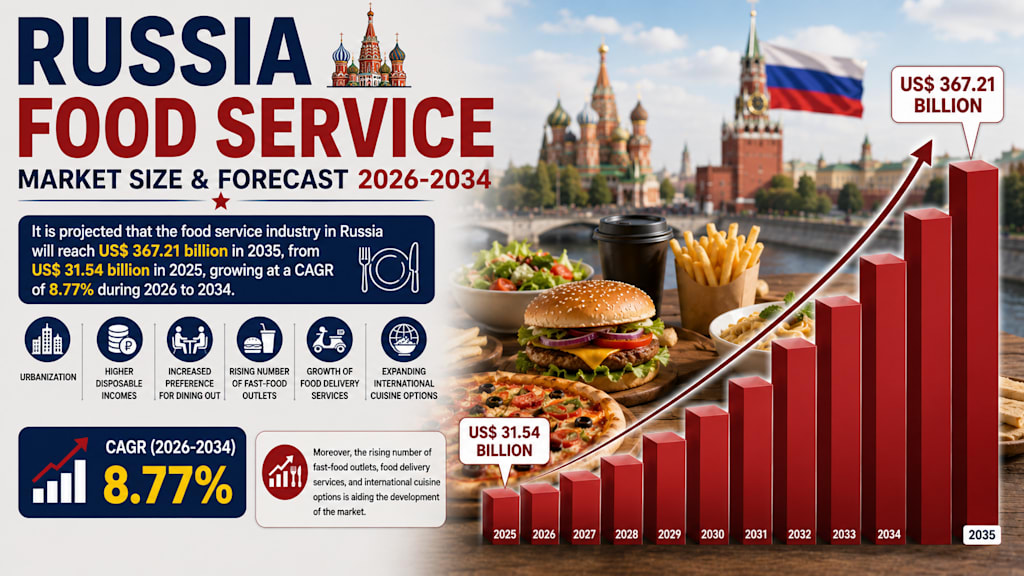
According to Renub Research, the Russia Food Service Market is projected to grow from US$ 31.54 billion in 2025 to US$ 367.21 billion by 2034, expanding at a CAGR of 8.77% during 2026–2034. The market is being driven by urbanization, growing consumer spending, expanding delivery platforms, and increasing demand for both local and international dining experiences.
Food Service Has Become a Core Part of Modern Russian Life
Food service encompasses a wide range of businesses involved in preparing, distributing, and delivering food and beverages to consumers.
The sector includes restaurants, cafés, bars, hotels, catering services, cloud kitchens, quick-service restaurants (QSRs), coffee shops, food delivery platforms, and institutional food providers.
As modern lifestyles become increasingly fast-paced, many consumers rely on food service establishments for convenience, social interaction, business meetings, and entertainment.
In Russia, the growing preference for convenience-oriented dining has transformed food service into a major component of daily life.
Consumers increasingly seek flexible dining solutions that fit their schedules while providing quality, variety, and affordability.
This shift continues creating opportunities across multiple food service categories.
Urbanization Continues to Drive Industry Expansion
Urbanization remains one of the strongest drivers of growth within Russia’s food service market.
As more people migrate to cities in search of employment opportunities and improved living standards, demand for convenient food solutions continues increasing.
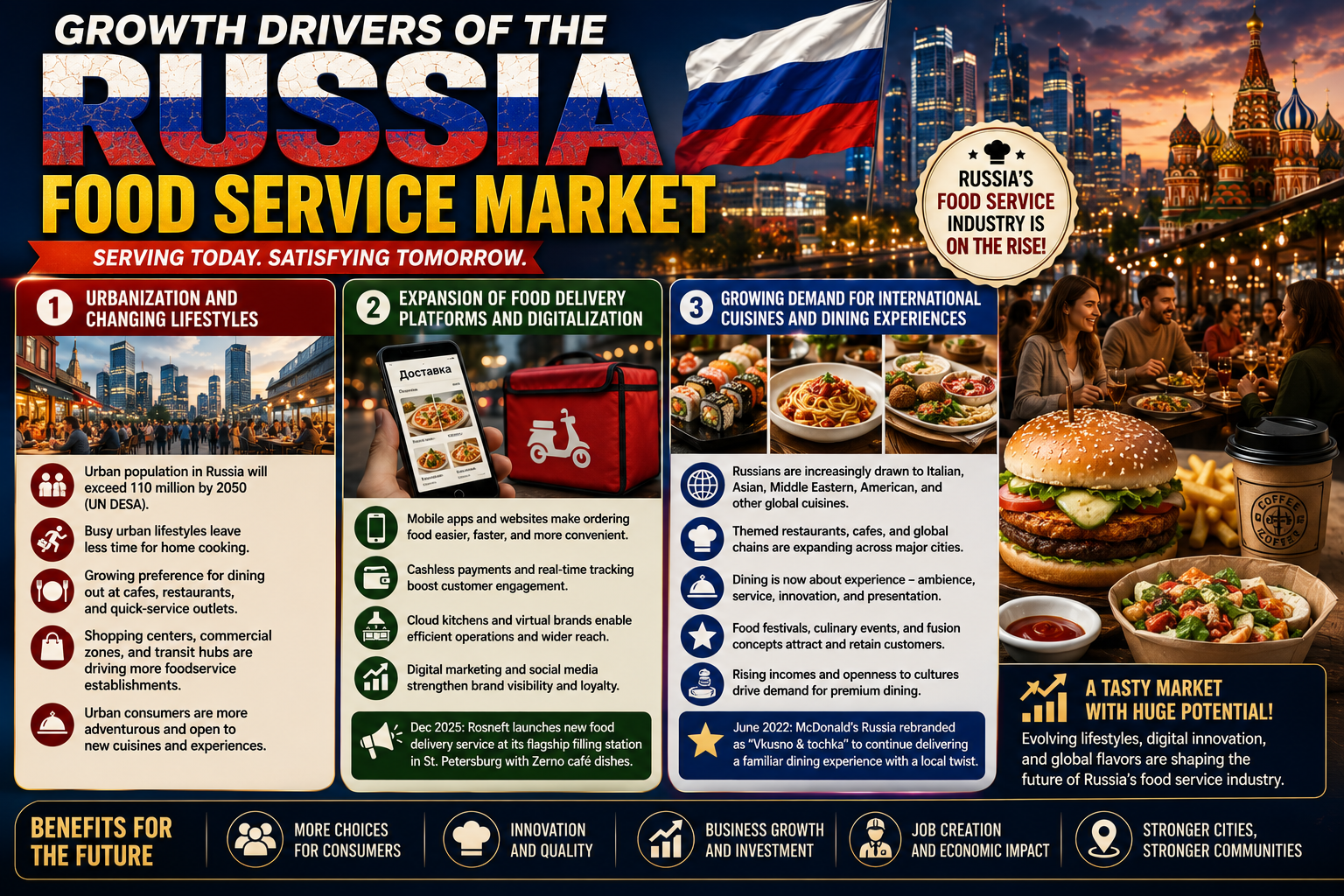
According to projections from the United Nations Department of Economic and Social Affairs, Russia’s urban population is expected to exceed 110 million people by 2050.
Urban consumers often have limited time for meal preparation and increasingly rely on restaurants, cafés, takeaway outlets, and food delivery services.
Large metropolitan areas such as Moscow and Saint Petersburg have become hubs for innovative dining concepts, international cuisines, and digital food service platforms.
As urbanization continues, food service demand is expected to remain robust.
Changing Lifestyles Encourage Dining Out
Modern consumer lifestyles are significantly influencing food service consumption patterns.
Longer working hours, dual-income households, busy schedules, and increased mobility have reduced the amount of time many consumers spend preparing meals at home.
Dining out has become a practical and enjoyable alternative.
Consumers increasingly view restaurants and cafés as social spaces where they can meet friends, conduct business discussions, celebrate events, or simply relax.
The growing emphasis on convenience and experience continues supporting demand across various food service segments.
Operators are responding by introducing innovative menus, flexible service formats, and enhanced customer experiences.
Food Delivery Platforms Are Revolutionizing the Industry
Digital food delivery services have become one of the most transformative forces within Russia’s food service market.
Consumers can now access a wide variety of cuisines through mobile applications and online ordering platforms without leaving their homes.
Convenience, speed, and user-friendly payment systems have significantly increased consumer adoption.
Restaurants increasingly rely on digital platforms to expand customer reach and generate additional revenue streams.
Food delivery has become especially popular among younger consumers, urban professionals, and families seeking convenience.
The digitalization of food service operations continues reshaping industry dynamics and creating new growth opportunities.
Technology Is Enhancing Customer Engagement
Beyond delivery services, technology is influencing virtually every aspect of the food service industry.
Restaurants increasingly utilize mobile applications, loyalty programs, customer analytics, and social media marketing to improve customer engagement.
Digital ordering systems help streamline operations while enhancing customer convenience.
Data-driven insights allow operators to personalize offerings and improve service quality.
Social media platforms have become powerful marketing tools that influence consumer preferences and drive brand visibility.
The integration of technology continues helping operators remain competitive in an increasingly crowded marketplace.
Cloud Kitchens Are Transforming Business Models
Cloud kitchens, also known as ghost kitchens, have emerged as one of the fastest-growing segments within Russia’s food service industry.
Unlike traditional restaurants, cloud kitchens operate exclusively for delivery and takeaway services without maintaining dine-in facilities.
This model significantly reduces overhead costs associated with real estate, front-of-house staff, and dining space maintenance.
Cloud kitchens enable businesses to launch multiple virtual brands from a single location while responding quickly to changing consumer preferences.
In 2024, numerous Russian food service operators introduced multi-concept cloud kitchens equipped with artificial intelligence tools to improve demand forecasting and delivery efficiency.
The continued growth of food delivery services is expected to further strengthen this segment.
International Cuisine Gains Popularity
Russian consumers are increasingly embracing international cuisines.
Italian, Asian, Middle Eastern, American, and Latin American food concepts continue attracting growing consumer interest.
Travel experiences, social media exposure, international tourism, and culinary content have broadened consumer tastes.
Restaurants offering authentic global flavors have expanded significantly across major cities.
Consumers increasingly seek variety and cultural experiences through food, encouraging operators to diversify menu offerings.
This growing openness to international cuisine remains an important catalyst for industry growth.
Dining Experiences Matter More Than Ever
Consumers are increasingly seeking memorable dining experiences rather than simply purchasing meals.
Atmosphere, service quality, presentation, storytelling, and culinary creativity have become important factors influencing restaurant selection.
Operators are investing heavily in unique concepts, themed venues, experiential dining, and innovative menus.
Food festivals, culinary events, chef collaborations, and experiential restaurant formats continue attracting consumers.
The emphasis on experience has elevated food service beyond basic consumption and created new opportunities for premium operators.
Quick Service Restaurants Continue Dominating
Quick Service Restaurants (QSRs) remain one of the largest and most influential segments within Russia’s food service industry.
Consumers appreciate QSRs for their affordability, speed, convenience, and accessibility.
Popular offerings include burgers, fried chicken, pizza, sandwiches, bakery products, and snack foods.
QSR operators benefit from strong foot traffic in shopping centers, transport hubs, business districts, and residential neighborhoods.
Digital ordering, mobile payments, and delivery partnerships have further strengthened the segment.
Continuous menu innovation and value-focused pricing strategies continue driving consumer demand.
Burger Segment Experiences Strong Growth
The burger category remains one of the fastest-growing areas within Russia’s food service market.
Younger consumers in particular have embraced burgers as a convenient and customizable meal option.
Both domestic and international brands continue introducing premium burgers featuring artisan ingredients, gourmet sauces, and unique flavor combinations.
In 2024, several burger chains expanded their menus with plant-based and hybrid meat burgers to address growing consumer interest in health-conscious and sustainable dining options.
The segment is expected to maintain strong momentum throughout the forecast period.
Meat-Based Cuisine Maintains Cultural Importance
Traditional meat-based dishes continue playing a central role within Russian food culture.
Popular menu items such as shashlik, pelmeni, grilled meats, and regional specialties remain highly sought after.
Consumers increasingly seek high-quality ingredients, authentic preparation methods, and premium dining experiences.
Restaurants specializing in traditional meat dishes continue benefiting from strong domestic demand.
At the same time, fusion concepts combining traditional Russian cuisine with international influences are gaining popularity among younger demographics.
This blend of tradition and innovation continues supporting segment growth.
Specialty Coffee and Tea Shops Flourish
Specialty coffee and tea shops have become increasingly important within Russia’s food service landscape.
Consumers increasingly value premium beverages, unique brewing methods, and café environments that support social interaction and remote work.
Specialty coffee shops serve as gathering spaces for professionals, students, entrepreneurs, and urban consumers.
Demand for exotic teas, artisanal coffee blends, and customized beverage experiences continues growing.
The rebranding of Starbucks operations into Stars Coffee helped strengthen local competition and expand the specialty coffee market.
The café segment remains one of the industry's most innovative categories.
Bars and Pubs Continue Attracting Consumers
Bars and pubs represent a vibrant component of Russia’s food service sector.
Consumers increasingly seek venues that combine beverages, entertainment, social experiences, and dining options.
The popularity of craft beer, signature cocktails, live music, and themed concepts continues driving visitation.
Urban consumers often view bars and pubs as important social destinations.
Operators differentiate themselves through unique drink offerings, ambiance, events, and customer experiences.
This segment continues benefiting from changing social habits and increasing demand for experiential entertainment.
Chained Outlets Strengthen Market Presence
Chained outlets play a critical role in Russia’s food service market.
Consumers often trust established brands because of their consistency, quality standards, and recognizable offerings.
Franchise models have enabled rapid expansion across multiple cities and regions.
Chains benefit from economies of scale, strong marketing capabilities, and standardized operating procedures.
Leading brands continue investing in digital technologies, menu innovation, and customer loyalty programs.
As competition intensifies, chain operators are expected to remain highly influential.
Moscow Leads Food Service Consumption
Moscow remains the largest and most advanced food service market in Russia.
The city’s large population, high disposable incomes, vibrant business environment, and international orientation create exceptional opportunities for operators.
Consumers in Moscow tend to be early adopters of new dining trends and international food concepts.
The city hosts a wide variety of establishments ranging from luxury restaurants to cloud kitchens and quick-service outlets.
Strong tourism activity further contributes to food service demand.
Moscow is expected to remain the industry's most important growth center.
Saint Petersburg Supports Premium Growth
Saint Petersburg represents another major food service market.
The city’s rich cultural heritage, tourism industry, and cosmopolitan population support strong demand for restaurants, cafés, and specialty dining concepts.
International cuisines, boutique cafés, and premium dining experiences are particularly popular.
Tourism-related spending contributes significantly to industry revenues.
The city continues serving as a key destination for food service innovation and culinary experimentation.
Regional Markets Continue Expanding
Beyond Moscow and Saint Petersburg, cities such as Novosibirsk, Yekaterinburg, Kazan, Nizhny Novgorod, and Chelyabinsk are experiencing steady food service growth.
Urbanization, rising incomes, expanding retail infrastructure, and growing consumer awareness continue supporting market development.
International brands are gradually expanding into secondary cities while local operators strengthen regional presence.
These markets represent significant long-term growth opportunities for the industry.
High Operating Costs Create Challenges
Despite strong growth prospects, food service operators face several challenges.
Rental expenses, labor costs, utility bills, and food ingredient prices continue increasing.
Prime commercial locations in major cities often require substantial investment.
Operators must carefully manage expenses while maintaining product quality and customer satisfaction.
Profitability pressures are particularly significant for independent businesses and smaller operators.
Effective cost management remains critical for long-term success.
Economic Uncertainty Influences Consumer Spending
Economic volatility can significantly affect consumer behavior.
Inflation, currency fluctuations, and broader economic conditions influence disposable income levels and discretionary spending.
During periods of uncertainty, consumers may reduce restaurant visits or shift toward lower-cost dining alternatives.
Food service businesses must remain flexible and responsive to changing economic conditions.
Diversified pricing strategies and operational efficiency are increasingly important for maintaining competitiveness.
Final Thoughts
Russia’s food service market is entering an exciting period of expansion driven by urbanization, digital transformation, changing lifestyles, and evolving consumer tastes.
The growth of food delivery platforms, cloud kitchens, international cuisines, specialty cafés, and quick-service restaurants continues creating substantial opportunities across the industry.
Although challenges related to operating costs, economic uncertainty, and regulatory requirements remain, innovation and consumer demand continue supporting long-term growth.
With the market projected to grow from US$ 31.54 billion in 2025 to US$ 367.21 billion by 2034, Russia’s food service industry is well positioned to become one of the country’s most dynamic consumer sectors in the years ahead.
About the Creator
Enjoyed the story? Support the Creator.
Subscribe for free to receive all their stories in your feed.
Comments
There are no comments for this story
Be the first to respond and start the conversation.