
Will Australia’s Meat Snacks Market Reach US$ 326.12 Million by 2034 as High-Protein Diets and On-the-Go Lifestyles Fuel Demand?
Rising consumer preference for protein-rich snacks, growing health awareness, busy lifestyles, and continuous product innovation are driving strong growth in Australia's meat snacks market.

Australia's snacking culture is undergoing a significant transformation as consumers increasingly move away from traditional carbohydrate-heavy snacks and embrace healthier, protein-rich alternatives. Among the fastest-growing categories benefiting from this shift is the meat snacks market.
Products such as jerky, meat sticks, sausages, biltong, and salami have become increasingly popular among Australians seeking convenient, nutritious, and satisfying snack options. These products offer a combination of high protein content, portability, extended shelf life, and compatibility with modern dietary trends such as keto, paleo, and low-carbohydrate lifestyles.
As consumers prioritize wellness, fitness, and convenience, meat snacks are becoming a mainstream snacking choice across Australia. Product innovation, expanding retail availability, and premiumization trends are further supporting industry growth.
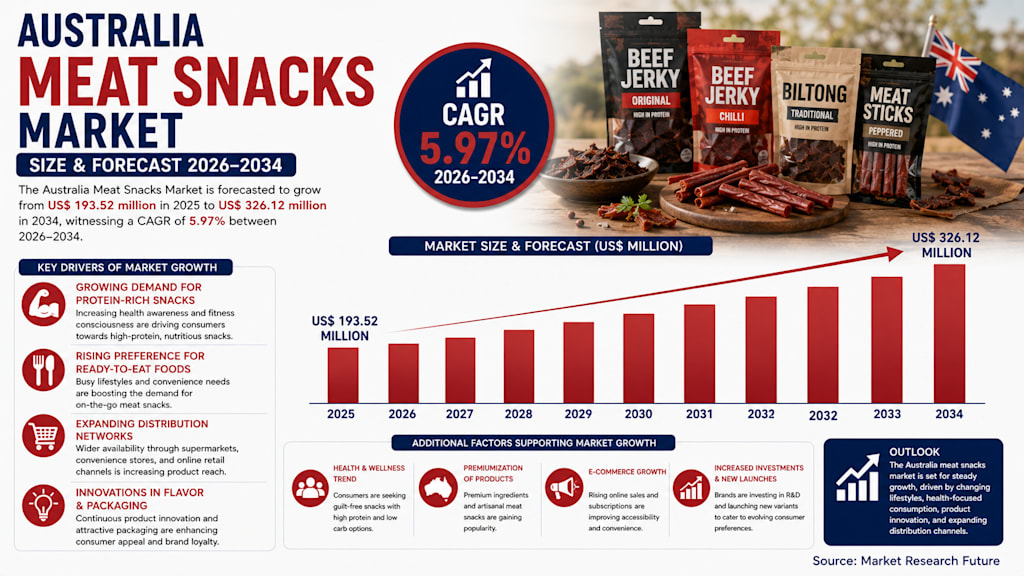
According to Renub Research, the Australia Meat Snacks Market is projected to grow from US$ 193.52 million in 2025 to US$ 326.12 million by 2034, registering a CAGR of 5.97% during 2026–2034. Rising demand for healthy snacks, expanding retail distribution, and continuous innovation in flavors and packaging continue to drive market expansion.

High-Protein Diets Are Reshaping Consumer Snacking Habits
One of the most important drivers behind the growth of Australia's meat snacks market is the increasing popularity of high-protein diets.
Consumers are becoming more conscious of the role protein plays in maintaining muscle health, supporting weight management, improving satiety, and sustaining energy levels throughout the day.
As a result, many Australians are replacing traditional snack foods such as chips, crackers, and sugary treats with protein-rich alternatives.
Meat snacks naturally align with this trend due to their high protein content and relatively low carbohydrate levels.
Products such as beef jerky, biltong, and meat sticks provide consumers with convenient nutrition while supporting fitness and wellness goals.
The popularity of ketogenic, paleo, and low-carb eating patterns has further strengthened demand for protein-based snack products.
As nutritional awareness continues to grow, meat snacks are expected to become an increasingly important category within Australia's broader snack food industry.
Health-Conscious Consumers Drive Market Expansion
Australian consumers are paying closer attention to ingredient quality, nutritional value, and food transparency than ever before.
This shift has encouraged meat snack manufacturers to introduce healthier formulations that appeal to wellness-focused buyers.
Many brands now offer products with reduced sodium, fewer preservatives, natural ingredients, and clean-label formulations.
Organic, grass-fed, hormone-free, and minimally processed meat snacks are also gaining traction among consumers seeking premium products.
Manufacturers are increasingly highlighting nutritional benefits, sourcing practices, and ingredient transparency on product packaging.
The growing emphasis on healthy eating continues to position meat snacks as a favorable alternative to conventional processed snack foods.
As consumer preferences evolve, demand for premium and nutritious meat-based snacks is expected to increase steadily.
Busy Lifestyles Increase Demand for Convenient Foods
Convenience remains one of the strongest drivers of meat snack consumption across Australia.
Modern consumers frequently juggle demanding work schedules, family responsibilities, travel commitments, and active lifestyles.
As a result, there is increasing demand for portable food products that can be consumed quickly without preparation.
Meat snacks offer a practical solution because they are easy to carry, require no refrigeration in many cases, and provide immediate nutritional value.
These products are commonly consumed during commutes, workplace breaks, sporting activities, hiking trips, road travel, and outdoor recreation.
The rise of convenience-oriented food purchasing behavior continues to support market growth.
As urbanization and fast-paced lifestyles persist, meat snacks are likely to remain a preferred option for consumers seeking quick and satisfying nutrition.
Product Innovation Keeps Consumers Engaged
Innovation has become a major competitive factor within Australia's meat snacks market.
Manufacturers continually develop new products, flavors, textures, and formulations to attract consumers and differentiate themselves in a competitive marketplace.
Traditional flavors continue to perform well, but consumers increasingly seek unique and adventurous taste experiences.
Popular flavor innovations include teriyaki, smoky barbecue, chili-lime, peppered beef, garlic herb, spicy blends, and international-inspired seasonings.
Product development is also focusing on premium ingredients and specialized formulations designed for health-conscious consumers.
Manufacturers are introducing organic, grass-fed, free-range, nitrate-free, and preservative-free products to address evolving consumer expectations.
Innovative packaging solutions that improve freshness and portability are further enhancing product appeal.
As brands continue investing in product development, innovation will remain a key growth driver for the industry.
Premium and Gourmet Segments Gain Momentum
Premiumization is becoming increasingly evident throughout Australia's meat snacks market.
Consumers are demonstrating a willingness to pay higher prices for products that offer superior quality, ethical sourcing, artisanal production methods, and distinctive flavor profiles.
Gourmet meat snacks are increasingly positioned as premium food products rather than simple convenience snacks.
Artisan producers are introducing handcrafted jerky, specialty cured meats, premium sausages, and unique flavor combinations designed to appeal to sophisticated consumers.
The premium segment benefits from broader trends favoring authenticity, craftsmanship, and culinary exploration.
As disposable incomes rise and consumer tastes become more refined, premium meat snacks are expected to capture a larger share of market demand.
Retail Expansion Improves Product Accessibility
Expanding retail distribution networks have significantly improved consumer access to meat snacks throughout Australia.
Supermarkets, hypermarkets, convenience stores, specialty food retailers, service stations, and online platforms now offer extensive selections of meat snack products.
Improved shelf visibility and broader product assortments have increased consumer awareness and trial rates.
Convenience stores remain particularly important because they cater directly to impulse purchases and on-the-go consumption patterns.
Retailers continue expanding shelf space dedicated to protein snacks as consumer demand increases.
Enhanced product accessibility is expected to remain a key contributor to future market growth.
E-Commerce Creates New Growth Opportunities
Online retail has emerged as an important distribution channel for meat snacks.
Consumers increasingly use e-commerce platforms to purchase specialty, premium, and niche food products that may not be readily available in physical stores.
Direct-to-consumer sales models enable brands to engage with customers more effectively while expanding geographic reach.
Online platforms also allow consumers to compare products, read reviews, and discover new brands.
Subscription services, promotional bundles, and targeted digital marketing campaigns are further supporting online sales growth.
As digital shopping continues expanding across Australia, e-commerce is expected to play an increasingly important role in market development.
Jerky Remains One of the Most Popular Categories
Jerky continues to be one of the most recognized and widely consumed meat snack formats in Australia.
Its combination of portability, long shelf life, high protein content, and variety of flavors makes it highly attractive to consumers.
Beef jerky remains the dominant product, although manufacturers are increasingly introducing alternatives made from pork, chicken, turkey, and specialty meats.
Advancements in processing techniques have improved texture, flavor consistency, and nutritional profiles.
The category continues benefiting from strong consumer awareness and broad retail availability.
As health-focused snacking trends continue, jerky is expected to maintain its leadership position within the market.
Meat Sticks Experience Rapid Growth
The meat sticks segment is witnessing strong growth due to its convenience and portability.
These products are typically made from beef, pork, or chicken and are cured, smoked, and packaged in easy-to-carry formats.
Meat sticks appeal to consumers seeking portion-controlled snacks that fit active lifestyles.
Their popularity has increased among fitness enthusiasts, travelers, office workers, and outdoor recreation participants.
Manufacturers continue introducing new flavors and healthier formulations to expand their customer base.
As demand for convenient protein sources increases, meat sticks are expected to remain one of the fastest-growing categories.
Sausage Snacks Continue to Attract Consumers
Snack-sized sausages remain a popular choice among Australian consumers.
Mini sausages, cocktail sausages, and cured meat products offer strong flavor profiles and satisfying textures that appeal to a broad audience.
Australia's strong meat production heritage and cultural familiarity with sausage products contribute to sustained demand.
Manufacturers are increasingly introducing low-fat, reduced-sodium, and premium formulations to attract health-conscious buyers.
The segment continues benefiting from product innovation and expanding distribution.
Organic Meat Snacks Gain Popularity
The organic meat snacks segment is becoming increasingly important as consumers prioritize food quality and sustainability.
Organic products are produced using livestock raised without synthetic hormones, antibiotics, or genetically modified feed.
Consumers concerned about food safety, animal welfare, and environmental sustainability are increasingly drawn to organic alternatives.
Premium pricing has not significantly deterred demand among affluent and health-conscious shoppers.
As awareness regarding sustainable food production continues to grow, organic meat snacks are expected to experience strong long-term growth.
Rising Raw Material Costs Create Challenges
Despite favorable growth prospects, the market faces several challenges.
One of the most significant issues involves fluctuations in the cost of raw materials such as beef, pork, and poultry.
Livestock production can be affected by drought conditions, feed costs, disease outbreaks, labor shortages, and broader economic factors.
Australia's exposure to climate variability can create supply chain disruptions that impact production costs.
Rising transportation, packaging, and operational expenses further increase pressure on manufacturers.
Maintaining product quality while controlling costs remains an ongoing challenge for industry participants.
Health Concerns and Regulatory Pressures Affect Growth
Health concerns regarding processed meat consumption represent another challenge facing the industry.
Some consumers remain cautious about sodium content, preservatives, additives, and potential health risks associated with processed foods.
Government regulations governing food safety, labeling requirements, and product formulations also contribute to compliance costs.
At the same time, plant-based snack alternatives are becoming increasingly popular among certain consumer groups.
In response, manufacturers are investing in healthier formulations that feature reduced sodium levels, natural ingredients, and clean-label positioning.
Successfully addressing health concerns will be important for sustaining long-term growth.
Convenience Stores Remain Critical Distribution Channels
Convenience stores play a crucial role in Australia's meat snacks market.
Their strategic locations in urban centers, transportation hubs, service stations, and high-traffic areas make them ideal outlets for impulse snack purchases.
Consumers frequently purchase meat snacks during commutes, travel, and outdoor activities.
Retailers continue expanding product offerings to include premium, organic, and health-focused options that appeal to evolving consumer preferences.
The convenience channel is expected to remain a major contributor to future sales growth.
Victoria Leads Market Innovation
Victoria remains one of Australia's most important markets for meat snacks.
Melbourne serves as a center for food innovation, premium food trends, and health-conscious consumer behavior.
Strong demand for gourmet, organic, and artisan products has encouraged manufacturers to introduce innovative offerings.
The state's vibrant retail environment and sophisticated consumer base continue influencing national market trends.
Victoria's emphasis on sustainability and quality ingredients further supports demand for premium meat snack products.
New South Wales Drives National Demand
New South Wales represents another major market due to its large population and advanced retail infrastructure.
Sydney plays a significant role in shaping consumer preferences and accelerating adoption of emerging food trends.
Busy lifestyles, increasing fitness participation, and growing demand for convenient nutrition continue driving sales.
Consumers increasingly view meat snacks as practical, protein-rich alternatives to traditional snack products.
The region remains an important growth engine for Australia's expanding meat snacks industry.
Final Thoughts
Australia's meat snacks market is benefiting from powerful consumer trends centered around health, convenience, nutrition, and premium food experiences.
The growing popularity of high-protein diets, increasing demand for portable snack solutions, and continuous product innovation are creating significant growth opportunities across the industry.
While challenges related to raw material costs, regulatory requirements, and changing consumer perceptions remain, manufacturers continue adapting through healthier formulations and premium product development.
With the market projected to grow from US$ 193.52 million in 2025 to US$ 326.12 million by 2034, Australia's meat snacks industry is well positioned for long-term expansion as consumers continue embracing protein-rich snacking options.
About the Creator
Enjoyed the story? Support the Creator.
Subscribe for free to receive all their stories in your feed.
Comments
There are no comments for this story
Be the first to respond and start the conversation.