
Why the US Cement Market Is Growing With Infrastructure and Low-Carbon Demand
The US cement market is expanding as infrastructure spending, housing demand, and the shift toward lower-carbon cement reshape construction materials across the country.

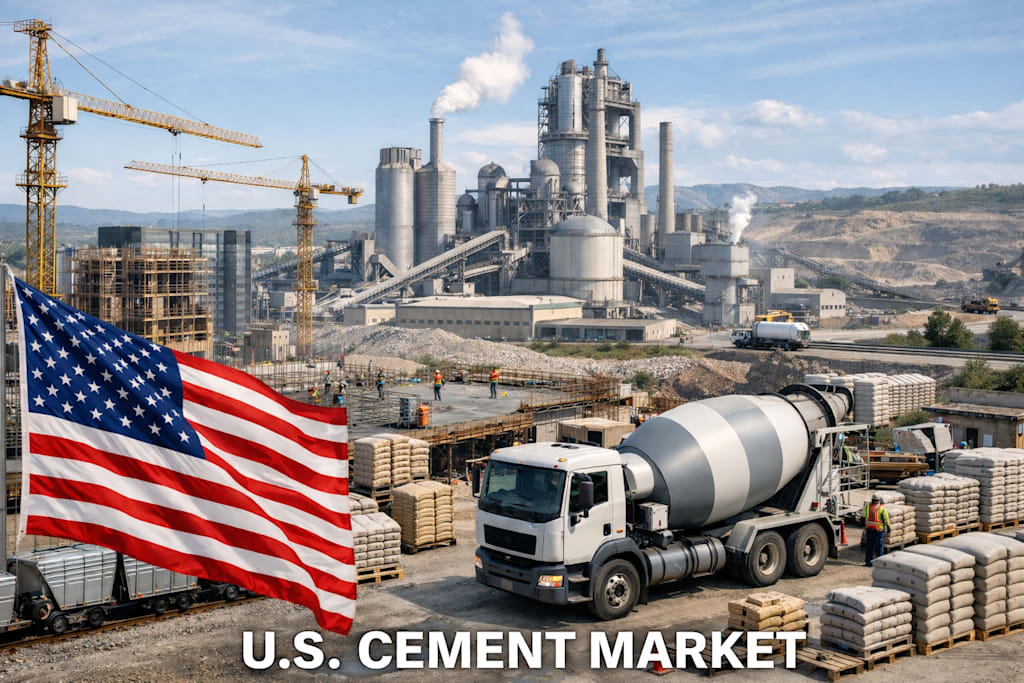
The cement industry has not received as much attention from the public as housing‚ roads and highways‚ and megaprojects‚ each of which the cement industry directly supports․ Currently‚ the cement market in the United States is still affected by older and newer trends at the same time: high spending on infrastructure projects‚ a continued shortage of housing‚ a boom in commercial construction‚ and a growing demand for alternatives with less carbon․ This has not only kept the demand strong‚ but also led to a change in the types of cement that are in demand․ According to IMARC Group‚ the US cement market was worth USD 105․86 billion in 2025‚ and is projected to reach USD 164․31 billion by 2034‚ growing at a CAGR of 4․86% from 2026 to 2034․
Federal infrastructure spending is one of the main drivers․ IMARC suggests that the Infrastructure Investment and Jobs Act (IIJA) was creating a long-term demand pipeline for roads‚ bridges‚ ports‚ and water systems‚ giving the market stronger multi-year visibility than is typical throughout a construction cycle․ According to the report‚ at 44․3% of total end-use demand in 2025‚ infrastructure is the largest end-use segment in the market․
Housing demand is also important: for IMARC‚ the continuing structural U․S․ housing deficit is a source of active residential construction activity‚ and hence further cement demand‚ for single family and multi-family dwellings․ Commercial and industrial construction‚ on the other hand‚ is an increasingly important part of the construction mix‚ as data centers‚ logistics facilities and semiconductor fabrication plants that require cement come to account for increasing amounts of the total․
Another important trend is the increased use of Portland-limestone cement‚ and blended low-carbon cements․ In 2025‚ IMARC finds that Portland cement will account for 52․6% of the market‚ while blended cement is the fastest-growing‚ with a CAGR of around 5․1%‚ which is expected to continue until 2034․ This change follows the passing of green public procurement rules‚ Environmental Product Declaration requirements for states such as California and New York‚ and the continuing call to reduce emissions from public and private infrastructure․
Which is especially important‚ because it suggests the market is no longer growing simply by volume‚ but also by a shift in product mix․ Cement manufacturers are being encouraged to deliver products and solutions that meet performance and decarbonization criteria and‚ as a result‚ the market is responding to both the construction market and decarbonization policy and procurement requirements․ The discussion of such trends by IMARC implies a rise in PLC adoption‚ and therefore also in green procurement mandates․
Regional markets matter too․ IMARC's report found the South continued to dominate the U․S․ cement market in 2025‚ with year-round construction and strong demand creating a 36․7% market share in Texas‚ Florida and Georgia․ The report noted that the South is the fastest-growing region in the country‚ with a compound annual growth rate (CAGR) of about 5․1%‚ and supports the concept of population shift toward the South and increased activity in construction․
IMARC also reported that in 2024‚ net imports accounted for 23% of U․S․ cement sales‚ indicating that U․S․ cement capacity is constrained․ Access to import terminals and delivery from producers to supply-constrained and high-growth coastal markets are currently the main logistics challenges․ Logistics decisions are increasingly important in the cement market because the United States domestic supply cannot meet U․S․ demand․
The environmental compliance costs‚ energy pricing volatility‚ cap on domestic capacity‚ and import pressure limit the potential of the market‚ according to IMARC․ Also highlighted are innovations in green cement and digital supply chain‚ and the CHIPS Act construction wave is driving a wave of industrial buildout‚ increasing demand․ That combination of pressure and opportunity is what makes the U․S․ cement market especially interesting: it is a mature industry‚ but one that is still being reshaped by policy‚ technology‚ and changing construction priorities․
The US cement market is interesting because it is right in the center of new infrastructure spending‚ housing demand‚ industrial demand‚ and the decarbonization of cement-based construction materials in an effort to reduce climate change․ Cement remains a commodity‚ but it is more complicated than it once was‚ and the forces shaping the market today might be as calculated as they have ever been․ This is my interpretation of the information on market drivers‚ segments and trends that IMARC provides․
About the Creator
michael matthew
I’m a market researcher passionate about understanding people, markets, and motivations. My work blends data analysis, consumer psychology, and strategic insight to help brands and businesses make informed, human-centered decisions.
Enjoyed the story? Support the Creator.
Subscribe for free to receive all their stories in your feed.
Comments
There are no comments for this story
Be the first to respond and start the conversation.