
Why the United States Stout Market Is Gaining Popularity in 2026
Growing craft beer culture, premiumization trends, flavor innovation, and increasing demand for unique beverage experiences are driving the expansion of the United States stout market.

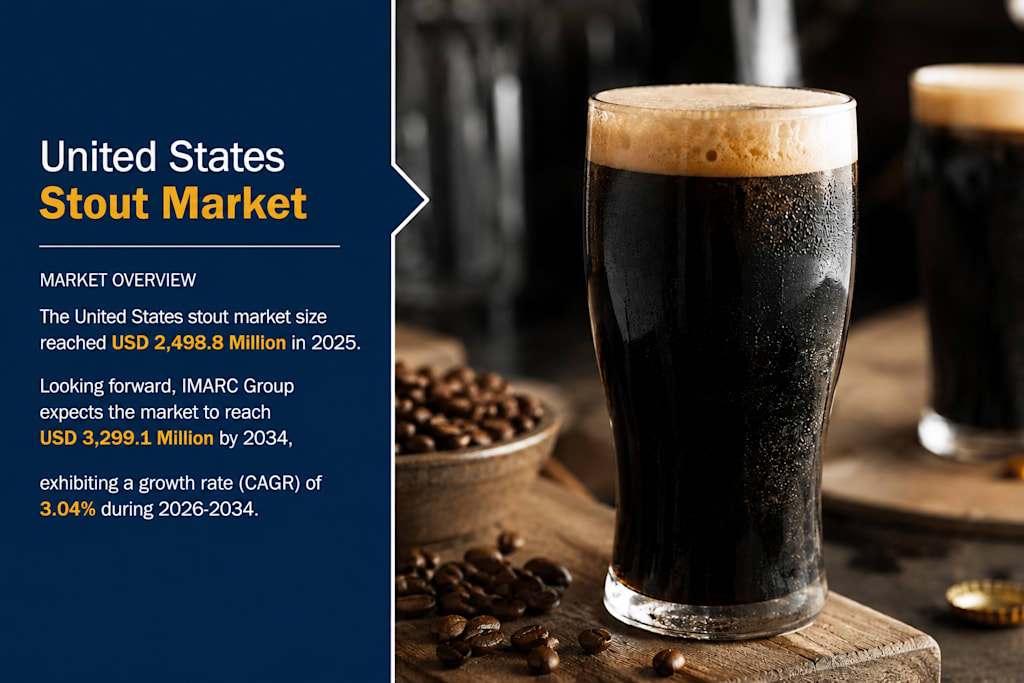
US stout market enjoying robust growth as drinkers crave high-quality and unique brews With its rich, dark color, roasted notes, and complex flavor profile, the stout beer segment is booming. Gone are the days of being relegated to the back of the bar, as stouts are now finding their rightful place among the more discerning, craft-seeking consumer set in America in 2026. Rising interest in high-end products, interesting flavor profiles, and the quest for unique and differentiating drinking experiences are some of the factors fueling the stout beer market expansion.
According to IMARC Group, United States stout market size was USD 2,498.8 Million in 2025, and is expected to reach USD 3,299.1 Million by 2034, exhibiting a CAGR of 3.04% during 2026-2034.
What Is Stout?
Traditionally, stout is brewed using roasted malts or roasted barley, which results in its distinctive dark hue and deep flavors. The distinctive flavor of coffee, cocoa, caramel, and toasted grain flavors gives stout an appealing, premium, and differentiated drinking experience. Popular stout varieties include: Dry stout Oatmeal stout Milk stout Imperial stout Coffee stout Chocolate stout Craft Beer Culture Is Driving Demand One of the primary market drivers is the expanding U.S. Craft beer industry.
Craft drinkers tend to prefer products that are distinctive and offer artisanal and superior taste.
These characteristics often allow for superior engagement, driving an increase in the demand for this segment. Premiumization Trends Are Supporting Growth Consumers increasingly consider premiumizing alcoholic beverage spending. The market has started taking off for such beverages such as luxury spirit categories and super-premium wines.
These products include a vast array of options that provide exclusivity, rarity and supreme quality. With premiumization of product preferences, the demand is set to fuel further growth, specifically concerning specialty stouts as brands capitalize on consumer’s willingness to shell out a higher sum. Flavor Innovation Is Expanding Consumer Interest Stouts appeal to consumers who are looking for a unique and interesting flavor that they can have with their meals or during an after dinner digestif.
With advancements in technology in recent years and micro breweries churning out flavor infused Stouts like chocolate and coffee stouts, the category has further cemented its foothold within a broader alcoholic beverage.
Seasonal Demand Is Boosting Sales Stouts are seasonal as well with the colder months and holiday festivities seeing increased consumption of these rich, heavy brews that offer comfort and satisfaction in winter as well as at year-end. This is one of the major reasons driving increased consumer purchasing, thereby boosting stout market growth across the United States in 2026. Food Pairing Trends Are Increasing Popularity One very important consideration for the growth of stouts in the US markets is the growth of the beverage and food pairing experience. Pairing is widely considered a high-end option with high-brow guests seeking authentic high quality experiences for a more relaxed meal, especially during holidays or special occasions as most of them enjoy the pairing of wine, scotch, and of course craft beer such as this.
Microbreweries and Independent Breweries Are Driving Innovation The United States is at forefront when it comes to the innovation being driven by microbreweries and smaller, independently run companies.
These breweries have innovated on existing styles of stouts by creating various infusions and additions such as chocolate or coffee, and offer unique flavor profiles that are appealing to a diverse customer base. These producers’ willingness to take risks in terms of flavors and brewing techniques continually provides an exciting and evolving market. Premium Packaging and Branding Are Enhancing Market Appeal Modern consumers are highly concerned with brand image and visual presentation of products.
While traditional Stouts do not have many eye-catching packaging designs in most cases, newage Breweries have certainly tried to take their packaging designs to a new level. With the recent increase in interest for the unique designs of craft Beer , the use of innovative and creative packaging and product labeling that highlights premiumization is steadily enhancing the value of Stouts. Rising Interest in Experiential Consumption Consumers are increasingly looking for memorable and shareable experiences instead of products and goods.
Craft beverage festivals, bar tours, and distillery visits can provide individuals with highly immersive experiences related to the beer-making and consumption process, which contribute significantly to increasing brand loyalty.
Such a shift in consumer preferences can help boost demand for unique, high-quality beverage options, including premium stouts which offer complexity and character. E-Commerce and Direct-to-Consumer Channels Are Expanding Reach Due to convenience and personalized services, online distribution channels are enabling consumers to access beverages previously difficult to acquire, and thereby contributing towards market growth. The proliferation of direct-to-consumer (DTC) models, supported by technological advancements, provides craft brewers with more direct engagement and expanded reach. By utilizing e-commerce and DTC platforms, breweries can directly interact with a wider range of consumers, promote specialty products and seasonal offerings, and cultivate stronger customer relationships.
Key Segments Driving Market Growth: Dry Stout Milk Stout Imperial Stout Flavored Stout (Coffee Stout, Chocolate Stout etc.)
Challenges Facing the Industry Several issues pose a risk to the market, including intense competition within the alcoholic beverage industry and a shift in consumer trends towards healthier beverages. Rising raw material costs for stouts, a highly variable regulatory landscape in the United States and supply chain disruption challenges in manufacturing and delivery processes also may impede market growth. Yet, the market shows promising growth with innovations in product flavors, ingredient developments, and ongoing premiumization trends supporting an positive futureoutlook for US stout.
Why the Market Matters in 2026 In 2026, the United States stout market continues its strong trajectory fueled by a growing appetite for higher quality and more distinct alcoholic beverages. Key drivers behind this growth include the ever-expanding craft beer culture, increased willingness of consumers to spend more on premium and unique products, an impressive array of flavored stouts, a rise in experiential food and drink opportunities, and consumers’ preference for handcrafted and artisanal offerings. All of these trends collectively signal the rising significance and growing popularity of stout within the American alcohol landscape.
Future Outlook The outlook for the United States stout market remains incredibly bright.
With continuous growth in the craft beer segment, effective premiumization strategies and flavor innovations coming from brewers, coupled with consumer interest in new experiences, expect this segment of the beer market to continue to soar for years to come. As American consumers continue to hunt for unique, artisanal and truly one-of-a-kind taste experiences from the beer that they drink, stout will undoubtedly solidify its place as one of the premier choices in the marketplace.
About the Creator
michael matthew
I’m a market researcher passionate about understanding people, markets, and motivations. My work blends data analysis, consumer psychology, and strategic insight to help brands and businesses make informed, human-centered decisions.
Enjoyed the story? Support the Creator.
Subscribe for free to receive all their stories in your feed.
Comments
There are no comments for this story
Be the first to respond and start the conversation.