
Why the United States Mushroom Market Is Growing With Plant-Based and Health-Focused Food Trends
The United States mushroom market is expanding as consumers embrace healthier diets, plant-based proteins, and more versatile ingredients across everyday meals.

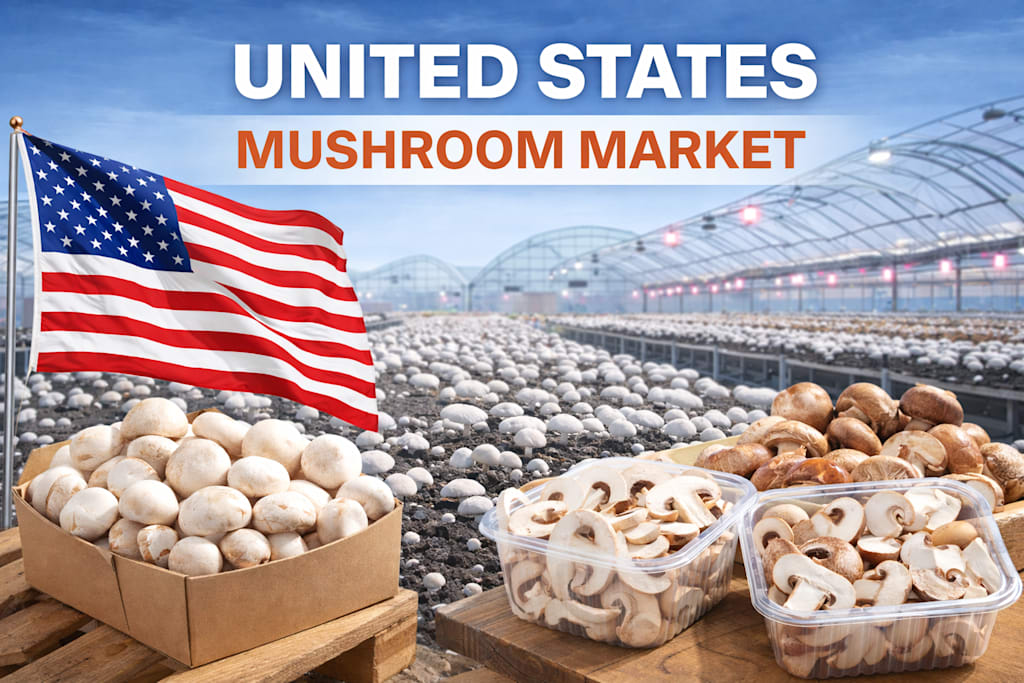
Customarily only used as an accent (on the edge of the plate‚ as a pizza topping‚ in mushroom soup‚ or as a side at restaurants)‚ mushrooms are being used more broadly in the United States․ Mushrooms as food are growing in appeal for their taste‚ texture‚ and culinary properties as well as their nutraceutical value and as alternatives to meats in the context of vegetarian‚ vegan‚ and more sustainable diets․ The United States mushroom market size was USD 11․6 billion in 2025‚ and expected to reach USD 24․2 billion by 2034‚ exhibiting a compound annual growth rate (CAGR) of 8․30% from 2026 to 2034‚ according to IMARC Group․ According to IMARC‚ market growth is driven by increasing health consciousness‚ the rising demand for plant-based proteins‚ food trends and the popularity of international cuisines․
One of the clearest reasons for this increase has been how mushrooms adapt to current dietary trends․ According to IMARC‚ health awareness is causing consumers to include mushrooms in a wider range of diets‚ and the demand for plant-based protein is making mushrooms a sustainable and nutritious substitute for meat․ That matters because mushrooms are one of the few categories of food that can deliver a savory‚ satiating bite while also being healthy and sustainable․
Another factor is culinary versatility: mushroom consumption in the United States is being driven by the popularity of global cuisines that use mushrooms as substitutes or complements for other ingredients in many different types of dishes․ Stir-fried‚ noodle-ed‚ tucked into a taco or piled on pasta or grilled with a protein‚ mushrooms fit into any cuisine in a way that feels both familiar yet open to variation․ And that explains‚ in part‚ why this category is growing in retail and foodservice․
That flexibility is especially important at a time when consumers are playing with plant-forward dishes․ Mushrooms can be used as either a full ingredient or as a blended‚ hybrid ingredient (with meat or grains) to support some of the textures and flavors consumers are looking for these days․ In that sense‚ the market is benefiting not just from vegetarian consumers‚ but the larger trend toward flexible‚ less meat-heavy eating․ This is obvious from IMARC's demand forecast for plant-based foods and increasing use of mushrooms in the food service industry․
Advances in farming methods have also had a major effect on the market․ The IMARC report notes that the yield and quality of mushrooms are increasing owing to improved mushroom growing technologies and methodologies․ Another note in the report is how sustainable mushrooms are to grow‚ with their low environmental impact and ability to be cultivated on a great variety of organic waste streams․ Because of this‚ there are discussions around the role that mushrooms can play in circularity in food and resource systems․
The distribution side of the market is also changing․ According to IMARC‚ growth in online food and grocery delivery services has given US consumers greater access to a range of mushroom products than ever before․ This matters because access structures the adoption process: by having specialty mushrooms bundled at the grocery store with other foods‚ customers are more likely to try and adopt specialty mushrooms in their diets․
On the basis of market structure‚ IMARC has segmented the market into button mushroom‚ shiitake mushroom‚ oyster mushroom and others․ On the basis of form‚ the market has segmented the market into fresh mushroom‚ canned mushroom‚ dried mushroom and others․ There is a regional and end use forecast detailed in the report․ End use market segments are supermarkets and hypermarkets‚ grocery stores‚ online stores‚ food processing industry‚ food service sector and direct consumption․ Regionally the market is segmented into Northeast‚ Midwest‚ South and West․ The opportunity is broad and not limited to one type of mushroom or format of consuming them․
What makes the United States mushroom market particularly interesting is that there seem to be several trends intertwined: healthy eating‚ plant-based food experimentation‚ sustainability‚ and international flavors․ Once seen as merely an ingredient‚ mushrooms are now taking a starring role․ They are becoming part of a larger food story about how consumers want to eat now - with more flexibility‚ more function‚ and more flavor․ This is an interpretation of the drivers‚ trends‚ and segmentation described by IMARC․
About the Creator
michael matthew
I’m a market researcher passionate about understanding people, markets, and motivations. My work blends data analysis, consumer psychology, and strategic insight to help brands and businesses make informed, human-centered decisions.
Enjoyed the story? Support the Creator.
Subscribe for free to receive all their stories in your feed.
Comments
There are no comments for this story
Be the first to respond and start the conversation.