
Why the United States Hazelnut Market Could Surpass $5 Billion by 2033
Growing Demand for Healthy Foods, Plant-Based Nutrition, and Premium Confectionery Products Is Transforming the U.S. Hazelnut Industry

The United States hazelnut market is experiencing a remarkable transformation as consumers increasingly prioritize healthy eating, plant-based nutrition, and premium food products. Once considered a niche ingredient primarily associated with chocolates and specialty confectionery, hazelnuts have evolved into a versatile superfood finding applications across food and beverage products, cosmetics, personal care formulations, and even pharmaceutical products.
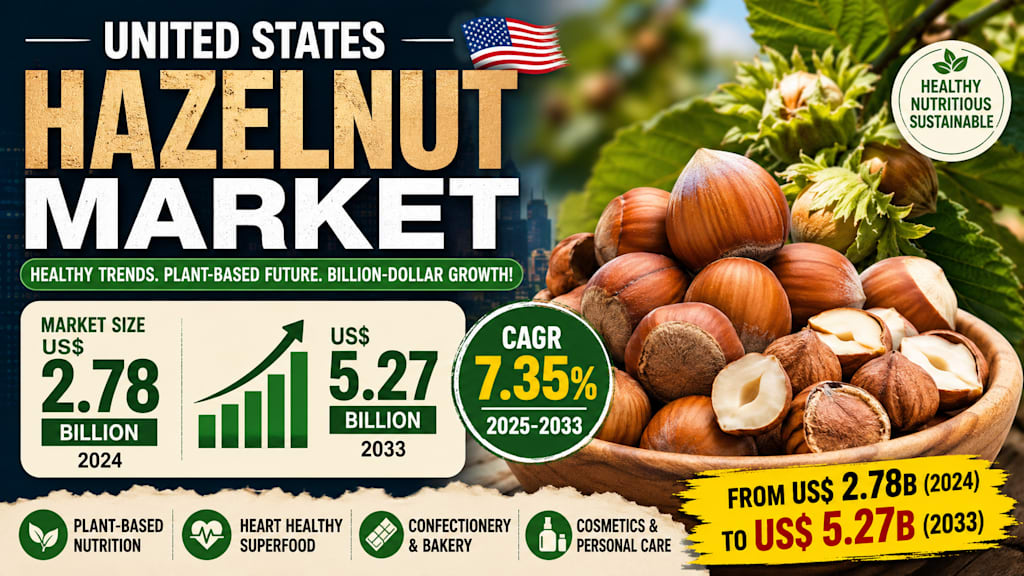
Industry analysts project that the United States Hazelnut Market will grow from approximately US$ 2.78 billion in 2024 to US$ 5.27 billion by 2033, reflecting a strong compound annual growth rate (CAGR) of 7.35% between 2025 and 2033. This growth trajectory highlights the increasing role hazelnuts are playing in modern consumer lifestyles as wellness, sustainability, and plant-based diets continue to reshape purchasing behavior.
Understanding the Growing Popularity of Hazelnuts
Hazelnuts, commonly known as filberts, belong to the Corylus genus and are among the most nutrient-rich tree nuts available today. Their naturally sweet flavor, crunchy texture, and impressive nutritional profile have helped them gain popularity among health-conscious consumers.
Rich in healthy monounsaturated fats, dietary fiber, antioxidants, vitamin E, B vitamins, and plant-based protein, hazelnuts are increasingly viewed as a functional food. Consumers are actively searching for foods that not only satisfy hunger but also contribute to long-term health and wellness goals.
This shift in consumer preferences has positioned hazelnuts as an attractive ingredient across multiple industries. Whether incorporated into breakfast cereals, energy bars, dairy alternatives, spreads, chocolates, or skincare products, hazelnuts are becoming a staple ingredient in premium product formulations.
The Health and Wellness Revolution Driving Market Growth
One of the strongest forces fueling market expansion is the growing awareness of nutrition and preventive healthcare.
Modern consumers are paying closer attention to ingredient labels and nutritional content than ever before. Foods containing healthy fats, antioxidants, and natural ingredients are receiving greater attention as individuals seek solutions for heart health, weight management, and overall well-being.
Hazelnuts align perfectly with these consumer preferences. Their antioxidant-rich composition helps combat oxidative stress, while healthy fats support cardiovascular wellness. As scientific research continues to highlight the benefits of nutrient-dense foods, hazelnut consumption is expected to rise steadily across all demographic groups.
The increasing popularity of functional foods is also contributing to market growth. Consumers are no longer satisfied with products that simply taste good. They increasingly seek foods that deliver additional health benefits, creating new opportunities for hazelnut-based innovations.
Plant-Based Diets Create New Opportunities
The rapid adoption of plant-based diets across the United States represents another significant growth driver.
Millions of consumers are reducing their dependence on animal-derived products and seeking alternative sources of protein and healthy fats. This shift is not limited to vegans and vegetarians. Flexitarian consumers—those who occasionally replace animal products with plant-based alternatives—are contributing substantially to market demand.
Hazelnuts are emerging as a preferred ingredient within this movement due to their nutritional density and versatility.
Manufacturers are introducing a growing range of products including:
Hazelnut milk
Dairy-free spreads
Plant-based protein snacks
Nut butters
Vegan desserts
Functional beverages
The clean-label movement further supports this trend. Consumers increasingly favor recognizable, minimally processed ingredients, and hazelnuts fit naturally within this preference.
As plant-based innovation accelerates, hazelnut-derived ingredients are expected to secure a stronger position in the alternative protein ecosystem.
Confectionery Industry Remains a Major Demand Generator
While health-conscious consumption is expanding, the confectionery sector remains one of the most important contributors to hazelnut demand.
Globally, a large share of hazelnut production is utilized in confectionery products such as chocolates, cookies, pastries, and premium desserts. Consumers continue to associate hazelnuts with indulgence, luxury, and rich flavor experiences.
Major chocolate manufacturers have long relied on hazelnuts to differentiate premium product offerings. Hazelnut-flavored chocolates, spreads, pralines, and snack products continue to enjoy widespread popularity among consumers.
In recent years, manufacturers have introduced innovative combinations that blend indulgence with health-conscious positioning. Products featuring reduced sugar, higher protein content, and natural ingredients often utilize hazelnuts to enhance both flavor and nutritional value.
This balance between indulgence and wellness has expanded hazelnuts' appeal among modern consumers, supporting sustained market growth.
Premiumization Trends Are Benefiting the Industry
Consumers are increasingly willing to pay premium prices for products perceived as healthier, more sustainable, or ethically sourced.
This trend has significantly benefited the hazelnut industry.
Organic hazelnuts, sustainably cultivated varieties, and specialty-origin products are attracting growing consumer interest. Shoppers increasingly seek transparency regarding sourcing practices, environmental impact, and production methods.
Food manufacturers are responding by investing in traceability programs and sustainability initiatives designed to meet evolving consumer expectations.
Premium hazelnut products often command higher profit margins, encouraging additional investments throughout the supply chain and creating opportunities for growers, processors, and retailers alike.
Innovation Across Food and Beverage Applications
Innovation continues to play a critical role in expanding the hazelnut market.
Manufacturers are exploring new ways to incorporate hazelnuts into a wide range of products beyond traditional confectionery applications.
Emerging product categories include:
Functional Snacks
Protein-rich snack bars, trail mixes, and healthy snack alternatives increasingly feature hazelnuts as a key ingredient.
Dairy Alternatives
Hazelnut-based milk products are gaining popularity among consumers seeking lactose-free and plant-based options.
Nutritional Supplements
Hazelnut extracts and oils are finding applications in wellness supplements due to their nutrient profile.
Gourmet Foods
Premium bakery products, artisan desserts, and specialty culinary applications continue to create new demand channels.
These innovations are helping broaden the consumer base and reduce reliance on traditional market segments.
Expanding Role in Cosmetics and Personal Care
Beyond food applications, hazelnuts are gaining traction within the beauty and personal care industry.
Hazelnut oil is valued for its moisturizing properties, antioxidant content, and lightweight texture. As consumers increasingly favor natural and plant-derived skincare ingredients, demand for hazelnut-based cosmetic formulations is growing.
Manufacturers are incorporating hazelnut oil into:
Facial creams
Moisturizers
Hair care products
Massage oils
Anti-aging formulations
The clean beauty movement is expected to create additional growth opportunities within this segment over the coming decade.
Challenges Facing the U.S. Hazelnut Industry
Despite strong growth prospects, several challenges continue to impact the industry.
Pest and Disease Pressure
One of the most significant threats is Eastern Filbert Blight, a fungal disease capable of causing substantial damage to hazelnut orchards.
Additional pests, including aphids and filbertworms, can reduce productivity and increase production costs.
Managing these biological risks requires ongoing investment in monitoring systems, disease-resistant varieties, and advanced agricultural practices.
Climate-Related Risks
Climate sensitivity remains another major challenge.
Hazelnut trees perform best under specific environmental conditions. Extreme weather events, unexpected frosts, droughts, and irregular rainfall patterns can negatively affect flowering and nut production.
Climate change is increasing weather unpredictability, creating additional challenges for growers seeking stable yields and long-term profitability.
Industry stakeholders are increasingly investing in climate-resilient farming techniques and research initiatives aimed at protecting future production capacity.
Market Segmentation Overview
The United States hazelnut market can be categorized by product type and application.
By Product
Whole Hazelnuts
Whole nuts remain highly popular for direct consumption, baking, and premium snack products.
Hazelnut Paste
Widely utilized in confectionery, bakery products, and specialty spreads.
Hazelnut Oil
Increasingly used across culinary and cosmetic applications.
Other Products
Includes hazelnut flour, extracts, powders, and innovative ingredient formats.
By Application
Food and Beverage
The largest and fastest-growing segment driven by health-conscious consumers and food innovation.
Cosmetics and Personal Care
Growing demand for natural ingredients supports market expansion.
Pharmaceuticals
Emerging applications continue to create opportunities.
Others
Includes specialty industrial and wellness-related applications.
Competitive Landscape
The U.S. hazelnut market features a combination of international suppliers, processors, and domestic producers competing to meet rising demand.
Key companies operating in the market include:
Archer Daniels Midland Company
Olam International
Arslanturk S.A.
Holmquist Hazelnut Orchards LLC
Durak Findik
DeveHerbes
Azerstar LLC
American Hazelnut Company
These organizations continue to invest in supply chain improvements, product innovation, sustainability initiatives, and strategic partnerships to strengthen their market positions.
10 Recent Company Developments Shaping the Industry
1. Archer Daniels Midland Company
Expanded investments in sustainable ingredient sourcing and plant-based nutrition solutions.
2. Olam International
Strengthened traceability programs across agricultural supply chains.
3. American Hazelnut Company
Advanced research focused on expanding domestic hazelnut cultivation.
4. Durak Findik
Enhanced processing capabilities to support growing international demand.
5. Arslanturk S.A.
Expanded premium hazelnut product offerings for global confectionery customers.
6. Holmquist Hazelnut Orchards LLC
Increased production efficiency through modern orchard management technologies.
7. Azerstar LLC
Expanded export activities targeting premium food manufacturers.
8. Ferrero Supply Network
Continued investments in hazelnut sourcing programs supporting long-term supply security.
9. Nestlé Ingredient Innovation Programs
Explored new hazelnut-based product formulations across confectionery categories.
10. Hershey Product Development Initiatives
Expanded premium chocolate offerings featuring hazelnut ingredients.
Future Outlook
The future of the United States hazelnut market appears highly promising. Consumer demand for nutritious foods, plant-based alternatives, and premium ingredients is expected to remain strong throughout the forecast period.
Technological advancements in cultivation and processing, combined with increasing innovation across food, beverage, and cosmetic sectors, are likely to support sustained market growth.
Although challenges such as climate variability and disease management persist, ongoing research and industry investments are helping create a more resilient supply chain.
As health-conscious lifestyles continue to shape consumer behavior, hazelnuts are positioned to become an increasingly important component of the American food and wellness landscape.
Final Thoughts
The United States hazelnut market is entering a dynamic phase of expansion driven by powerful consumer trends, innovation, and growing awareness of nutrition and sustainability. With market value projected to rise from US$ 2.78 billion in 2024 to US$ 5.27 billion by 2033, the industry presents significant opportunities for growers, manufacturers, investors, and retailers alike.
As plant-based eating, premium food experiences, and clean-label products continue to gain momentum, hazelnuts are evolving from a specialty ingredient into a mainstream nutritional powerhouse. Companies that successfully combine sustainability, innovation, and consumer-focused product development will be best positioned to capitalize on this growing market opportunity in the years ahead.
About the Creator
Enjoyed the story? Support the Creator.
Subscribe for free to receive all their stories in your feed.
Comments
There are no comments for this story
Be the first to respond and start the conversation.