
Why the U.S. Retinal Surgery Devices Market Is Poised for Strong Growth Through 2034
Rising cases of retinal diseases, technological innovation, and expanding access to advanced eye care are driving demand for retinal surgery devices across the United States

Protecting Vision in an Aging America
Vision is one of the most important aspects of human health, yet millions of Americans face conditions that threaten their eyesight every year. Diseases affecting the retina—the light-sensitive tissue at the back of the eye—have become increasingly common due to aging populations, rising diabetes rates, and improved disease detection.
Fortunately, advancements in ophthalmic technology have dramatically improved the ability of surgeons to diagnose, manage, and treat complex retinal disorders. Modern retinal surgery devices now allow physicians to perform highly precise procedures that can preserve vision, prevent blindness, and improve quality of life for countless patients.
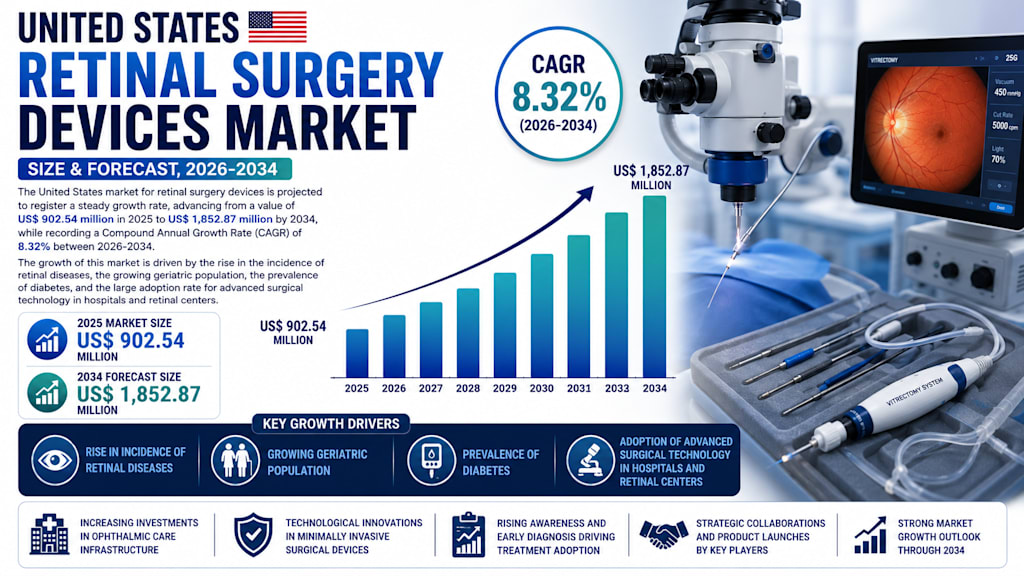
As healthcare systems continue investing in advanced eye care technologies, the retinal surgery devices industry is experiencing substantial growth. According to Renub Research, the United States Retinal Surgery Devices Market is projected to expand from US$ 902.54 million in 2025 to US$ 1,852.87 million by 2034, registering a compound annual growth rate (CAGR) of 8.32% between 2026 and 2034. Growth is being fueled by increasing rates of retinal diseases, a growing elderly population, rising diabetes prevalence, and strong adoption of innovative surgical technologies throughout hospitals and eye care centers.
As vision preservation becomes a growing healthcare priority, retinal surgery devices are playing an increasingly vital role in modern ophthalmology.
Understanding Retinal Surgery Devices
Retinal surgery devices are specialized medical instruments designed to diagnose and treat disorders affecting the retina. Because the retina is responsible for converting light into signals that the brain interprets as vision, damage to this delicate tissue can result in significant visual impairment or even blindness.
Modern retinal surgery relies on a variety of advanced tools, including vitrectomy machines, retinal lasers, microscopic illumination systems, surgical probes, forceps, scissors, cannulas, and sophisticated imaging technologies. These devices allow surgeons to perform delicate procedures with remarkable precision and safety.
Retinal surgery devices are commonly used to treat conditions such as retinal detachment, diabetic retinopathy, macular holes, epiretinal membranes, and age-related macular degeneration. Improvements in device performance have made many procedures less invasive, more effective, and associated with faster patient recovery times.
As technology continues to evolve, these devices are becoming increasingly sophisticated and capable of addressing a broader range of retinal conditions.
Rising Retinal Disease Rates Are Fueling Demand
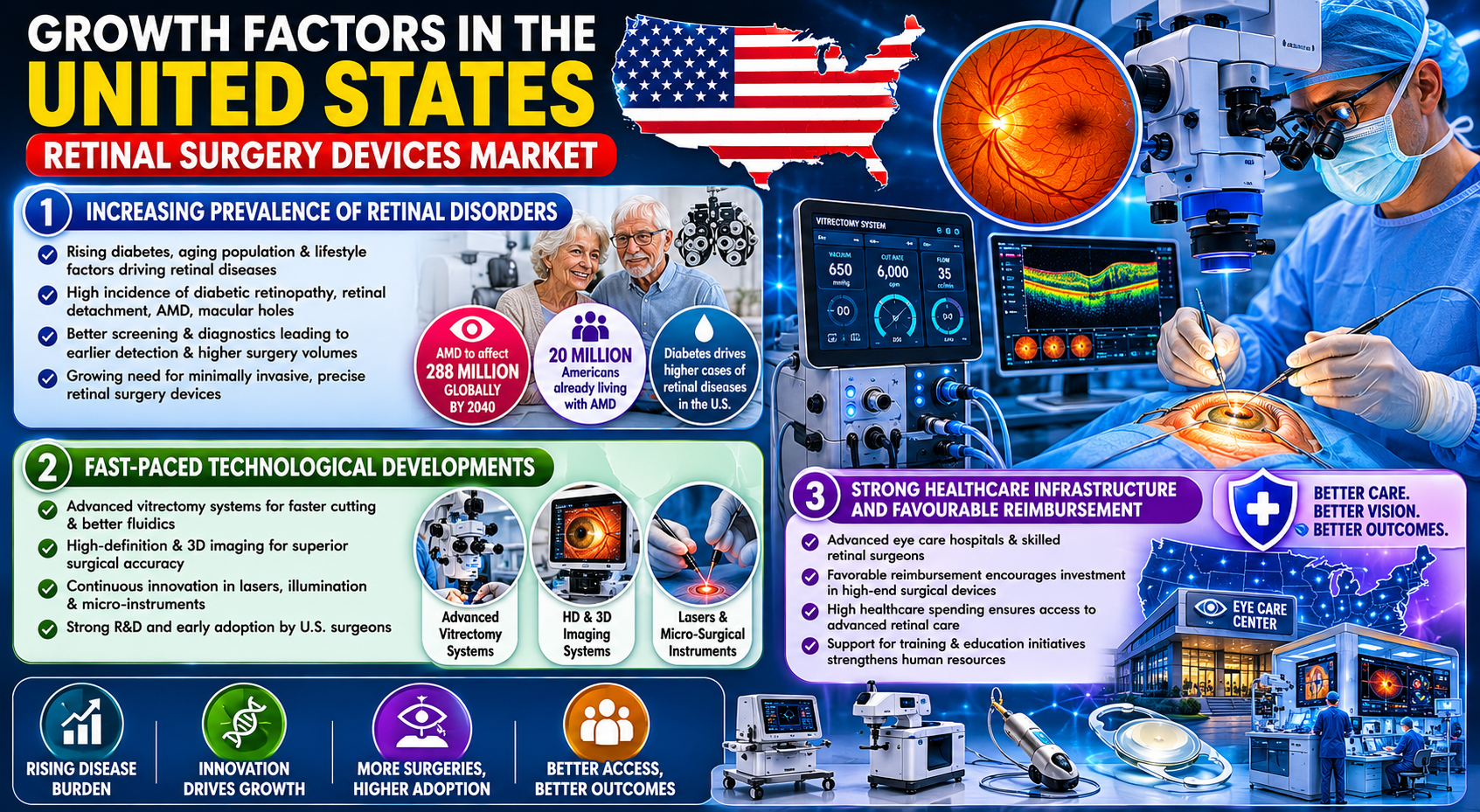
One of the most significant drivers of market growth is the increasing prevalence of retinal disorders throughout the United States.
Several demographic and lifestyle factors are contributing to this trend. The aging population is particularly important because many retinal diseases become more common with age. Conditions such as age-related macular degeneration (AMD), retinal detachment, and macular holes are increasingly affecting older adults, creating greater demand for specialized surgical interventions.
Diabetes is another major contributor. Diabetic retinopathy remains one of the leading causes of vision loss among working-age adults and continues to place significant pressure on ophthalmology services nationwide. As diabetes rates increase, the number of patients requiring retinal treatment also continues to grow.
Improved screening programs and diagnostic technologies are also helping identify retinal diseases at earlier stages. While this is beneficial for patient outcomes, it also contributes to increased demand for surgical procedures and the devices required to perform them.
The combination of demographic changes and enhanced diagnostic capabilities is creating sustained demand for advanced retinal surgery solutions.
Technological Innovation Is Transforming Eye Surgery
Innovation has become one of the most important factors driving growth within the retinal surgery devices market.
Modern vitrectomy systems offer faster cutting speeds, improved fluid control, enhanced precision, and greater safety compared to previous generations of equipment. These advancements allow surgeons to perform complex procedures more efficiently while reducing risks and improving outcomes.
Imaging technologies have also evolved significantly. High-definition visualization systems, digital imaging platforms, and three-dimensional surgical viewing systems provide surgeons with greater clarity and improved decision-making capabilities during procedures.
The United States has long been a leader in adopting advanced medical technologies, and retinal surgery is no exception. Ophthalmologists and healthcare institutions regularly embrace new innovations that improve surgical performance and patient outcomes.
Manufacturers continue investing heavily in research and development to create devices that support minimally invasive procedures, improve ergonomics, and enhance overall surgical efficiency. These innovations are encouraging healthcare providers to upgrade older systems and invest in next-generation retinal technologies.
Strong Healthcare Infrastructure Supports Growth
The United States benefits from one of the most advanced healthcare systems in the world, creating an ideal environment for the adoption of sophisticated retinal surgery devices.
Hospitals, specialty eye centers, ambulatory surgery facilities, and academic medical institutions provide extensive access to advanced ophthalmic care. The availability of highly trained retinal specialists further supports the widespread use of modern surgical technologies.
Healthcare spending also plays a crucial role. The United States consistently invests heavily in healthcare services, enabling providers to acquire advanced equipment and offer specialized treatment options. Favorable reimbursement policies for many retinal procedures further encourage healthcare facilities to invest in cutting-edge surgical technologies.
Additionally, ongoing efforts to expand education and training opportunities for eye care professionals are helping strengthen the workforce needed to meet growing demand for retinal care services.
These factors collectively position the United States as one of the world's most important markets for retinal surgery devices.
Vitrectomy Equipment Remains at the Core of Retinal Surgery
Among all retinal surgery technologies, vitrectomy systems remain one of the most essential product categories.
Vitrectomy procedures involve the removal of vitreous gel from the eye to allow access to the retina for treatment. These procedures are commonly performed to address retinal detachment, diabetic retinopathy, macular holes, and other serious retinal conditions.
The growing number of retinal surgeries being performed nationwide is driving demand for both vitrectomy machines and disposable vitrectomy packs. Single-use surgical kits help maintain sterile conditions and reduce infection risks while improving procedural efficiency.
As surgeons increasingly favor minimally invasive approaches and advanced surgical techniques, demand for high-performance vitrectomy equipment is expected to continue rising throughout the forecast period.
Diabetic Retinopathy Continues to Drive Market Expansion
Diabetic retinopathy has become one of the most important clinical applications supporting market growth.
As diabetes prevalence continues to rise, more patients are developing retinal complications that require surgical intervention. Advanced cases often necessitate the use of vitrectomy systems, retinal lasers, and microsurgical instruments to preserve vision and prevent permanent blindness.
Improved screening programs are enabling earlier detection of diabetic retinopathy, allowing healthcare providers to intervene before significant vision loss occurs. While early treatment improves patient outcomes, it also contributes to increased utilization of retinal surgery devices.
Given ongoing diabetes trends in the United States, diabetic retinopathy is expected to remain a major contributor to demand within the retinal surgery devices market.
Hospitals and Eye Clinics Are Major End Users
Hospitals currently represent the largest end-user segment within the retinal surgery devices market.
Large healthcare institutions often manage complex retinal cases and possess the infrastructure required to support advanced surgical technologies. Teaching hospitals and multi-specialty medical centers are particularly important because they perform a high volume of retinal procedures and frequently adopt new innovations.
At the same time, specialty eye clinics are becoming increasingly influential. Many patients prefer dedicated ophthalmology centers because they offer specialized expertise, shorter waiting times, and streamlined care pathways. These clinics are increasingly investing in compact, high-performance retinal surgery systems designed to support outpatient procedures and improve operational efficiency.
The growing role of ambulatory and specialty care settings is expected to create additional opportunities for device manufacturers.
Challenges Facing the Market
Despite strong growth prospects, the retinal surgery devices industry faces several challenges.
One of the most significant obstacles is the high cost of advanced surgical equipment. Modern vitrectomy systems, retinal lasers, imaging platforms, and microsurgical tools require substantial capital investments. Smaller healthcare facilities and independent practices may struggle to justify these expenditures despite growing patient demand.
Beyond equipment acquisition, healthcare providers must also consider ongoing costs related to maintenance, consumables, software updates, and staff training. These factors can increase total ownership costs and influence purchasing decisions.
Another challenge is the shortage of highly skilled retinal surgeons. Retinal surgery is among the most technically demanding specialties in ophthalmology, requiring extensive training and experience. Limited access to qualified specialists in certain regions can restrict patient access to advanced treatments and slow market growth.
California, New York, New Jersey, and Texas Lead Adoption
Several states are emerging as key contributors to market expansion.
California remains one of the largest markets for retinal surgery devices due to its large population, advanced healthcare infrastructure, and high prevalence of retinal diseases. The state's strong concentration of medical institutions and technology companies further supports innovation and early adoption.
New York benefits from a dense network of academic medical centers, specialty eye hospitals, and large patient populations. These factors contribute to strong demand for advanced retinal technologies.
New Jersey continues to experience growth due to high healthcare spending, strong insurance coverage, and close connections to the pharmaceutical and medical device industries.
Texas has emerged as one of the fastest-growing regional markets, driven by population growth, increasing diabetes prevalence, and expanding access to specialized ophthalmic care.
Together, these states are helping shape the future of retinal surgery innovation in the United States.
Final Thoughts
The United States retinal surgery devices market is positioned for sustained growth as healthcare providers respond to rising rates of retinal disease, increasing demand for vision preservation, and ongoing technological innovation.
The projected expansion from US$ 902.54 million in 2025 to US$ 1,852.87 million by 2034 highlights the growing importance of advanced ophthalmic technologies in modern healthcare. As retinal disorders become more prevalent and treatment options continue to improve, demand for sophisticated surgical devices will remain strong.
While challenges such as equipment costs and workforce shortages persist, advances in surgical technology, supportive healthcare infrastructure, and increasing awareness of retinal health are creating favorable conditions for long-term market growth.
As the healthcare industry continues prioritizing vision preservation and patient outcomes, retinal surgery devices will remain at the forefront of innovation, helping millions of Americans maintain their sight and quality of life for years to come.
About the Creator
Enjoyed the story? Support the Creator.
Subscribe for free to receive all their stories in your feed.
Comments
There are no comments for this story
Be the first to respond and start the conversation.