
Why the U.S. Medical Ceramics Market Is Becoming a Critical Part of Modern Healthcare
Growing demand for orthopedic implants, dental restorations, and advanced biomaterials is driving steady expansion across the United States

The Future of Healthcare Is Being Built with Advanced Materials
Healthcare innovation is often associated with cutting-edge technologies, robotic surgeries, and breakthrough pharmaceuticals. However, one of the most significant transformations occurring in modern medicine involves materials that most patients never see. Among these, medical ceramics are emerging as a crucial component in improving patient outcomes, extending implant longevity, and advancing the capabilities of modern healthcare.
Medical ceramics have become increasingly important in orthopedic procedures, dental restorations, reconstructive surgeries, and regenerative medicine. Their unique combination of durability, biocompatibility, corrosion resistance, and mechanical strength makes them ideal for applications where long-term performance is essential.
As healthcare providers seek better solutions for aging populations and growing numbers of surgical procedures, demand for medical ceramics continues to increase across the United States.
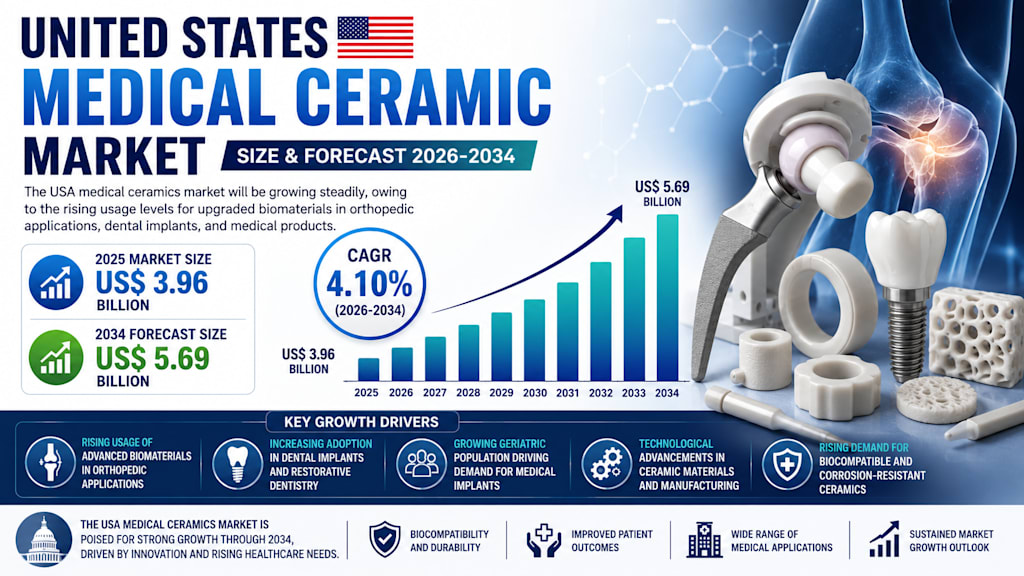
According to Renub Research, the United States Medical Ceramics Market is expected to grow from US$ 3.96 Billion in 2025 to US$ 5.69 Billion by 2034, expanding at a compound annual growth rate (CAGR) of 4.10% between 2026 and 2034. This growth is being supported by technological advancements, rising demand for orthopedic and dental implants, and the increasing adoption of biocompatible materials throughout the healthcare sector.
As medical science continues to evolve, medical ceramics are becoming a foundational element in the next generation of healthcare solutions.
Understanding Medical Ceramics and Their Importance
Medical ceramics are specialized ceramic materials designed for use within the human body and other healthcare applications. Unlike conventional ceramics used in industrial or household products, medical ceramics are engineered to meet strict safety, durability, and biocompatibility standards.
Common types of medical ceramics include alumina, zirconia, calcium phosphate ceramics, bioactive glass, and other advanced biomaterials. These materials are widely utilized in orthopedic implants, dental restorations, bone grafts, reconstructive surgeries, and medical devices because they offer exceptional resistance to wear, corrosion, and biological degradation.
One of the primary advantages of medical ceramics is their compatibility with human tissue. Unlike some metals and polymers, ceramics can remain stable within the body for extended periods while minimizing adverse reactions. Their strength and low-friction characteristics also contribute to improved performance in joint replacements and other load-bearing applications.
The increasing acceptance of ceramic-based medical solutions reflects a broader shift toward materials that combine functionality, durability, and patient safety.
An Aging Population Is Driving Demand
One of the strongest forces shaping the medical ceramics market is demographic change.
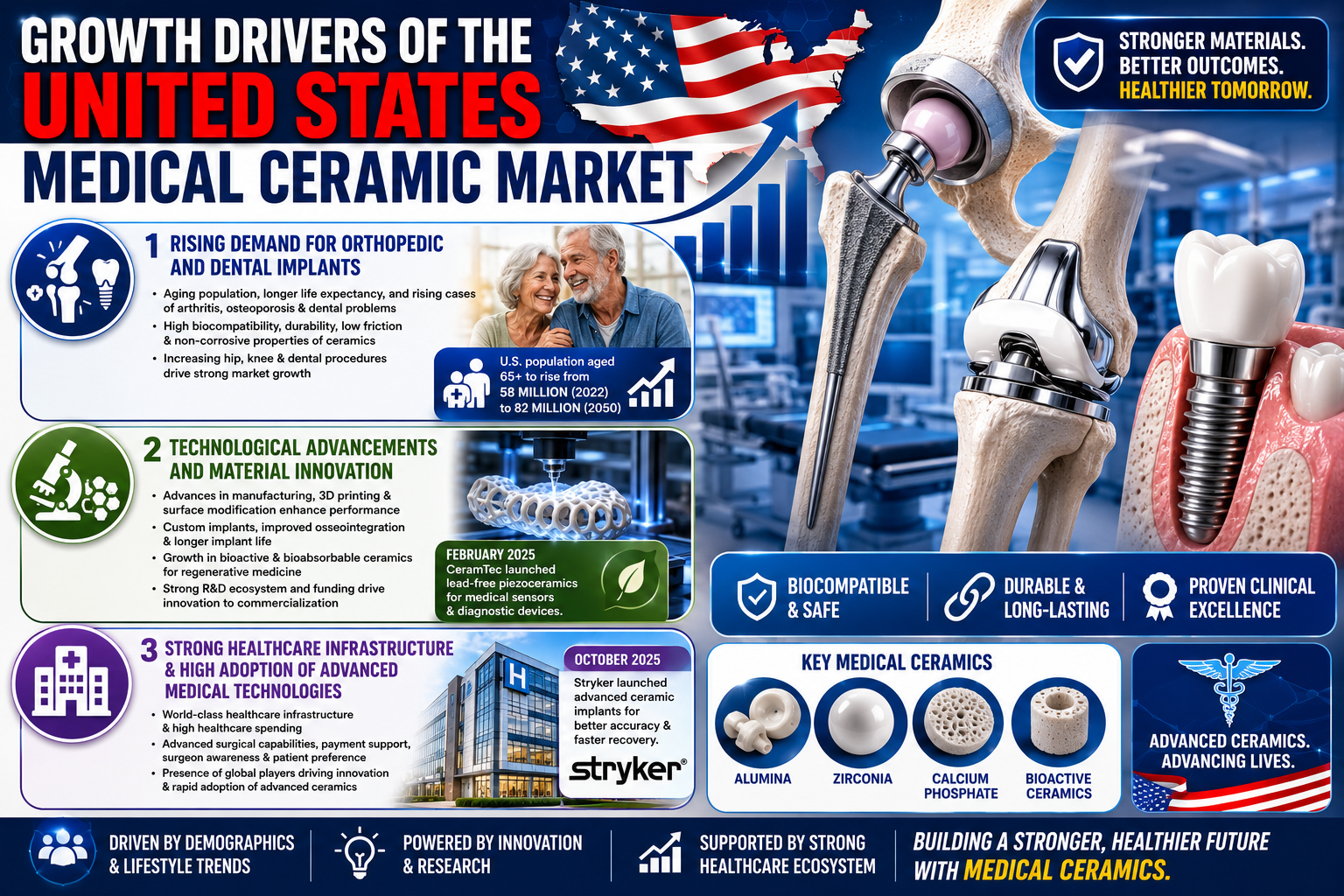
The United States population is aging rapidly, creating increased demand for healthcare services, particularly orthopedic and dental treatments. As people live longer, age-related conditions such as arthritis, osteoporosis, joint degeneration, and tooth loss are becoming more common.
These trends are generating significant demand for medical implants and restorative procedures that rely heavily on advanced ceramic materials. Hip replacements, knee replacements, dental implants, and spinal procedures increasingly utilize ceramic components because of their durability and excellent clinical performance.
Medical ceramics such as zirconia, alumina, and calcium phosphate are widely preferred in these applications because they provide superior wear resistance, corrosion protection, and long-term reliability compared to many traditional materials.
Population trends suggest that demand will continue to rise in the coming decades. As the number of older adults increases substantially, healthcare providers will require more implantable solutions capable of supporting active and healthy lifestyles among aging patients.
Orthopedic Implants Are a Major Growth Engine
Orthopedic medicine represents one of the largest application areas for medical ceramics in the United States.
Joint replacement procedures have become increasingly common as healthcare providers seek effective solutions for arthritis, sports injuries, and age-related joint deterioration. Ceramic materials are particularly valuable in these procedures because they offer low-friction surfaces, excellent wear resistance, and exceptional durability.
Ceramic-on-ceramic and ceramic-on-polymer implant combinations have demonstrated improved performance and lower failure rates compared to some traditional alternatives. These characteristics can reduce the need for revision surgeries while improving long-term patient outcomes.
As orthopedic surgery volumes continue to increase, demand for advanced ceramic materials is expected to grow accordingly. The combination of an aging population and rising expectations for mobility and quality of life is creating strong momentum within this segment of the market.
Dental Applications Continue to Expand
Dental care represents another major growth area for medical ceramics.
Modern dental implants, crowns, bridges, and prosthetics increasingly utilize ceramic materials because they offer both functional and aesthetic advantages. Zirconia, in particular, has become highly popular due to its strength, durability, and natural appearance.
Patients often prefer ceramic dental restorations because they closely resemble natural teeth while minimizing the risk of allergic reactions associated with certain metal-based alternatives. Additionally, ceramic materials provide excellent long-term performance, making them a preferred choice among dentists and oral surgeons.
As awareness of oral health continues to grow and cosmetic dentistry becomes more mainstream, demand for advanced ceramic dental solutions is expected to remain strong throughout the forecast period.
Technology Is Transforming Medical Ceramics
Innovation remains one of the most important drivers of market growth.
Recent advancements in manufacturing processes, material science, surface engineering, and 3D printing technologies have significantly improved the performance of medical ceramics. These developments are enabling healthcare providers to deliver more personalized treatments while enhancing implant functionality and durability.
Custom-designed implants can now be manufactured to match individual patient anatomy with greater precision. Enhanced surface treatments improve osseointegration, allowing implants to bond more effectively with surrounding bone tissue. These innovations contribute to better surgical outcomes and faster recovery times.
Researchers are also exploring bioactive and bioabsorbable ceramics for use in regenerative medicine and tissue engineering. These next-generation materials have the potential to support natural healing processes while reducing the need for additional surgical procedures.
Continued investment in research and development by universities, healthcare institutions, and private companies is accelerating the pace of innovation throughout the industry.
Bioactive and Bioresorbable Ceramics Open New Possibilities
The future of medical ceramics extends far beyond traditional implants.
Bioactive ceramics are designed to interact positively with biological tissues, encouraging healing and supporting bone growth. These materials are increasingly being used in regenerative medicine applications where stimulating natural repair processes is a primary objective.
Bioresorbable ceramics represent another exciting development. Materials such as hydroxyapatite and tricalcium phosphate can gradually dissolve within the body while promoting bone regeneration. This eliminates the need for secondary procedures to remove implants and creates more patient-friendly treatment options.
The growing focus on minimally invasive medicine and natural healing approaches is increasing interest in these advanced biomaterials. Researchers and medical device manufacturers continue to explore new ways to utilize bioresorbable ceramics across orthopedic, dental, and tissue engineering applications.
Strong Healthcare Infrastructure Supports Adoption
The United States benefits from one of the world's most advanced healthcare systems, providing an ideal environment for the adoption of innovative medical technologies.
Hospitals, specialty clinics, research institutions, and medical device manufacturers play a vital role in supporting the growth of the medical ceramics market. High healthcare spending, advanced surgical capabilities, and widespread access to specialized treatments create favorable conditions for market expansion.
The presence of leading global medical device companies further strengthens the ecosystem by encouraging innovation, investment, and commercialization of new ceramic-based technologies. Surgeons and healthcare providers are also highly receptive to advanced materials that improve patient outcomes and procedural success rates.
This combination of technological readiness, financial resources, and clinical expertise continues to position the United States as a leader in medical ceramics adoption.
Challenges Facing the Industry
Despite strong growth prospects, several challenges remain.
One of the most significant barriers is the high cost associated with producing medical-grade ceramics. Manufacturing these materials requires sophisticated processing techniques, specialized equipment, and strict quality controls. Raw materials such as high-purity alumina and zirconia can also be expensive, increasing overall production costs.
These expenses ultimately affect pricing throughout the healthcare value chain and create pressure on manufacturers seeking to balance quality with affordability. Cost optimization remains a key focus area for industry participants.
Regulatory compliance presents another challenge. Medical ceramic devices must undergo extensive testing, validation, and approval processes before reaching the market. Regulatory agencies such as the U.S. Food and Drug Administration maintain rigorous standards to ensure patient safety and product effectiveness.
While these regulations are essential, they can increase development timelines and costs, particularly for smaller companies attempting to commercialize innovative technologies.
California, Texas, and New York Lead Regional Growth
Several states are emerging as major contributors to market expansion.
California benefits from world-class healthcare institutions, biotechnology companies, research universities, and strong demand for orthopedic, dental, and cosmetic procedures. The state's emphasis on innovation and advanced healthcare technologies continues to support market growth.
Texas is experiencing steady growth due to its large population, expanding healthcare infrastructure, and increasing demand for orthopedic and dental treatments. Major metropolitan areas such as Houston, Dallas, and Austin are driving adoption of advanced medical technologies.
New York remains an important market due to its sophisticated healthcare ecosystem, high procedure volumes, and concentration of specialty medical services. Strong collaboration between hospitals, research institutions, and healthcare companies continues to encourage innovation and market development.
Final Thoughts
The United States medical ceramics market is entering a period of sustained growth driven by demographic shifts, technological innovation, and increasing demand for advanced healthcare solutions.
The projected expansion from US$ 3.96 Billion in 2025 to US$ 5.69 Billion by 2034 reflects the growing importance of biocompatible materials in modern medicine. As orthopedic procedures, dental restorations, reconstructive surgeries, and regenerative therapies become more common, medical ceramics will continue to play a vital role in improving patient outcomes and enhancing quality of life.
Although challenges related to manufacturing costs and regulatory requirements remain, ongoing advances in material science and healthcare technology are creating new opportunities for innovation and growth.
As healthcare providers increasingly seek durable, safe, and effective solutions for patients, medical ceramics are positioned to become one of the most important material categories shaping the future of medicine in the United States.
About the Creator
Enjoyed the story? Support the Creator.
Subscribe for free to receive all their stories in your feed.
Comments
There are no comments for this story
Be the first to respond and start the conversation.