
Why the Osteoporosis Drugs Market Is Set for Strong Growth Through 2034
Aging populations, breakthrough biologics, and rising awareness of bone health are reshaping the future of osteoporosis treatment worldwide.

Osteoporosis has long been called the “silent disease” because it often develops without noticeable symptoms until a fracture occurs. For millions of people around the world, especially older adults, the condition poses a serious threat to mobility, independence, and overall quality of life. As global populations continue to age and healthcare systems place greater emphasis on preventive care, osteoporosis is emerging as one of the most important public health challenges of the coming decade.
The good news is that treatment options are evolving rapidly. New biologic therapies, innovative drug delivery systems, and greater awareness about bone health are creating opportunities for earlier diagnosis and more effective treatment. As a result, the global osteoporosis drugs market is entering a period of sustained growth.
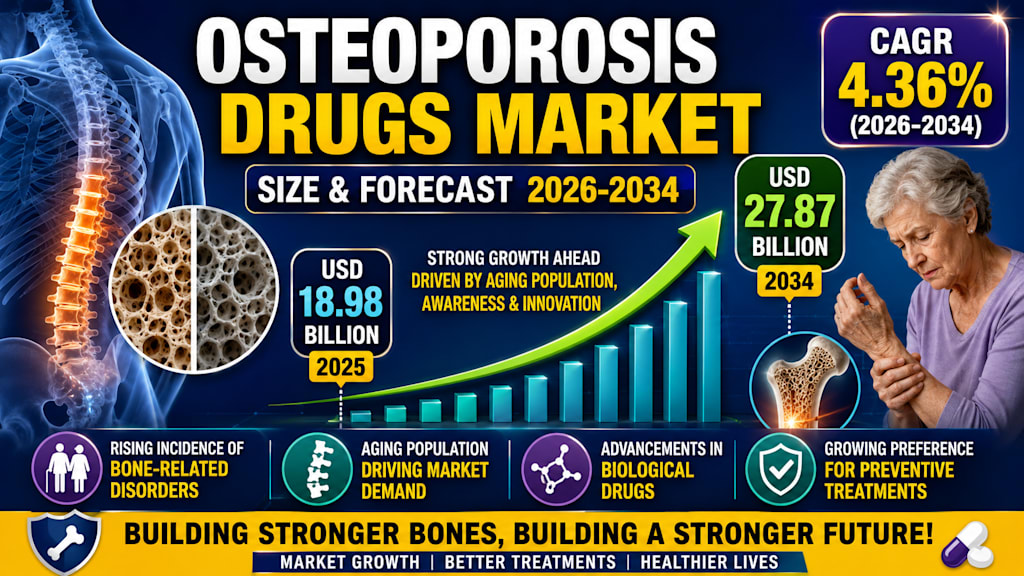
According to Renub Research, the global Osteoporosis Drugs Market is expected to increase from USD 18.98 billion in 2025 to USD 27.87 billion by 2034, expanding at a compound annual growth rate (CAGR) of 4.36% during 2026–2034. This growth reflects rising disease prevalence, expanding treatment accessibility, and continued pharmaceutical innovation.
The osteoporosis market is no longer simply about treating fractures. It is increasingly focused on prevention, long-term bone preservation, and improving the quality of life for aging populations worldwide.
Understanding Osteoporosis and Why It Matters
Osteoporosis is a chronic bone disease characterized by reduced bone mass and deterioration of bone tissue. As bones become weaker and more porous, the risk of fractures increases significantly, particularly in the hips, spine, and wrists.
The condition affects millions of people globally, with postmenopausal women and older adults representing the highest-risk groups. Because bone loss occurs gradually over time, many individuals remain unaware they have osteoporosis until they experience a fracture. This delayed diagnosis often leads to more severe health complications and increased healthcare costs.
Modern osteoporosis treatments aim to strengthen bones, reduce bone breakdown, and stimulate new bone formation. Drug categories include bisphosphonates, hormone therapies, selective estrogen receptor modulators (SERMs), monoclonal antibodies, and newer bone-forming therapies. Popular treatments such as alendronate, denosumab, and teriparatide have become essential tools in osteoporosis management.
As awareness grows and diagnostic technologies improve, healthcare professionals are increasingly recognizing osteoporosis as a preventable and manageable condition rather than an inevitable consequence of aging.
Aging Populations Are Driving Market Demand
One of the strongest forces behind market expansion is the rapid growth of the elderly population.
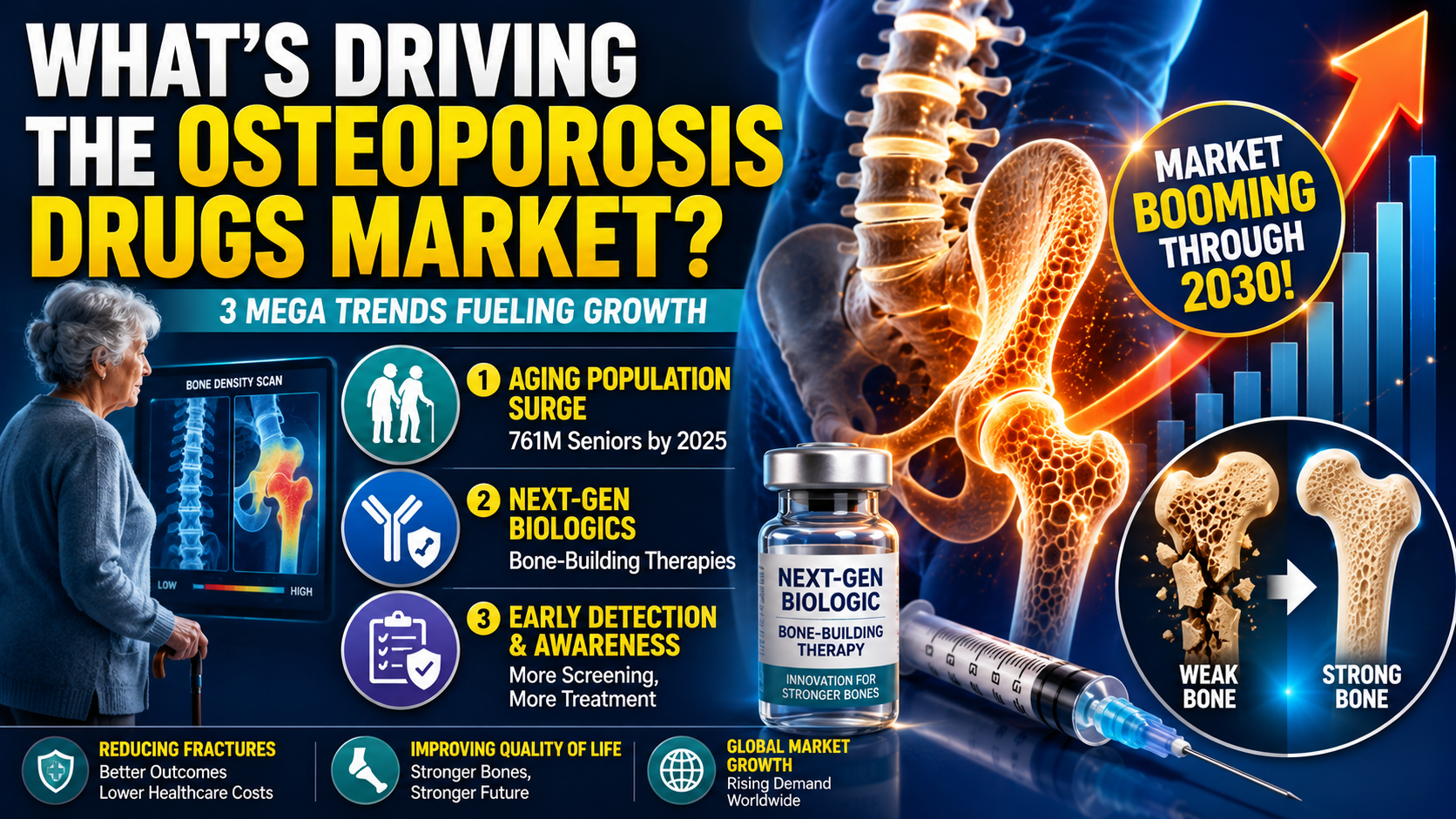
The United Nations estimates that the number of people aged 65 and older will reach approximately 761 million by 2025, up from 727 million previously. Since age is one of the most significant risk factors for osteoporosis, this demographic shift is creating unprecedented demand for bone health treatments.
Countries with some of the world's oldest populations—including Japan, Italy, Germany, Portugal, and Finland—are already witnessing rising rates of osteoporosis-related fractures and bone diseases. Similar trends are now emerging across developing economies as life expectancy continues to improve.
The aging phenomenon extends beyond developed nations. Countries across Asia-Pacific, Latin America, and the Middle East are experiencing demographic transitions that will substantially increase osteoporosis prevalence in the coming years.
For healthcare systems, this means greater emphasis on fracture prevention, bone density screening, and long-term treatment strategies. For pharmaceutical companies, it represents a significant opportunity to address a growing global health need.
The Global Burden of Osteoporotic Fractures
While osteoporosis itself can remain hidden, its consequences are highly visible.
Fractures caused by weakened bones often result in hospitalization, long recovery periods, reduced mobility, and increased mortality risk among older adults. In many cases, a single fracture can permanently alter a person's quality of life.
Several European countries currently carry particularly high osteoporosis-related fracture burdens. Germany leads with an estimated 936,000 annual osteoporotic fractures, followed by the United Kingdom, Italy, France, and Spain. These numbers highlight the enormous social and economic costs associated with bone health deterioration.
As healthcare providers seek to reduce these burdens, preventive treatment strategies are becoming increasingly important. Earlier intervention not only improves patient outcomes but can also help reduce healthcare expenditures associated with fracture management and rehabilitation.
Biologic Therapies Are Transforming Treatment
One of the most exciting developments in the osteoporosis market is the emergence of advanced biologic therapies.
Traditional osteoporosis medications such as bisphosphonates have played a critical role in reducing fracture risk for decades. However, newer biologic drugs offer additional advantages, including targeted mechanisms of action and improved effectiveness for certain patient groups.
Monoclonal antibodies and bone-forming therapies represent a new generation of treatment options capable of both slowing bone loss and stimulating new bone growth.
Pharmaceutical companies are investing heavily in research and development to create therapies that require less frequent administration while delivering better outcomes and fewer side effects.
A notable example came in January 2026 when Hikma Pharmaceuticals introduced Enoby and Xtrenbo, two biologic products developed from established denosumab-based therapies. These innovations demonstrate the growing importance of biologics within osteoporosis treatment strategies.
The shift toward biologics is expected to remain a major growth driver throughout the forecast period.
Preventive Healthcare Is Gaining Momentum
Public awareness regarding bone health has improved dramatically in recent years.
Health organizations, medical associations, and government agencies are increasingly educating people about the importance of maintaining bone strength through nutrition, exercise, regular screening, and appropriate medication when necessary.
Preventive healthcare initiatives are encouraging earlier diagnosis, particularly among postmenopausal women and elderly individuals who face elevated fracture risks. Bone mineral density testing is becoming more common, helping healthcare providers identify osteoporosis before serious complications occur.
Insurance coverage improvements and public health programs are also making osteoporosis diagnosis and treatment more accessible in many countries.
As awareness increases, demand for pharmaceutical interventions continues to rise, creating favorable conditions for market expansion.
Bisphosphonates Remain Market Leaders
Despite growing interest in biologic therapies, bisphosphonates continue to dominate the osteoporosis treatment landscape.
Drugs such as alendronate, risedronate, and zoledronic acid remain among the most widely prescribed osteoporosis medications worldwide. Their effectiveness, affordability, and extensive clinical track record have made them the first-line treatment option for many physicians.
Bisphosphonates work by slowing bone resorption, helping maintain bone density and reduce fracture risk.
Their widespread availability and lower cost compared with many newer therapies ensure that they remain highly relevant, particularly in healthcare systems focused on cost-effective treatment solutions.
Although concerns regarding long-term side effects exist, bisphosphonates are expected to remain a cornerstone of osteoporosis management for the foreseeable future.
Emerging Opportunities for Sclerostin Inhibitors
Among the newest and most promising treatment categories are sclerostin inhibitors.
These innovative therapies target the sclerostin protein, which plays a role in regulating bone formation. By blocking this protein, sclerostin inhibitors encourage the development of new bone tissue while improving overall bone strength.
This approach differs from many traditional treatments that primarily focus on slowing bone loss.
For patients at particularly high fracture risk or those who have not responded well to existing therapies, sclerostin inhibitors may offer significant clinical benefits.
While higher treatment costs and cardiovascular safety considerations may influence adoption rates, interest in anabolic bone-building therapies continues to grow among healthcare professionals worldwide.
The Continued Importance of Oral Medications
Convenience remains a major factor influencing treatment decisions.
Oral osteoporosis medications represent one of the largest segments of the global market because they are easy to administer and generally do not require hospitalization or specialized medical procedures.
Many patients prefer oral therapies because they can be taken at home and often involve lower treatment costs.
Healthcare providers also appreciate their proven ability to reduce fracture rates while maintaining favorable cost-effectiveness profiles.
Although injectable biologics are gaining popularity, oral medications continue to play a critical role in osteoporosis management, particularly in emerging markets where affordability remains a key consideration.
Challenges Facing the Market
Despite strong growth prospects, the osteoporosis drugs market faces several important challenges.
One of the most significant concerns involves long-term safety and side effects.
Some osteoporosis treatments, particularly certain bisphosphonates, have been associated with adverse events such as gastrointestinal irritation, atypical femoral fractures, and osteonecrosis of the jaw. These concerns can reduce patient adherence and make physicians more cautious when prescribing long-term therapy.
Another major issue is underdiagnosis.
Because osteoporosis often develops silently, many individuals remain untreated until a fracture occurs. Limited access to diagnostic services, especially in developing countries and rural communities, continues to restrict treatment adoption.
Healthcare providers and policymakers must address these barriers if they hope to maximize the benefits of modern osteoporosis therapies.
Regional Markets Shaping Global Growth
United States
The United States remains one of the world's most influential osteoporosis drug markets. Advanced healthcare infrastructure, strong insurance coverage, and robust pharmaceutical innovation continue to support market expansion. In 2025, the FDA approved Ospomyv, a denosumab biosimilar to Prolia, further strengthening treatment options available to patients.
United Kingdom
The UK market benefits from organized screening programs, strong public healthcare support, and growing utilization of advanced therapies. National treatment guidelines continue to improve patient access to osteoporosis medications.
India
India is emerging as one of the fastest-growing osteoporosis markets globally. Increasing awareness, healthcare investment, and improved access to diagnostic services are fueling demand. The launch of Zydus Lifesciences' Denosumab biosimilar "Zyrifa" highlights the country's growing pharmaceutical capabilities.
Saudi Arabia
Saudi Arabia's osteoporosis market is benefiting from healthcare modernization initiatives, increased awareness, and growing adoption of advanced biologic therapies. Rising rates of vitamin D deficiency and lifestyle-related risk factors are also contributing to greater demand for treatment solutions.
Looking Ahead: A Strong Future for Bone Health Innovation
The future of osteoporosis treatment appears increasingly promising.
Advances in biologics, personalized medicine, anabolic therapies, and innovative drug delivery technologies are expanding treatment possibilities beyond traditional approaches. Pharmaceutical companies continue investing heavily in therapies designed to improve convenience, effectiveness, and long-term patient outcomes.
At the same time, healthcare systems are placing greater emphasis on preventive care, early diagnosis, and healthy aging initiatives.
These combined trends are creating a favorable environment for sustained market growth and improved patient care worldwide.
Final Thoughts
Osteoporosis may be a silent disease, but its impact is anything but quiet.
As populations age and fracture risks increase, the need for effective osteoporosis treatments is becoming more urgent than ever. Fortunately, advances in pharmaceutical research, growing awareness about bone health, and expanding access to healthcare are transforming the way osteoporosis is diagnosed and managed.
With the global Osteoporosis Drugs Market expected to grow from USD 18.98 billion in 2025 to USD 27.87 billion by 2034, the industry is entering a period of meaningful expansion and innovation.
For patients, healthcare providers, and investors alike, the next decade could mark a major turning point in the fight against osteoporosis and the pursuit of healthier aging worldwide.
About the Creator
Enjoyed the story? Support the Creator.
Subscribe for free to receive all their stories in your feed.
Comments
There are no comments for this story
Be the first to respond and start the conversation.