
Why the Intraocular Lens Market Is Expanding as Cataract Cases Rise Worldwide
Aging Populations, Advanced Vision Correction Technologies, and Growing Access to Eye Care Are Driving Strong Growth in the Global Intraocular Lens Industry

Vision is one of the most important aspects of everyday life, yet millions of people around the world experience visual impairment caused by cataracts and other age-related eye conditions. As populations continue to age and life expectancy increases, eye health has become an increasingly important focus for healthcare providers, governments, and medical technology companies.
Among the most significant advancements in modern ophthalmology is the development of intraocular lenses, commonly known as IOLs. These artificial lenses have transformed cataract treatment by restoring vision and improving quality of life for millions of patients worldwide. What was once considered a major cause of blindness can now often be treated through a relatively quick and highly successful surgical procedure.
The growing demand for cataract surgery, coupled with advances in lens technology and improved healthcare access, is creating substantial opportunities across the global intraocular lens market.
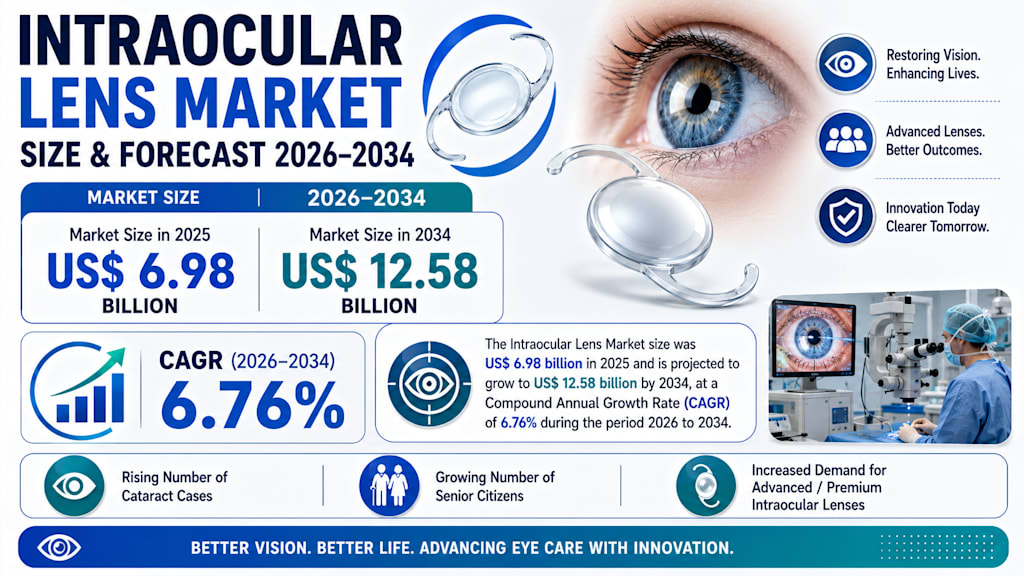
According to Renub Research, the Global Intraocular Lens Market was valued at US$ 6.98 billion in 2025 and is projected to reach US$ 12.58 billion by 2034, expanding at a compound annual growth rate (CAGR) of 6.76% between 2026 and 2034. The market's growth is being driven by rising cataract prevalence, increasing numbers of elderly individuals, technological innovation, and growing demand for premium vision-correction solutions.
Understanding Intraocular Lenses
An intraocular lens is a small artificial lens that is surgically implanted into the eye, most commonly during cataract surgery. Cataracts occur when the natural lens of the eye becomes cloudy, causing blurred vision, glare sensitivity, and progressive vision loss.
During cataract surgery, the clouded natural lens is removed and replaced with an intraocular lens that restores the eye's ability to focus light properly onto the retina.
Although cataract treatment remains the primary use of intraocular lenses, they are also increasingly used in refractive lens exchange procedures designed to correct vision disorders such as myopia, hyperopia, and presbyopia.
Modern intraocular lenses are available in several forms, including monofocal lenses, multifocal lenses, toric lenses, and accommodative lenses. Each design addresses different visual requirements and offers unique benefits depending on the patient's condition and lifestyle needs.
Cataracts Continue to Drive Demand
One of the most important factors fueling the growth of the intraocular lens market is the increasing prevalence of cataracts worldwide.
Cataracts are strongly associated with aging, making them one of the most common age-related medical conditions. As life expectancy rises globally, the number of individuals requiring cataract surgery continues to increase.
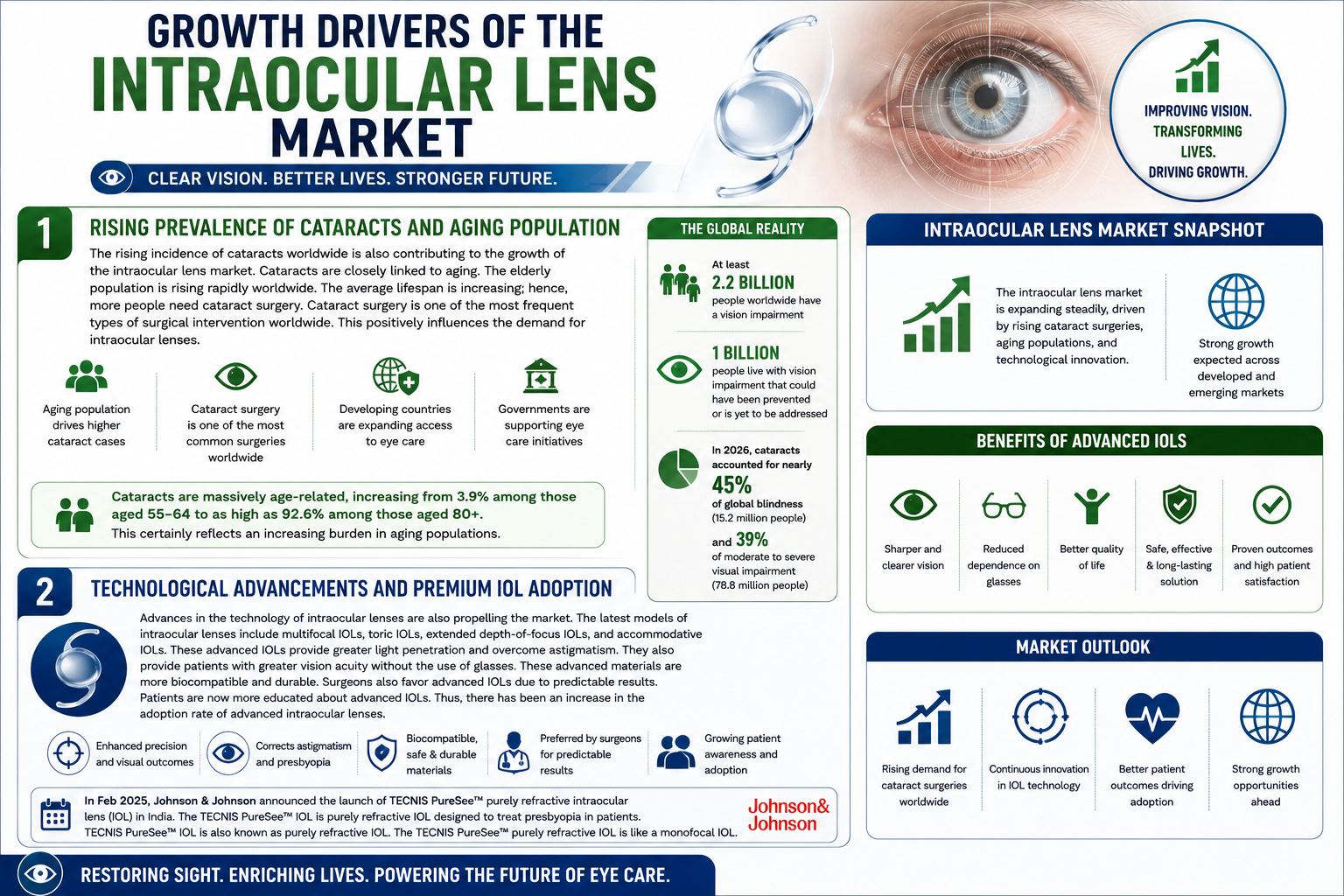
The burden of vision impairment remains substantial. According to data highlighted in the report, approximately 2.2 billion people worldwide live with some form of vision impairment. Among them, nearly one billion individuals have visual impairments that could have been prevented or remain untreated. Cataracts account for a significant share of global blindness and moderate-to-severe vision impairment, making them one of the leading causes of avoidable vision loss.
As populations age across both developed and developing countries, cataract surgery volumes are expected to continue increasing, creating sustained demand for intraocular lenses.
Aging Populations Are Reshaping Eye Care
Demographic trends are playing a major role in the expansion of the intraocular lens market.
People are living longer than ever before, resulting in larger elderly populations worldwide. Since cataracts become increasingly common with age, healthcare systems are witnessing a growing number of patients requiring vision-restoring procedures.
The prevalence of cataracts rises dramatically among older adults. While cataracts affect a relatively small percentage of individuals between the ages of 55 and 64, prevalence rates increase significantly among people aged 80 and above. This trend highlights the growing importance of ophthalmic care within aging societies.
Healthcare providers are responding by expanding access to cataract surgeries, investing in advanced surgical technologies, and improving patient education regarding the benefits of timely treatment.
As aging populations continue to grow, intraocular lenses will remain a critical component of global eye care services.
Premium Intraocular Lenses Are Gaining Popularity
Technological innovation has transformed the intraocular lens industry over the past several years.
While traditional monofocal lenses remain widely used, many patients are increasingly choosing premium intraocular lenses that offer enhanced visual performance and greater independence from glasses.
Modern premium options include multifocal lenses, toric lenses, extended depth-of-focus lenses, and accommodative lenses. These advanced technologies allow patients to see clearly at multiple distances while addressing common refractive errors such as astigmatism.
Improved materials and lens designs have enhanced optical quality, durability, and biocompatibility. Surgeons often favor these advanced solutions because they provide more predictable outcomes and higher levels of patient satisfaction.
Patient awareness has also increased significantly. More individuals are actively researching available treatment options and are willing to invest in premium vision correction technologies that improve quality of life.
In February 2025, Johnson & Johnson introduced the TECNIS PureSee™ purely refractive intraocular lens in India. Designed to address presbyopia while maintaining visual clarity, the launch reflects growing industry focus on advanced vision correction solutions.
Better Access to Eye Care Is Expanding the Market
Growing access to ophthalmic surgical services is another major factor supporting market growth.
Governments, nonprofit organizations, and private healthcare providers are investing heavily in eye care infrastructure, particularly in developing regions where preventable blindness remains a significant challenge.
Large-scale cataract surgery programs, blindness prevention initiatives, and expanded healthcare coverage are helping more patients receive treatment earlier. Improvements in healthcare infrastructure have also increased the availability of trained ophthalmologists and advanced surgical equipment.
These developments are making cataract surgery safer, faster, and more accessible to patients worldwide.
A notable example occurred in October 2024 when ZEISS Medical Technology showcased new digital enhancements and surgical innovations designed to improve cataract, retinal, glaucoma, and refractive treatment workflows. Such advancements support more personalized patient care while improving surgical efficiency.
Monofocal Lenses Continue to Dominate
Despite the growing popularity of premium lenses, monofocal intraocular lenses remain the largest segment within the market.
Monofocal lenses provide clear vision at a single focal distance, most commonly for distance vision. Their affordability, proven effectiveness, and broad insurance coverage have made them the preferred choice for many patients and healthcare systems.
These lenses consistently deliver excellent visual outcomes while minimizing the risk of visual disturbances such as glare and halos. As a result, monofocal lenses continue to dominate cataract surgery procedures worldwide.
Their widespread use is particularly evident in developing countries, where cost considerations often influence treatment decisions. Hospitals, public health programs, and nonprofit eye care initiatives frequently rely on monofocal lenses to maximize treatment accessibility.
Multifocal Lenses Are Expanding Rapidly
The multifocal intraocular lens segment is experiencing strong growth as patients increasingly seek greater visual freedom after surgery.
Unlike monofocal lenses, multifocal lenses provide functional vision at multiple distances, reducing dependence on glasses for everyday activities such as reading, driving, and using digital devices.
The convenience offered by these lenses has made them particularly attractive to active adults seeking long-term lifestyle benefits.
Although multifocal lenses generally carry higher costs, growing awareness and willingness to invest in premium eye care continue supporting adoption. As technology advances and outcomes improve, demand for multifocal lenses is expected to remain strong.
Materials Play an Important Role
The materials used to manufacture intraocular lenses significantly influence performance, flexibility, and surgical outcomes.
Silicone-based lenses remain popular due to their excellent optical properties, flexibility, and biocompatibility. Their foldable nature allows surgeons to implant them through smaller incisions, resulting in faster patient recovery and reduced surgical trauma.
Polymethyl methacrylate (PMMA) lenses, while less commonly used in advanced surgical settings, continue to play an important role in cost-sensitive healthcare environments. Their durability and affordability make them valuable options in government-sponsored cataract programs and emerging markets where affordability remains a priority.
Ongoing innovation in acrylic and other advanced materials continues to improve lens performance while supporting broader adoption of premium products.
Ambulatory Surgery Centers Are Changing Cataract Care
The increasing use of ambulatory surgery centers is reshaping the way cataract procedures are performed.
These facilities provide efficient, cost-effective alternatives to traditional hospital-based surgery while maintaining high standards of patient care. Cataract surgery is particularly well suited for outpatient settings due to its minimally invasive nature and short recovery times.
Advancements in surgical techniques, anesthesia, and lens implantation technologies have enabled ambulatory surgery centers to perform high volumes of procedures safely and efficiently.
As healthcare systems seek ways to improve efficiency and reduce costs, ambulatory surgery centers are expected to become increasingly important within the intraocular lens market.
Challenges Continue to Affect Market Growth
Despite strong growth prospects, the intraocular lens market faces several challenges.
One of the most significant barriers is the high cost associated with premium intraocular lenses. Advanced multifocal, toric, and accommodative lenses are often only partially covered by insurance programs, leaving patients responsible for substantial out-of-pocket expenses. This limits adoption, particularly in price-sensitive markets.
Post-surgical complications can also affect patient satisfaction. Although cataract surgery remains one of the safest procedures performed today, issues such as glare, halos, lens displacement, and posterior capsule opacification may occur in some cases. Managing these complications requires skilled surgical expertise and comprehensive patient education.
Regulatory approval processes present additional challenges, as manufacturers must meet strict safety and efficacy requirements before introducing new products.
Regional Markets Continue to Grow
The United States remains one of the world's largest and most technologically advanced intraocular lens markets. High cataract surgery volumes, strong adoption of premium lenses, advanced healthcare infrastructure, and ongoing innovation continue supporting market leadership. In October 2025, the U.S. Food and Drug Administration approved BVI's FineVision HP trifocal intraocular lens, expanding premium treatment options available to American patients.
The United Kingdom benefits from a structured healthcare system and growing awareness regarding eye health. While cost considerations influence premium lens adoption within public healthcare settings, private sector demand continues to expand. In August 2024, UK-based Rayner announced the upcoming launch of the world's first spiral-shaped artificial intelligence-enabled intraocular lens, highlighting the country's role in ophthalmic innovation.
India represents one of the fastest-growing markets due to its large aging population, substantial cataract burden, and ongoing investments in eye care infrastructure. Government blindness prevention programs and nonprofit initiatives continue increasing access to treatment. In March 2024, Alcon introduced its Clareon family of intraocular lenses in India, further strengthening access to advanced vision correction technologies.
Saudi Arabia is also experiencing steady market expansion as healthcare modernization efforts and investments in specialized ophthalmic care continue improving treatment accessibility.
Looking Ahead
The future of the intraocular lens market appears highly promising. Growing cataract prevalence, increasing life expectancy, rising awareness of eye health, and continuous technological innovation are creating strong momentum across the industry.
Healthcare providers are increasingly focused on delivering personalized vision correction solutions that improve both visual outcomes and quality of life. At the same time, manufacturers continue investing in advanced lens designs that offer greater precision, comfort, and patient satisfaction.
Leading companies including Alcon, Bausch Health, Hoya Corporation, Johnson & Johnson, STAAR Surgical, Carl Zeiss Meditec, and Novartis continue expanding their ophthalmology portfolios and investing in next-generation intraocular lens technologies.
Final Thoughts
Intraocular lenses have transformed the treatment of cataracts and vision impairment, helping millions of people regain clear sight and improve their quality of life. As populations age and demand for advanced vision correction grows, these innovative devices will play an increasingly important role in global healthcare.
With the market projected to exceed US$ 12.5 billion by 2034, intraocular lenses are poised to remain one of the most impactful innovations in modern ophthalmology. Continued advances in technology, broader access to surgical care, and growing patient awareness will ensure that the industry continues improving vision outcomes for people around the world.
About the Creator
Enjoyed the story? Support the Creator.
Subscribe for free to receive all their stories in your feed.
Comments
There are no comments for this story
Be the first to respond and start the conversation.