
Why the Global Osteoporosis Drugs Market Is Entering a New Era of Growth
Aging populations, breakthrough biologic therapies, and growing awareness of bone health are driving demand for osteoporosis treatments worldwide

As life expectancy continues to rise worldwide, osteoporosis is becoming one of the most significant health challenges associated with aging. Millions of individuals are living longer, but many are also facing increased risks of bone loss, fractures, and mobility-related complications that can dramatically affect their quality of life.
Fortunately, advances in medical science are changing the outlook for patients. New biologic drugs, innovative treatment approaches, and greater emphasis on preventive healthcare are helping healthcare providers diagnose and manage osteoporosis more effectively than ever before.
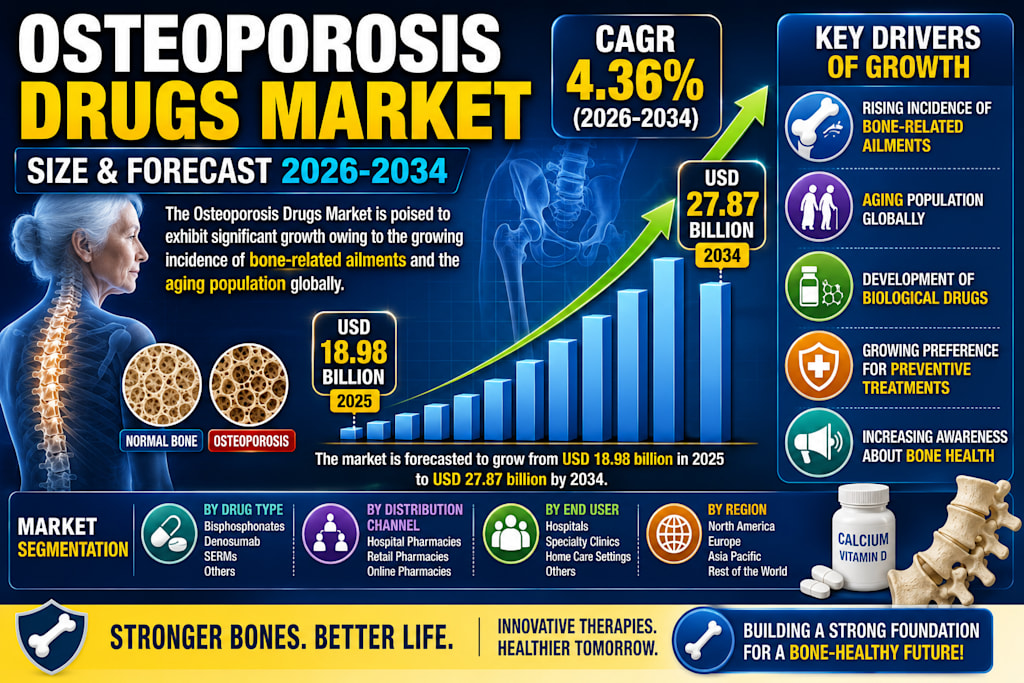
According to Renub Research, the global Osteoporosis Drugs Market is expected to grow from USD 18.98 billion in 2025 to USD 27.87 billion by 2034, expanding at a compound annual growth rate (CAGR) of 4.36% during 2026–2034. This growth reflects rising disease prevalence, increasing awareness, and continued innovation in osteoporosis treatment.
As healthcare systems increasingly focus on healthy aging and fracture prevention, the osteoporosis drugs market is entering a period of sustained and meaningful expansion.
Understanding Osteoporosis and Its Growing Global Impact
Osteoporosis is a disease characterized by reduced bone density and deterioration of bone tissue. As bones become weaker, even minor falls or everyday activities can result in serious fractures.
The condition most commonly affects:
- Older adults
- Postmenopausal women
- Individuals with hormonal imbalances
- People with nutritional deficiencies
- Those with sedentary lifestyles
Although osteoporosis can affect anyone, aging remains one of the most significant risk factors. Bone density naturally declines over time, making older adults particularly vulnerable to fractures involving the hip, spine, and wrist.
The consequences extend far beyond broken bones. Osteoporotic fractures can lead to chronic pain, loss of mobility, reduced independence, prolonged hospitalization, and increased healthcare costs.
As populations continue aging globally, the burden of osteoporosis is expected to rise substantially over the coming decades.
The World's Aging Population Is Fueling Demand
One of the strongest growth drivers for the osteoporosis drugs market is the rapid expansion of the elderly population.
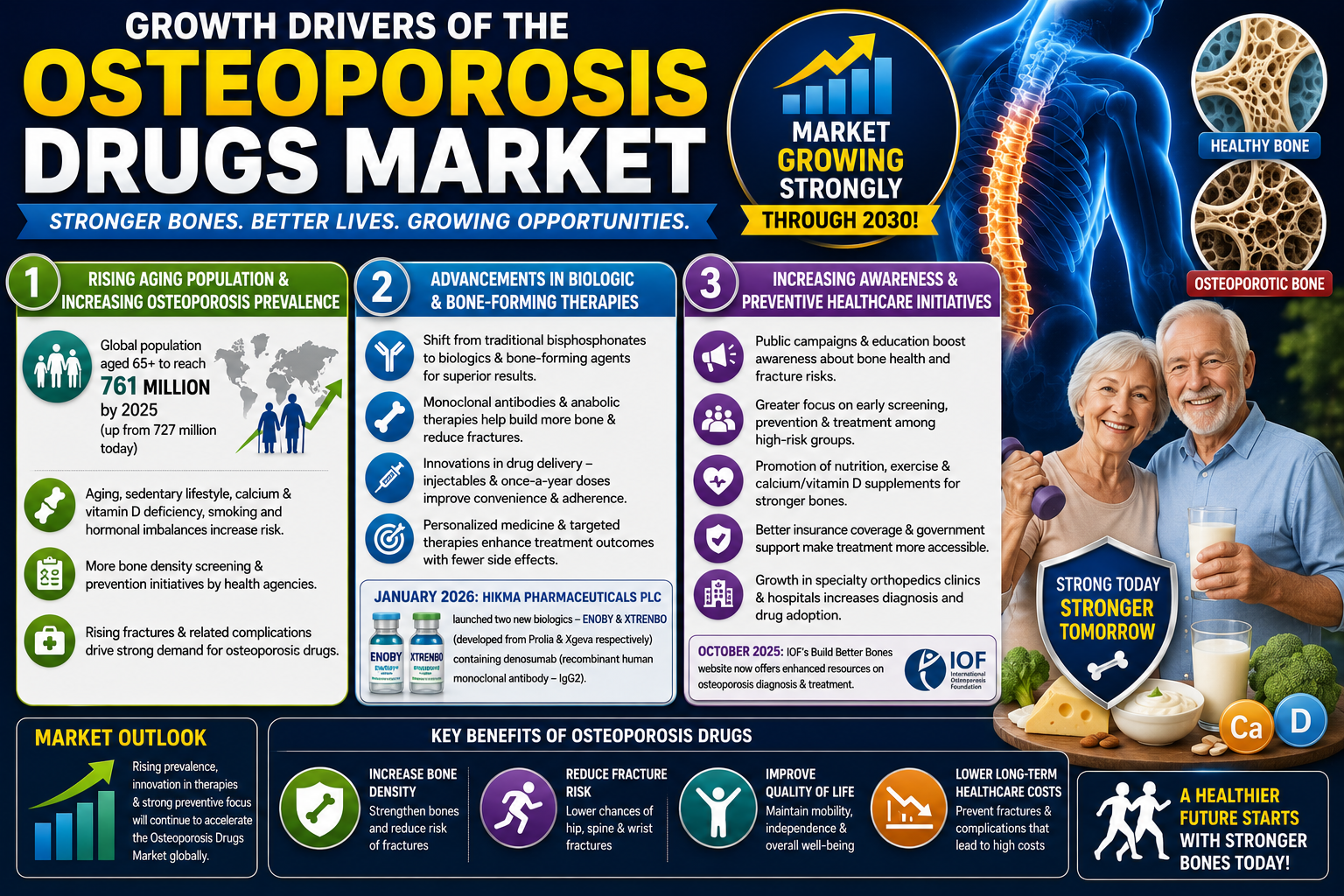
According to projections cited in the report, the global population aged 65 and older is expected to reach approximately 761 million people by 2025, compared with 727 million previously. This demographic shift is creating a larger patient population vulnerable to osteoporosis and related fractures.
Several countries already have exceptionally high proportions of elderly citizens.
Among the countries with the highest percentage of people aged 65 and above are:
- Monaco
- Japan
- Italy
- Portugal
- Greece
- Finland
- Germany
- Croatia
- Serbia
These demographic trends are placing increased pressure on healthcare systems while simultaneously driving demand for osteoporosis prevention and treatment solutions.
As life expectancy improves across both developed and emerging economies, osteoporosis management is becoming an increasingly important public health priority.
Osteoporotic Fractures Represent a Major Healthcare Challenge
The true impact of osteoporosis often becomes apparent only after fractures occur.
Many patients remain unaware they have osteoporosis until they experience a serious injury. Because the disease progresses slowly and often without symptoms, diagnosis frequently occurs after significant bone loss has already developed.
Several countries face particularly high fracture burdens.
According to Renub Research, Germany records approximately 936,000 osteoporotic fractures annually, making it one of the countries with the highest osteoporosis-related fracture burdens worldwide. Other heavily affected countries include the United Kingdom, Italy, France, Spain, Poland, Sweden, Greece, the Netherlands, and the Czech Republic.
These figures highlight the growing need for effective therapies capable of reducing fracture risks and improving long-term patient outcomes.
Healthcare systems increasingly recognize that preventing fractures is often far less costly than treating them after they occur.
Biologic Therapies Are Transforming Treatment Options
One of the most exciting developments in the osteoporosis market is the rise of advanced biologic therapies.
For many years, treatment relied heavily on traditional medications such as bisphosphonates. While these therapies remain important, newer biologic drugs offer enhanced treatment possibilities for patients who require more aggressive intervention.
Modern biologics can:
- Reduce bone loss
- Stimulate bone formation
- Improve bone density
- Lower fracture risk
- Provide longer-lasting effects
Monoclonal antibodies have emerged as particularly promising treatment options.
In January 2026, Hikma Pharmaceuticals introduced two biologic products, Enoby and Xtrenbo, both developed using denosumab technology. These launches illustrate the growing importance of biologics within osteoporosis treatment strategies.
The increasing adoption of biologic therapies is expected to remain a key growth driver throughout the forecast period.
Preventive Healthcare Is Gaining Momentum
Another major factor supporting market expansion is the growing emphasis on prevention.
Healthcare providers, public health organizations, and governments are investing more resources into educating individuals about bone health and fracture prevention.
Awareness campaigns increasingly encourage:
- Bone density testing
- Calcium and vitamin D supplementation
- Physical activity
- Early diagnosis
- Lifestyle modifications
- Timely medical intervention
As awareness improves, more individuals are seeking screening and treatment before fractures occur.
This shift toward preventive care benefits patients while helping healthcare systems reduce the long-term costs associated with osteoporosis-related complications.
In October 2025, the International Osteoporosis Foundation expanded resources through its Build Better Bones initiative, further supporting education and awareness efforts worldwide.
Bisphosphonates Continue to Dominate the Market
Despite the emergence of biologic therapies, bisphosphonates remain one of the largest and most widely prescribed drug classes in osteoporosis treatment.
Common medications include:
- Alendronate
- Risedronate
- Zoledronic acid
These drugs work by slowing the process of bone resorption, helping maintain bone density and reduce fracture risk.
Several factors explain their continued popularity:
Proven Effectiveness
Bisphosphonates have demonstrated strong clinical results over many years of use.
Affordability
Compared with newer biologic therapies, bisphosphonates are generally more cost-effective.
Physician Familiarity
Healthcare providers have extensive experience prescribing and managing these medications.
As a result, bisphosphonates remain a first-line treatment option for many osteoporosis patients worldwide.
Sclerostin Inhibitors Represent the Next Generation
Among the most promising emerging therapies are sclerostin inhibitors.
Unlike treatments that primarily slow bone loss, sclerostin inhibitors actively promote new bone formation by targeting the sclerostin protein. This innovative mechanism offers significant potential for patients with severe osteoporosis or high fracture risk.
Medical professionals are increasingly interested in anabolic therapies that not only preserve existing bone but also help rebuild it.
Although higher treatment costs and cardiovascular safety considerations may influence adoption rates, sclerostin inhibitors are expected to play an increasingly important role in future osteoporosis care.
Oral Medications Remain Highly Popular
Oral osteoporosis drugs continue to account for a substantial share of the market.
Their popularity stems from several advantages:
- Ease of administration
- Home-based treatment
- Lower costs
- Established safety profiles
- Broad availability
Patients often prefer oral medications because they eliminate the need for hospital visits or injectable treatments. Physicians also value their cost-effectiveness and demonstrated ability to reduce fracture rates.
Although injectable biologics are gaining market share, oral therapies remain a cornerstone of osteoporosis management, particularly in emerging markets.
Challenges Facing the Market
Despite strong growth prospects, several challenges continue to affect market development.
Safety Concerns and Side Effects
Long-term use of some osteoporosis medications has been associated with side effects such as:
- Gastrointestinal irritation
- Osteonecrosis of the jaw
- Atypical femoral fractures
- Potential immune-related complications
These concerns can reduce patient adherence and influence prescribing decisions.
Manufacturers continue working to develop safer therapies with improved benefit-risk profiles.
Underdiagnosis Remains Widespread
Because osteoporosis often develops without symptoms, many patients remain undiagnosed until fractures occur.
Limited access to screening services, low awareness levels, and inadequate preventive healthcare programs contribute to delayed diagnosis in many regions.
Addressing underdiagnosis will be critical for improving patient outcomes and maximizing treatment adoption.
Regional Markets Driving Growth
United States
The United States remains one of the largest osteoporosis drug markets globally. Advanced healthcare infrastructure, strong reimbursement systems, and ongoing pharmaceutical innovation continue supporting growth. In February 2025, the FDA approved Ospomyv, a biosimilar version of Prolia, further expanding treatment options.
United Kingdom
The UK benefits from structured screening programs, public healthcare support, and increasing adoption of advanced osteoporosis therapies. Government treatment guidelines continue improving access to care.
India
India is emerging as one of the fastest-growing osteoporosis treatment markets. Rising awareness, healthcare investments, and expanding diagnostic capabilities are driving demand. In December 2025, Zydus Lifesciences launched Zyrifa, a denosumab biosimilar that further strengthened treatment availability.
Saudi Arabia
Improved healthcare infrastructure, increasing awareness, and growing adoption of biologic therapies are supporting market growth in Saudi Arabia. However, reliance on imported medications remains a challenge.
The Future of Osteoporosis Treatment
The osteoporosis treatment landscape is evolving rapidly.
Future innovations are expected to focus on:
- Personalized medicine
- Advanced biologic therapies
- Bone-forming treatments
- Improved drug delivery systems
- Longer-lasting medications
- Enhanced patient adherence
At the same time, healthcare systems are placing greater emphasis on preventive care and healthy aging initiatives.
These trends are creating a favorable environment for continued market expansion while improving outcomes for millions of patients worldwide.
Final Thoughts
Osteoporosis may develop silently, but its consequences can profoundly affect individuals, families, and healthcare systems.
As populations age and fracture risks increase, the demand for effective osteoporosis treatments is becoming more urgent than ever. Fortunately, advances in biologics, bone-forming therapies, preventive healthcare, and patient awareness are transforming how the disease is managed.
With the global Osteoporosis Drugs Market projected to grow from USD 18.98 billion in 2025 to USD 27.87 billion by 2034, the industry is entering a new phase of innovation and opportunity.
For patients seeking healthier aging, healthcare providers focused on prevention, and pharmaceutical companies developing next-generation therapies, the future of osteoporosis treatment appears increasingly promising.
About the Creator
Enjoyed the story? Support the Creator.
Subscribe for free to receive all their stories in your feed.
Comments
There are no comments for this story
Be the first to respond and start the conversation.