
Why the Bioplastics Market Could Become One of the Fastest-Growing Industries of the Next Decade
As governments crack down on plastic waste and consumers demand sustainable alternatives, bioplastics are emerging as a critical solution for a greener future.

For decades, plastic has been one of the most transformative materials in human history. It revolutionized manufacturing, packaging, transportation, healthcare, and consumer products. However, the environmental consequences of widespread plastic use have become impossible to ignore.
Mountains of plastic waste, overflowing landfills, polluted oceans, and growing concerns about microplastics have prompted governments, businesses, and consumers to search for more sustainable alternatives. Among the most promising solutions is bioplastics—a category of materials designed to reduce dependence on fossil fuels while supporting environmental sustainability.
What was once considered a niche segment of the materials industry is rapidly evolving into a major global market. Advances in technology, stricter environmental regulations, and increasing consumer awareness are driving widespread adoption across multiple industries.
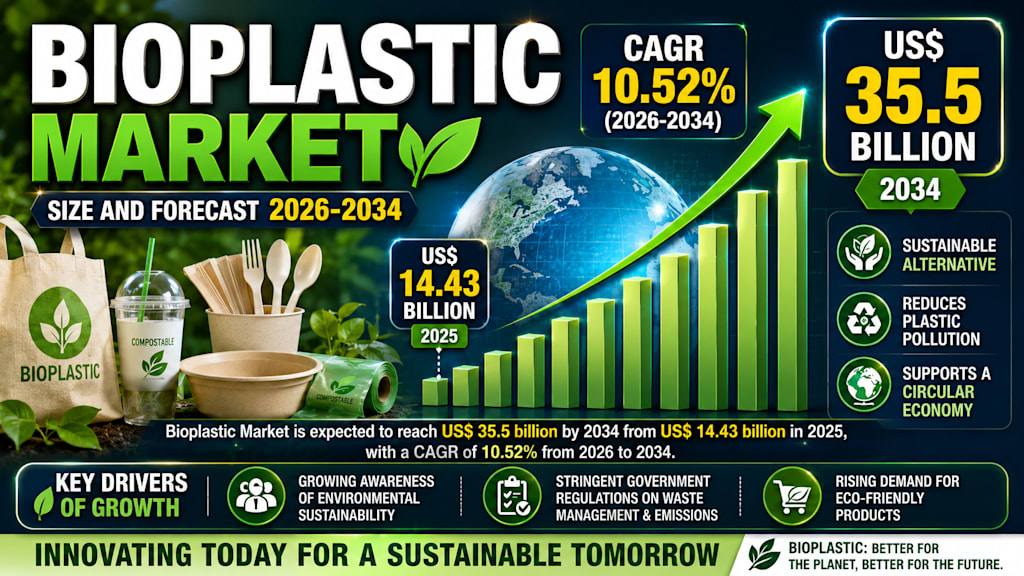
According to Renub Research, the global Bioplastics Market is projected to grow from US$ 14.43 billion in 2025 to US$ 35.5 billion by 2034, representing a strong compound annual growth rate (CAGR) of 10.52% between 2026 and 2034. This growth positions bioplastics among the fastest-expanding sectors within the broader sustainability economy.
As the world moves toward a more circular and environmentally responsible future, bioplastics are increasingly becoming a key part of the solution.
Understanding What Bioplastics Are
Bioplastics are materials derived wholly or partially from renewable biological resources rather than conventional petroleum-based feedstocks.
Common raw materials used in bioplastic production include:
- Corn starch
- Sugarcane
- Cellulose
- Agricultural waste
- Plant-based oils
- Other renewable biomass sources
Unlike traditional plastics, many bioplastics are designed to be biodegradable, compostable, or significantly less dependent on fossil resources. While not all bioplastics are biodegradable, they generally offer a lower environmental footprint than conventional plastics.
As environmental concerns continue to shape purchasing decisions and government policies, these materials are attracting increasing attention from industries seeking sustainable alternatives.
The growing shift toward responsible manufacturing is helping transform bioplastics from an emerging innovation into a mainstream industrial material.
Sustainability Is Reshaping Material Choices
One of the biggest forces behind bioplastics growth is the global push toward sustainability.
Consumers today are more environmentally conscious than ever before. Many actively seek products that reduce waste, minimize pollution, and support sustainable production practices.
Businesses are responding accordingly.
Companies across industries are reevaluating their supply chains and material choices to meet both regulatory requirements and changing consumer expectations. The transition toward sustainable packaging, eco-friendly consumer products, and reduced carbon footprints has accelerated demand for bio-based materials.
At the same time, governments worldwide are introducing stricter environmental regulations aimed at reducing plastic pollution and encouraging sustainable alternatives.
This combination of regulatory pressure and consumer demand is creating ideal conditions for long-term market growth.
Packaging Remains the Largest Opportunity
Among all applications, packaging continues to dominate the bioplastics market.
The food and beverage industry, retail sector, and rapidly growing e-commerce market all require enormous amounts of packaging material. Historically, much of this demand has been met through conventional plastics.
Today, however, companies are increasingly exploring bioplastic alternatives to reduce environmental impact and comply with sustainability goals.
Flexible packaging, food containers, shopping bags, disposable utensils, and protective packaging materials are among the products benefiting from bioplastic adoption.
The trend is particularly strong in food packaging because consumers increasingly associate environmentally friendly packaging with responsible brands.
As businesses seek to improve their environmental credentials, packaging is expected to remain the largest and most influential application segment throughout the forecast period.
Production Capacity Is Expanding Rapidly
The industry's growth is reflected not only in market value but also in production capacity.
Current forecasts indicate that global biobased plastics production capacity will increase from approximately 2.31 million tonnes in 2025 to around 4.69 million tonnes by 2030, effectively doubling within five years.
This expansion demonstrates increasing confidence among manufacturers, investors, and policymakers regarding the future of bioplastics.
Although bioplastics currently represent only a small fraction of total global plastic production, their growth rate significantly exceeds that of conventional materials.
As economies of scale improve and technological innovation continues, production capacity is expected to expand even further over the next decade.
Technology Is Closing the Performance Gap
For many years, one of the biggest criticisms of bioplastics involved concerns about performance, durability, and cost.
Those concerns are gradually becoming less significant.
Advances in polymer science, material engineering, and manufacturing technologies have enabled bioplastics to achieve performance characteristics increasingly comparable to traditional plastics. Modern biopolymers are becoming more durable, flexible, lightweight, and suitable for a wider range of industrial applications.
Several major companies are investing heavily in research and development to improve both functionality and affordability.
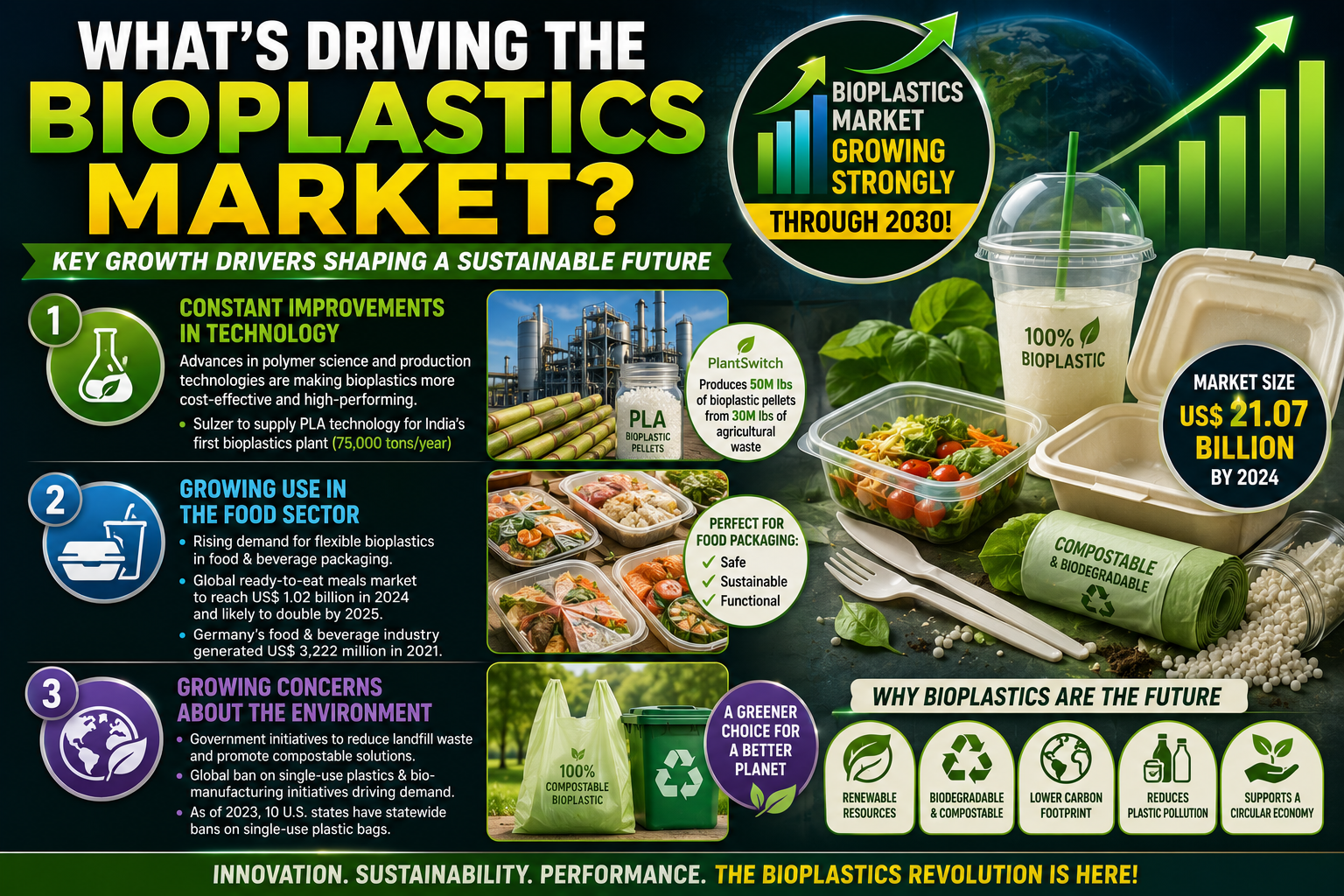
A notable example occurred in 2024 when Sulzer Ltd. partnered with Balrampur Chini Mills Limited to support the development of India's first large-scale bioplastics facility utilizing advanced PLA production technology. The facility is expected to produce 75,000 tons of biodegradable and recyclable bioplastics annually using sugarcane feedstock.
Such investments highlight the industry's commitment to technological advancement and commercialization.
Waste Materials Are Creating New Opportunities
One of the most exciting developments in the bioplastics industry is the increasing use of waste materials as feedstocks.
Rather than relying solely on dedicated agricultural crops, companies are finding innovative ways to transform agricultural waste and other byproducts into valuable bioplastic materials.
This approach offers several advantages:
- Reduced waste generation
- Lower environmental impact
- Improved resource efficiency
- Enhanced sustainability credentials
- Potential cost reductions
For example, some manufacturers are converting millions of pounds of agricultural waste annually into bioplastic pellets for industrial use.
These innovations align closely with global circular economy initiatives aimed at maximizing resource utilization while minimizing environmental damage.
Government Regulations Are Accelerating Adoption
Government policies have become one of the most influential drivers of bioplastics demand.
Many countries are introducing regulations designed to reduce dependence on conventional plastics and promote sustainable alternatives.
Several jurisdictions have implemented bans or restrictions on single-use plastic products. In the United States, multiple states have enacted statewide plastic bag restrictions, while similar measures continue to expand globally.
Governments are also supporting:
- Compostable packaging initiatives
- Waste reduction targets
- Sustainable manufacturing programs
- Circular economy strategies
- Green procurement policies
As regulatory frameworks become stricter, businesses are increasingly adopting bioplastics as a practical compliance solution.
Challenges Still Need Attention
Despite strong momentum, the industry faces important challenges.
High Production Costs
One of the most significant barriers is cost competitiveness.
Bioplastics generally remain more expensive to manufacture than conventional petroleum-based plastics. Renewable feedstocks, specialized production processes, and limited economies of scale contribute to higher costs.
For price-sensitive markets, these differences can influence purchasing decisions.
Industry leaders continue investing in technological improvements and production efficiency to reduce costs and improve competitiveness.
Limited Composting Infrastructure
Another challenge involves waste management infrastructure.
Many biodegradable bioplastics require specific industrial composting conditions to decompose effectively. Unfortunately, adequate composting facilities remain unavailable in many regions.
Inadequate labeling standards and consumer confusion regarding disposal methods can also reduce the environmental benefits that bioplastics are designed to provide.
Addressing these infrastructure gaps will be essential for maximizing long-term sustainability outcomes.
Regional Markets Driving Global Growth
United States
The U.S. market is benefiting from strong environmental awareness, growing corporate sustainability commitments, and ongoing investments in advanced biopolymer research. Industries ranging from packaging to automotive manufacturing are increasing their adoption of bio-based materials.
Germany
Germany remains one of Europe's leading bioplastics markets due to its strong focus on sustainability, advanced manufacturing capabilities, and commitment to circular economy principles. Regulatory support continues to encourage innovation and adoption across multiple industries.
China
China's bioplastics sector is expanding rapidly as the government intensifies efforts to reduce plastic pollution. Strong manufacturing capabilities, growing consumer demand, and substantial investment in sustainable technologies are driving market development.
United Arab Emirates
The UAE is increasingly promoting sustainable materials through environmental initiatives and waste reduction programs. Growing demand from retail, hospitality, and food service sectors is creating new opportunities for bioplastic adoption.
Beyond Packaging: Expanding Applications
While packaging remains dominant, bioplastics are steadily expanding into new industries.
Growing applications include:
- Agriculture
- Consumer goods
- Textiles
- Automotive components
- Building materials
- Transportation products
As material performance improves, bioplastics are becoming viable alternatives in sectors that previously relied almost entirely on conventional plastics.
This diversification reduces reliance on any single industry and strengthens the market's long-term growth prospects.
The Future of Bioplastics
The future of bioplastics extends far beyond replacing traditional plastic packaging.
The industry is becoming a critical component of broader sustainability initiatives aimed at reducing carbon emissions, minimizing waste, and supporting circular economic models.
Future growth will likely be driven by:
- Continued technological innovation
- Expansion of production capacity
- Stronger environmental regulations
- Greater consumer awareness
- Improved recycling and composting infrastructure
- Increased corporate sustainability commitments
As these trends converge, bioplastics are expected to become increasingly integrated into everyday products and industrial processes.
Final Thoughts
The global plastics industry is undergoing a significant transformation, and bioplastics are at the center of that change.
Driven by environmental concerns, regulatory pressure, technological innovation, and shifting consumer expectations, bioplastics are evolving from a niche alternative into a mainstream material solution.
With the global Bioplastics Market forecast to grow from US$ 14.43 billion in 2025 to US$ 35.5 billion by 2034, the sector is poised for remarkable expansion over the next decade.
While challenges related to cost and infrastructure remain, continued investment and innovation are creating a path toward broader adoption. For businesses, consumers, and policymakers committed to sustainability, bioplastics represent one of the most promising opportunities to reduce environmental impact while supporting economic growth.
The future of materials may not be built on fossil fuels alone—it may increasingly be grown from the ground up.
About the Creator
Enjoyed the story? Support the Creator.
Subscribe for free to receive all their stories in your feed.
Comments
There are no comments for this story
Be the first to respond and start the conversation.