
Why Payment Gateways Are Becoming the Foundation of the Global Digital Economy
As e-commerce, digital wallets, and cashless transactions continue to grow worldwide, payment gateways are evolving into one of the most critical technologies powering modern commerce

Not long ago, cash and physical cards dominated everyday transactions. Today, consumers can purchase products with a smartphone tap, complete international transactions within seconds, subscribe to digital services online, and send money across borders without visiting a bank. These changes have fundamentally transformed how businesses and consumers interact with the global economy.
At the center of this transformation is a technology that many people use every day without even noticing: the payment gateway.
Whether someone is shopping online, paying through a mobile wallet, booking a flight, ordering food, or subscribing to a streaming platform, payment gateways work behind the scenes to securely process transactions and move money between consumers, merchants, and financial institutions.
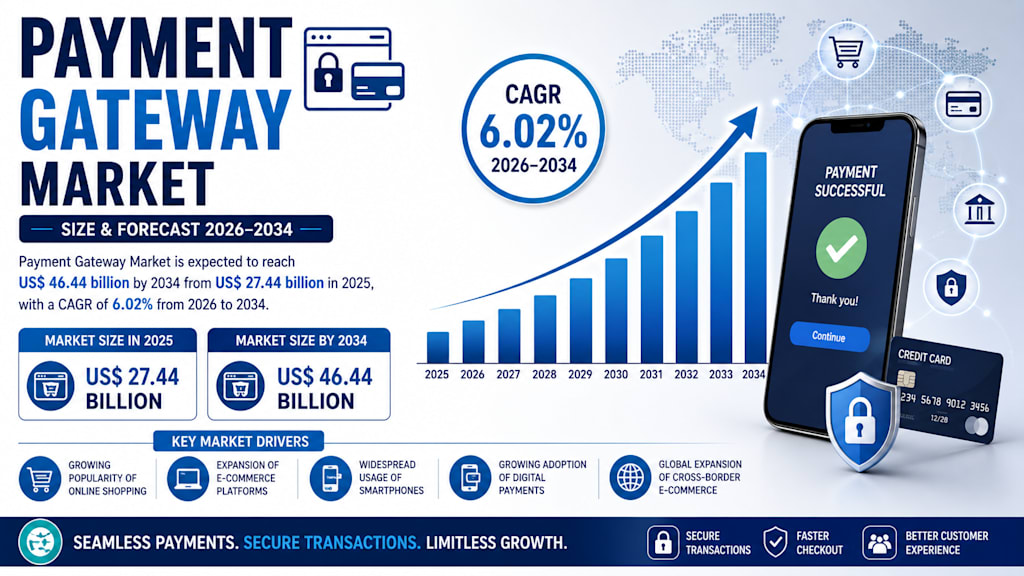
According to Renub Research, the global Payment Gateway Market is expected to grow from US$ 27.44 billion in 2025 to US$ 46.44 billion by 2034, expanding at a compound annual growth rate (CAGR) of 6.02% between 2026 and 2034. This growth is being driven by the continued expansion of e-commerce, increasing adoption of digital payments, rising smartphone usage, and the growing popularity of cross-border online commerce.
As businesses and consumers continue embracing digital transactions, payment gateways are becoming one of the most important pieces of infrastructure in the global financial ecosystem.

What Exactly Is a Payment Gateway?
Most consumers rarely think about what happens after clicking the "Pay Now" button during an online purchase.
Within seconds, a complex series of processes takes place.
A payment gateway acts as a secure bridge between the customer, merchant, payment processor, and financial institution. It verifies payment information, encrypts sensitive data, authorizes transactions, and ensures that funds move securely from one party to another.
Without payment gateways, modern e-commerce would struggle to function efficiently.
These systems handle various payment methods, including credit cards, debit cards, digital wallets, bank transfers, contactless payments, and increasingly, newer options such as Buy Now, Pay Later services and cryptocurrency transactions.
Their primary goal is to make payments fast, secure, and seamless while protecting both merchants and consumers from fraud and data breaches.
As digital commerce expands globally, the importance of reliable payment gateways continues growing.
The E-Commerce Boom Is Fueling Demand
One of the strongest drivers behind the payment gateway market is the explosive growth of e-commerce.
Consumers increasingly prefer shopping online because it offers convenience, wider product selections, competitive pricing, and home delivery options. Businesses, meanwhile, benefit from the ability to reach customers beyond traditional geographic limitations.
This shift has created enormous demand for payment infrastructure.
Every online transaction requires secure payment processing. Whether a customer purchases clothing, electronics, groceries, software subscriptions, or travel services, payment gateways facilitate the movement of funds.
The rise of mobile commerce has further accelerated demand.
Consumers now shop directly from smartphones and tablets, requiring payment systems that function seamlessly across multiple devices and platforms. Businesses increasingly seek payment solutions that support both online and offline sales channels while providing unified transaction management.
As global e-commerce continues expanding, payment gateways are becoming indispensable to digital business operations.
The Shift Toward Cashless Economies
The global movement toward cashless transactions is reshaping consumer behavior.
Governments, financial institutions, and technology companies are actively promoting digital payment adoption to improve convenience, transparency, and financial inclusion. Mobile banking, digital wallets, real-time payment systems, and contactless payment technologies are increasingly replacing traditional cash transactions.
Consumers appreciate the speed and simplicity of digital payments.
Rather than carrying cash or visiting physical bank branches, individuals can complete purchases instantly through smartphones, wearable devices, and online platforms. Businesses also benefit from faster transaction processing, improved record keeping, and reduced cash handling costs.
The COVID-19 pandemic further accelerated this trend by encouraging contactless transactions and reducing reliance on physical cash.
As societies continue embracing digital financial services, payment gateways are becoming essential components of modern economic infrastructure.
Smartphones Have Changed Everything
The rapid adoption of smartphones has transformed the payments landscape.
Today, billions of people worldwide use smartphones as primary tools for communication, shopping, entertainment, and financial management. Mobile applications have become gateways to digital commerce, enabling users to complete transactions anytime and anywhere.
This shift has dramatically increased demand for payment gateways capable of supporting mobile-first experiences.
Consumers expect fast checkout processes, multiple payment options, and secure authentication methods. Businesses that fail to provide seamless mobile payment experiences risk losing customers to competitors.
Payment gateway providers have responded by developing mobile-optimized solutions that support digital wallets, QR code payments, one-click purchasing, and in-app transactions.
The smartphone revolution continues creating new opportunities for payment innovation and market expansion.
Technology Is Making Payments Smarter and Safer
Technological innovation is playing a central role in the evolution of payment gateways.
Modern platforms incorporate advanced technologies that improve security, efficiency, and customer experiences. Artificial intelligence and machine learning are increasingly used to detect suspicious transactions and identify fraud patterns in real time.
These systems analyze large volumes of transaction data to identify unusual activity and prevent fraudulent payments before they occur.
Security technologies such as tokenization, end-to-end encryption, and 3D Secure authentication provide additional protection by safeguarding sensitive customer information.
At the same time, cloud-based architectures and API-driven platforms are making payment gateways more flexible and scalable.
Businesses can integrate payment capabilities directly into websites, mobile applications, and point-of-sale systems without extensive technical complexity.
These innovations are helping payment gateways become more intelligent, secure, and adaptable to changing business needs.
Cross-Border Commerce Is Expanding Opportunities
The internet has removed many of the traditional barriers that once limited international commerce.
Today, consumers routinely purchase products and services from businesses located in other countries. This growth in cross-border e-commerce has created new opportunities and new challenges for payment providers.
International transactions require support for multiple currencies, local payment preferences, regulatory compliance, and foreign exchange processing.
Payment gateways have evolved to address these requirements by offering multi-currency capabilities, localized checkout experiences, and international payment acceptance.
Businesses benefit from the ability to reach customers worldwide without establishing physical operations in every market.
As global commerce becomes increasingly interconnected, payment gateways capable of supporting international transactions are becoming even more valuable.
Buy Now, Pay Later and Alternative Payments Are Growing
Consumer preferences regarding payments continue evolving.
Traditional card payments remain dominant, but alternative payment methods are gaining popularity across many regions. Buy Now, Pay Later services have emerged as particularly attractive options for consumers seeking flexible financing solutions.
These services allow shoppers to spread payments across multiple installments without relying on traditional credit products.
Digital wallets are also experiencing significant growth. Consumers increasingly prefer storing payment credentials electronically and completing transactions through platforms that offer convenience and security.
Cryptocurrency payments, while still relatively niche, are attracting interest among technology-focused businesses and consumers.
Payment gateways that support multiple payment methods are better positioned to meet changing consumer expectations and capture new growth opportunities.
Security Remains a Major Challenge
Despite technological progress, security remains one of the industry's biggest challenges.
As digital transaction volumes increase, cybercriminals continue developing sophisticated techniques designed to exploit vulnerabilities within payment systems. Fraud, phishing attacks, account takeovers, and data breaches remain significant concerns for businesses and consumers alike.
Payment gateway providers must continuously invest in security infrastructure to stay ahead of evolving threats.
Compliance with standards such as PCI DSS has become essential for maintaining trust and protecting sensitive financial information. Real-time monitoring, fraud detection algorithms, and customer authentication protocols are now critical components of modern payment systems.
For smaller businesses, maintaining adequate cybersecurity protections can be particularly challenging.
The ongoing battle against fraud and cybercrime will remain a defining issue for the payment gateway industry in the years ahead.
Regulatory Complexity Creates Additional Pressure
Payment gateways operate within highly regulated environments.
Different countries maintain unique rules governing financial transactions, data privacy, anti-money laundering requirements, and consumer protection. Navigating these regulations can be complex, particularly for companies operating internationally.
Cross-border payments introduce additional challenges related to taxation, currency conversion, and local banking regulations.
Regulatory changes require constant monitoring and system updates to ensure ongoing compliance. Failure to meet legal requirements can result in penalties, operational restrictions, and reputational damage.
For payment providers, balancing innovation with compliance remains an ongoing challenge.
Regional Markets Driving Growth
The United States remains one of the largest payment gateway markets globally.
Strong e-commerce activity, widespread digital payment adoption, and significant fintech innovation continue driving demand. Businesses increasingly rely on advanced payment technologies that support mobile commerce, subscription services, and international transactions.
Germany is another important market, supported by high internet penetration, strong consumer trust in digital payments, and compliance frameworks such as PSD2. The country's mature e-commerce ecosystem continues creating opportunities for payment gateway providers.
China represents one of the world's most dynamic digital payment environments. Mobile wallets, QR code payments, and digital financial services have become deeply integrated into everyday life, creating enormous demand for sophisticated payment processing solutions.
Saudi Arabia is also experiencing rapid growth as digital transformation initiatives, e-commerce expansion, and government-backed cashless economy programs accelerate payment technology adoption.
These regional trends demonstrate the global nature of payment gateway expansion.
The Future of Payment Processing
The future of payment gateways will likely be shaped by automation, artificial intelligence, and greater financial connectivity.
Emerging technologies such as blockchain, biometric authentication, real-time payments, and embedded finance are expected to influence how transactions are processed and managed.
Consumers will increasingly expect instant, frictionless, and highly secure payment experiences.
Businesses will continue demanding payment systems capable of supporting multiple channels, currencies, and customer preferences. Payment providers that successfully combine security, convenience, and flexibility will be best positioned for future growth.
As digital commerce becomes increasingly central to the global economy, payment gateways will continue evolving from simple transaction processors into sophisticated financial technology platforms.
Final Thoughts
Payment gateways have become one of the most important technologies supporting the modern digital economy. Every online purchase, subscription payment, mobile transaction, and cross-border sale depends on secure and efficient payment infrastructure working behind the scenes.
With the global Payment Gateway Market projected to grow from US$ 27.44 billion in 2025 to US$ 46.44 billion by 2034, the industry is positioned for sustained expansion. The continued rise of e-commerce, digital wallets, mobile payments, and international online commerce will create significant opportunities for innovation and growth.
As consumers increasingly embrace cashless lifestyles and businesses continue digitizing operations, payment gateways will remain essential to enabling secure, seamless, and trustworthy financial interactions worldwide. In many ways, the future of commerce depends on how effectively these invisible technologies continue connecting buyers, sellers, and financial institutions across the globe.
About the Creator
Enjoyed the story? Support the Creator.
Subscribe for free to receive all their stories in your feed.
Comments
There are no comments for this story
Be the first to respond and start the conversation.