
Why Next-Generation Sequencing Is Transforming the Future of Healthcare in the United States
Precision medicine, cancer diagnostics, and groundbreaking genomics research are driving explosive growth in the U.S. sequencing industry

A Genomic Revolution Is Reshaping Modern Medicine
The healthcare industry is entering a new era where treatments are becoming increasingly personalized, diseases are being identified earlier, and medical decisions are being guided by an individual's genetic profile. At the center of this transformation is Next-Generation Sequencing (NGS), one of the most significant technological breakthroughs in modern healthcare.
What once required years of research and enormous financial resources can now be accomplished in a fraction of the time. Scientists, physicians, and pharmaceutical companies can rapidly analyze millions of DNA and RNA fragments, enabling deeper insights into diseases and opening new possibilities for personalized treatment.
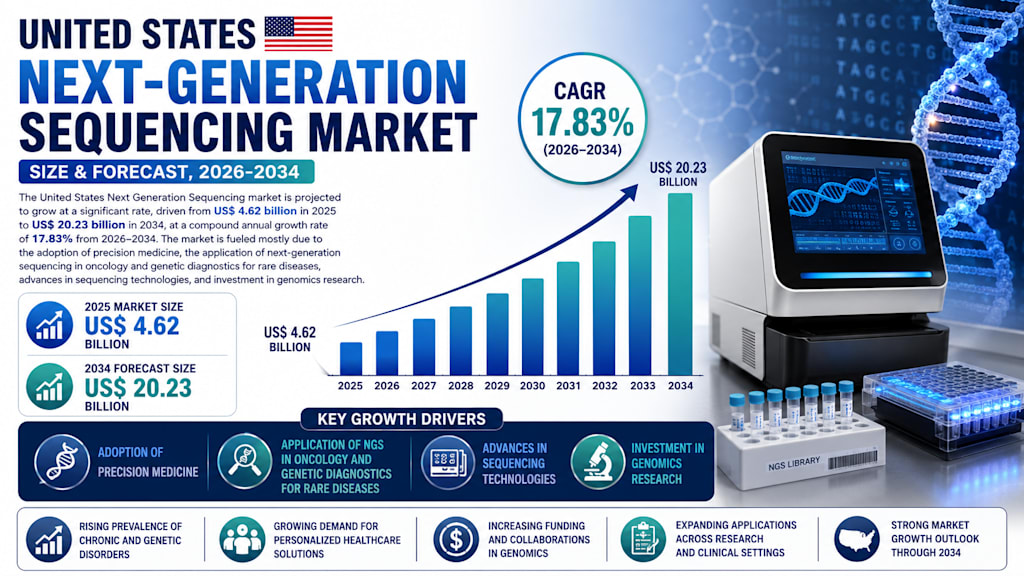
The growing role of genomics in healthcare is creating substantial momentum for the industry. According to Renub Research, the United States Next-Generation Sequencing Market is projected to grow from US$ 4.62 billion in 2025 to US$ 20.23 billion by 2034, expanding at an impressive compound annual growth rate (CAGR) of 17.83% between 2026 and 2034. This remarkable growth is being driven by the widespread adoption of precision medicine, increasing use of genomic testing in oncology, advances in sequencing technologies, and significant investments in genomics research.
As healthcare becomes increasingly data-driven, NGS is emerging as one of the most influential technologies shaping the future of medicine.
Understanding Next-Generation Sequencing
Next-Generation Sequencing, often referred to as NGS, is an advanced genomic technology that enables the rapid sequencing of DNA and RNA molecules. Unlike traditional sequencing methods, NGS can analyze millions of genetic fragments simultaneously, allowing researchers and clinicians to obtain comprehensive genomic information quickly and efficiently.
This capability has revolutionized multiple areas of healthcare and life sciences. NGS is now widely used in cancer genomics, rare disease diagnostics, infectious disease monitoring, fertility research, drug discovery, and personalized medicine programs.
The ability to generate detailed genetic information at lower costs and faster speeds has transformed NGS from a specialized research tool into a critical component of modern clinical practice. Healthcare providers increasingly rely on genomic information to improve diagnoses, guide treatment decisions, and identify disease risks before symptoms appear.
Precision Medicine Is Fueling Demand
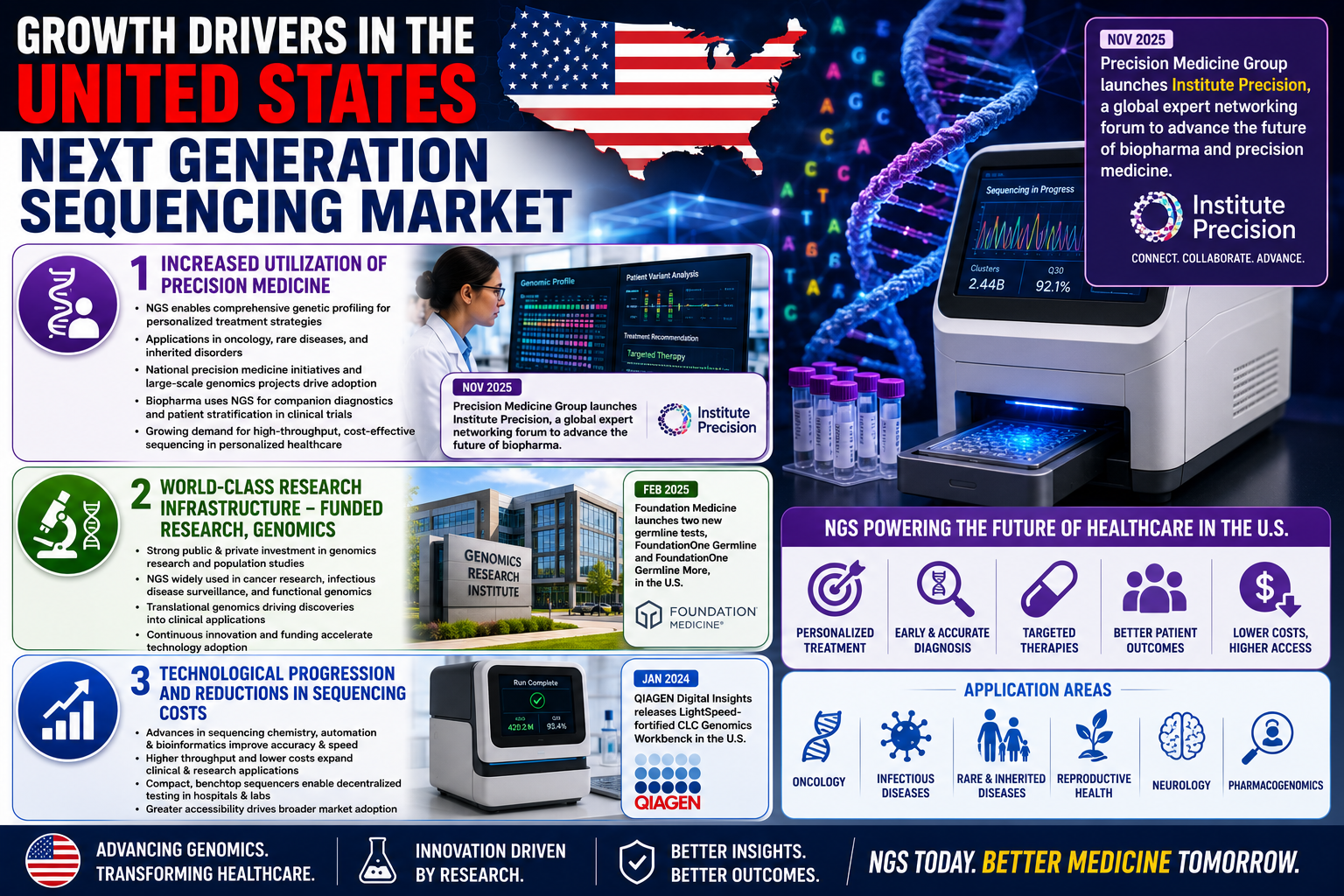
One of the strongest drivers of the U.S. NGS market is the rapid growth of precision medicine.
Traditional healthcare approaches often apply standardized treatments to large patient populations. Precision medicine takes a different path by using an individual's genetic information to customize therapies, predict treatment responses, and improve outcomes.
NGS makes this personalized approach possible by providing detailed genomic insights that help physicians understand the underlying causes of disease. In oncology, for example, sequencing technologies allow doctors to identify specific genetic mutations responsible for cancer growth. This information can then be used to select targeted therapies that are more likely to be effective for individual patients.
The growing adoption of precision medicine across the United States is creating strong demand for high-throughput sequencing platforms capable of delivering accurate and cost-effective genomic data. Pharmaceutical companies are also increasingly using NGS to develop companion diagnostics and identify patient populations most likely to benefit from specific therapies.
As personalized healthcare becomes more mainstream, NGS is expected to play an even greater role in clinical decision-making.
Cancer Care Is Being Revolutionized
Among all medical applications, oncology remains one of the most important areas driving NGS adoption.
Cancer is fundamentally a genetic disease, making genomic analysis an essential tool for understanding tumor biology and developing effective treatment strategies. NGS allows clinicians to analyze multiple genetic mutations simultaneously, providing a comprehensive picture of a patient's cancer.
This information helps physicians identify targeted treatment options, monitor disease progression, and evaluate the likelihood of treatment success. In many cases, NGS can reveal genetic alterations that would be difficult or impossible to detect using conventional diagnostic methods.
The increasing emphasis on early detection and personalized cancer care is fueling widespread adoption of NGS-based testing throughout hospitals, research centers, and specialized oncology clinics across the country.
As cancer treatment becomes increasingly dependent on genomic information, sequencing technologies are expected to remain central to innovation in oncology care.
Genomics Research Continues to Expand
The United States remains a global leader in genomics research, providing a strong foundation for continued market growth.
Government agencies, universities, biotechnology companies, and healthcare institutions continue to invest heavily in large-scale genomic studies aimed at improving disease understanding and advancing medical science. These investments support research in areas such as cancer biology, rare diseases, infectious disease surveillance, population health, and functional genomics.
NGS serves as the backbone of many of these initiatives because it provides researchers with unprecedented access to genetic information. The ability to analyze entire genomes quickly and accurately has accelerated scientific discovery while creating new opportunities for medical innovation.
The country's world-class research infrastructure continues to encourage adoption of sequencing technologies and supports the commercialization of new genomic applications.
Technology Advancements Are Lowering Barriers
One of the most important factors supporting market expansion is the continuous improvement of sequencing technologies.
Over the past decade, advances in sequencing chemistry, automation, bioinformatics, and data processing have dramatically improved the speed, accuracy, and affordability of NGS. These innovations have reduced operational complexity while making genomic testing more accessible to healthcare providers.
Modern sequencing platforms can process larger numbers of samples in shorter timeframes while generating increasingly reliable results. Compact benchtop sequencers have also expanded access by enabling hospitals and clinical laboratories to perform sequencing services in-house.
At the same time, advances in bioinformatics software are helping researchers and clinicians interpret complex genomic data more efficiently. Improved workflows and automation are reducing barriers to adoption and enabling broader integration of NGS into routine healthcare settings.
As costs continue to decline, sequencing technologies are expected to become even more widely available across healthcare systems.
Drug Discovery Is Becoming Faster and Smarter
The pharmaceutical industry is increasingly utilizing NGS to improve the efficiency of drug development.
Sequencing technologies help researchers identify disease-related genetic targets, discover biomarkers, understand treatment responses, and develop companion diagnostics. These capabilities allow pharmaceutical companies to make more informed decisions throughout the drug development process.
By providing deeper insights into disease mechanisms and patient populations, NGS helps reduce uncertainty and improve the likelihood of successful clinical outcomes. This approach is particularly valuable in areas such as oncology, rare diseases, and biologics development.
The growing emphasis on personalized therapies is further increasing the importance of genomic information in pharmaceutical research. As drug developers seek more targeted and effective treatments, demand for sequencing technologies continues to rise.
NGS Is Becoming Mainstream in Hospitals
Hospitals and healthcare systems are increasingly adopting NGS technologies as genomic medicine becomes a standard component of patient care.
Sequencing is now commonly used for cancer profiling, prenatal screening, rare disease diagnosis, inherited disease testing, and infectious disease detection. The growing availability of user-friendly sequencing platforms is making it easier for healthcare providers to integrate genomic testing into clinical workflows.
Many hospitals are establishing their own sequencing facilities, while others partner with specialized service providers to access genomic testing capabilities. Increased physician awareness and expanding reimbursement coverage for certain genetic tests are further supporting adoption.
As genomic medicine continues to evolve, hospitals are expected to become one of the largest end-user segments within the NGS market.
Challenges Remain Despite Strong Growth
Despite its tremendous potential, the NGS industry faces several challenges.
One of the most significant issues involves data management. Sequencing technologies generate enormous amounts of genomic information that require advanced computational infrastructure for storage, analysis, and interpretation. Many healthcare organizations continue to face difficulties integrating genomic data into existing systems.
The shortage of trained bioinformaticians and genetic counselors further complicates implementation, particularly for smaller laboratories and healthcare facilities. These workforce limitations can increase operational costs and slow adoption.
Regulatory and reimbursement uncertainties also remain important considerations. Approval processes for genomic tests can be complex, and reimbursement policies often vary between insurance providers. This inconsistency can create financial uncertainty for laboratories and diagnostic companies while delaying commercialization of innovative testing solutions.
California, Texas, New York, and New Jersey Lead Adoption
Several states have emerged as major hubs for NGS innovation and adoption.
California remains one of the most advanced sequencing markets in the country due to its concentration of biotechnology firms, research institutions, venture capital investment, and world-renowned healthcare organizations. The state's leadership in cancer research, rare disease diagnostics, and drug development continues to drive demand for sequencing technologies.
New York benefits from a strong academic and medical ecosystem that actively utilizes NGS for precision medicine, oncology research, prenatal screening, and population health initiatives.
New Jersey's significant pharmaceutical and biotechnology presence makes it a major center for drug discovery, biomarker research, and companion diagnostics development.
Texas has become one of the fastest-growing NGS markets due to expanding healthcare infrastructure, rising cancer incidence, and substantial investments in biotechnology and genomics research.
Together, these regions are helping shape the future direction of genomic medicine in the United States.
Final Thoughts
The United States Next-Generation Sequencing market is entering a period of extraordinary expansion driven by advances in genomics, precision medicine, and biotechnology innovation.
The projected increase from US$ 4.62 billion in 2025 to US$ 20.23 billion by 2034 reflects the growing importance of genomic information in modern healthcare. From cancer diagnostics and rare disease detection to drug discovery and personalized treatment planning, NGS is transforming how diseases are understood, diagnosed, and treated.
While challenges related to data management, workforce shortages, and reimbursement policies remain, ongoing technological advancements are making sequencing more accessible and practical than ever before.
As healthcare continues moving toward personalized, data-driven care, Next-Generation Sequencing is poised to become one of the most powerful tools shaping the future of medicine in the United States.
About the Creator
Enjoyed the story? Support the Creator.
Subscribe for free to receive all their stories in your feed.
Comments
There are no comments for this story
Be the first to respond and start the conversation.