
Why Is Soup Remaining a Staple Meal Choice for Health-Conscious and Busy Americans?
How Convenience, Nutrition, and Clean-Label Innovation Are Driving Growth in the United States Soup Market

Soup has long been a comfort food favorite in American households, offering warmth, nourishment, and versatility. However, in today's fast-paced world, soup has evolved beyond its traditional role as a cold-weather meal. Modern consumers increasingly view soup as a convenient, nutritious, and affordable food option that aligns with busy lifestyles and changing dietary preferences.
From ready-to-eat wet soups and frozen varieties to premium organic recipes and globally inspired flavors, the soup category continues to adapt to evolving consumer expectations. Manufacturers are responding with healthier formulations, innovative packaging, plant-based ingredients, and clean-label products that appeal to a broader audience.
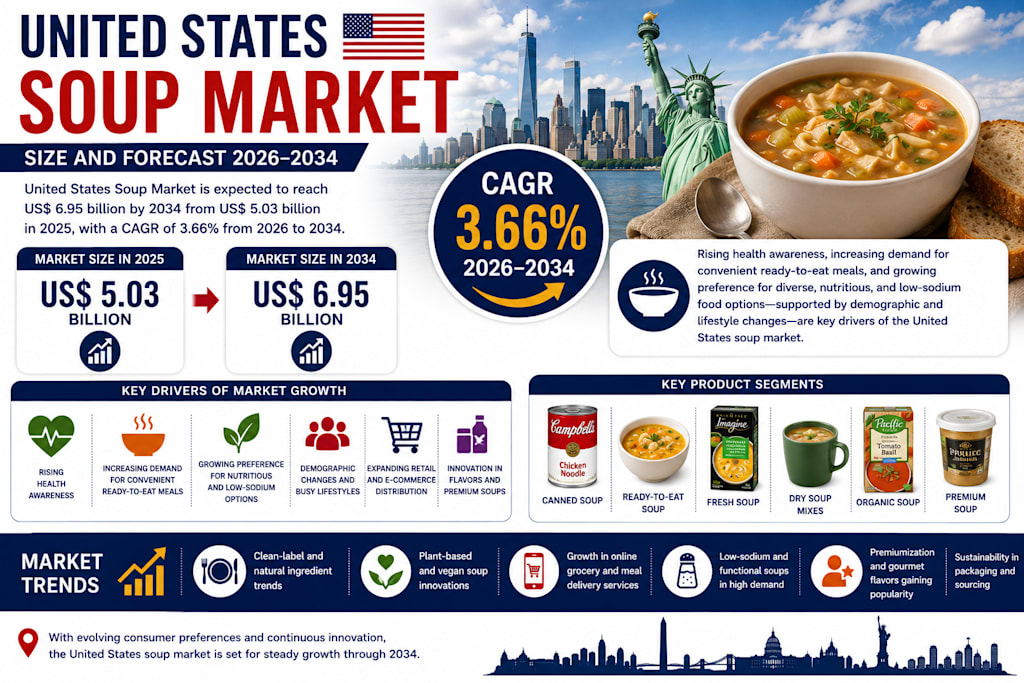
According to Renub Research, the United States Soup Market is expected to grow from US$ 5.03 billion in 2025 to US$ 6.95 billion by 2034, expanding at a compound annual growth rate (CAGR) of 3.66% between 2026 and 2034. Rising health awareness, increasing demand for convenient meal solutions, and growing consumer preference for nutritious, low-sodium, and diverse food options are among the key factors driving market growth.
As consumers continue seeking affordable, healthy, and easy-to-prepare meals, soup remains one of the most adaptable and resilient categories within the U.S. food industry.

Soup Continues to Evolve with Modern Consumer Needs
Soup remains one of the most versatile food categories available in the United States.
Traditionally consumed as an appetizer or side dish, soup has increasingly become a complete meal solution. Modern products incorporate vegetables, legumes, grains, lean proteins, and plant-based ingredients to provide balanced nutrition while maintaining convenience.
Today's market includes canned soups, frozen soups, dry soups, ready-to-eat wet soups, condensed soups, refrigerated varieties, and broth-based products. These options cater to a wide range of dietary preferences and lifestyle requirements.
Consumers appreciate soup because it offers convenience without necessarily sacrificing nutrition. Many products provide vitamins, minerals, fiber, hydration, and satiety while requiring minimal preparation time.
As dietary preferences continue evolving, soup manufacturers are expanding offerings to address health-conscious consumers seeking functional and nutrient-dense meal options.
Convenience Remains One of the Strongest Growth Drivers
One of the most important factors supporting the growth of the U.S. soup market is the increasing demand for convenience foods.
Modern lifestyles leave many consumers with limited time for meal preparation. Working professionals, students, dual-income households, and single-person households increasingly seek products that can be prepared quickly while still delivering satisfying nutrition.
According to the U.S. Bureau of Labor Statistics, Americans spend less than one hour per day cooking on average, highlighting the growing demand for foods that require minimal preparation. Ready-to-eat soups, microwaveable options, and heat-and-serve formats fit perfectly into these time-constrained lifestyles.
Soup products offer long shelf life, easy storage, portability, and rapid preparation, making them highly attractive to consumers prioritizing convenience and efficiency.
As daily schedules become increasingly demanding, convenience is expected to remain a major growth catalyst for the soup industry.
Health-Conscious Consumers Are Driving Product Innovation
Health awareness has become one of the most significant influences on food purchasing behavior in the United States.
Consumers are increasingly paying attention to ingredient quality, nutritional content, calorie levels, and sodium intake. Growing concerns regarding obesity, cardiovascular disease, diabetes, and overall wellness are encouraging individuals to seek healthier meal alternatives.
Soup aligns well with these preferences when formulated using vegetables, legumes, lean proteins, and nutrient-rich ingredients. Broth-based soups, plant-forward recipes, and clean-label formulations have become especially popular among health-conscious consumers.
Many manufacturers are responding by introducing products that emphasize organic ingredients, reduced sodium content, higher protein levels, and natural flavor profiles.
As preventive health and nutrition continue shaping consumer behavior, demand for healthier soup options is expected to increase across all age groups.
Demographic Changes Are Supporting Market Expansion
Changing household structures are creating additional opportunities for the soup industry.
Nearly 30% of U.S. households now consist of a single individual, increasing demand for portion-controlled and easy-to-prepare meal solutions. Single consumers often prioritize convenience and affordability, making soup an attractive option for everyday consumption.
Additionally, the aging population continues supporting demand for soups due to their ease of preparation, digestibility, and nutritional value. Older consumers frequently seek meals that are both convenient and easy to consume while supporting specific dietary requirements.
Families with busy schedules also appreciate soup's versatility as a quick lunch, dinner, or snack option.
These demographic shifts continue creating favorable conditions for sustained market growth.
Affordability Remains a Major Advantage
Economic pressures continue influencing consumer purchasing decisions across the food sector.
Rising grocery prices have encouraged many households to seek cost-effective meal solutions that offer value without compromising nutrition. Soup remains one of the most affordable prepared food categories available to consumers.
Many canned and dried soup products provide multiple servings at relatively low cost, making them attractive options for budget-conscious households. Their long shelf life also helps reduce food waste while allowing consumers to maintain stocked pantries.
As economic uncertainty and inflationary pressures persist, affordability remains an important factor supporting demand across multiple soup segments.
Consumers increasingly appreciate products that combine convenience, nutrition, and cost efficiency, positioning soup favorably within the broader food market.
Clean-Label and Plant-Based Trends Are Reshaping the Market
Consumers are becoming increasingly selective about ingredient transparency and product sourcing.
Many shoppers now actively seek foods that contain recognizable ingredients and minimal artificial additives. This shift has accelerated demand for clean-label soup products featuring natural vegetables, herbs, spices, and whole-food ingredients.
Plant-based eating habits are also gaining momentum. Consumers interested in reducing meat consumption are turning to vegetable-based soups, lentil recipes, bean soups, and other plant-forward options that provide nutrition without sacrificing flavor.
Manufacturers are responding by expanding portfolios that emphasize organic ingredients, sustainable sourcing, and transparent labeling practices.
The combination of health awareness and environmental consciousness continues encouraging innovation throughout the soup category.
Premiumization Is Expanding Consumer Choices
The soup market is increasingly moving beyond traditional canned products.
Premium and gourmet soups are gaining popularity among consumers seeking restaurant-quality experiences at home. Manufacturers are introducing chef-inspired recipes, international flavors, artisan ingredients, and premium packaging formats designed to elevate the category.
Consumers are showing growing interest in soups inspired by global cuisines, including Asian, Mediterranean, Latin American, and European flavors.
This premiumization trend allows manufacturers to attract higher-income consumers while differentiating products in a competitive marketplace.
As culinary exploration becomes more important to consumers, premium soup offerings are expected to remain an important growth area.
Challenges Facing the United States Soup Market
Despite positive growth prospects, several challenges continue affecting the industry.
One major concern is the high sodium content traditionally associated with many packaged soup products. Some canned soups contain significant amounts of sodium, leading health-conscious consumers to seek alternatives or reduce consumption.
Manufacturers must often invest in reformulation efforts to lower sodium levels while preserving flavor and product quality. These adjustments can increase production costs and create operational challenges.
Another challenge involves growing consumer skepticism toward ultra-processed foods. Many canned and shelf-stable soup products are perceived as highly processed, encouraging some consumers to favor refrigerated, fresh, or homemade alternatives.
To remain competitive, companies must continue improving ingredient quality, transparency, and nutritional profiles.
Successfully addressing these concerns will be critical for sustaining long-term market growth.
California Leads Demand for Healthy and Diverse Soup Options
California represents one of the largest and most influential soup markets in the United States.
The state's health-conscious population actively seeks nutritious, plant-based, organic, and clean-label food products. Consumers frequently embrace globally inspired flavors and innovative recipes that reflect California's diverse cultural landscape.
Cities such as Los Angeles and San Francisco drive strong demand for premium and specialty soup products.
The state's large senior population further contributes to consumption of convenient and nutrient-rich meal options. Combined with widespread online grocery adoption and a thriving foodservice industry, California remains a key market for soup manufacturers.
Texas Benefits from Health and Convenience Trends
Texas continues to represent a significant growth market for soup products.
Increasing health awareness is encouraging consumers to explore lower-sodium and nutrient-dense meal options. At the same time, large urban populations in cities such as Houston, Dallas, and Austin support demand for convenient ready-to-eat products.
Tex-Mex-inspired soups, chili-based varieties, and regionally influenced flavors remain particularly popular.
Retail expansion and broad product availability further support market growth throughout the state.
New York Drives Premium and Specialty Soup Consumption
New York's fast-paced urban environment creates strong demand for convenient meal solutions.
Consumers often seek portable, single-serve, and premium soup products that align with busy lifestyles. The state's diverse population also supports demand for international flavors, specialty ingredients, and health-focused formulations.
Cold winter temperatures further contribute to strong seasonal consumption patterns, making New York one of the most important markets within the industry.
Florida Benefits from a Large Senior Population
Florida's large retiree population continues supporting soup consumption.
Older consumers often favor soups due to their convenience, digestibility, and nutritional benefits. The state's multicultural population also contributes to demand for diverse flavor profiles influenced by Caribbean, Latin American, and international cuisines.
Tourism and hospitality sectors further strengthen foodservice demand for soup products across hotels, restaurants, and institutional settings.
Ready-to-Eat Soups and Foodservice Continue Expanding
Ready-to-eat wet soups remain one of the fastest-growing segments within the market.
Consumers increasingly prefer heat-and-serve products that offer convenience without sacrificing taste or nutrition. Manufacturers continue introducing premium ingredients, globally inspired recipes, and healthier formulations to meet evolving preferences.
Meanwhile, the foodservice sector continues supporting demand through restaurants, hospitals, schools, cafeterias, and catering operations. Operators value soup for its versatility, affordability, and compatibility with health-focused menu trends.
These segments are expected to remain important contributors to future industry growth.
Recent Industry Developments Highlight Innovation
Innovation remains a defining characteristic of the U.S. soup market.
In December 2024, Panera Bread launched a limited-edition holiday soup cup collection and introduced new seasonal varieties including Hearty Fireside Chili and Rustic Baked Potato Soup.
In November 2024, Amy's Kitchen expanded its portfolio with five new soups featuring organic ingredients and globally inspired flavors designed to appeal to clean-label consumers.
These developments reflect the industry's ongoing focus on product diversification, premiumization, and consumer engagement.
Leading Companies Competing in the Market
The U.S. soup market features strong competition among major food manufacturers, including The Campbell's Company, Kellanova, PepsiCo, Nestlé, General Mills Inc., The Kraft Heinz Company, Hain Celestial Group, Cargill Incorporated, Conagra Brands, Inc., and Greencore. These companies continue investing in innovation, healthier formulations, and expanded product portfolios to strengthen their market positions.
Final Thoughts
The United States Soup Market continues evolving as consumers increasingly prioritize convenience, nutrition, affordability, and flavor diversity. Rising health awareness, changing household structures, clean-label preferences, and growing demand for ready-to-eat meals are creating favorable conditions for long-term growth.
With the market expected to grow from US$ 5.03 billion in 2025 to US$ 6.95 billion by 2034, soup remains one of the most resilient and adaptable food categories in the country.
As manufacturers continue innovating through healthier formulations, premium offerings, and globally inspired flavors, soup is well-positioned to remain a staple meal solution for American consumers seeking both comfort and convenience.
About the Creator
Enjoyed the story? Support the Creator.
Subscribe for free to receive all their stories in your feed.
Comments
There are no comments for this story
Be the first to respond and start the conversation.