
Why Is School Furniture Becoming a Strategic Investment in the Future of American Education?
How Education Infrastructure Spending, Flexible Learning Spaces, Ergonomic Design, and Technology Integration Are Driving Growth in the United States School Furniture Market

The learning environment has become an increasingly important factor in shaping educational outcomes across the United States. While curriculum development, technology adoption, and teacher quality remain essential components of academic success, schools are also recognizing the critical role that furniture plays in supporting student engagement, collaboration, comfort, and overall well-being.
Today's classrooms look very different from those of previous generations. Traditional rows of fixed desks are gradually being replaced by flexible seating arrangements, collaborative workstations, standing desks, mobile storage systems, and technology-friendly furniture designed to support modern teaching methods. As educational institutions continue investing in infrastructure upgrades, school furniture is emerging as a key component of classroom transformation.
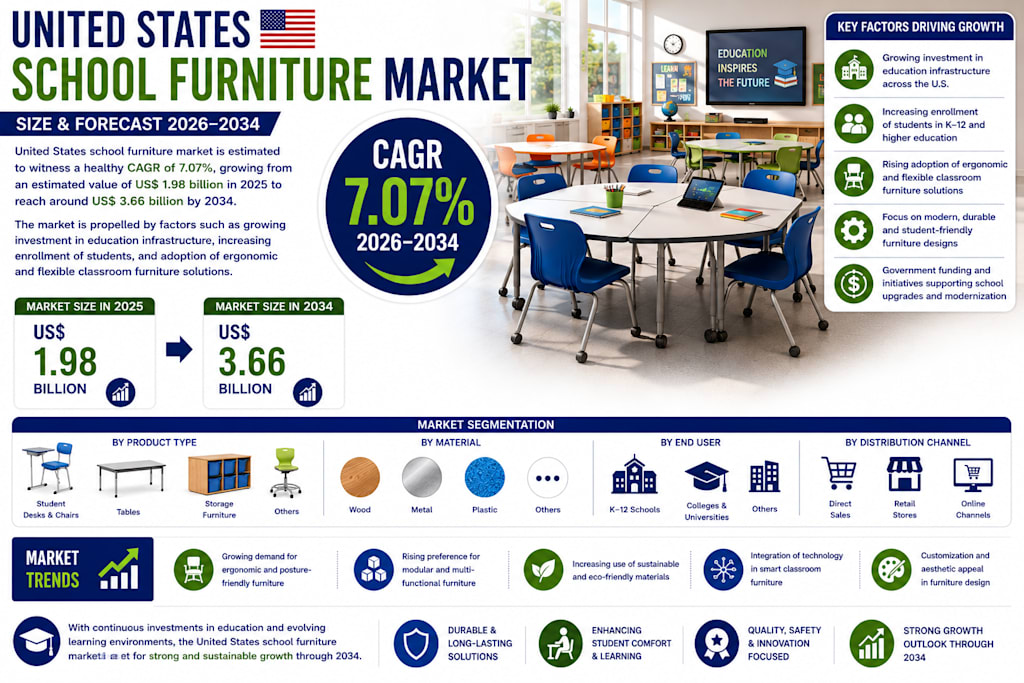
According to Renub Research, the United States School Furniture Market is projected to grow from US$ 1.98 billion in 2025 to approximately US$ 3.66 billion by 2034, expanding at a compound annual growth rate (CAGR) of 7.07% from 2026 to 2034. Rising investments in educational infrastructure, increasing student enrollment, growing awareness of ergonomic design, and the adoption of flexible classroom solutions are among the primary factors fueling market growth.
As schools increasingly prioritize student-centered learning environments, furniture is becoming far more than a classroom necessity—it is becoming a strategic educational investment.
School Furniture Plays a Critical Role in Learning Environments
School furniture encompasses a wide range of products designed to support educational activities, administration, collaboration, and student well-being.
Common categories include desks, chairs, tables, lockers, storage systems, whiteboards, library furniture, laboratory furniture, and technology-integrated workstations. Modern furniture solutions are designed with durability, flexibility, ergonomics, and functionality in mind.
Well-designed furniture contributes to student concentration, classroom organization, and teaching effectiveness. It also supports the implementation of innovative educational models that encourage participation, creativity, and teamwork.
As educational practices continue evolving, the importance of adaptable and student-friendly furniture continues increasing.
Education Infrastructure Investment Is Driving Market Growth
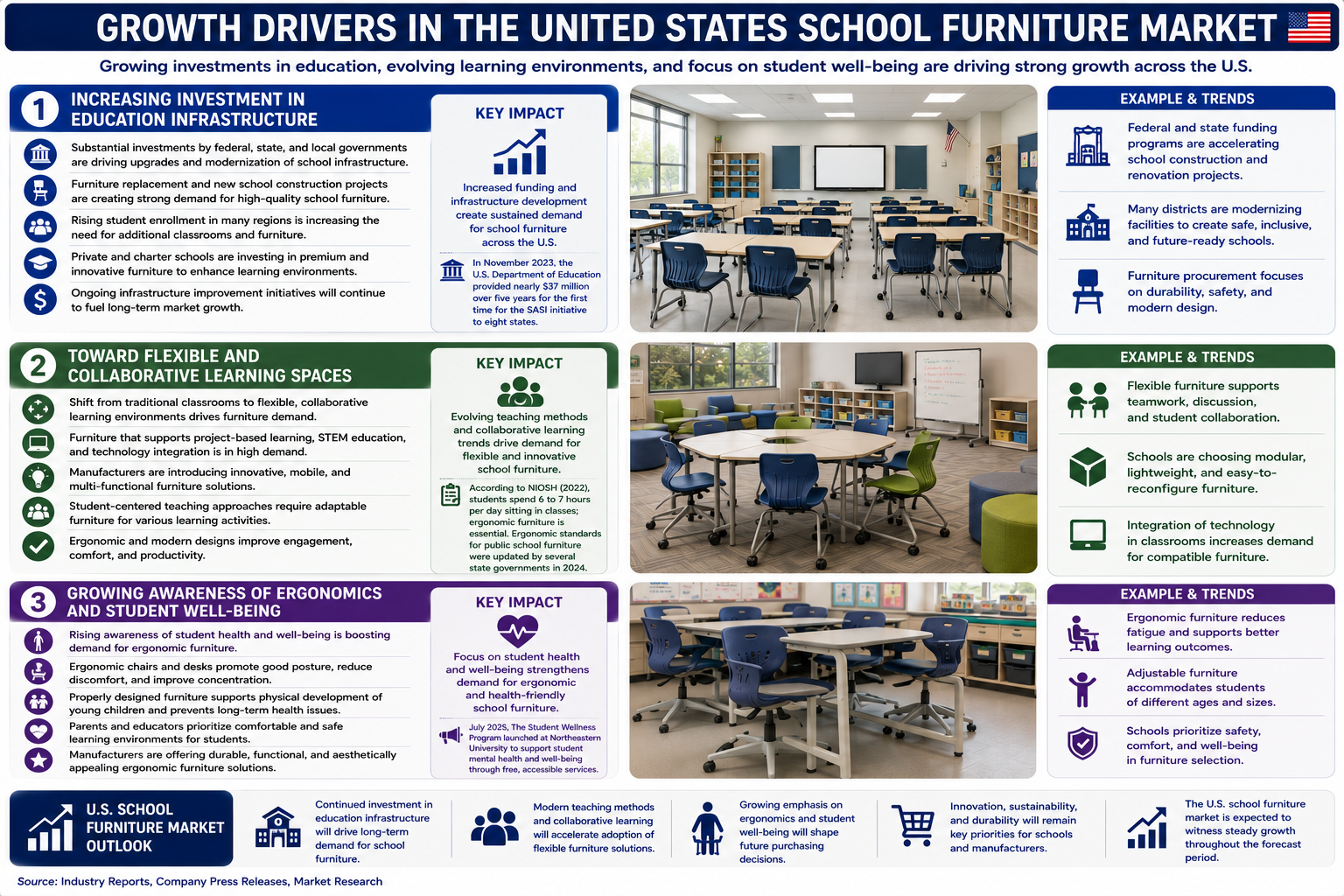
One of the strongest drivers of the U.S. school furniture market is increasing investment in educational infrastructure.
Federal, state, and local governments continue allocating significant resources toward modernizing schools, renovating classrooms, and improving educational facilities. Infrastructure upgrades often include large-scale replacement of aging furniture systems that no longer meet modern educational requirements.
In addition to public funding, private educational institutions and charter schools are investing heavily in facility improvements to remain competitive and attract students.
In November 2023, the U.S. Department of Education announced nearly US$ 37 million in funding over five years through the Supporting America’s School Infrastructure initiative, further supporting modernization efforts nationwide.
As schools continue upgrading facilities, demand for innovative furniture solutions is expected to rise substantially.
Flexible Learning Spaces Are Reshaping Classroom Design
Educational approaches have evolved dramatically in recent years, influencing how classrooms are designed and furnished.
Traditional classroom layouts often emphasized fixed seating arrangements focused on teacher-centered instruction. Today, many schools are adopting collaborative and student-centered learning models that require more adaptable environments.
Flexible classrooms support project-based learning, STEM education, group activities, and interactive teaching methods. These spaces frequently incorporate mobile desks, modular seating, movable tables, and reconfigurable furniture systems that can be adjusted quickly to accommodate different instructional needs.
Furniture manufacturers are increasingly developing products specifically designed to support collaborative learning and dynamic classroom environments.
As schools continue embracing flexible learning models, demand for adaptable furniture solutions will remain strong.
Ergonomics Is Becoming a Major Priority
Growing awareness regarding student health and wellness is significantly influencing furniture purchasing decisions.
Students often spend six to seven hours per day seated in classrooms, making furniture design an important factor affecting comfort, posture, concentration, and long-term physical development.
Poorly designed furniture can contribute to discomfort, fatigue, and musculoskeletal issues. In response, schools are increasingly investing in ergonomic desks and chairs that support proper posture and improve learning experiences.
Adjustable furniture solutions are particularly attractive because they accommodate students of different ages, sizes, and physical needs.
Parents, educators, and policymakers increasingly recognize that comfortable learning environments can positively influence academic performance and student engagement.
As awareness of student well-being grows, ergonomic furniture is expected to remain a key market driver.
Technology Integration Is Creating New Furniture Requirements
Technology has become deeply integrated into modern education, creating new opportunities within the school furniture market.
Classrooms increasingly rely on laptops, tablets, interactive displays, charging stations, and digital learning platforms. As a result, schools require furniture capable of supporting these technologies while maintaining flexibility and functionality.
Manufacturers are developing desks with integrated charging ports, cable management systems, device storage solutions, and collaborative workstations designed specifically for technology-enabled learning environments.
The growth of hybrid learning models and digital education initiatives is further increasing demand for technology-compatible furniture.
As educational technology continues evolving, furniture solutions must adapt to support increasingly connected classrooms.
Student Well-Being Is Influencing Purchasing Decisions
Educational institutions increasingly recognize that physical environments contribute significantly to student success.
Comfortable seating, adjustable workstations, and thoughtfully designed classroom layouts help reduce distractions while promoting concentration and engagement. Student wellness initiatives often include investments in learning environments that support both physical and mental well-being.
Research continues highlighting the relationship between classroom comfort and educational performance. As a result, schools are becoming more willing to invest in furniture that contributes to healthier and more productive learning environments.
The growing emphasis on student wellness is creating new opportunities for manufacturers focused on ergonomic and human-centered designs.
School Seating Furniture Continues Dominating Demand
Seating furniture remains one of the most important segments within the school furniture market.
Products such as chairs, stools, benches, and flexible seating solutions are essential components of virtually every educational environment. Schools increasingly seek seating options that balance comfort, durability, and mobility.
Ergonomic seating has gained particular attention because it supports posture and helps reduce discomfort during extended periods of study.
Movable seating systems are also becoming increasingly popular as schools adopt collaborative teaching models that require flexible classroom configurations.
As educational environments continue evolving, demand for innovative seating solutions is expected to remain strong.
Storage Furniture Is Supporting Classroom Efficiency
Storage solutions represent another important category within the market.
Lockers, cabinets, shelving systems, and mobile storage units help schools maintain organized learning environments while maximizing available space. Increasing student enrollment and growing classroom complexity have increased the need for efficient storage systems.
Many schools are adopting modular storage solutions that can be reconfigured based on changing requirements. Smart storage systems featuring digital locks and enhanced security capabilities are also gaining popularity.
Mobile storage furniture provides additional flexibility by allowing resources and equipment to be moved easily throughout school facilities.
As schools continue optimizing space utilization, storage furniture will remain a critical market segment.
Wood Furniture Continues Offering Durability and Sustainability
Wood remains one of the most widely used materials within the school furniture market.
Wood furniture is valued for its durability, natural appearance, and sustainability characteristics. Desks, chairs, cabinets, and classroom storage systems frequently utilize wood or engineered wood materials such as plywood and medium-density fiberboard.
Educational institutions increasingly appreciate furniture manufactured from responsibly sourced and recyclable materials.
Wood furniture also offers customization opportunities and long service life, making it an attractive investment for schools seeking durable classroom solutions.
As sustainability considerations continue influencing purchasing decisions, wood furniture is expected to maintain strong demand.
Metal Furniture Supports Long-Term Value
Metal furniture remains highly popular due to its strength, durability, and low maintenance requirements.
Products such as lockers, laboratory furniture, desks, and storage systems frequently utilize metal construction because of its ability to withstand intensive daily use.
Powder-coated finishes provide additional protection against rust and wear, helping schools maximize product lifespan.
Many manufacturers combine metal with materials such as wood and plastic to improve aesthetics while maintaining structural integrity.
The long-term value offered by metal furniture continues making it a preferred choice for many educational institutions.
Classroom Furniture Continues Driving Market Revenue
Classroom furniture represents the largest application segment within the market.
Desks, chairs, collaborative workstations, whiteboards, and modular learning systems form the foundation of modern educational environments. As teaching methods continue evolving, schools increasingly require furniture capable of supporting multiple instructional formats.
Modular classroom systems allow educators to quickly reconfigure learning spaces for lectures, group projects, independent study, and technology-based activities.
Manufacturers continue introducing innovative classroom solutions designed to improve functionality, flexibility, and student engagement.
As classroom modernization efforts continue, this segment is expected to remain the primary source of market growth.
Budget Constraints Remain a Major Challenge
Despite strong growth prospects, financial limitations continue affecting many educational institutions.
Public schools often face budget pressures that restrict their ability to replace aging furniture or invest in premium solutions. Educational administrators must balance furniture expenditures against competing priorities such as staffing, technology, maintenance, and instructional resources.
Smaller school districts are particularly vulnerable to funding challenges and may delay furniture upgrades despite clear needs.
Economic uncertainty and policy changes can also influence infrastructure spending levels.
Manufacturers must continue developing cost-effective solutions that meet quality expectations while remaining accessible to budget-conscious institutions.
Durability and Maintenance Requirements Create Challenges
School furniture must withstand heavy daily use, creating significant durability requirements.
Products are exposed to constant movement, wear, and occasional damage throughout their lifecycle. Educational institutions therefore seek furniture capable of maintaining performance over extended periods while minimizing maintenance costs.
Balancing durability, aesthetics, functionality, and affordability remains a challenge for manufacturers.
Schools increasingly evaluate total ownership costs rather than focusing solely on initial purchase prices when making furniture decisions.
Long-lasting, easy-to-maintain products are likely to remain highly attractive within the market.
California Leads School Furniture Demand
California remains one of the most influential school furniture markets in the United States.
The state's large student population, substantial investments in educational infrastructure, and commitment to sustainability create strong demand for innovative classroom furniture solutions. Schools increasingly prioritize ergonomic designs, flexible learning environments, and environmentally responsible materials.
California's emphasis on collaborative learning and student-centered education further supports adoption of modern furniture systems.
As infrastructure investments continue expanding, California is expected to remain a key growth market.
Texas, New York, and Florida Continue Expanding Opportunities
Texas benefits from rapid population growth and increasing student enrollment, creating strong demand for durable and affordable school furniture. Investments in both urban and rural educational infrastructure continue supporting market expansion.
New York's focus on modern learning environments and efficient space utilization has increased demand for flexible, collaborative, and ergonomically designed furniture solutions. Sustainability initiatives further influence purchasing decisions.
Florida's growing student population, infrastructure development projects, and emphasis on technology-enabled classrooms continue driving demand for modern school furniture products. Moisture-resistant and low-maintenance furniture solutions are particularly attractive within the state.
Together, these states represent some of the most important regional markets shaping industry growth.
Leading Companies Competing in the Market
Major participants in the United States school furniture market include Smith System, Steelcase Inc., MillerKnoll, Inc., The HON Company, Virco, Fleetwood Group, VS America, Inc., Hertz Furniture, Paragon Furniture, Haskell Education, and Marco Group. These companies continue investing in ergonomic innovation, sustainability, flexible classroom solutions, and technology integration to strengthen their market positions.
Final Thoughts
The United States School Furniture Market is evolving rapidly as educational institutions seek learning environments that promote collaboration, comfort, flexibility, and student success.
With the market projected to grow from US$ 1.98 billion in 2025 to US$ 3.66 billion by 2034, opportunities remain substantial for manufacturers capable of delivering innovative, ergonomic, and technology-friendly furniture solutions.
As classrooms continue transforming to support the future of education, school furniture will play an increasingly important role in shaping how students learn, interact, and thrive in modern educational environments
About the Creator
Enjoyed the story? Support the Creator.
Subscribe for free to receive all their stories in your feed.
Comments
There are no comments for this story
Be the first to respond and start the conversation.