
Why Is Plant-Based Meat Rapidly Transforming the Future of Food in the United States?
How Health Awareness, Sustainability Concerns, and Food Innovation Are Driving Growth in the United States Plant-Based Meat Market

The American food industry is undergoing one of its most significant transformations in decades as consumers increasingly embrace plant-based alternatives to traditional meat products. What was once considered a niche category aimed primarily at vegetarians and vegans has evolved into a mainstream movement attracting millions of consumers seeking healthier, more sustainable, and ethically produced food options.
Today's plant-based meat products are designed to closely replicate the taste, texture, appearance, and cooking experience of conventional meat while using ingredients derived from plants such as soy, peas, wheat, mushrooms, legumes, and vegetable oils. As food technology continues advancing, these products are becoming increasingly appealing to a broader audience, including flexitarians who want to reduce meat consumption without eliminating it entirely.
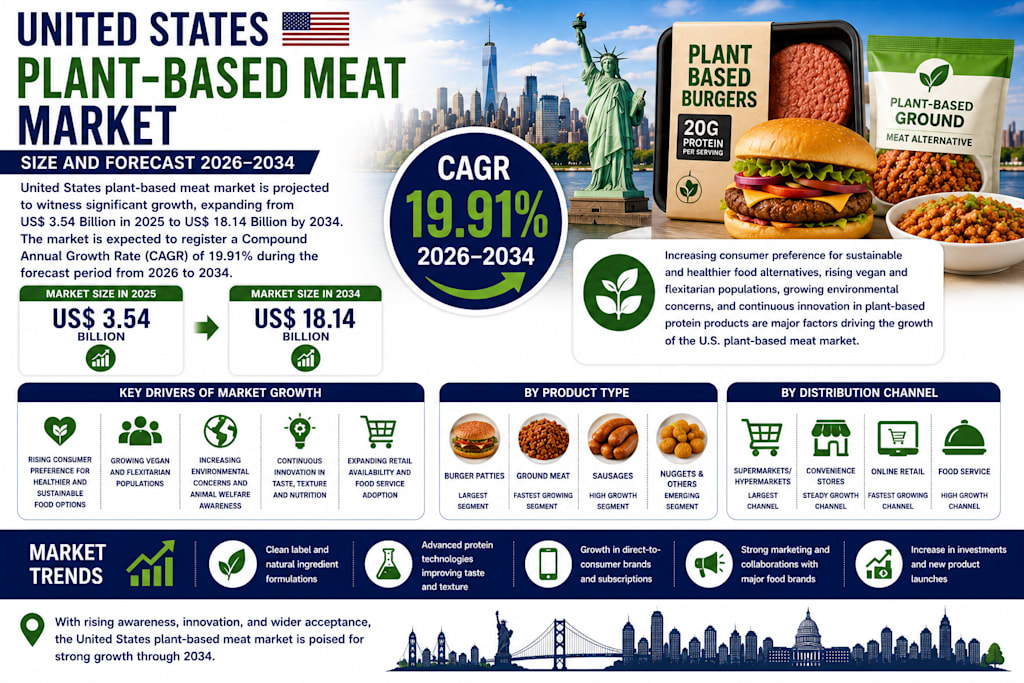
According to Renub Research, the United States Plant-Based Meat Market is projected to grow from US$ 3.54 billion in 2025 to US$ 18.14 billion by 2034, expanding at a remarkable compound annual growth rate (CAGR) of 19.91% from 2026 to 2034. Rising health consciousness, growing environmental concerns, expanding vegan and flexitarian populations, and continuous innovation in alternative protein products are among the major factors driving market growth.
As consumers increasingly rethink their relationship with food, plant-based meat is becoming one of the fastest-growing segments within the U.S. food industry.

Plant-Based Meat Is Moving into the Mainstream
Plant-based meat products have evolved significantly over the past decade.
Earlier generations of meat alternatives often appealed primarily to vegetarians and health enthusiasts. However, modern plant-based products are designed specifically to mimic traditional meat products in flavor, texture, appearance, and cooking performance.
Manufacturers now offer plant-based burgers, sausages, nuggets, tenders, meatballs, ground meat alternatives, and ready-to-eat meals that closely resemble their conventional counterparts. This improved product quality has encouraged broader consumer acceptance and increased trial rates among mainstream consumers.
The growing popularity of plant-based meat reflects changing attitudes toward nutrition, sustainability, and food innovation.
As consumers continue seeking flexible dietary options, plant-based alternatives are becoming increasingly integrated into everyday eating habits.
Consumer Adoption Continues to Accelerate
Consumer interest in plant-based meat products has reached unprecedented levels.
Recent data shows that 53% of Americans have tried plant-based meat products, while 40% reported consuming them within the past year. Approximately 24% of consumers now eat plant-based meat at least once per month, demonstrating the category's growing relevance within mainstream diets.
Among consumers who purchase plant-based meat products, many continue incorporating them into regular meal routines. Some primarily consume them at home, while others enjoy them in restaurants, cafeterias, and foodservice establishments.
The growing popularity of flexitarian eating patterns has been particularly important. Many consumers are not eliminating meat entirely but are actively reducing consumption and incorporating plant-based alternatives into their diets.
This broadening consumer base continues creating favorable conditions for long-term market growth.
Health Awareness Is a Major Growth Driver
One of the strongest factors supporting the expansion of the plant-based meat market is increasing health consciousness among American consumers.
Many individuals are becoming more aware of the potential health risks associated with excessive consumption of red and processed meat, including cardiovascular disease, obesity, and elevated cholesterol levels. As a result, consumers are actively seeking alternative protein sources that align with healthier dietary goals.
Plant-based meat products are often marketed as lower-cholesterol alternatives that provide protein while reducing reliance on animal-derived ingredients. Manufacturers continue improving nutritional profiles by incorporating vitamins, minerals, fiber, and protein-rich plant ingredients.
The growing popularity of wellness-focused lifestyles, preventive healthcare, and fitness-oriented diets has further strengthened demand.
As consumers increasingly prioritize long-term health outcomes, plant-based meat products are expected to become an increasingly important part of balanced eating strategies.
Sustainability Concerns Are Reshaping Food Choices
Environmental sustainability has become another powerful force driving market growth.
Consumers are increasingly aware of the environmental impact associated with traditional livestock production, including greenhouse gas emissions, water consumption, land use, and deforestation. This awareness is encouraging many individuals to explore alternative protein sources that require fewer natural resources.
Plant-based meat products are widely promoted as more sustainable food options because they generally produce lower carbon emissions and require less water and land than conventional meat production.
Many consumers now view purchasing decisions as opportunities to support environmental responsibility and sustainable food systems.
Manufacturers are also emphasizing eco-friendly sourcing practices, sustainability initiatives, and environmentally conscious branding to strengthen consumer engagement.
As climate concerns continue influencing purchasing behavior, demand for plant-based protein alternatives is expected to remain strong.
Food Technology Is Improving Product Quality
Technological innovation has played a crucial role in expanding the plant-based meat category.
Advances in food science have significantly improved flavor, texture, appearance, aroma, and cooking performance. Modern products more closely replicate traditional meat experiences than ever before.
Manufacturers continue investing heavily in research and development to refine ingredient formulations and improve consumer satisfaction.
In September 2024, Beyond Meat introduced a whole-muscle steak alternative designed to mimic the texture and flavor of filet mignon while emphasizing cleaner ingredients and health-focused positioning.
Ongoing innovation is helping manufacturers overcome historical barriers related to taste and texture, making plant-based products increasingly attractive to mainstream consumers.
Restaurants and Foodservice Providers Are Expanding Offerings
Foodservice adoption has become a major catalyst for market growth.
Restaurants, fast-food chains, cafes, and casual dining establishments are increasingly adding plant-based menu items to meet changing consumer preferences. Plant-based burgers, nuggets, sandwiches, sausages, and specialty dishes are becoming common menu offerings across the country.
Foodservice visibility plays an important role in introducing consumers to plant-based products. Many consumers first experience plant-based meat alternatives through restaurant visits before purchasing products for home consumption.
Partnerships between foodservice operators and plant-based manufacturers continue accelerating market penetration while expanding consumer familiarity.
As restaurants seek to serve increasingly diverse dietary preferences, plant-based menu integration is expected to continue expanding.
Retail Distribution Is Increasing Accessibility
The rapid expansion of retail distribution channels has significantly improved product availability.
Plant-based meat products are now widely available through supermarkets, hypermarkets, convenience stores, specialty retailers, and online grocery platforms. Consumers can access a broad range of products without needing to visit specialty health food stores.
E-commerce has further strengthened accessibility by allowing consumers to explore extensive product selections, compare brands, and order products directly to their homes.
Greater visibility within mainstream retail environments has contributed significantly to consumer awareness and trial purchases.
As distribution networks continue expanding, plant-based meat products are becoming increasingly integrated into everyday shopping experiences.
Plant-Based Burgers Continue Leading the Market
Plant-based burgers represent one of the most successful and recognizable product categories within the market.
These products are specifically designed to replicate traditional beef burgers while utilizing ingredients such as pea protein, soy protein, wheat protein, and vegetable oils. Improved taste, texture, and cooking performance have contributed to growing consumer acceptance.
Fast-food chains, restaurants, and retailers continue expanding plant-based burger offerings to meet evolving consumer demand.
Strong marketing campaigns, celebrity endorsements, and product innovation have further increased category visibility.
As consumer interest in alternative proteins continues growing, plant-based burgers are expected to remain a leading segment within the market.
Soy-Based Products Remain Important Protein Sources
Soy-based meat alternatives continue to play a significant role within the industry.
Soy protein offers high protein content, versatility, affordability, and nutritional benefits, making it a popular ingredient in plant-based burgers, sausages, nuggets, meatballs, and prepared meals.
Advancements in food technology have improved the texture and flavor of soy-based products, helping broaden consumer acceptance.
Consumers increasingly appreciate soy-based meat alternatives because they provide protein-rich nutrition while supporting plant-based dietary goals.
The segment continues benefiting from growing awareness regarding sustainability and alternative protein consumption.
Frozen Products Support Convenience Trends
Frozen plant-based meat products are experiencing strong growth due to consumer demand for convenience.
Frozen burgers, nuggets, sausages, patties, and prepared meals offer extended shelf life while providing flexibility for meal planning and home cooking. Consumers appreciate the ability to store products for longer periods without sacrificing quality.
Retailers continue expanding frozen plant-based selections to meet rising demand.
Improvements in cold-chain logistics, packaging technologies, and product quality have further strengthened the segment's appeal.
As busy lifestyles continue driving demand for convenient meal solutions, frozen plant-based meat products are expected to remain an important growth area.
High Costs Continue Challenging Market Expansion
Despite strong growth prospects, affordability remains a significant challenge.
Plant-based meat products often involve advanced food processing technologies, specialized ingredients, and substantial research and development investments. These factors contribute to higher production costs and premium retail pricing.
Many consumers continue comparing plant-based products to conventional meat based on price, particularly during periods of economic uncertainty and inflation.
Manufacturers must continue working toward cost reductions through production efficiencies, scale expansion, and technological innovation.
Improving affordability will be essential for expanding adoption among price-sensitive consumers.
Taste and Processing Concerns Influence Consumer Perceptions
Consumer skepticism remains another important challenge.
While product quality has improved significantly, some consumers still believe plant-based meat products do not fully replicate the taste and texture of traditional meat. Taste remains one of the most important factors influencing repeat purchases.
Additionally, some health-conscious consumers express concerns regarding highly processed ingredients and product formulations.
Manufacturers continue addressing these concerns through clean-label initiatives, ingredient transparency, and ongoing product improvements.
Building consumer trust through innovation and education remains essential for sustaining long-term growth.
California Leads the Plant-Based Meat Movement
California remains the largest and most influential plant-based meat market in the United States.
The state's health-conscious consumers, strong environmental awareness, and vibrant food innovation ecosystem create ideal conditions for market growth. Major cities such as Los Angeles, San Francisco, and San Diego continue serving as centers for alternative protein innovation and consumer adoption.
The presence of numerous food technology companies and plant-based startups further strengthens California's leadership position.
Strong demand for sustainable and ethical food choices continues supporting market expansion throughout the state.
Texas, New York, and Florida Continue Expanding Demand
Texas is witnessing increasing adoption of plant-based products as consumers seek healthier and more sustainable protein options. Manufacturers are introducing products inspired by local barbecue and Tex-Mex flavors to appeal to regional tastes.
New York benefits from a highly health-conscious urban population and strong demand for environmentally responsible food choices. The state's expanding vegan restaurant scene continues supporting product visibility and consumer awareness.
Florida's growing wellness culture, expanding vegan communities, and strong tourism industry contribute to rising demand for plant-based meat products throughout the state.
Leading Companies Competing in the Market
Major participants in the United States plant-based meat market include Beyond Meat, Maple Leaf Foods, Gardein, MorningStar Farms, and Tyson Foods. These companies continue investing heavily in product innovation, flavor enhancement, nutritional improvements, and retail expansion to strengthen their market positions.
Final Thoughts
The United States Plant-Based Meat Market is experiencing extraordinary growth as consumers increasingly prioritize health, sustainability, and dietary flexibility.
With the market expected to grow from US$ 3.54 billion in 2025 to US$ 18.14 billion by 2034, plant-based meat is evolving from a niche category into a mainstream food movement.
Driven by health-conscious consumers, environmental awareness, foodservice expansion, and continuous technological innovation, the market offers substantial opportunities for manufacturers capable of delivering high-quality, affordable, and appealing alternatives to traditional meat products. As consumer attitudes toward food continue evolving, plant-based meat is poised to play a central role in shaping the future of American dining.
About the Creator
Enjoyed the story? Support the Creator.
Subscribe for free to receive all their stories in your feed.
Comments
There are no comments for this story
Be the first to respond and start the conversation.