
Why Is Home Baking Fueling a New Era of Growth in the United States Bakeware Market?
How Rising Interest in Home Cooking, Product Innovation, E-Commerce Expansion, and Premium Kitchen Tools Are Transforming the U.S. Bakeware Industry

Home baking has experienced a remarkable resurgence across the United States, transforming from a simple household activity into a widespread lifestyle trend. Whether inspired by social media, cooking shows, health-conscious eating habits, or the joy of creating homemade treats, millions of Americans are spending more time in their kitchens experimenting with breads, cakes, cookies, pastries, and gourmet desserts.
This growing passion for baking has significantly increased demand for high-quality bakeware products. Consumers are no longer satisfied with basic baking tools. They increasingly seek durable, non-stick, aesthetically appealing, and multifunctional bakeware that delivers professional-quality results while complementing modern kitchen designs.
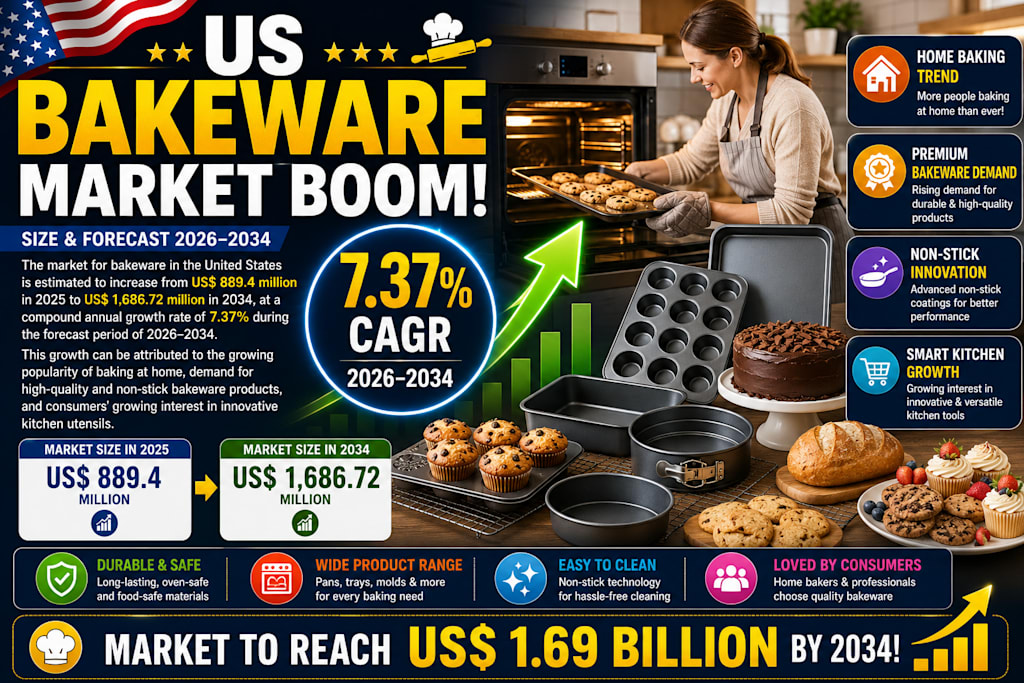
According to Renub Research, the United States Bakeware Market is projected to expand from US$ 889.4 million in 2025 to US$ 1,686.72 million by 2034, growing at a compound annual growth rate (CAGR) of 7.37% between 2026 and 2034. Rising interest in home baking, innovations in bakeware materials, increasing e-commerce sales, and growing demand for premium kitchen products are among the primary factors driving market expansion.
As consumers continue embracing baking as both a hobby and a practical cooking solution, the bakeware industry is entering a period of sustained growth and innovation.
Bakeware Has Become an Essential Kitchen Category
Bakeware includes a wide variety of products specifically designed for preparing food in ovens and other baking environments.
Common products include baking trays, cake pans, muffin tins, baking sheets, molds, rolling pins, casserole dishes, pie pans, and specialty baking accessories. These products are manufactured using materials such as aluminum, stainless steel, silicone, ceramic, glass, and carbon steel, each offering distinct performance characteristics.
Modern consumers increasingly view bakeware as a long-term investment that contributes directly to cooking quality, convenience, and creativity.
As baking continues gaining popularity among households, demand for versatile and durable bakeware products continues expanding.
Home Baking Trends Are Driving Market Growth
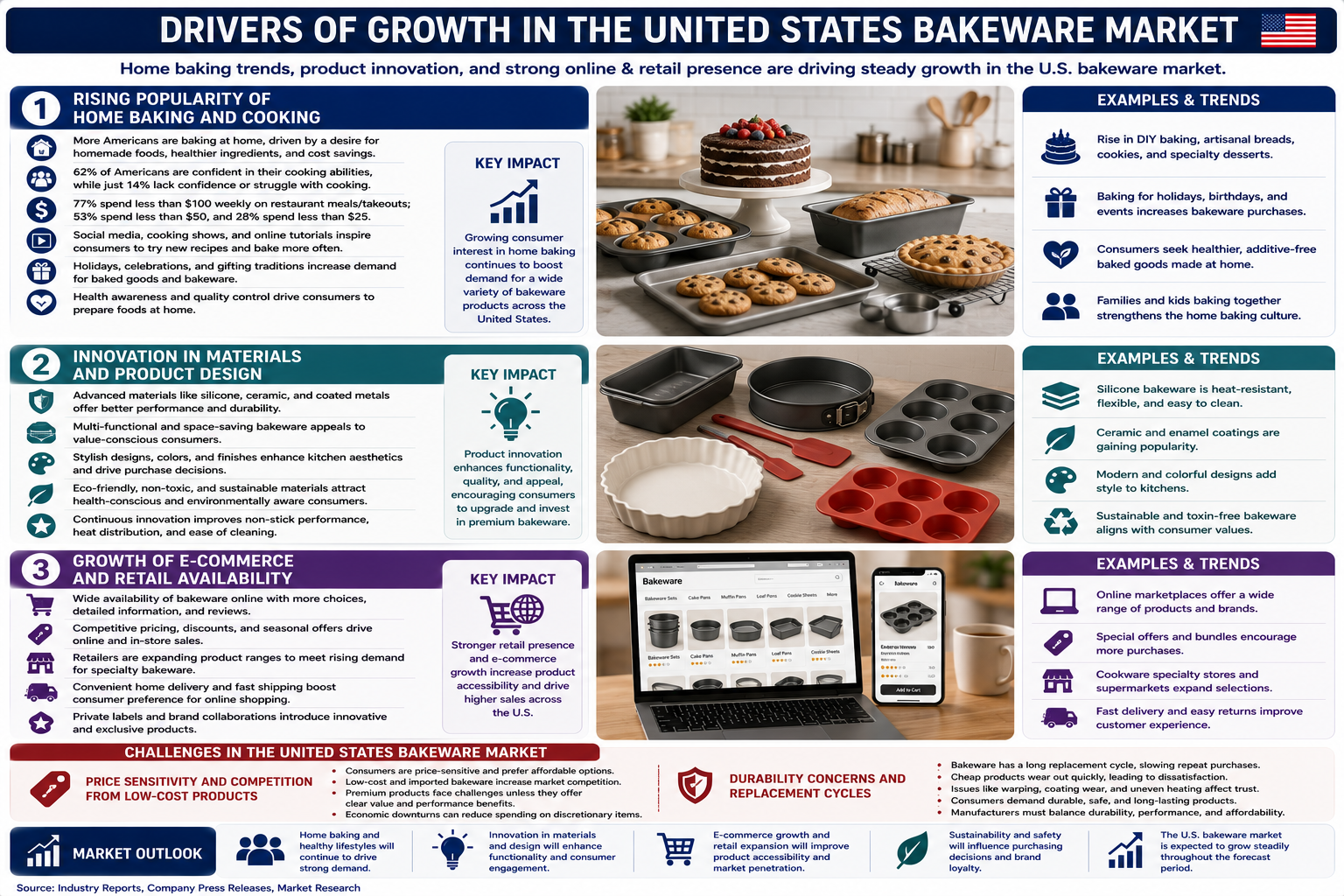
One of the most significant drivers of the U.S. bakeware market is the growing popularity of home baking.
Consumers increasingly prepare cakes, cookies, breads, muffins, pastries, and specialty desserts in their own kitchens. This trend has been supported by changing lifestyles, increased interest in homemade food, and the desire for greater control over ingredients and nutritional quality.
Cooking shows, social media platforms, baking competitions, online tutorials, and food influencers have further encouraged consumers to experiment with baking at home.
Research cited within the market indicates that nearly two-thirds of Americans consider themselves highly confident in their cooking abilities, reflecting growing consumer engagement with food preparation activities.
As home baking becomes more mainstream, demand for reliable and innovative bakeware products is expected to remain strong.
Health-Conscious Consumers Prefer Homemade Foods
The increasing focus on health and wellness is also contributing to market growth.
Many consumers prefer preparing baked goods at home because it allows them to control ingredients, reduce sugar consumption, avoid preservatives, and customize recipes according to dietary preferences.
Homemade baking aligns well with trends involving organic ingredients, gluten-free recipes, plant-based diets, and clean-label foods.
Consumers seeking healthier lifestyles increasingly view home baking as an alternative to highly processed commercial products.
As awareness regarding nutrition continues increasing, the demand for bakeware products that support healthy cooking practices is expected to rise further.
Material Innovation Is Transforming Product Performance
Innovation in bakeware materials has become one of the most influential factors shaping industry growth.
Manufacturers continue introducing products that improve baking performance, durability, convenience, and safety. Modern materials such as silicone, advanced ceramics, coated metals, and toxin-free non-stick surfaces offer superior functionality compared to traditional alternatives.
Consumers increasingly seek products that distribute heat evenly, resist warping, simplify cleaning, and deliver consistent baking results.
Many manufacturers are also focusing on environmentally friendly and health-conscious materials that appeal to modern consumers.
As technology continues advancing, innovative materials will remain a major source of competitive differentiation within the market.
Attractive Designs Are Influencing Purchasing Decisions
Today's consumers increasingly view kitchen products as extensions of personal style.
Beyond functionality, many buyers seek bakeware products that complement kitchen décor and provide visually appealing presentation. Stylish finishes, designer collections, premium packaging, and coordinated product sets have become important purchasing considerations.
Manufacturers are responding by creating aesthetically attractive bakeware collections that combine performance with modern design.
The growing popularity of social media food photography has also increased interest in visually appealing kitchen accessories.
As kitchen aesthetics continue influencing consumer preferences, design-focused innovation is expected to support future growth.
E-Commerce Is Expanding Market Accessibility
The rapid expansion of online shopping has significantly transformed the bakeware industry.
Consumers now have access to an extensive range of products through e-commerce platforms, specialty kitchen websites, and direct-to-consumer brands. Online channels provide detailed product information, customer reviews, comparison tools, and convenient home delivery options.
Digital retailing has also enabled niche and premium brands to reach broader audiences without relying solely on traditional retail distribution.
In March 2024, Our Place expanded its bakeware collection with innovative non-stick ceramic-coated products designed to provide durability and enhanced baking performance.
As online shopping continues growing, digital sales channels are expected to remain an important contributor to market expansion.
Retail Innovation Continues Supporting Consumer Engagement
Traditional retailers remain highly influential within the bakeware market.
Department stores, supermarkets, kitchen specialty shops, and home goods retailers continue expanding their bakeware assortments to meet growing consumer demand. Product demonstrations, promotional campaigns, seasonal displays, and exclusive collections help drive consumer engagement.
In May 2024, Meyer Corporation introduced Disney-themed bakeware collections under the Farberware brand featuring durable non-stick construction and visually distinctive designs.
Retail innovation helps attract new customers while strengthening brand visibility.
As competition intensifies, both online and offline channels will continue playing essential roles in market development.
Tins and Trays Continue Dominating Product Demand
Tins and trays represent one of the largest segments within the U.S. bakeware market.
These products are widely used for baking cookies, cakes, pastries, breads, and other baked goods in both household and commercial settings. Consumers value tins and trays for their durability, ease of use, and ability to deliver consistent baking results.
Manufacturers increasingly incorporate features such as reinforced construction, non-stick coatings, and sustainable materials to improve performance and convenience.
The growing emphasis on reusable and environmentally friendly kitchen products further supports demand within this category.
As home baking continues expanding, tins and trays are expected to remain essential bakeware products.
Baking Cups Are Benefiting from Celebration Trends
Baking cups have become increasingly popular due to rising demand for cupcakes, muffins, and personalized desserts.
Available in paper, silicone, and metal formats, baking cups are widely used for birthdays, holidays, weddings, and special events. Consumers increasingly seek decorative, themed, and customized options for celebrations.
Sustainability concerns are also encouraging demand for biodegradable and recyclable baking cups.
Manufacturers continue introducing products in various sizes, colors, and designs to satisfy evolving consumer preferences.
The combination of convenience and creativity continues supporting growth within this segment.
Stainless Steel Bakeware Gains Popularity
Stainless steel bakeware remains highly valued for its durability, corrosion resistance, and long service life.
Many consumers appreciate stainless steel products because they contain no coating materials and align with preferences for non-toxic cooking solutions. The material's ability to withstand high temperatures and repeated use further strengthens its appeal.
Health-conscious consumers increasingly favor stainless steel bakeware due to growing awareness regarding food safety and material quality.
As demand for durable and low-maintenance products increases, stainless steel bakeware is expected to maintain strong market performance.
Aluminum Bakeware Remains a Consumer Favorite
Aluminum continues to be one of the most widely used materials within the bakeware industry.
Its affordability, lightweight construction, and excellent heat conductivity make it particularly attractive for both household and commercial users. Aluminum bakeware provides consistent heating performance, helping improve baking outcomes.
Manufacturers increasingly utilize anodized and coated aluminum technologies to enhance safety, durability, and resistance to acidic ingredients.
The balance between performance and affordability ensures aluminum's continued importance within the market.
Commercial Demand Continues Expanding
Commercial bakeries, restaurants, coffee shops, catering companies, and foodservice operators represent an important customer segment.
Growing consumer demand for baked goods has encouraged foodservice businesses to invest in durable and high-performance bakeware capable of supporting intensive daily use.
In February 2024, Maison Demarle expanded its Flexipan bakeware offerings featuring silicone and fiberglass technology known for flexibility and professional-level performance.
As specialty bakeries and dessert-focused businesses continue expanding, commercial demand for premium bakeware is expected to remain strong.
Household Applications Remain the Largest Market Segment
The household segment continues generating the largest share of market demand.
Consumers increasingly purchase bakeware for everyday cooking, holiday celebrations, meal preparation, and recreational baking activities. Features such as non-stick surfaces, dishwasher compatibility, compact storage, and multipurpose functionality are particularly attractive.
The continued popularity of baking as a hobby, combined with increasing health awareness, supports strong household demand.
Manufacturers continue developing products designed specifically for home kitchens and casual baking enthusiasts.
This segment is expected to remain the primary growth engine for the industry.
Price Sensitivity Remains a Key Challenge
Despite strong growth prospects, price sensitivity continues presenting challenges for manufacturers.
Many consumers remain reluctant to spend significantly on premium bakeware unless they bake frequently or perceive clear value advantages. Lower-cost alternatives available through mass-market retailers and imported products intensify competitive pressures.
Economic uncertainty can further influence purchasing behavior because bakeware is often considered a discretionary household purchase.
Manufacturers must balance innovation, durability, and affordability to maintain competitiveness.
Addressing consumer price concerns will remain important for long-term market expansion.
Product Durability Influences Replacement Cycles
Durability presents another important market challenge.
Because quality bakeware products often last for many years, replacement cycles can be relatively long. At the same time, lower-quality products may suffer from warping, coating degradation, and uneven heating performance, leading to consumer dissatisfaction.
Manufacturers must ensure products meet expectations regarding longevity, safety, and performance.
Investments in product quality and customer education are becoming increasingly important for maintaining brand loyalty.
The ability to balance durability and affordability will continue influencing competitive success.
California Leads National Demand
California remains one of the most influential bakeware markets in the United States.
The state's strong culture of home cooking, health-conscious lifestyles, and interest in sustainable products supports demand for premium bakeware solutions. Consumers increasingly favor silicone, ceramic, and environmentally friendly products aligned with wellness and sustainability values.
California's vibrant food culture also encourages experimentation with baking and gourmet cooking.
As innovation continues driving consumer preferences, California is expected to remain a major growth center.
Texas, New York, and Florida Continue Driving Growth
Texas benefits from a large population, strong home cooking traditions, and demand for practical, affordable bakeware products suitable for family gatherings and everyday baking.
New York consumers increasingly seek premium, compact, and multifunctional bakeware products designed for urban lifestyles and smaller kitchen spaces. Gourmet cooking trends continue supporting demand for high-quality solutions.
Florida's growing population, active social culture, and hospitality sector contribute to steady demand for convenient and durable bakeware products. Consumer interest in healthier cooking methods further supports market growth.
Together, these states represent some of the most important regional markets shaping industry development.
Leading Companies Competing in the Market
Major participants in the United States bakeware market include Groupe SEB, Wilton Brands LLC, Newell Brands Inc., Meyer Corporation U.S., Emile Henry USA, ZWILLING, USA Pan, Le Creuset, Nordic Ware, and Caraway. These companies continue investing in innovation, sustainability, premium materials, and direct-to-consumer strategies to strengthen their positions within the market.
Final Thoughts
The United States Bakeware Market is benefiting from powerful consumer trends centered on home baking, healthy cooking, premium kitchen products, and digital retail expansion.
With the market projected to grow from US$ 889.4 million in 2025 to US$ 1,686.72 million by 2034, manufacturers have substantial opportunities to capitalize on evolving consumer preferences, material innovations, and expanding online sales channels.
As more Americans embrace baking as both a lifestyle activity and a practical approach to healthier eating, bakeware is expected to remain one of the most dynamic categories within the broader kitchenware industry.
About the Creator
Enjoyed the story? Support the Creator.
Subscribe for free to receive all their stories in your feed.
Comments
There are no comments for this story
Be the first to respond and start the conversation.