
Why Is Frozen Food Becoming a Staple of Modern American Lifestyles?
How Convenience, Innovation, E-Commerce Growth, and Healthier Product Choices Are Driving the United States Frozen Food Market

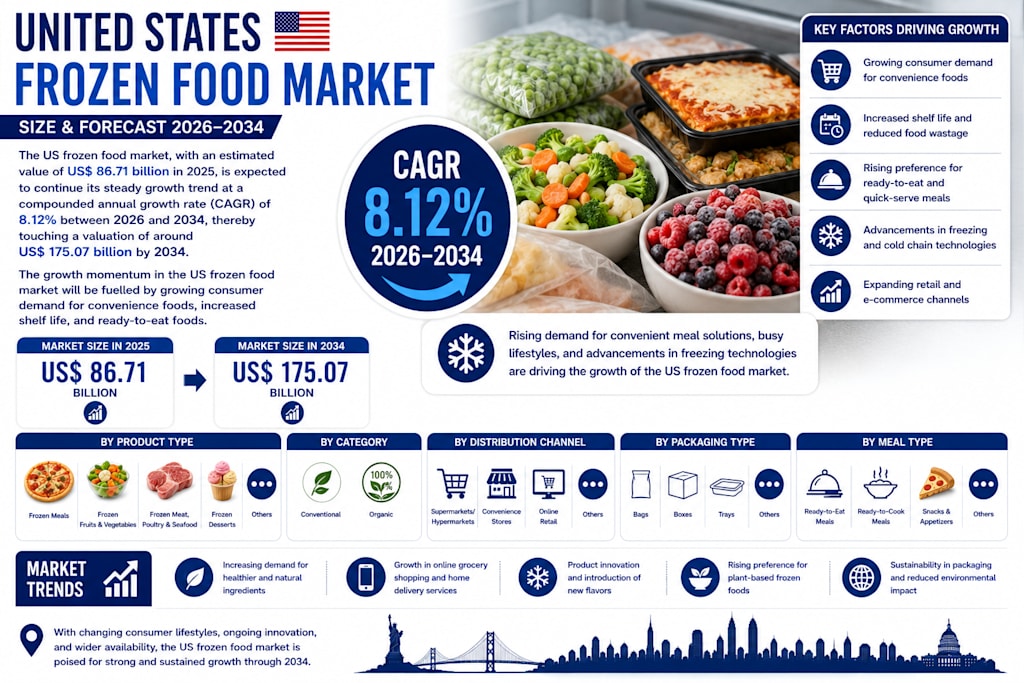
Frozen food has transformed from a simple storage solution into one of the most important segments of the American food industry. As modern consumers juggle demanding work schedules, family responsibilities, and increasingly busy lifestyles, frozen foods offer a practical combination of convenience, affordability, long shelf life, and nutritional value. Today's frozen food aisle looks very different from the past, featuring everything from gourmet meals and organic vegetables to plant-based snacks and international cuisine.
Advancements in freezing technologies have significantly improved product quality, allowing manufacturers to preserve taste, texture, and nutritional content more effectively than ever before. As a result, frozen foods are increasingly viewed as viable alternatives to fresh products rather than merely emergency pantry staples.
According to Renub Research, the United States Frozen Food Market is expected to grow from US$ 86.71 billion in 2025 to US$ 175.07 billion by 2034, expanding at a compound annual growth rate (CAGR) of 8.12% between 2026 and 2034. Rising demand for convenience foods, expanding ready-to-eat meal categories, technological innovation, and growing online grocery sales are among the major factors driving market growth.
As Americans continue seeking convenient meal solutions without compromising quality, the frozen food industry is entering a new era of growth and innovation.
Frozen Food Has Become an Everyday Necessity
Frozen foods are products preserved through freezing technologies designed to maintain freshness, taste, texture, and nutritional value over extended periods.
The category includes a wide range of products such as frozen vegetables, fruits, ready meals, seafood, poultry, desserts, snacks, and baked goods. By slowing bacterial growth and reducing spoilage, freezing allows food products to remain usable for significantly longer periods compared to fresh alternatives.
For many consumers, frozen foods provide a practical solution to modern lifestyle challenges. They reduce meal preparation time, minimize food waste, and ensure access to a broad variety of food options year-round.
As household routines become increasingly time-sensitive, frozen foods continue gaining importance in daily meal planning.
Convenience Is Driving Consumer Demand
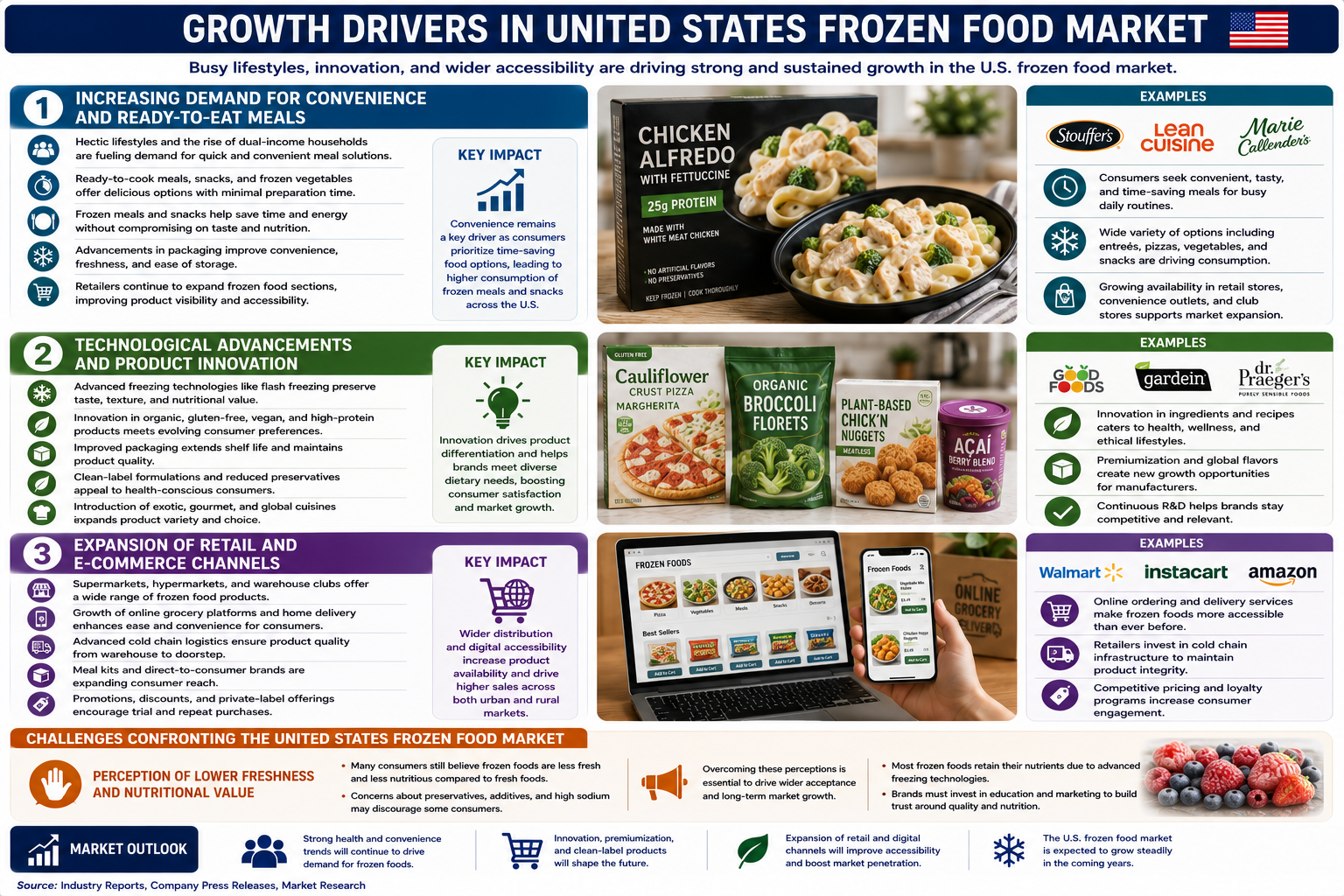
One of the strongest growth drivers within the frozen food market is the growing demand for convenience.
Modern households increasingly seek meal solutions that require minimal preparation while still delivering flavor, nutrition, and variety. Dual-income families, working professionals, students, and busy parents often prefer products that reduce cooking time and simplify meal planning.
Frozen ready meals, frozen vegetables, prepared snacks, and quick-cook protein products allow consumers to prepare meals efficiently without sacrificing quality.
Packaging innovations have also enhanced convenience by introducing microwaveable containers, portion-controlled servings, and resealable packaging formats.
As time-saving meal solutions become increasingly valuable, frozen foods remain highly attractive to consumers seeking convenience.
Technological Innovation Is Improving Product Quality
Technological advancements have significantly transformed consumer perceptions of frozen food.
Modern freezing methods such as flash freezing allow manufacturers to preserve texture, flavor, appearance, and nutritional content far more effectively than earlier freezing technologies. These improvements help ensure products maintain high quality from production to consumption.
Manufacturers are also introducing innovative products that align with evolving dietary preferences. Organic meals, gluten-free options, vegan products, protein-rich foods, and clean-label offerings are becoming increasingly common throughout frozen food categories.
Packaging technologies continue advancing as well, helping improve freshness, shelf life, and product protection.
As innovation continues enhancing product quality, frozen foods are increasingly viewed as premium meal solutions rather than convenience compromises.
Retail Expansion Is Supporting Market Growth
The expansion of retail distribution channels has played a major role in increasing frozen food accessibility.
Supermarkets, hypermarkets, warehouse clubs, discount stores, and convenience retailers continue expanding frozen food selections to meet growing consumer demand. Retailers increasingly dedicate larger sections of store space to frozen products due to strong sales performance.
Consumers benefit from broader product availability, greater variety, and improved shopping convenience.
Private-label frozen products have also become increasingly popular, offering affordable alternatives while maintaining competitive quality standards.
The continued expansion of retail distribution channels is expected to remain a major contributor to market growth.
E-Commerce Is Reshaping Frozen Food Purchasing
Online grocery shopping has become one of the fastest-growing distribution channels within the frozen food industry.
Consumers increasingly purchase frozen foods through digital platforms due to convenience, product variety, and home delivery options. Services such as online grocery marketplaces, subscription meal providers, and direct-to-consumer brands have expanded consumer access to frozen food products.
Advances in cold chain logistics and temperature-controlled delivery systems ensure products maintain quality during transportation.
The ability to compare products, access specialty offerings, and receive home deliveries has significantly increased consumer adoption of online frozen food purchasing.
As e-commerce continues expanding, frozen food manufacturers and retailers are expected to invest further in digital sales strategies.
Frozen Breakfast Foods Continue Growing in Popularity
Frozen breakfast foods have become increasingly popular among consumers seeking convenient morning meal solutions.
Products such as frozen pancakes, waffles, breakfast sandwiches, burritos, and breakfast bowls provide quick preparation while supporting busy lifestyles. Consumers appreciate the ability to enjoy satisfying breakfasts without extensive cooking.
Health-conscious buyers are also driving demand for products containing whole grains, high protein content, reduced sugar, and cleaner ingredient labels.
Manufacturers continue introducing innovative breakfast products tailored to evolving nutritional preferences.
The popularity of convenient breakfast options is expected to continue supporting growth within this segment.
Frozen Seafood Benefits from Health Trends
Frozen seafood remains an important category within the broader frozen food market.
Products such as shrimp, salmon, cod, and prepared seafood meals offer consumers year-round access to nutritious protein sources. Frozen seafood is valued for its long shelf life, convenience, and affordability.
Growing awareness of omega-3 fatty acids, heart health benefits, and protein-rich diets continues increasing demand for seafood products.
Sustainability has also become an important purchasing consideration. Many manufacturers now emphasize responsible sourcing practices and sustainable fishing methods to appeal to environmentally conscious consumers.
As healthy eating trends continue strengthening, frozen seafood demand is expected to remain robust.
Frozen Poultry Continues Supporting Protein Consumption
Frozen poultry products remain highly popular among American consumers.
Chicken nuggets, wings, breasts, tenders, turkey products, and pre-seasoned poultry options provide convenient protein-rich meal solutions that require minimal preparation.
Consumers increasingly favor ready-to-cook and pre-cooked products that simplify meal preparation while supporting active lifestyles.
Health-conscious consumers are also driving demand for organic, antibiotic-free, and free-range poultry products.
The combination of convenience, affordability, and nutritional value continues supporting strong demand throughout this category.
Frozen Desserts Are Evolving with Consumer Preferences
The frozen dessert segment continues adapting to changing consumer tastes.
Traditional ice cream and sherbet products remain popular, but manufacturers are increasingly introducing healthier alternatives such as low-sugar, keto-friendly, dairy-free, and plant-based frozen desserts.
Consumers increasingly seek indulgent products that also align with wellness goals.
Premium flavors, innovative ingredients, and attractive packaging continue supporting category growth.
The rise of functional desserts offering nutritional benefits alongside indulgence is creating new opportunities within the frozen dessert market.
Frozen Fruits and Vegetables Are Benefiting from Wellness Trends
Frozen fruits and vegetables continue gaining popularity among health-conscious consumers.
Products such as frozen strawberries, blueberries, broccoli, mixed vegetables, and prepared vegetable blends provide convenient access to nutrient-rich foods year-round. These products retain much of their nutritional value while offering extended shelf life and reduced food waste.
Frozen strawberries are especially popular for smoothies, baking, and desserts, while frozen broccoli remains one of the most widely consumed frozen vegetables due to its versatility and nutritional profile.
Growing interest in home cooking, meal preparation, vegetarian diets, and healthy eating habits continues supporting demand.
As consumers prioritize nutrition and convenience, frozen fruits and vegetables remain important growth segments.
Frozen Snacks Appeal to Younger Consumers
Frozen snacks continue attracting strong demand among younger demographic groups.
Popular products include mozzarella sticks, pizza rolls, dumplings, appetizers, and shareable snack items that can be prepared quickly and consumed conveniently.
Gen Z and millennial consumers particularly appreciate frozen snacks because they support flexible eating habits, social gatherings, and home entertainment experiences.
Manufacturers continue introducing plant-based, gluten-free, and air-fryer-compatible products to meet changing consumer preferences.
Flavor innovation and convenient preparation methods remain important factors driving category growth.
Consumer Perceptions Continue Creating Challenges
Despite significant improvements in quality, some consumers still perceive frozen foods as less fresh and less nutritious than fresh alternatives.
Misconceptions regarding preservatives, sodium content, and processing methods can influence purchasing decisions among health-conscious shoppers.
Manufacturers continue addressing these concerns through clean-label products, educational marketing campaigns, and transparent ingredient sourcing practices.
Improving consumer understanding regarding the nutritional value of frozen foods remains an important industry priority.
Successfully changing outdated perceptions will be essential for continued market expansion.
Energy Costs and Supply Chain Complexity Remain Concerns
The frozen food industry relies heavily on cold storage infrastructure and temperature-controlled transportation systems.
Maintaining frozen products throughout the supply chain requires significant energy consumption and specialized refrigeration equipment. Fluctuations in energy costs can directly affect manufacturing, storage, and distribution expenses.
Supply chain disruptions and temperature-control failures can also lead to product spoilage and financial losses.
Manufacturers must continually invest in efficient cold chain management systems to maintain product quality and profitability.
Managing these operational challenges remains critical to long-term industry success.
California Leads Demand for Premium Frozen Foods
California remains one of the most influential frozen food markets in the United States.
Consumers in the state demonstrate strong demand for premium, organic, plant-based, and sustainably produced frozen foods. California's diverse population also contributes to growing interest in international cuisine and specialty frozen meal products.
Health-conscious lifestyles continue supporting demand for vegan, gluten-free, and protein-rich frozen foods.
The state's emphasis on sustainability and innovation further strengthens market development.
Texas, New York, and Florida Continue Supporting Growth
Texas benefits from a large population, growing workforce, and strong demand for affordable meal solutions. Frozen poultry products, prepared meals, and family-sized offerings remain especially popular throughout the state.
New York's fast-paced urban lifestyle supports strong demand for convenient frozen meals, gourmet products, and health-focused frozen food options. Consumers increasingly seek organic, plant-based, and clean-label products.
Florida's tourism industry, warm climate, and growing population contribute to rising consumption of frozen foods, particularly frozen desserts, prepared meals, and convenience-oriented products.
Together, these states represent some of the most important markets driving national frozen food consumption.
Leading Companies Competing in the Market
Major participants in the United States frozen food market include Unilever PLC, Nestlé S.A., General Mills, Inc., Nomad Foods Ltd., Tyson Foods Inc., Conagra Brands Inc., Wawona Frozen Foods, Bellisio Parent, LLC, McCain Foods, and The Kraft Heinz Company. These organizations continue investing in product innovation, sustainable sourcing, premium offerings, and omnichannel distribution strategies to strengthen their market positions.
Final Thoughts
The United States Frozen Food Market is benefiting from powerful consumer trends centered on convenience, quality, affordability, and nutritional value.
With the market projected to grow from US$ 86.71 billion in 2025 to US$ 175.07 billion by 2034, manufacturers have significant opportunities to capitalize on changing lifestyles, technological innovation, online grocery expansion, and growing demand for ready-to-eat meal solutions.
As consumers continue balancing busy schedules with health-conscious eating habits, frozen foods are expected to remain one of the fastest-growing and most resilient segments of the American food industry.
About the Creator
Enjoyed the story? Support the Creator.
Subscribe for free to receive all their stories in your feed.
Comments
There are no comments for this story
Be the first to respond and start the conversation.