
Why Is Cheese Powder Becoming an Essential Ingredient in North America’s Favorite Foods?
How Convenience Foods, Snack Innovation, and Foodservice Expansion Are Driving Growth in the North America Cheese Powder Market

Cheese has long been one of North America's most beloved food ingredients, appearing in everything from burgers and pizzas to pasta dishes and snack foods. However, a less visible but increasingly important form of cheese is gaining momentum across the food industry: cheese powder. Valued for its convenience, versatility, long shelf life, and ability to deliver rich flavor consistently, cheese powder has become a crucial ingredient for food manufacturers, restaurants, and snack producers throughout the region.
As consumer demand for ready-to-eat meals, flavorful snacks, and convenient food products continues to rise, the cheese powder market is experiencing steady expansion. Food companies are increasingly incorporating cheese powder into a wide range of applications, including chips, popcorn, crackers, sauces, seasonings, bakery products, and instant meals.
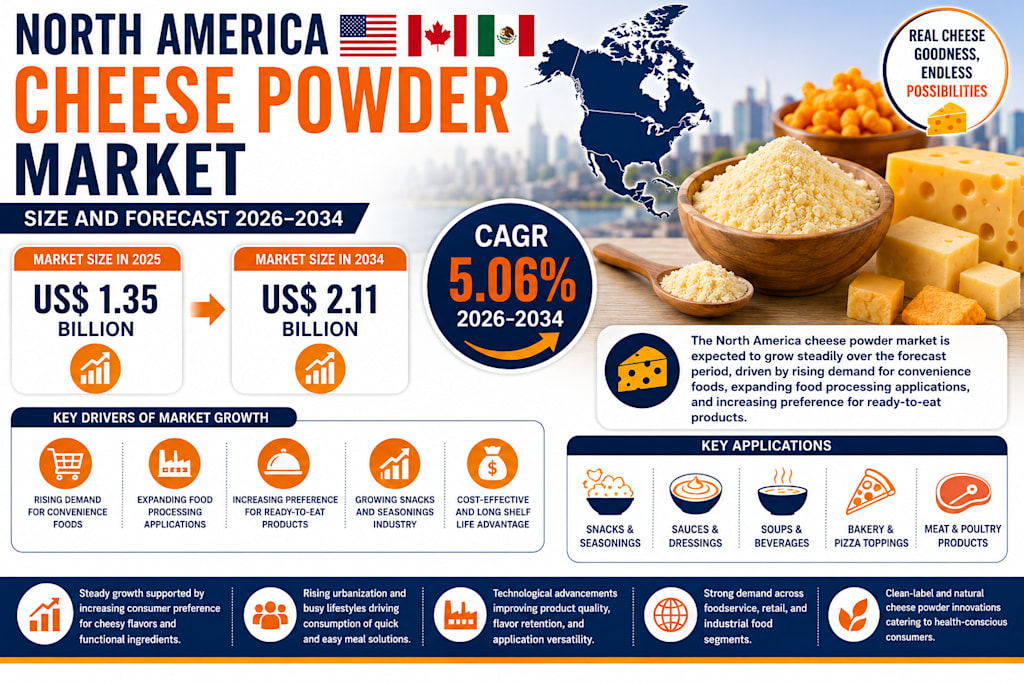
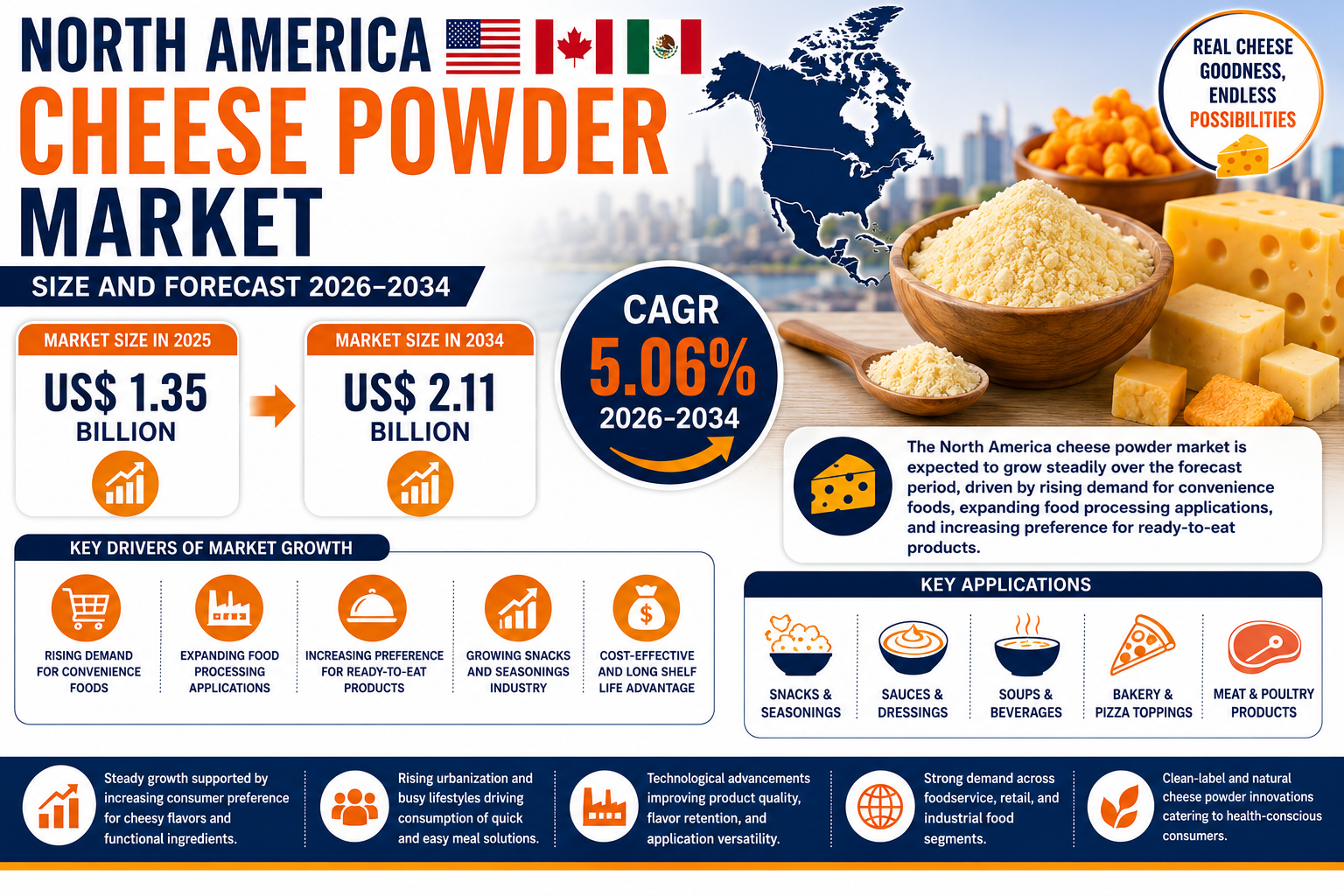
According to Renub Research, the North America Cheese Powder Market is expected to grow from US$ 1.35 billion in 2025 to US$ 2.11 billion by 2034, registering a compound annual growth rate (CAGR) of 5.06% between 2026 and 2034. This growth is supported by increasing demand for convenience foods, expanding food processing activities, rising snack consumption, and continuous innovation across the food industry.
As manufacturers seek efficient ingredients that combine flavor, functionality, and storage advantages, cheese powder is becoming an increasingly valuable component of modern food production.
Understanding the Growing Popularity of Cheese Powder
Cheese powder is produced by dehydrating natural cheese into a powdered form that retains much of its original flavor, aroma, and nutritional profile. This process creates a highly versatile ingredient that can be easily incorporated into numerous food products while offering a significantly longer shelf life than traditional cheese.
Food manufacturers favor cheese powder because it provides consistent flavor, simplified storage, reduced transportation costs, and easier handling during production. Unlike fresh cheese, powdered cheese requires less refrigeration and can be used across large-scale manufacturing operations with greater efficiency.
The ingredient is commonly found in snack seasonings, dry mixes, ready-to-eat meals, sauces, dressings, soups, bakery products, and flavoring applications. Its ability to enhance taste while maintaining product stability makes it highly attractive to manufacturers seeking reliable ingredients.
As consumer demand for convenience and flavor continues growing, cheese powder's role within the food industry is expanding rapidly.
Convenience Foods Continue to Shape Consumer Behavior
One of the most important drivers behind the growth of the North America cheese powder market is the increasing popularity of convenience foods.
Modern consumers often lead busy lifestyles that leave limited time for meal preparation. As a result, ready-to-eat products, instant meals, packaged snacks, and quick meal solutions have become essential components of many households.
Cheese powder plays a critical role in these products by providing rich cheese flavor without the challenges associated with storing and handling fresh cheese. Its long shelf life and ease of incorporation make it particularly suitable for convenience food applications.
The growing number of working professionals, urban households, and consumers seeking quick meal options continues driving demand for processed and packaged foods that utilize cheese powder as a key ingredient.
As convenience remains a major purchasing factor, manufacturers are expected to increase their use of cheese powder across a wide range of product categories.
The Snack Food Industry Is Fueling Market Expansion
Few sectors have contributed more to cheese powder demand than the rapidly expanding snack food industry.
North American consumers continue to embrace snacking as part of their daily routines. Products such as potato chips, popcorn, crackers, pretzels, corn snacks, and extruded snacks frequently rely on cheese powder to deliver distinctive and appealing flavors.
Cheese-flavored snacks remain among the most popular categories in the market due to their broad consumer appeal and versatility. Manufacturers continuously introduce new flavor combinations and premium offerings designed to attract consumers seeking unique taste experiences.
The rise of gourmet snacks has further expanded opportunities for cheese powder producers. Premium cheese blends, specialty varieties, and innovative seasoning profiles are increasingly being used to differentiate products in competitive retail environments.
As consumer interest in snacking continues to grow, cheese powder is expected to remain a critical ingredient supporting industry innovation.
Foodservice Expansion Creates New Opportunities
The continued growth of the foodservice industry represents another significant driver of market demand.
Quick-service restaurants, casual dining establishments, cafés, catering services, and institutional food providers rely heavily on ingredients that offer consistency, convenience, and operational efficiency. Cheese powder meets these requirements by providing reliable flavor and easy integration into recipes.
The ingredient is commonly used in sauces, dips, seasoning blends, dressings, and prepared menu items. Large-scale foodservice operations particularly value cheese powder because it simplifies inventory management and ensures consistent taste across multiple locations.
The increasing popularity of fast food and takeaway meals further contributes to market expansion. As restaurant chains continue introducing new cheese-flavored products, demand for powdered cheese ingredients is expected to rise accordingly.
Foodservice innovation remains a major opportunity for manufacturers seeking long-term growth.
Product Innovation Is Strengthening Market Appeal
Innovation has become a key factor driving growth within the cheese powder industry.
Manufacturers are increasingly developing specialized formulations that cater to changing consumer preferences. New product offerings include premium cheese blends, natural formulations, clean-label products, and customized flavor solutions designed for specific applications.
Consumers today seek more than basic cheese flavor. They increasingly demand unique taste experiences, authentic ingredients, and products aligned with broader health and wellness trends.
As a result, companies are investing in research and development to improve flavor retention, texture performance, nutritional value, and ingredient transparency.
Product diversification also allows manufacturers to serve a broader range of industries, from snack foods and bakery products to sauces, seasonings, and ready-to-eat meals.
Innovation will remain essential as companies compete to meet evolving consumer expectations.
Clean-Label Trends Influence Product Development
Consumer interest in clean-label foods is significantly influencing the cheese powder market.
Many shoppers now carefully evaluate ingredient lists and seek products containing recognizable, minimally processed ingredients. This trend is encouraging manufacturers to develop cheese powders with fewer additives, cleaner formulations, and greater sourcing transparency.
Food producers increasingly promote natural ingredients and simplified recipes to build consumer trust and appeal to health-conscious buyers.
Although cheese powder is a processed ingredient, manufacturers are finding ways to align products with clean-label expectations while maintaining functionality and flavor performance.
As transparency becomes increasingly important within the food industry, clean-label innovation is expected to remain a major area of focus.
Challenges Facing the Cheese Powder Industry
Despite strong growth opportunities, the market faces several challenges.
One major concern is the volatility of dairy raw material prices. Cheese powder production depends heavily on milk and cheese supplies, both of which can be affected by weather conditions, feed costs, production fluctuations, and broader agricultural market dynamics.
Changes in raw material costs directly impact manufacturing expenses and profit margins, creating challenges for producers seeking to maintain pricing stability.
Another challenge involves growing health awareness among consumers. Some individuals are reducing consumption of highly processed foods due to concerns regarding sodium levels, fat content, and overall nutritional quality.
Regulatory requirements related to ingredient labeling, nutritional disclosures, and food safety standards further increase operational complexity for manufacturers.
To address these concerns, companies are investing in healthier formulations, product reformulation initiatives, and transparent communication strategies.
The United States Leads Regional Demand
The United States represents the largest market for cheese powder within North America.
Strong consumption of processed foods, widespread snacking habits, and a highly developed food manufacturing industry contribute significantly to market demand. Cheese powder is widely used across snack foods, convenience meals, sauces, seasonings, and restaurant applications.
The country's extensive retail infrastructure and advanced food processing capabilities further support market expansion.
Innovation remains a defining characteristic of the U.S. market, with manufacturers continually introducing new flavors, premium formulations, and clean-label alternatives to meet evolving consumer preferences.
Canada Emphasizes Quality and Product Innovation
Canada's cheese powder market continues to expand as consumers increasingly seek convenient and flavorful food products.
The country's strong food processing sector and well-developed retail network provide favorable conditions for market growth. Canadian consumers are showing growing interest in clean-label foods and products featuring natural ingredients, encouraging manufacturers to develop more transparent formulations.
Demand for cheese powder is particularly strong within snack foods, prepared meals, and foodservice applications.
The continued growth of e-commerce platforms is also improving product accessibility and supporting broader market development.
Mexico Offers Emerging Growth Opportunities
Mexico's cheese powder market is gradually expanding due to changing lifestyles, urbanization, and increasing consumption of packaged foods.
As consumers seek more convenient meal and snack options, demand for flavor-enhancing ingredients continues to rise. Supermarkets, convenience stores, and online retail channels are helping improve product availability throughout the country.
Manufacturers are actively exploring opportunities to educate consumers about cheese powder applications and expand their presence within this developing market.
Although economic and regulatory factors present challenges, long-term growth prospects remain positive.
Strategic Industry Developments Continue to Strengthen Competition
Competition within the cheese powder market remains intense as companies seek to expand product portfolios and strengthen market positions.
Manufacturers continue investing in advanced processing technologies that improve flavor retention, product consistency, and nutritional quality. Sustainability initiatives focused on efficient resource utilization and environmentally responsible packaging are also becoming increasingly important.
Strategic partnerships, product launches, and capacity expansions remain common growth strategies throughout the industry.
Major companies operating within the North America cheese powder market include Kerry Group plc, Cargill Incorporated, Land O'Lakes, Fonterra Co-operative Group, Tate & Lyle, California Milk Advisory Board, FrieslandCampina, CRÈMEITALIA, and ADM.
Final Thoughts
The North America Cheese Powder Market is benefiting from powerful trends that continue reshaping the food industry. Rising demand for convenience foods, expanding snack consumption, growth in foodservice operations, and ongoing product innovation are creating favorable conditions for sustained market expansion.
With the market projected to grow from US$ 1.35 billion in 2025 to US$ 2.11 billion by 2034, cheese powder is becoming an increasingly important ingredient across multiple food categories. Its ability to provide flavor consistency, storage efficiency, and manufacturing convenience ensures its continued relevance in a rapidly evolving marketplace.
As consumers continue seeking convenient, flavorful, and innovative food experiences, cheese powder will remain a valuable ingredient supporting the future of North America's food industry.
:::
About the Creator
Enjoyed the story? Support the Creator.
Subscribe for free to receive all their stories in your feed.
Comments
There are no comments for this story
Be the first to respond and start the conversation.