
Why Is Bottled Water Becoming America’s Beverage of Choice?
How Health Awareness, Convenience, Premium Hydration, and Sustainable Packaging Are Driving Growth in the United States Bottled Water Market

Bottled water has evolved from a simple convenience product into one of the most consumed beverages in the United States. As consumers increasingly prioritize health, hydration, and wellness, bottled water has emerged as a preferred alternative to sugary soft drinks, energy beverages, and artificially flavored refreshments. What was once viewed as a commodity is now a dynamic category that includes premium spring water, purified water, mineral water, sparkling water, and enhanced hydration products.
The market continues to benefit from changing consumer lifestyles, growing health consciousness, increasing urbanization, and the demand for portable beverage solutions. Innovations in packaging, sustainability initiatives, and premium product offerings are further transforming the industry and attracting a broader consumer base.
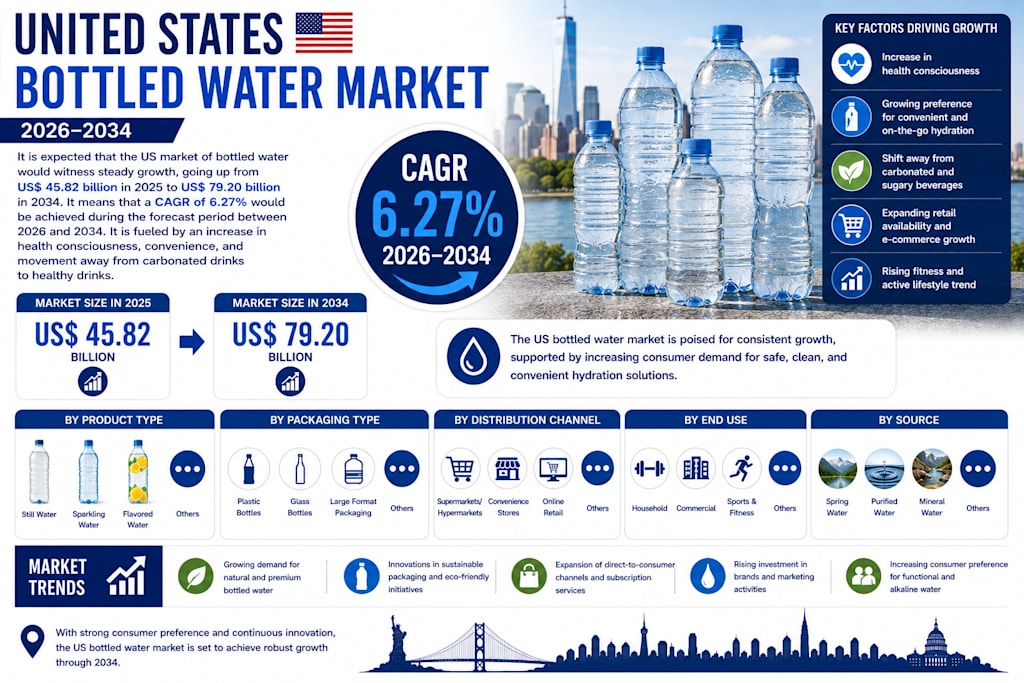
According to Renub Research, the United States Bottled Water Market is expected to expand from US$ 45.82 billion in 2025 to US$ 79.20 billion by 2034, registering a compound annual growth rate (CAGR) of 6.27% from 2026 to 2034. Rising health awareness, convenience-driven consumption, and the growing shift away from carbonated beverages are among the major factors fueling market growth.
As Americans increasingly embrace healthier lifestyles, bottled water is becoming one of the strongest-performing categories within the beverage industry.
Bottled Water Has Become a Daily Essential
Bottled water is now deeply integrated into everyday American life.
Consumers purchase bottled water for use at home, in offices, while traveling, during exercise, at schools, and in recreational settings. Its portability, accessibility, and convenience make it one of the most practical beverage choices available.
The category includes a wide variety of products such as purified water, spring water, mineral water, sparkling water, flavored water, and enhanced water fortified with vitamins and other beneficial ingredients.
Beyond routine consumption, bottled water also plays a critical role during emergencies, natural disasters, and situations where access to safe drinking water becomes limited.
As consumer lifestyles become increasingly mobile and health-focused, bottled water continues strengthening its position as a staple beverage.
Health Consciousness Is Accelerating Market Growth
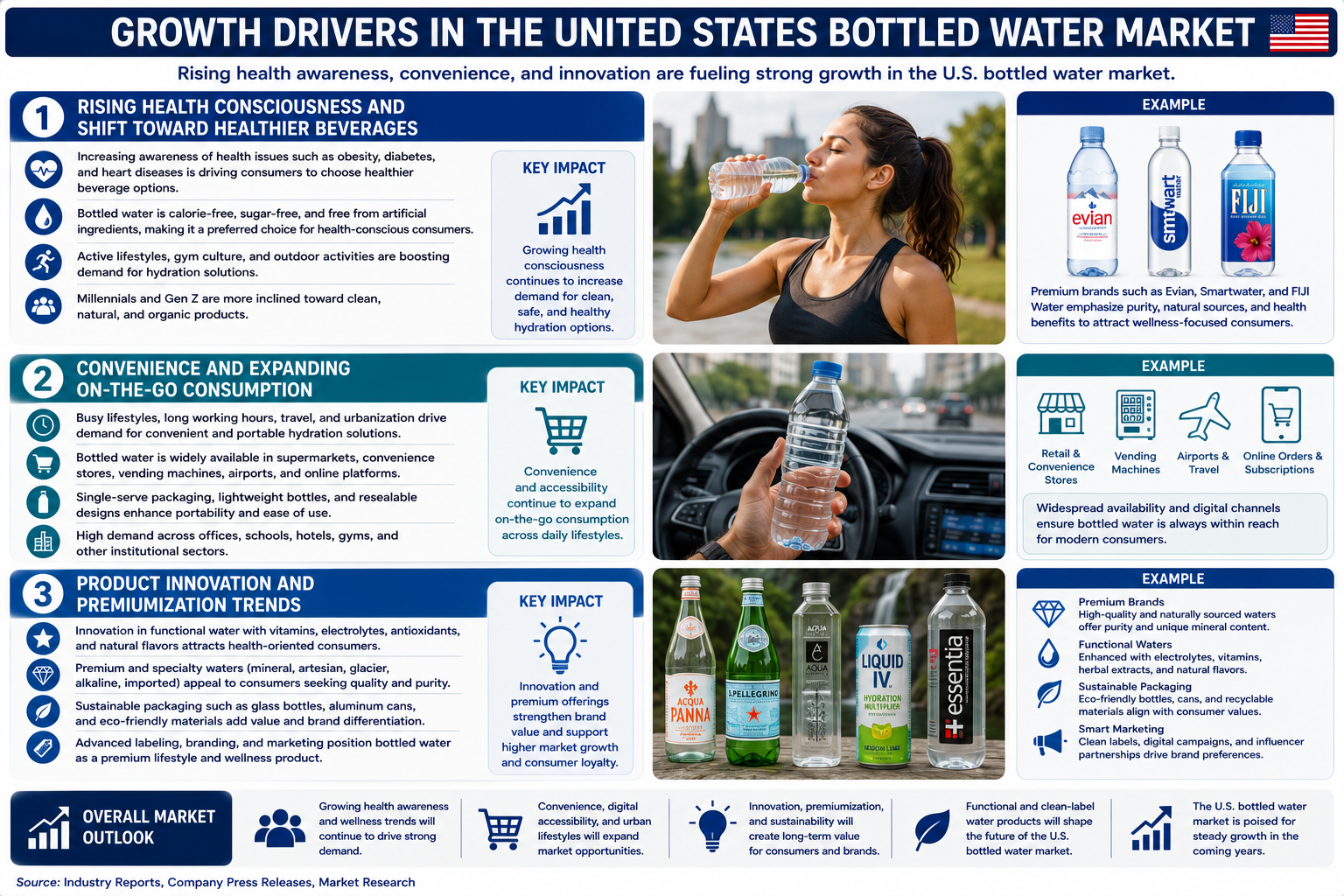
One of the most important factors driving market expansion is increasing consumer awareness regarding health and wellness.
Americans are becoming more conscious of the negative health impacts associated with excessive sugar consumption, obesity, diabetes, and cardiovascular disease. As a result, many consumers are replacing sugary soft drinks and high-calorie beverages with bottled water.
Unlike many competing beverages, bottled water contains no calories, sugar, or artificial ingredients, making it a highly attractive choice for health-conscious consumers.
The trend is particularly strong among Millennials and Generation Z consumers who actively seek healthier beverage alternatives and prioritize wellness-oriented lifestyles.
As preventive health awareness continues growing, bottled water demand is expected to remain robust.
Per Capita Consumption Continues Rising
The long-term growth trajectory of bottled water consumption highlights its increasing importance within American beverage habits.
According to Beverage Marketing Corporation data, per capita bottled water consumption in the United States increased from 33.6 gallons in 2014 to 47.3 gallons in 2024. The market experienced strong growth throughout the decade, with notable annual increases recorded in 2014, 2015, and 2016.
Although growth temporarily slowed during 2022 and 2023 as the market matured, consumption rebounded in 2024 with a 2.1% increase, reaching a new record level.
These trends demonstrate the enduring consumer preference for bottled water and the category's continued ability to attract new users.
As hydration increasingly becomes a wellness priority, per capita consumption is expected to continue expanding.
Convenience Is Reshaping Consumer Purchasing Behavior
Convenience remains one of the strongest advantages of bottled water.
Modern consumers lead increasingly busy lives and often require beverages that can be consumed easily during commuting, travel, work, fitness activities, and social engagements. Bottled water satisfies these needs through lightweight packaging, portability, resealable containers, and widespread availability.
Consumers can purchase bottled water through supermarkets, convenience stores, vending machines, airports, offices, gyms, restaurants, and online platforms.
The rapid growth of food delivery services, e-commerce platforms, and subscription-based beverage delivery programs has further improved accessibility.
As convenience continues influencing consumer behavior, bottled water remains exceptionally well-positioned to meet evolving lifestyle demands.
Premiumization Is Transforming the Industry
Bottled water is increasingly evolving into a premium beverage category.
Manufacturers are introducing differentiated products such as artesian water, glacier water, imported water, alkaline water, mineral water, and functional hydration beverages designed to appeal to sophisticated consumers seeking unique experiences.
Premium bottled water products often emphasize source purity, mineral composition, sustainable production methods, and distinctive branding strategies.
Enhanced water products infused with vitamins, electrolytes, antioxidants, and natural flavors are also gaining popularity among consumers seeking additional wellness benefits.
Premiumization allows companies to differentiate products while appealing to consumers willing to pay higher prices for quality and exclusivity.
As consumer expectations evolve, premium bottled water is expected to remain a major growth segment.
Product Innovation Continues Driving Market Expansion
Innovation remains central to the bottled water industry's development.
Manufacturers are introducing new formulations, packaging designs, flavor profiles, and functional benefits to attract consumers and strengthen brand loyalty. Enhanced hydration products containing vitamins, minerals, electrolytes, antioxidants, and natural ingredients continue gaining market share.
Packaging innovation also plays an important role. Companies increasingly utilize glass bottles, aluminum cans, smart labeling technologies, and sustainable materials to improve product differentiation and consumer engagement.
These innovations help transform bottled water from a basic commodity into a premium lifestyle product.
As competition intensifies, continuous innovation will remain critical to long-term market success.
Spring Water Continues Attracting Premium Consumers
Spring water remains one of the most desirable bottled water categories in the United States.
Consumers often perceive natural spring water as a healthier and more natural option due to its mineral content and minimal processing requirements. Many brands emphasize source authenticity, environmental stewardship, and natural purity as key selling points.
Marketing efforts frequently focus on the pristine origins of spring water and its association with premium hydration experiences.
Growing consumer interest in natural and minimally processed products continues supporting demand within this segment.
As wellness-focused purchasing behavior expands, spring water is expected to maintain strong growth momentum.
Purified Water Dominates Consumer Demand
Purified bottled water remains the most widely consumed category within the U.S. market.
Advanced purification technologies such as reverse osmosis, distillation, and filtration provide consumers with confidence regarding product safety and quality. Concerns surrounding municipal water quality further strengthen demand for purified bottled water products.
Consumers appreciate the consistency, affordability, and accessibility associated with purified water.
Manufacturers continue investing in advanced purification systems and packaging innovations designed to improve convenience and enhance product appeal.
The category's broad accessibility ensures its continued importance within the overall market.
Mineral Water Benefits from Wellness Trends
Mineral water continues gaining popularity among health-conscious consumers.
Naturally occurring minerals such as calcium, magnesium, and potassium provide additional nutritional benefits while supporting hydration. Many consumers perceive mineral water as a premium beverage that contributes positively to overall wellness.
The category is particularly attractive among affluent consumers and individuals seeking functional health benefits through everyday beverage choices.
Premium branding, source authenticity, and sustainability initiatives further strengthen market demand.
As wellness-oriented purchasing decisions continue expanding, mineral water is expected to experience sustained growth.
PET Packaging Remains Industry Standard
PET packaging continues dominating the bottled water industry due to its affordability, durability, lightweight characteristics, and logistical efficiency.
Manufacturers widely utilize PET bottles because they offer strong product protection while reducing transportation costs. Consumers appreciate their convenience and portability.
At the same time, environmental concerns are encouraging greater use of recycled PET materials and more sustainable manufacturing practices.
Many companies are investing in bottles made from 100% recycled PET and supporting broader recycling initiatives aimed at reducing plastic waste.
Despite growing sustainability challenges, PET remains the industry's most widely used packaging format.
Canned Water Is Emerging as a Sustainable Alternative
Canned bottled water is becoming increasingly popular among environmentally conscious consumers.
Aluminum cans offer excellent recyclability and are often viewed as more sustainable alternatives to single-use plastic packaging. This positioning has helped attract consumers seeking environmentally responsible beverage options.
Manufacturers are increasingly launching premium and flavored water products in aluminum cans to differentiate themselves while supporting sustainability objectives.
Growing consumer awareness regarding environmental issues continues driving interest in alternative packaging formats.
As sustainability becomes increasingly important, canned water is expected to capture a larger share of the market.
Environmental Concerns Present Significant Challenges
Environmental sustainability remains one of the industry's most significant challenges.
The widespread use of plastic bottles has contributed to concerns regarding waste management, landfill accumulation, marine pollution, and carbon emissions. Regulatory pressure and consumer activism are encouraging companies to adopt more sustainable production and packaging practices.
Manufacturers are increasingly investing in recyclable materials, biodegradable packaging, recycled PET, aluminum alternatives, and circular economy initiatives.
While these efforts support long-term sustainability goals, they often increase production costs and operational complexity.
Balancing environmental responsibility with profitability remains a key industry challenge.
Competition from Tap Water and Filtration Systems Is Increasing
Another important challenge comes from municipal tap water and home filtration technologies.
Many consumers have access to safe drinking water through public water systems and increasingly utilize filtration devices that improve water quality at home. These alternatives often provide cost savings and reduce environmental impact compared to bottled water.
Refillable bottles and public hydration stations are also gaining popularity among environmentally conscious consumers.
To remain competitive, bottled water companies must continue emphasizing quality, convenience, safety, innovation, and premium experiences.
Differentiation will remain essential as alternative hydration solutions continue expanding.
California Leads the National Market
California represents one of the largest bottled water markets in the United States.
Strong health consciousness, sustainability awareness, premium product adoption, and active lifestyles contribute significantly to demand throughout the state. Consumers increasingly purchase natural spring water, alkaline water, and functional hydration beverages.
California's strict environmental regulations also encourage innovation in sustainable packaging and responsible sourcing practices.
The state's large population, urban concentration, and strong retail infrastructure further support market growth.
California is expected to remain a key driver of national bottled water demand.
Texas, New York, and Florida Continue Driving Consumption
Texas benefits from rapid population growth, high temperatures, and extensive urbanization, all of which support strong bottled water consumption. Bulk purchases and affordable purified water products remain particularly popular throughout the state.
New York's dense urban environment and fast-paced lifestyle encourage strong demand for convenient single-serve bottled water products. Premium and functional water offerings are also gaining traction among consumers.
Florida's warm climate and thriving tourism industry generate year-round demand for bottled water among both residents and visitors. Health awareness and hydration needs continue supporting market expansion.
Together, these states represent some of the most influential regional markets shaping industry growth.
Leading Companies Competing in the Market
Major participants in the United States bottled water market include Nestlé, The Coca-Cola Company, PepsiCo, Danone, Primo Water Corporation, FIJI Water Company LLC, Gerolsteiner Brunnen GmbH & Co. KG, VOSS WATER, and Nongfu Spring. These companies continue investing in product innovation, sustainability initiatives, premiumization strategies, and expanded distribution networks to strengthen their market positions.
Final Thoughts
The United States Bottled Water Market continues benefiting from powerful shifts in consumer behavior centered on health, convenience, and premium hydration.
With the market projected to grow from US$ 45.82 billion in 2025 to US$ 79.20 billion by 2034, manufacturers have significant opportunities to capitalize on rising wellness awareness, product innovation, sustainable packaging developments, and evolving beverage preferences.
As consumers increasingly replace sugary beverages with healthier alternatives, bottled water is expected to remain one of the most resilient and fastest-growing categories within the U.S. beverage industry.
About the Creator
Enjoyed the story? Support the Creator.
Subscribe for free to receive all their stories in your feed.
Comments
There are no comments for this story
Be the first to respond and start the conversation.