
Why Is Athletic Wear Becoming an Everyday Lifestyle Choice Across North America?
How Fitness Awareness, Athleisure Fashion, Product Innovation, and Digital Shopping Are Driving Growth in the North America Athletic Wear Market

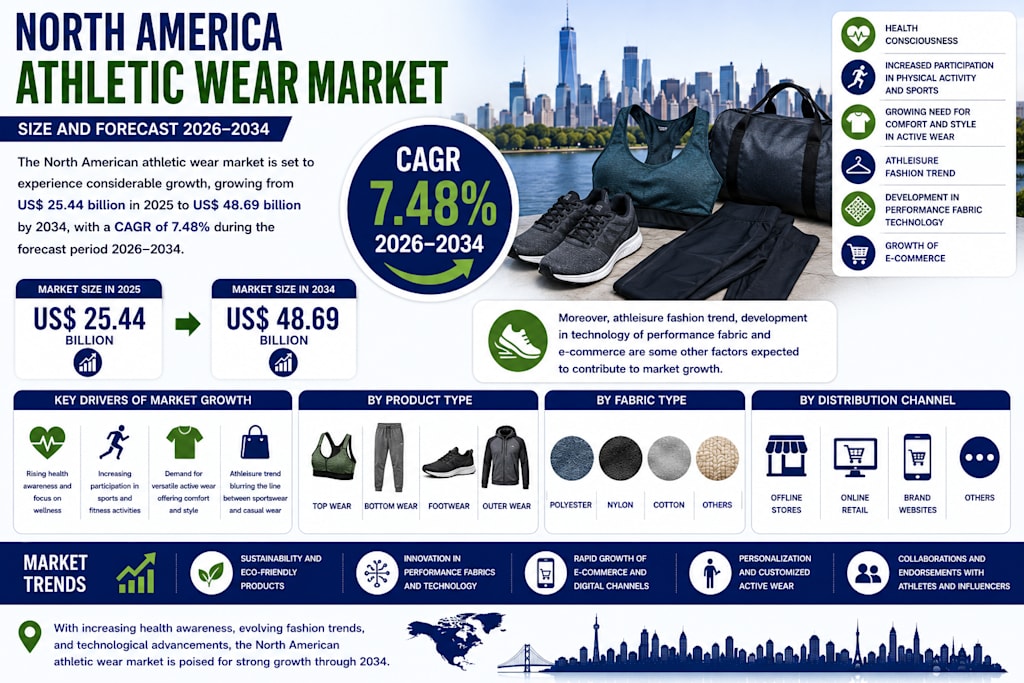
Athletic wear has evolved from being specialized sports apparel into a dominant category within the global fashion industry. Across North America, consumers increasingly choose athletic wear not only for workouts and sports activities but also for daily routines, travel, social gatherings, and work-from-home lifestyles. The combination of comfort, functionality, and style has transformed activewear into a mainstream fashion choice that appeals to consumers of all ages.
The growing emphasis on health and wellness, rising participation in fitness activities, and increasing demand for versatile clothing have significantly expanded the athletic wear market. At the same time, technological innovations in fabrics, sustainability initiatives, celebrity endorsements, and the booming athleisure trend continue reshaping consumer purchasing behavior.
According to Renub Research, the North America Athletic Wear Market is projected to grow from US$ 25.44 billion in 2025 to US$ 48.69 billion by 2034, expanding at a compound annual growth rate (CAGR) of 7.48% from 2026 to 2034. Growing health awareness, increasing participation in sports and fitness activities, rising demand for comfort-oriented fashion, and continuous product innovation are among the major factors supporting market growth.
As consumers increasingly prioritize wellness and comfort, athletic wear is becoming one of the fastest-growing segments within North America's apparel industry.
Athletic Wear Has Become a Lifestyle Essential
Athletic wear today serves a much broader purpose than simply supporting sports performance.
Modern consumers expect clothing that seamlessly transitions between exercise sessions, casual outings, travel, and daily activities. This shift has significantly expanded the role of athletic apparel in everyday wardrobes.
Products such as leggings, sports bras, hoodies, performance T-shirts, sneakers, yoga pants, tracksuits, and athletic jackets are now commonly worn outside gyms and sports facilities. Consumers value these products because they provide comfort, flexibility, durability, and contemporary style.
The growing acceptance of casual dress codes across workplaces and social environments has further accelerated athletic wear adoption.
As comfort continues influencing fashion preferences, athletic apparel is increasingly becoming a staple category across North America.
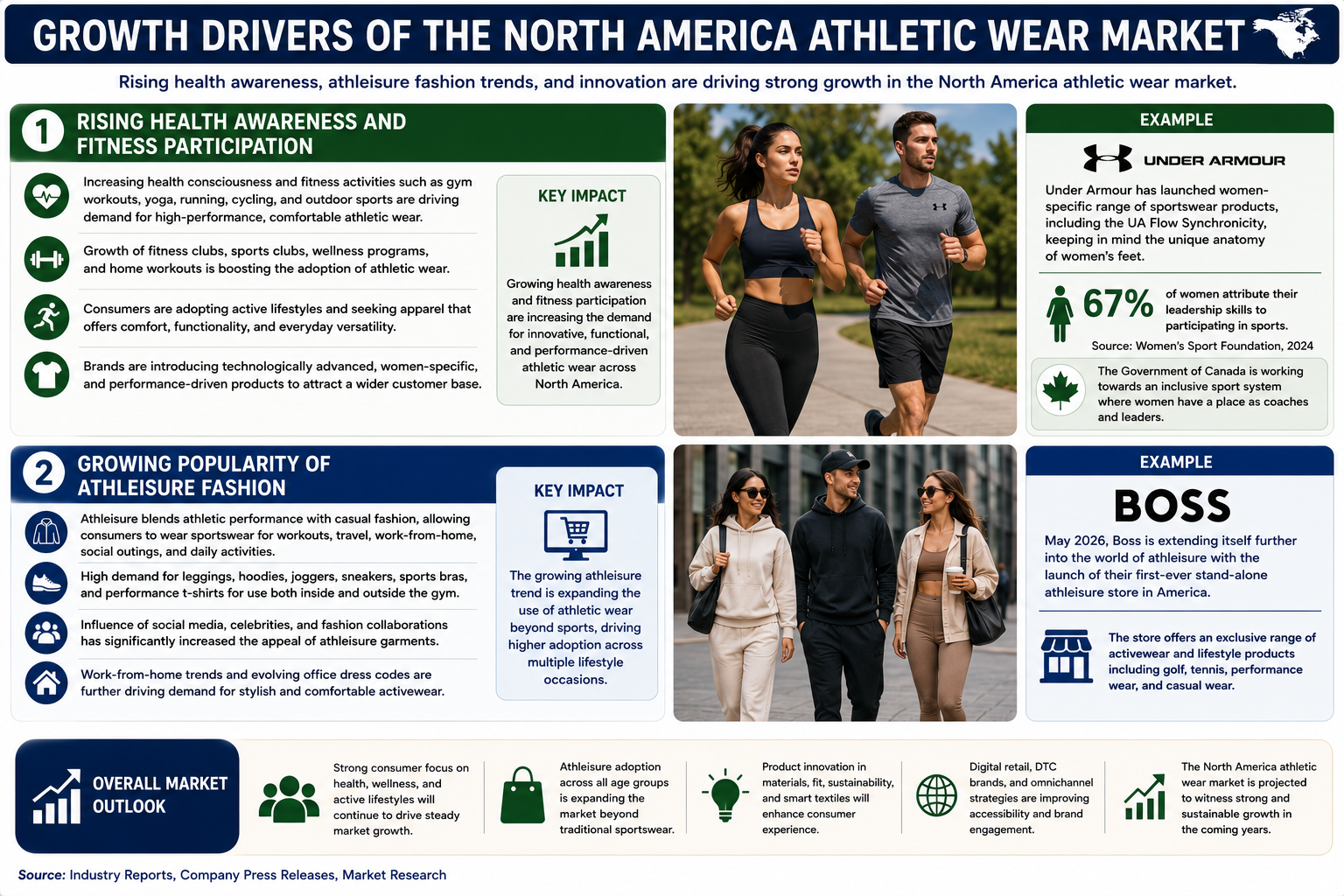
Rising Fitness Participation Is Driving Demand
One of the strongest growth drivers within the athletic wear market is increasing participation in sports, fitness, and recreational activities.
Consumers are becoming more health-conscious and actively engaging in activities such as running, yoga, cycling, gym workouts, hiking, strength training, and organized sports. These activities require specialized apparel designed to enhance performance while ensuring comfort and flexibility.
According to industry data, more than 250 million Americans participated in sports, fitness, or recreational activities during 2025, while Canada recorded over 16 million active participants, and Mexico reported approximately 75 million individuals engaged in sports and physical activities. These figures highlight the enormous consumer base supporting athletic wear demand across the region.
As participation rates continue increasing, athletic apparel manufacturers are benefiting from sustained consumer demand.
Health Awareness Is Transforming Consumer Preferences
Health consciousness continues influencing purchasing decisions across North America.
Consumers increasingly recognize the importance of maintaining active lifestyles and are investing in products that support physical well-being. Athletic wear has become an essential component of this broader wellness movement.
Many consumers seek apparel featuring moisture-wicking fabrics, breathability, flexibility, temperature regulation, and ergonomic designs that enhance exercise experiences. Comfort and performance remain critical considerations when selecting activewear products.
Women's participation in sports and fitness activities has also become an important growth catalyst. According to the Women's Sports Foundation, 67% of women report that participation in sports contributed to the development of leadership skills, highlighting the broader societal impact of athletic engagement.
As health and wellness continue shaping consumer lifestyles, demand for functional athletic apparel is expected to remain strong.
Athleisure Fashion Is Redefining the Industry
Few trends have influenced the athletic wear market more significantly than athleisure.
Athleisure combines athletic functionality with casual fashion aesthetics, enabling consumers to wear activewear in a wide variety of settings beyond exercise environments. Leggings, hoodies, joggers, sneakers, sports bras, and performance tops have become common components of everyday wardrobes.
Consumers increasingly prefer versatile apparel that provides comfort while maintaining a fashionable appearance. The trend is especially popular among millennials and Generation Z consumers who prioritize flexibility and convenience in their clothing choices.
Social media platforms, celebrity endorsements, and collaborations between sportswear brands and fashion labels have accelerated athleisure adoption throughout North America.
The continued popularity of athleisure is expected to remain a major growth driver over the coming decade.
Product Innovation Continues Transforming Athletic Apparel
Technological innovation has become a critical competitive advantage within the athletic wear industry.
Manufacturers are continuously developing advanced fabrics and apparel technologies designed to improve comfort, durability, performance, and sustainability. Features such as moisture management, compression support, stretchability, odor control, UV protection, and temperature regulation have become increasingly important to consumers.
In 2025, several leading brands introduced innovative product collections aimed at addressing evolving consumer preferences. Arc'teryx expanded into mountain running footwear and alpine apparel, while Under Armour launched advanced running footwear featuring enhanced cushioning and lightweight construction.
Lululemon introduced new collections such as Daydrift trousers, BeCalm leggings, Glow Up leggings, and expanded Align products designed to balance performance with everyday style. Patagonia continued emphasizing sustainability through the use of recycled polyester materials.
As technology continues advancing, product innovation will remain central to market competitiveness.
Women's Athletic Wear Represents a Major Opportunity
Women's athletic wear has emerged as one of the most dynamic segments within the market.
Growing participation in sports, fitness activities, wellness programs, and recreational exercise has significantly increased demand for women's activewear products. Consumers increasingly seek apparel specifically designed to accommodate diverse body types while enhancing comfort and performance.
Manufacturers continue investing in women-focused product development that incorporates improved fit, support, style, and functionality.
Recent collaborations such as Nike's partnership with SKIMS to launch the NikeSKIMS activewear collection demonstrate the industry's focus on inclusivity and female consumer engagement.
As female participation in fitness and sports continues rising, this segment is expected to generate substantial growth opportunities.
Premium Athletic Apparel Continues Gaining Momentum
Premium athletic apparel has become an increasingly important category within the market.
Consumers are willing to pay higher prices for products that deliver superior comfort, performance, durability, and design. Premium activewear often incorporates advanced fabric technologies, innovative construction methods, and sophisticated aesthetics that distinguish it from mass-market alternatives.
Professional athletes, fitness enthusiasts, and wellness-focused consumers frequently prioritize quality and functionality over price considerations.
Celebrity endorsements, athlete partnerships, and digital marketing campaigns continue strengthening consumer loyalty within the premium segment.
As consumers increasingly view athletic wear as both performance equipment and fashion apparel, premium products are expected to maintain strong growth momentum.
Leggings and Athletic Pants Remain Market Leaders
Leggings and athletic pants represent one of the fastest-growing product categories within the North American athletic wear market.
Consumers value these products for their versatility, comfort, support, and stylish appearance. Leggings are commonly worn during yoga, gym workouts, home exercise sessions, travel, and casual social activities.
Features such as high-rise waistbands, compression technology, moisture management, stretch fabrics, and squat-proof construction have become important purchasing considerations.
Joggers and athletic pants have also gained popularity due to their suitability for remote work, travel, and everyday wear.
The ongoing popularity of athleisure continues supporting demand for leggings and athletic pants across diverse consumer segments.
Athletic T-Shirts and Tops Continue Expanding Demand
Athletic T-shirts and tops remain among the most widely purchased activewear products.
Consumers appreciate these garments because they offer lightweight comfort, breathability, flexibility, and versatility across multiple activities. They are commonly used during gym workouts, running, hiking, yoga sessions, and casual daily wear.
Manufacturers continue introducing innovations such as seamless construction, quick-drying materials, UV protection, and thermoregulating fabrics to enhance performance.
Fashion trends have also contributed to demand for oversized athletic shirts, crop tops, and gym-inspired casual apparel among younger consumers.
As active lifestyles continue influencing wardrobe choices, athletic tops remain a core market segment.
Online Retail Is Reshaping Consumer Purchasing Behavior
Digital commerce has become one of the most influential distribution channels within the athletic wear market.
Consumers increasingly prefer online shopping due to convenience, product variety, competitive pricing, personalized recommendations, and direct-to-consumer experiences. Online platforms enable shoppers to compare products, access exclusive launches, and receive products quickly through home delivery services.
Brands are investing heavily in digital marketing, influencer partnerships, artificial intelligence technologies, virtual sizing tools, and personalized shopping experiences to strengthen customer engagement.
Mobile commerce and social commerce platforms are further expanding opportunities for athletic wear brands.
The continued growth of online retail is expected to remain a major contributor to market expansion.
Sporting Goods Retailers Continue Playing a Key Role
Despite the rapid growth of e-commerce, sporting goods retailers remain an important sales channel.
Consumers often prefer visiting physical stores to evaluate product quality, fit, fabric performance, and overall comfort before making purchasing decisions. Retailers also benefit from product demonstrations, loyalty programs, promotional campaigns, and expert guidance.
Many sporting goods retailers are adopting omnichannel strategies that combine physical shopping experiences with digital convenience.
The integration of online ordering, click-and-collect services, mobile applications, and augmented reality technologies is helping retailers remain competitive in an increasingly digital marketplace.
Intense Competition Challenges Industry Participants
Despite strong growth prospects, competition remains one of the market's most significant challenges.
Global brands, emerging activewear companies, luxury athleisure labels, and fast-fashion retailers all compete for consumer attention. Established brands continually introduce new products, athlete endorsements, and marketing campaigns to maintain market share.
Smaller companies often struggle to compete against well-funded global brands with extensive retail networks and strong brand recognition.
Rapidly changing fashion trends further increase pressure on manufacturers to innovate continuously.
Successfully differentiating products while maintaining profitability remains an ongoing challenge across the industry.
Rising Costs and Supply Chain Pressures Persist
Production costs and supply chain challenges continue affecting the athletic wear industry.
Advanced fabrics, specialized manufacturing processes, sustainability initiatives, labor costs, transportation expenses, and raw material price fluctuations contribute to increasing operational complexity.
Global supply chain disruptions can impact product availability and delivery timelines, while inflationary pressures may influence consumer purchasing behavior.
Manufacturers must balance innovation, sustainability, and affordability to remain competitive in a challenging economic environment.
Managing these operational risks will remain essential for long-term success.
United States Leads Regional Demand
The United States remains the largest athletic wear market in North America.
Strong consumer spending, widespread fitness participation, robust sports culture, and the presence of globally recognized sportswear brands contribute to market leadership. Consumers increasingly integrate athletic apparel into both fitness routines and everyday lifestyles.
Celebrity endorsements, professional sports organizations, fitness influencers, and social media campaigns continue strengthening brand visibility throughout the country.
The rapid growth of direct-to-consumer digital channels is also contributing significantly to market expansion.
Canada and Mexico Continue Supporting Growth
Canada continues experiencing strong athletic wear demand due to increasing participation in activities such as yoga, hiking, running, skiing, snowboarding, and gym training. Consumers also demonstrate strong interest in sustainable apparel produced from recycled and eco-friendly materials.
Mexico is emerging as a rapidly growing market driven by urbanization, rising disposable incomes, expanding fitness culture, and increasing adoption of sportswear among younger consumers. International brands continue expanding their presence through retail stores, digital commerce platforms, and localized product offerings.
Together, these countries are creating substantial opportunities for athletic wear manufacturers across North America.
Leading Companies Competing in the Market
Major participants in the North America athletic wear market include NIKE, Inc., Under Armour, Inc., Lululemon Athletica Inc., Adidas Group, Patagonia, Inc., The North Face, Inc., Alo, LLC, PUMA SE, Columbia Sportswear Company, and New Balance Athletics, Inc.. These organizations continue investing in innovation, sustainability, digital retail, and product diversification to strengthen their competitive positions.
Final Thoughts
The North America Athletic Wear Market is benefiting from powerful shifts in consumer lifestyles, fitness participation, and fashion preferences.
With the market projected to grow from US$ 25.44 billion in 2025 to US$ 48.69 billion by 2034, opportunities remain substantial for brands that successfully combine performance, comfort, style, sustainability, and digital innovation.
As athleisure continues blurring the line between fashion and functionality, athletic wear is expected to remain one of the most influential and fastest-growing segments within the North American apparel industry.
About the Creator
Enjoyed the story? Support the Creator.
Subscribe for free to receive all their stories in your feed.
Comments
There are no comments for this story
Be the first to respond and start the conversation.