
Why Is a 1983 Penny Worth $10,000? The Story of a Copper Coin That Should Not Exist
Why Is a 1983 Penny Worth $10,000? The Story of a Copper Coin That Should Not Exist

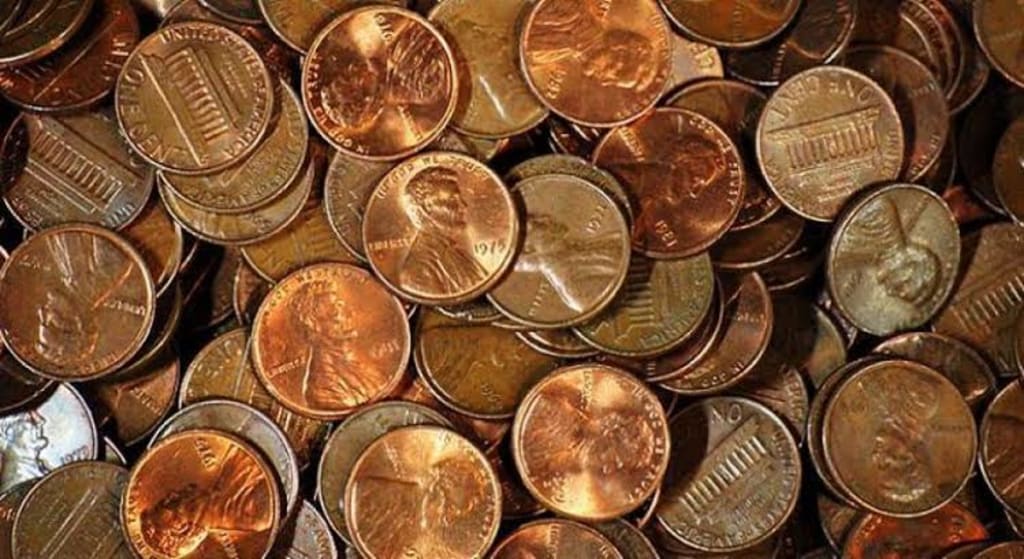
Picture a coining press at a United States Mint facility in 1983. It is running at full speed, spitting out hundreds of cents a minute. Every blank fed into it is supposed to be a new zinc planchet with a thin copper coating, the recipe the Mint adopted the year before.
But somewhere in the bottom of a tote bin, or wedged in a corner of the feeding equipment, a few leftover blanks from the old days are still hiding. These are solid bronze planchets, 95% copper, left over from 1982. One slips into the press. The dies slam down. Out comes a 1983 penny that looks perfectly ordinary and weighs just a little too much.
That coin is the answer to the question.
So why is a 1983 penny worth $10,000? The honest answer is that almost none of them are. A normal 1983 penny is copper-plated zinc and is worth exactly one cent. The only 1983 cents that command five-figure prices are extraordinarily rare mint errors struck on leftover 95% copper (bronze) planchets.
Authenticated examples have sold at auction for well over $10,000 because they are transitional errors that should never have left the Mint. Unless your 1983 penny weighs about 3.11 grams instead of about 2.5 grams, and unless a professional grading service confirms it, it is worth face value.
How a Bronze Planchet Error Survived the 1982 Copper-to-Zinc Transition
To understand the error, you need to understand the switch. For decades, the Lincoln cent was made of roughly 95% copper and 5% zinc.
By the early 1980s, years of inflation had driven the price of copper so high that the metal in a cent was worth close to, or more than, its face value. The government did what governments do when honest metal becomes too expensive: it cheapened the coin.
During 1982, the Mint began striking cents on a zinc core with a thin copper plating, 97.5% zinc and 2.5% copper. Both compositions were produced that year, which is why 1982 cents must be weighed to know what they are.
By 1983, bronze planchets were supposed to be gone. But minting is a physical, industrial process involving enormous volumes of metal and equipment. A small number of old bronze blanks lingered and were struck with the 1983 date. The result is what collectors call a "transitional error," a coin struck on the metal of the previous era.
The same phenomenon produced the most famous error penny of all. In 1943, cents were struck on zinc-coated steel so that copper could go to the war effort in World War II. A handful of leftover bronze planchets were struck with the 1943 date, and genuine 1943 bronze cents have sold for staggering sums. The 1983 bronze cent is a younger cousin of that legend, much less valuable, but built on the very same kind of mistake.
Key Factors to Weigh
If you think you might have one, these factors separate a real opportunity from wishful thinking.
1. Weight. This is the first and most important test. A bronze cent weighs about 3.11 grams; a zinc cent weighs about 2.5 grams. A digital scale accurate to 0.1 gram is essential. If your 1983 cent weighs 2.5 grams, the investigation is over.
2. Third-party authentication. Serious buyers will not pay a premium for an error coin that has not been examined and certified by a major grading service. Authentication confirms the planchet composition and rules out alteration.
3. Condition. As with any collectible coin, better preserved examples command higher prices. Never clean a coin you think may be valuable; cleaning can destroy much of its collector value.
4. Fakes and alterations. Plating a zinc cent with extra copper, or altering the date on an older copper cent, are old tricks. Weight catches some of these, but not all. That is why authentication matters.
Simple Decision Framework
Here is a calm, step-by-step way to handle a 1983 penny you suspect may be special:
If it weighs about 2.5 grams: It is a normal zinc cent. Spend it or keep it for fun, but it is worth one cent.
If it weighs about 3.1 grams: Set it aside in a soft holder. Do not clean it or handle it roughly.
If the date looks altered or the surface looks unusual: Be skeptical. Weight alone does not rule out tampering.
If it passes the weight test: Submit it to a major third-party grading service before trying to sell it or insure it.
If someone offers to buy it "raw" without authentication: Proceed carefully. A reputable buyer will want certification, and so should you.
If you are shopping for one: Only consider certified examples from reputable sellers. Never buy an uncertified "rare error" from an online listing.
Common Concerns and Misconceptions
"Every 1983 penny is worth thousands." In reality, the Mint produced billions of 1983 cents, and nearly all of them are ordinary zinc coins. Viral headlines rarely mention that the valuable pieces are a tiny number of verified errors. The existence of one rare coin does not make the common version valuable.
"Online listings prove what my penny is worth." Anyone can list a coin at any price. Asking prices on auction sites and marketplaces are not sales, and many "rare penny" listings involve ordinary coins with wildly inflated prices. The only meaningful benchmarks are realized auction prices for certified coins.
"Rare error coins are a better way to protect my savings than bullion." This is where the prudent saver should pause. Error coins are fascinating, but their value depends on scarcity, condition, authentication, and collector demand, all of which can change. They are illiquid, easily faked, and difficult to price without expertise. That is a very different proposition from owning widely recognized precious metals, whose value is anchored in weight and purity that anyone can verify.
What One Heavy Penny Reveals
There is an irony at the heart of this story. The 1983 bronze cent is valuable precisely because it contains the honest metal that the regular coin no longer does. It is a relic of a slightly more honest version of the currency, preserved by accident.
The penny's composition changed because inflation had eroded the dollar so much that a cent's worth of copper was no longer a cent's worth.
The Mint's solution was to keep the face value and cheapen the metal. Decades later, in November 2025, the Mint struck its final circulating pennies after the coin had come to cost well over a cent to produce.
For collectors, that history creates a thrilling treasure hunt. For savers, it sends a sober message. When the government cannot afford to put real metal into its money, the smart response is not to chase a one-in-a-billion error. It is to own real metal on purpose.
Conclusion
A 1983 penny is worth $10,000 or more only if it is a rare transitional error struck on a leftover 95% copper bronze planchet, confirmed by weight and professional authentication. The ordinary 1983 cent is copper-plated zinc and worth one cent.
If you find a heavy one, handle it carefully and get it certified. If you do not, take comfort in knowing what the story teaches: value comes from verified scarcity and genuine metal content, never from a headline. That same principle, applied deliberately rather than by chance, is what guides careful savers toward physical metal whose worth does not depend on a lucky mistake.
About the Creator
Stefan Gleason
Stefan Gleason is President and CEO of Money Metals, the company recently named "Best Overall Online Precious Metals Dealer" by Investopedia. A graduate of the University of Florida, Gleason is a seasoned business leader and investor.
Enjoyed the story? Support the Creator.
Subscribe for free to receive all their stories in your feed.
Comments
There are no comments for this story
Be the first to respond and start the conversation.