
Why Generic Drugs Are Reshaping American Healthcare: The $131.9 Billion Market Revolution Ahead
As healthcare costs continue to climb, generic medicines are emerging as one of the most powerful solutions for affordability, accessibility, and long-term patient care in the United States.

When Americans discuss healthcare challenges, one issue consistently dominates the conversation: the rising cost of prescription medications. For millions of families, medication expenses have become a significant financial burden, especially for those managing chronic illnesses that require lifelong treatment.
Yet amid concerns about healthcare affordability, one sector continues to offer a practical solution that benefits patients, insurers, healthcare providers, and governments alike: generic drugs.
Once considered simple alternatives to brand-name medications, generic drugs have evolved into an essential pillar of modern healthcare. They provide the same therapeutic benefits as branded medicines while significantly reducing costs, helping millions of Americans gain access to treatments they might otherwise struggle to afford.
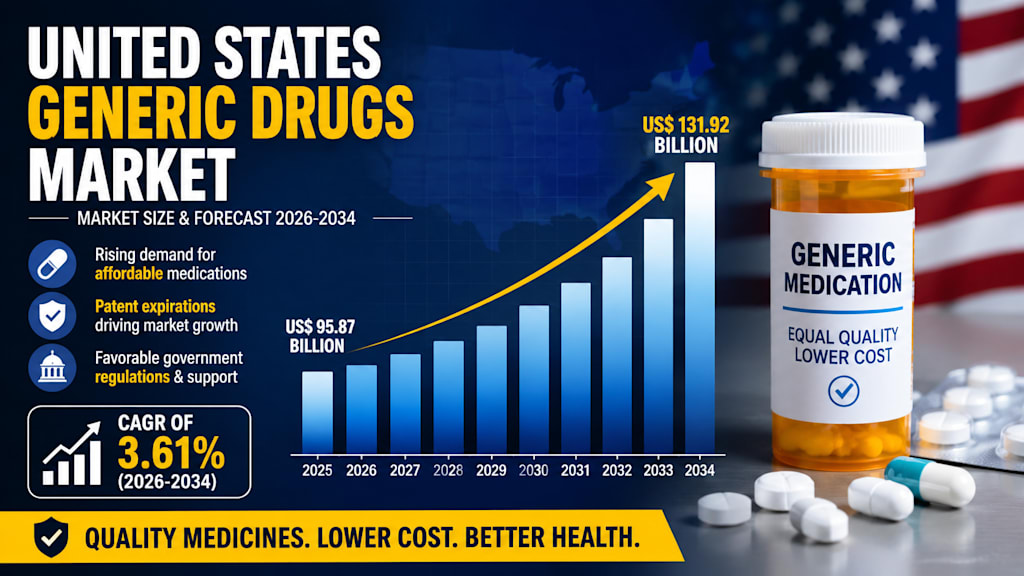
The importance of this market is reflected in its impressive growth trajectory. According to Renub Research, the United States Generic Drugs Market is projected to increase from US$95.87 billion in 2025 to US$131.92 billion by 2034, growing at a compound annual growth rate (CAGR) of 3.61% from 2026 to 2034. This expansion is being fueled by rising demand for affordable medicines, patent expirations of major branded drugs, and supportive government initiatives.
The numbers tell a compelling story, but the broader impact extends far beyond market valuations. Generic drugs are helping reshape healthcare delivery in America, making treatment more accessible and sustainable in an increasingly complex medical landscape.
What Exactly Are Generic Drugs?
Generic drugs are medications that contain the same active ingredients as their brand-name counterparts. They must meet strict regulatory requirements to ensure they match the original drug in dosage, safety, effectiveness, strength, and intended use.
Before approval, manufacturers must demonstrate bioequivalence, meaning the generic version works in the body in essentially the same way as the original medicine.
Despite these similarities, generic drugs are usually sold at substantially lower prices.
The reason is straightforward. Original pharmaceutical companies invest billions of dollars into research, development, clinical trials, and marketing before bringing a new drug to market. Generic manufacturers can produce equivalent medicines after patents expire, avoiding many of those initial costs.
The result is a win-win situation: patients receive effective treatments while paying significantly less.
Over the years, public confidence in generic medications has grown dramatically. Today, doctors, pharmacists, insurers, and healthcare systems routinely recommend generic alternatives whenever appropriate.
The Growing Need for Affordable Medications
Healthcare affordability remains one of the most pressing concerns facing Americans.
Prescription drug prices in the United States are among the highest in the world, creating financial strain for patients across all age groups. Individuals suffering from chronic conditions such as diabetes, hypertension, heart disease, and respiratory illnesses often require continuous treatment, making affordability especially important.
Generic drugs provide a practical solution.
By offering equivalent therapeutic outcomes at lower prices, generics allow patients to remain consistent with their treatment plans. This improved medication adherence can lead to better health outcomes, fewer complications, and reduced hospital admissions.
Healthcare insurers also benefit from increased generic usage because lower prescription costs help control overall healthcare expenditures.
As the U.S. population continues to age and chronic diseases become more prevalent, demand for cost-effective medications is expected to rise even further.
This trend is one of the primary reasons analysts remain optimistic about the future of the generic drugs industry.
Patent Expirations Are Creating Massive Opportunities
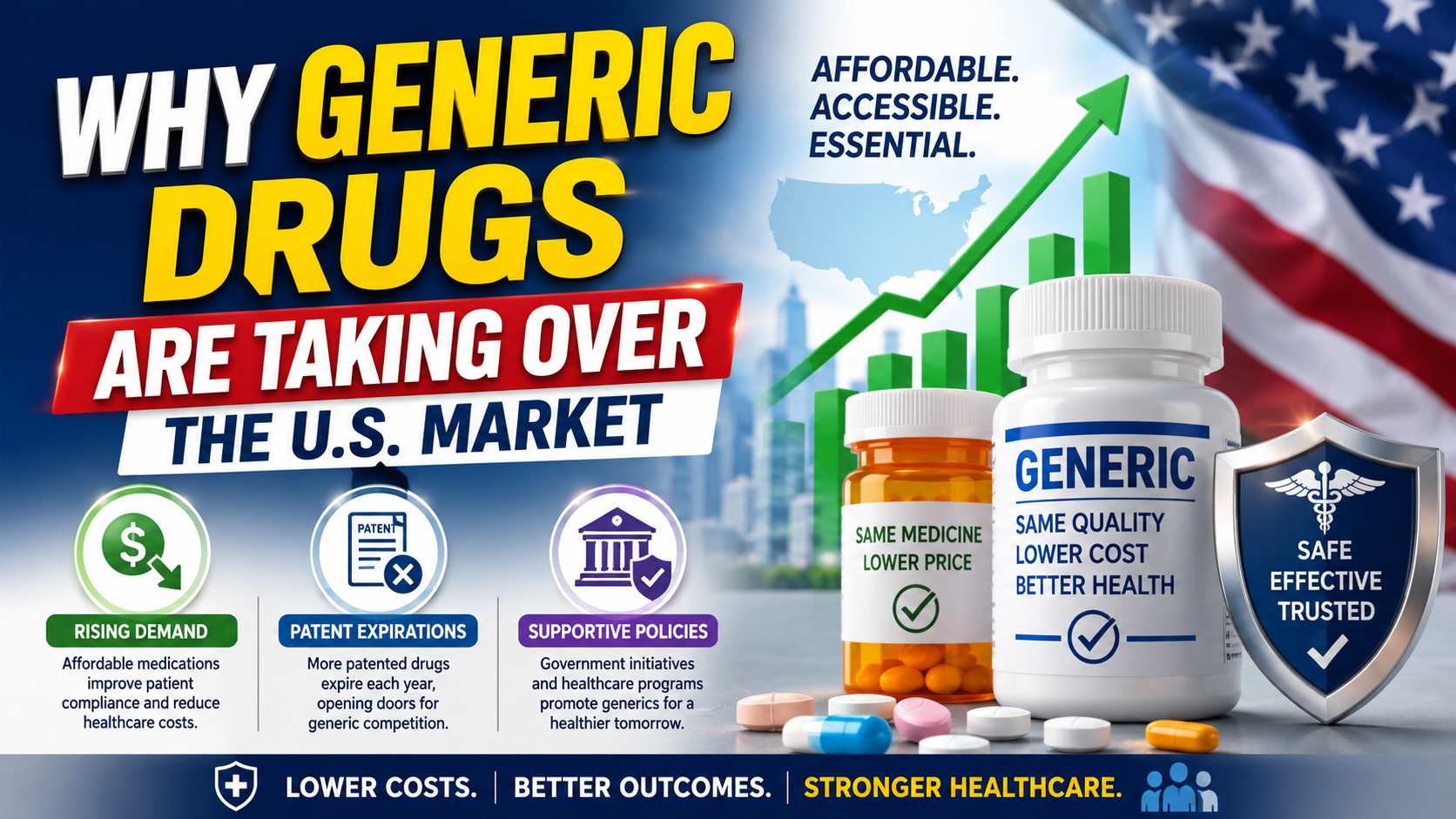
One of the most powerful growth drivers in the generic drugs market is the steady expiration of pharmaceutical patents.
When a pharmaceutical company develops a new medicine, it receives patent protection that prevents competitors from manufacturing identical products for a specific period. Once that protection expires, other companies gain the legal right to develop and market generic versions.
These patent expirations often transform entire therapeutic categories.
Many blockbuster drugs generate billions of dollars annually while under patent protection. After expiration, multiple generic manufacturers enter the market, increasing competition and driving prices downward.
Patients benefit from improved affordability, while healthcare providers gain access to more cost-effective treatment options.
Several high-profile medications across cardiovascular care, oncology, diabetes management, and other therapeutic areas have already experienced patent expirations in recent years, opening substantial opportunities for generic manufacturers.
As additional patents expire throughout the coming decade, market expansion is expected to accelerate.
Government Policies Continue to Encourage Adoption
Government support has played a crucial role in the success of generic medicines across the United States.
Federal and state healthcare programs increasingly recognize that generic drugs help improve access to care while controlling costs. As a result, policymakers have implemented measures designed to encourage their use.
Programs such as Medicare and Medicaid actively promote generic prescribing whenever suitable alternatives are available. Many pharmacies also participate in automatic substitution programs that allow generic replacements unless physicians specify otherwise.
Regulatory agencies have worked to streamline approval pathways for generic manufacturers while maintaining rigorous safety standards.
Public awareness campaigns have further helped strengthen consumer confidence by emphasizing that generic medicines meet the same quality and effectiveness requirements as branded products.
These efforts have contributed significantly to the growing acceptance and widespread adoption of generic drugs throughout the country.
The Rise of Branded Generics
Although traditional generics dominate the market, branded generics are becoming an increasingly important segment.
Unlike unbranded generics, branded generics are marketed under a specific trade name while still offering the same active ingredients and therapeutic benefits.
For many consumers, branding creates familiarity and trust.
Patients who may hesitate to switch from a well-known brand-name medication often feel more comfortable choosing a branded generic because it offers a recognizable identity while remaining more affordable.
Manufacturers use branding strategies to differentiate themselves in a highly competitive marketplace. Marketing initiatives, physician recommendations, and customer loyalty all contribute to the success of branded generic products.
As healthcare consumers continue seeking affordable solutions without compromising confidence, branded generics are expected to maintain strong market relevance.
Heart Disease Treatments Drive Significant Demand
Cardiovascular disease remains one of the leading health challenges in America, making heart disease medications a major component of the generic drugs market.
Millions of Americans rely on medications to manage hypertension, heart failure, high cholesterol, and related cardiovascular conditions.
Generic versions of commonly prescribed drugs—including statins, beta blockers, anticoagulants, and ACE inhibitors—have become essential treatment options.
Several factors continue to fuel growth in this segment:
- Aging demographics
- Increasing obesity rates
- Sedentary lifestyles
- Rising prevalence of hypertension
- Improved disease awareness
Because cardiovascular conditions often require lifelong treatment, affordability becomes especially important. Generic medications help patients maintain therapy while reducing long-term healthcare expenses.
As cardiovascular disease remains widespread, this segment is expected to remain one of the industry's strongest growth contributors.
Rising Demand for Allergy and Asthma Medications
Another rapidly expanding category is the market for generic allergy and asthma treatments.
Environmental changes, air pollution, seasonal allergens, and growing awareness of respiratory health have all contributed to increased demand for these medications.
Generic antihistamines, inhaled corticosteroids, bronchodilators, and other respiratory therapies offer effective symptom control at lower costs.
For individuals managing chronic asthma or recurring allergies, long-term medication use can become expensive. Generic alternatives provide a financially sustainable option that encourages treatment adherence.
Healthcare providers increasingly recommend these products because they combine affordability with proven clinical effectiveness.
As respiratory conditions continue affecting millions of Americans, this segment is expected to experience sustained growth throughout the forecast period.
Oral Generic Drugs Continue to Dominate
Among all drug delivery methods, oral medications remain the most widely used.
Tablets, capsules, and liquid medicines are convenient, familiar, and easy to administer. They are used to treat a broad range of conditions, including:
- Diabetes
- Cardiovascular diseases
- Mental health disorders
- Infectious diseases
- Chronic pain conditions
Patients generally prefer oral treatments because they are non-invasive and can be taken independently.
Manufacturers also benefit from established production processes and relatively straightforward distribution channels.
Because of their versatility and widespread acceptance, oral generic drugs continue to represent one of the largest segments within the broader generic pharmaceutical industry.
Retail Pharmacies Are the Front Line of Access
Retail pharmacies serve as the primary connection between generic drug manufacturers and consumers.
Whether through national chains, regional pharmacy groups, independent drugstores, or online prescription platforms, pharmacies play a vital role in encouraging generic drug adoption.
Pharmacists often educate patients about available alternatives, helping them understand that generic medicines provide equivalent therapeutic value.
Many pharmacies also offer discount programs, loyalty benefits, and insurance-supported pricing that further increase affordability.
The growth of digital healthcare has expanded accessibility even more. Prescription delivery services and online pharmacy platforms allow patients to receive medications conveniently without visiting physical locations.
As healthcare increasingly embraces digital transformation, retail pharmacies will remain central to the distribution and promotion of generic medicines.
Key States Leading Market Growth
Certain states have emerged as particularly influential in driving generic drug adoption across the nation.
California
California represents one of the country's largest healthcare markets. The state's commitment to healthcare affordability has encouraged strong adoption of generic medications. Programs aimed at lowering pharmaceutical costs continue supporting market growth.
Texas
Texas has experienced rapid healthcare expansion alongside significant population growth. Increased investment in pharmaceutical supply chains and healthcare infrastructure has strengthened demand for generic drugs throughout the state.
New York
New York's extensive healthcare network and diverse population contribute to a highly active generic pharmaceutical market. Ongoing efforts to improve pricing transparency have further encouraged adoption.
Florida
Florida's large senior population creates substantial demand for affordable prescription medications. Many retirees rely heavily on generic medicines to manage chronic health conditions, making the state an important growth market.
Together, these regions demonstrate how demographic and healthcare trends are shaping generic drug demand nationwide.
Challenges Still Facing the Industry
Despite its positive outlook, the generic pharmaceutical industry faces several challenges.
Intense Pricing Competition
Competition among manufacturers often leads to aggressive pricing strategies. While lower prices benefit consumers, they can reduce profitability for producers.
In some cases, low profit margins discourage manufacturers from producing certain medications, increasing the risk of supply shortages.
Regulatory Complexity
Maintaining compliance with strict regulatory standards remains a significant responsibility.
Manufacturers must meet rigorous requirements related to production quality, testing, safety monitoring, and facility inspections.
Although these standards are essential for patient protection, they increase operational costs and create barriers for smaller companies entering the market.
Balancing affordability with quality assurance will remain a key challenge moving forward.
A Promising Future for Generic Medicine
The future of generic drugs in the United States appears exceptionally strong.
Rising healthcare costs, increasing chronic disease prevalence, supportive government policies, and continued patent expirations are all contributing to sustained market expansion.
At the same time, patients have become more informed and more comfortable choosing generic alternatives than ever before.
This growing trust is helping transform generics from simple substitutes into preferred treatment options across many therapeutic categories.
As healthcare systems seek long-term sustainability, generic medicines will continue playing an essential role in improving access, reducing costs, and enhancing patient outcomes.
Final Thoughts
The evolution of generic drugs represents one of the most important developments in modern American healthcare. These medications have successfully bridged the gap between medical innovation and affordability, ensuring that millions of patients can access the treatments they need without facing overwhelming financial burdens.
With the United States Generic Drugs Market expected to grow from US$95.87 billion in 2025 to US$131.92 billion by 2034, the sector's influence will only continue to expand.
Beyond the impressive financial projections lies a much greater achievement: making healthcare more accessible, equitable, and sustainable for future generations. As the healthcare landscape continues to evolve, generic drugs are proving that affordability and quality can coexist—and that may be their most valuable contribution of all.
About the Creator
Enjoyed the story? Support the Creator.
Subscribe for free to receive all their stories in your feed.
Comments
There are no comments for this story
Be the first to respond and start the conversation.