
Why Electric Toothbrushes Are Transforming the Future of Oral Care
From AI-powered brushing guidance to advanced sonic cleaning technology, electric toothbrushes are redefining how people approach daily dental hygiene.

For decades, brushing teeth has been one of the simplest daily routines practiced around the world. Yet despite its importance, many people still struggle to maintain optimal oral hygiene. Inconsistent brushing techniques, inadequate cleaning time, and excessive brushing pressure often contribute to plaque buildup, gum disease, and other dental problems.
Today, technology is changing that reality.
Electric toothbrushes have evolved from premium dental gadgets into sophisticated personal care devices designed to improve brushing effectiveness, promote healthier habits, and provide a more personalized oral care experience. With features such as sonic cleaning, pressure sensors, artificial intelligence, mobile connectivity, and customized brushing modes, these devices are helping consumers achieve professional-level cleaning from the comfort of their homes.
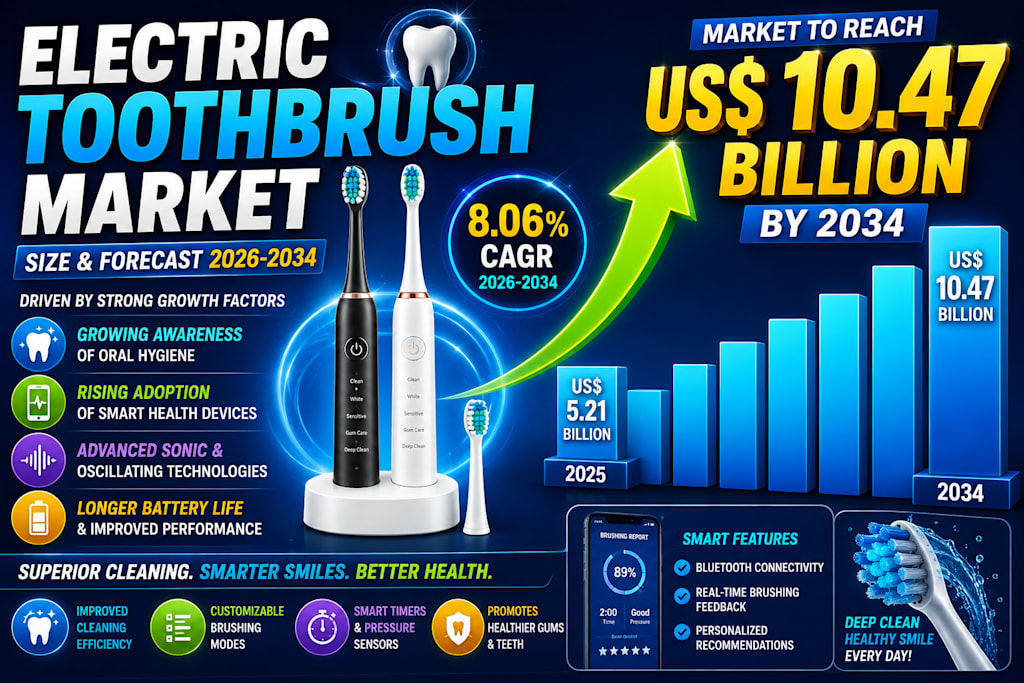
According to Renub Research, the global Electric Toothbrush Market is expected to grow from US$ 5.21 billion in 2025 to US$ 10.47 billion by 2034, expanding at a compound annual growth rate (CAGR) of 8.06% between 2026 and 2034. This growth reflects increasing awareness of oral health, rising adoption of smart personal care devices, and continuous innovation in dental technology.
As consumers become more proactive about preventive healthcare, electric toothbrushes are emerging as one of the most significant innovations in everyday wellness.
Oral Health Is Receiving Greater Attention
Over the past decade, awareness of oral hygiene has increased significantly across the world.
Healthcare professionals increasingly emphasize the connection between oral health and overall well-being. Research continues to highlight links between poor oral hygiene and broader health concerns, including cardiovascular disease, diabetes, and chronic inflammation.
As a result, consumers are paying closer attention to preventive dental care than ever before.
Regular brushing remains the foundation of oral hygiene, but many individuals are seeking tools that can improve cleaning efficiency and help them develop healthier habits. Electric toothbrushes address this need by offering consistent performance and features designed to optimize brushing techniques.
For many users, the transition from a manual toothbrush to an electric model represents an investment in long-term health rather than a simple upgrade in convenience.
Technology Is Revolutionizing Everyday Brushing
One of the most significant drivers of market growth is rapid technological innovation.
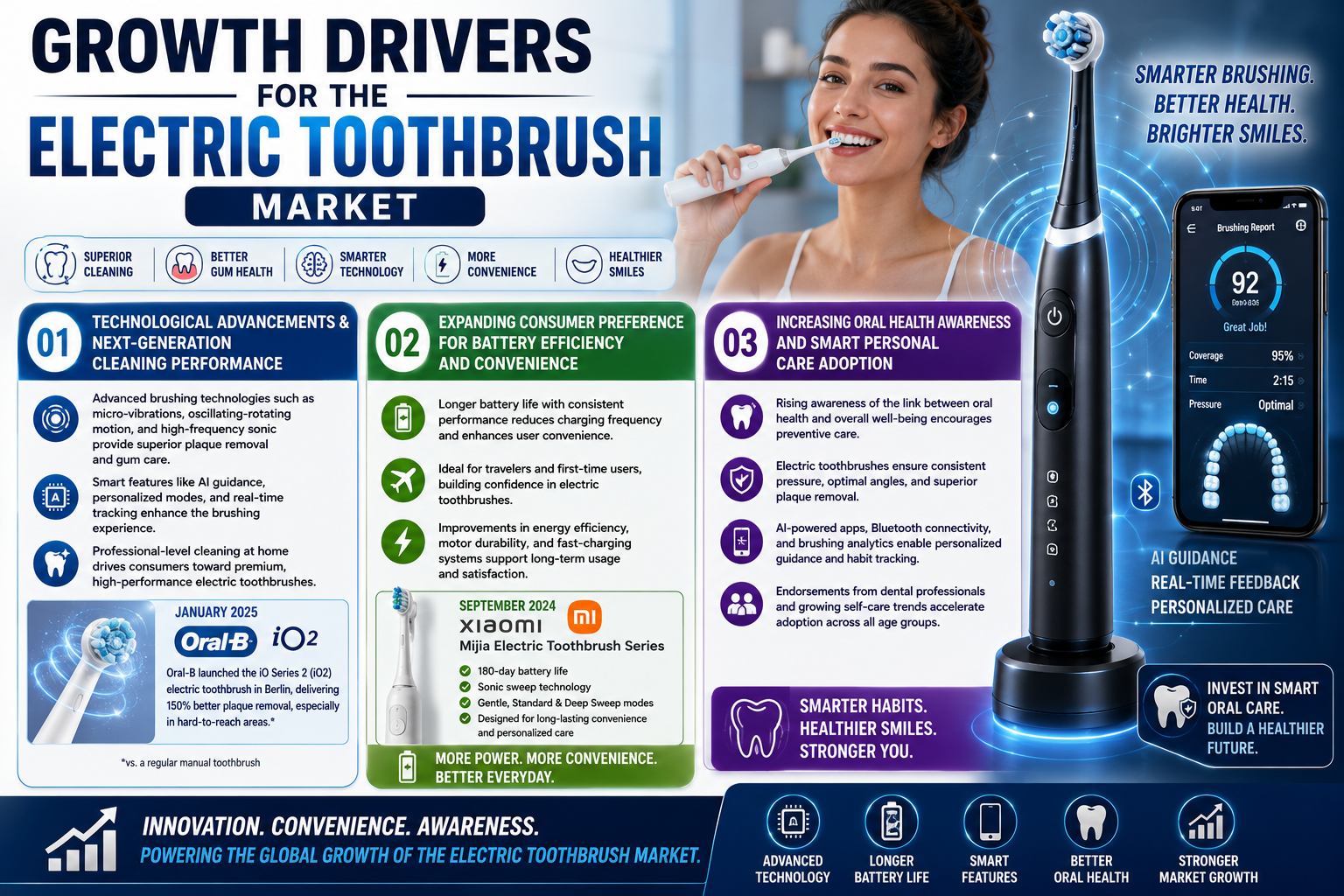
Modern electric toothbrushes incorporate advanced cleaning mechanisms that go far beyond traditional brushing methods. Oscillating, rotating, and sonic technologies generate thousands of cleaning movements per minute, helping remove plaque more effectively than manual brushing.
These innovations enable users to clean hard-to-reach areas while maintaining consistent pressure and motion throughout the brushing process.
Manufacturers continue to introduce increasingly sophisticated products that combine cleaning efficiency with user-friendly features. Advanced models often include pressure sensors that alert users when brushing too aggressively, helping prevent gum damage and enamel wear.
Built-in timers encourage users to brush for the dentist-recommended duration, while multiple cleaning modes allow customization based on individual needs, including sensitive teeth, gum care, whitening, and deep cleaning.
As technology becomes more accessible, consumers are increasingly recognizing the benefits of upgrading their daily oral care routines.
Smart Features Are Creating Personalized Experiences
The growing popularity of smart health devices has significantly influenced the electric toothbrush market.
Consumers today are accustomed to wearable fitness trackers, smartwatches, and connected health applications. Electric toothbrush manufacturers are responding by integrating similar technologies into oral care products.
Bluetooth connectivity, smartphone applications, and artificial intelligence are transforming brushing into a data-driven experience.
Many advanced toothbrushes now provide real-time feedback on brushing habits, coverage areas, duration, and pressure levels. Users receive personalized recommendations designed to improve technique and maximize cleaning effectiveness.
Artificial intelligence can identify missed areas, track progress over time, and help establish healthier routines. These features are particularly appealing to younger consumers who value technology-enabled self-care and health monitoring.
The integration of digital wellness tools is helping electric toothbrushes evolve from simple appliances into intelligent personal health companions.
Superior Cleaning Performance Drives Adoption
One of the primary reasons consumers switch to electric toothbrushes is improved cleaning performance.
Manual brushing effectiveness depends heavily on technique, consistency, and individual effort. Electric toothbrushes reduce variability by automating many aspects of the brushing process.
High-frequency sonic vibrations and oscillating brush heads can remove plaque more efficiently while promoting healthier gums. Many users report cleaner-feeling teeth, reduced plaque accumulation, and improved oral hygiene outcomes after switching to electric models.
Professional recommendations further support adoption. Dentists frequently endorse electric toothbrushes for patients seeking better plaque control, orthodontic care, or improved gum health.
As awareness of these benefits grows, demand continues to increase across both premium and entry-level product categories.
Battery Innovation Is Improving Convenience
Convenience plays a crucial role in consumer purchasing decisions.
Modern users expect personal care devices that are easy to use, require minimal maintenance, and deliver reliable performance. Battery technology has become a major area of innovation within the electric toothbrush market.
Manufacturers are introducing products with significantly longer battery life, reducing the need for frequent charging. Fast-charging capabilities and improved power management systems further enhance user convenience.
Long-lasting batteries are particularly attractive for travelers and busy professionals who value portability and uninterrupted performance.
By addressing common concerns about charging frequency and device reliability, these advancements are making electric toothbrushes more appealing to a broader audience.
E-Commerce Is Expanding Market Reach
The rise of digital commerce has played a significant role in accelerating electric toothbrush adoption worldwide.
Online platforms provide consumers with access to extensive product selections, detailed reviews, educational content, and competitive pricing. Customers can compare features, read expert recommendations, and make informed purchasing decisions from the comfort of their homes.
Subscription services have also emerged as a popular business model. Many brands now offer automatic delivery of replacement brush heads, ensuring users maintain optimal performance without remembering to reorder supplies.
Social media marketing, influencer endorsements, and targeted advertising have further increased product visibility, particularly among younger demographics.
As e-commerce continues to expand globally, electric toothbrush manufacturers are gaining access to new consumer segments and geographic markets.
Regional Markets Are Driving Growth
The electric toothbrush market is expanding across both developed and emerging economies.
The United States remains one of the most mature markets, supported by strong consumer awareness, high disposable incomes, and widespread acceptance of smart health devices. Dental professionals frequently recommend electric toothbrushes, contributing to high adoption rates.
Germany represents one of Europe's strongest markets, where consumers value technological innovation, preventive healthcare, and product quality. Sustainability considerations also influence purchasing decisions, encouraging demand for rechargeable devices.
China is experiencing rapid growth due to rising incomes, expanding urbanization, and increasing interest in connected consumer electronics. Domestic brands are making advanced products more affordable, accelerating adoption among younger consumers.
Saudi Arabia is also witnessing steady market expansion as awareness of oral health increases and consumers embrace premium personal care products. A young population and growing interest in technology-driven wellness solutions support continued growth.
These regional trends highlight the global nature of the market and the widespread appeal of advanced oral care technologies.
Challenges Continue to Affect Adoption
Despite strong growth prospects, several challenges remain.
The high cost of advanced electric toothbrushes continues to limit adoption in many price-sensitive markets. Premium devices equipped with smart features, artificial intelligence, and specialized cleaning modes often carry significantly higher price tags than traditional toothbrushes.
The recurring cost of replacement brush heads can also discourage long-term usage among budget-conscious consumers.
Consumer education remains another challenge. Many individuals are unfamiliar with the benefits of electric toothbrushes or remain skeptical about whether they provide meaningful advantages over manual brushing.
Older adults and consumers in rural areas may be less comfortable adopting new technologies, creating additional barriers to market penetration.
Manufacturers and healthcare professionals must continue investing in awareness campaigns to address misconceptions and encourage broader adoption.
Innovation Is Shaping the Future
The future of the electric toothbrush industry will be defined by continuous innovation.
Artificial intelligence is expected to become increasingly sophisticated, providing more personalized recommendations and predictive insights. Enhanced sensors will deliver greater accuracy in tracking brushing behavior and identifying oral health risks.
Integration with broader health ecosystems may allow electric toothbrushes to contribute valuable data to preventive healthcare platforms.
Sustainability will also become a more important focus. Manufacturers are exploring environmentally friendly materials, recyclable components, and energy-efficient designs that align with growing consumer interest in responsible consumption.
As technology continues to advance, electric toothbrushes are likely to become even more effective, intelligent, and accessible.
Looking Toward 2034
The next decade presents substantial opportunities for the electric toothbrush industry.
Growing awareness of preventive healthcare, expanding digital wellness ecosystems, and increasing consumer demand for smart personal care products are expected to support continued market growth.
As technology becomes more affordable and accessible, electric toothbrush adoption is likely to accelerate across emerging economies, creating new opportunities for manufacturers and retailers.
Consumers are increasingly seeking products that combine convenience, personalization, and measurable health benefits. Electric toothbrushes are uniquely positioned to meet these expectations.
Final Thoughts
The electric toothbrush market is undergoing a remarkable transformation driven by innovation, health awareness, and changing consumer preferences.
What was once considered a luxury dental device is rapidly becoming a mainstream wellness tool that supports healthier habits and improved oral care outcomes. From sonic cleaning technology and AI-powered guidance to long-lasting batteries and smart connectivity, electric toothbrushes are redefining the daily brushing experience.
With the global market projected to reach US$ 10.47 billion by 2034, the future of electric toothbrushes looks exceptionally promising. As consumers continue to prioritize preventive health and embrace technology-driven solutions, these devices will play an increasingly important role in modern personal care routines.
The future of oral hygiene is becoming smarter, more personalized, and more effective—and electric toothbrushes are leading the way.
About the Creator
Enjoyed the story? Support the Creator.
Subscribe for free to receive all their stories in your feed.
Comments
There are no comments for this story
Be the first to respond and start the conversation.