
Why Are Wine Coolers Becoming a Must-Have Appliance for American Wine Enthusiasts?
How Growing Wine Culture, Smart Home Technology, and Premium Kitchen Trends Are Driving the United States Wine Cooler Market

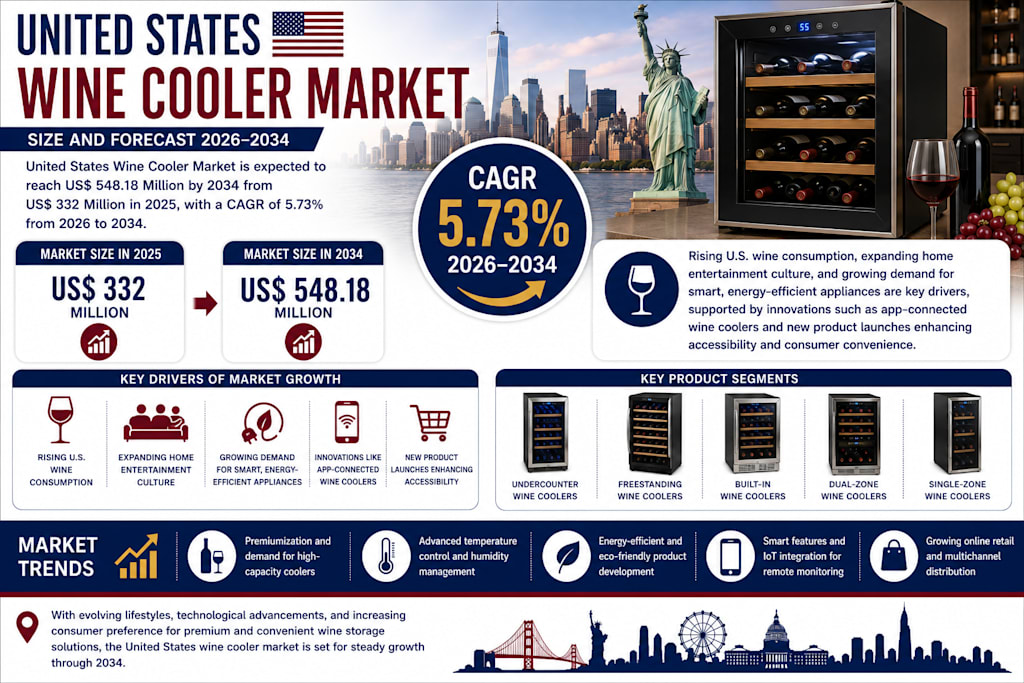
Wine has become more than just a beverage in the United States—it is increasingly a lifestyle choice. As wine appreciation continues to grow across the country, consumers are investing not only in premium bottles but also in the proper storage solutions needed to preserve flavor, aroma, and quality. This trend has transformed wine coolers from niche appliances into essential additions to modern homes, luxury kitchens, restaurants, and entertainment spaces.
Today's consumers understand that proper wine storage plays a critical role in maintaining wine quality. Standard refrigerators often expose wine to fluctuating temperatures, excessive vibrations, and low humidity levels, conditions that can negatively impact taste and aging potential. Wine coolers address these concerns by providing specialized environments designed specifically for wine preservation.
According to Renub Research, the United States Wine Cooler Market is projected to grow from US$ 332 million in 2025 to US$ 548.18 million by 2034, expanding at a compound annual growth rate (CAGR) of 5.73% from 2026 to 2034. Increasing wine consumption, growing home entertainment culture, rising demand for premium kitchen appliances, and technological advancements in smart refrigeration are key factors supporting market growth.
As consumers continue embracing wine culture and sophisticated home lifestyles, wine coolers are becoming an increasingly important appliance category across the United States.
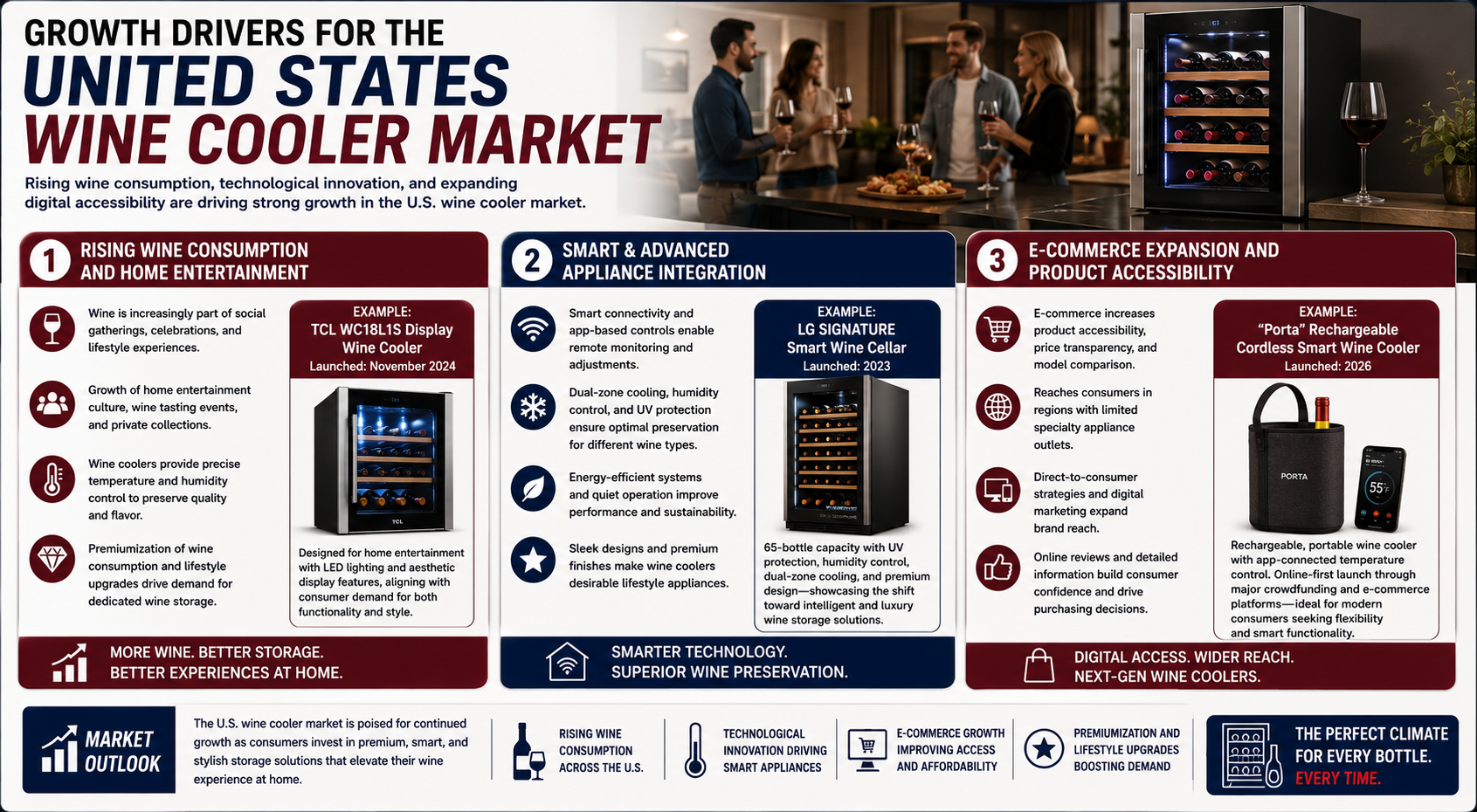
Understanding the Importance of Wine Coolers
Wine coolers are specialized refrigeration appliances designed to maintain optimal temperature and humidity conditions for wine storage.
Unlike conventional refrigerators, wine coolers are engineered to preserve the unique characteristics of wine by minimizing temperature fluctuations, controlling humidity, reducing vibrations, and protecting bottles from harmful UV exposure. These features help ensure that wines retain their intended flavor profiles and aging potential.
Modern wine coolers are available in a variety of configurations, including freestanding units, built-in models, countertop designs, and large-capacity wine cellars. Many products feature dual-zone or multi-zone cooling systems that allow different wine varieties to be stored at ideal temperatures simultaneously.
As wine collections become more diverse, consumers increasingly recognize the value of dedicated storage solutions that protect their investments while enhancing convenience.
Growing Wine Consumption Is Fueling Market Expansion
One of the most significant drivers of the U.S. wine cooler market is the continued growth of wine consumption.
Wine has become a popular beverage choice among a broad range of consumers, including millennials, professionals, retirees, and affluent households. As consumers purchase higher-quality wines and expand personal collections, the need for proper storage solutions naturally increases.
Many wine enthusiasts now understand that preserving wine quality requires more than simply placing bottles in a kitchen refrigerator. Dedicated wine coolers offer temperature consistency and storage conditions specifically designed to maintain optimal flavor and aging characteristics.
The increasing popularity of wine tasting, wine clubs, and collector culture has further strengthened demand for specialized storage appliances.
As wine appreciation continues spreading across demographic groups, wine coolers are expected to become increasingly common in American households.
Home Entertainment Culture Is Creating New Opportunities
The growing emphasis on home entertainment has become another major growth driver.
Many consumers now invest heavily in creating sophisticated home environments designed for hosting friends and family. Wine often plays a central role in social gatherings, dinner parties, celebrations, and special occasions.
As a result, homeowners increasingly seek appliances that support entertaining while enhancing aesthetic appeal. Wine coolers not only provide practical storage but also contribute to luxury kitchen designs, home bars, and dedicated entertainment spaces.
Modern units often feature elegant finishes, LED lighting, glass doors, and premium shelving systems that allow consumers to display collections while maintaining proper storage conditions.
The desire to replicate restaurant-quality experiences at home continues supporting demand for wine coolers across multiple consumer segments.
Smart Technology Is Transforming Wine Storage
Technological innovation has significantly enhanced the appeal of wine coolers.
Today's consumers increasingly expect household appliances to offer advanced functionality, convenience, and connectivity. Wine cooler manufacturers are responding by incorporating smart features that improve user experiences and simplify wine management.
Modern products often include app-based controls, Wi-Fi connectivity, digital temperature monitoring, touch-screen interfaces, and remote management capabilities. These technologies allow users to adjust settings, monitor conditions, and receive notifications directly from smartphones.
Dual-zone cooling systems have become particularly popular because they enable simultaneous storage of red and white wines at their respective ideal temperatures.
The integration of wine coolers into broader smart-home ecosystems has further increased their appeal among technology-focused consumers seeking seamless appliance connectivity.
Premium Kitchen Design Trends Support Demand
Kitchen remodeling and home improvement trends are playing an increasingly important role in market growth.
Consumers are investing more heavily in premium appliances that combine functionality with aesthetics. Wine coolers have become desirable additions to luxury kitchens because they offer both practical storage and visual sophistication.
Built-in wine coolers are especially popular among homeowners seeking seamless integration with cabinetry and modern kitchen layouts. These units provide a clean, customized appearance while maximizing available space.
Interior designers and home builders increasingly include wine coolers in high-end residential projects as part of broader luxury lifestyle offerings.
As consumers continue prioritizing premium home environments, wine coolers are expected to benefit from sustained demand within the remodeling and construction sectors.
E-Commerce Is Expanding Consumer Access
The rapid growth of online retail has significantly increased accessibility within the wine cooler market.
Consumers can now explore extensive product selections, compare specifications, review customer feedback, and evaluate pricing through digital platforms. This convenience has expanded access to wine coolers beyond traditional appliance retailers.
Online shopping is particularly valuable for consumers living in areas with limited access to specialty appliance stores. E-commerce platforms allow manufacturers to reach broader audiences while providing detailed product information and educational resources.
Direct-to-consumer strategies have also gained popularity as manufacturers seek stronger customer relationships and greater control over brand experiences.
The continued expansion of digital commerce is expected to remain an important driver of market growth throughout the forecast period.
Built-In Wine Coolers Continue Gaining Popularity
Built-in wine coolers represent one of the fastest-growing segments within the market.
Consumers increasingly prefer appliances that integrate seamlessly into kitchen cabinetry and home bar designs. Built-in models offer aesthetic advantages while conserving valuable floor space.
The growth of luxury apartments, premium housing developments, and kitchen renovation projects has significantly increased demand for these products.
Advanced features such as multi-zone cooling, digital controls, quiet operation, and customizable shelving further enhance their appeal.
As modern interior design trends continue emphasizing integrated appliances, built-in wine coolers are expected to remain a major growth segment.
Thermoelectric Models Appeal to Energy-Conscious Consumers
Thermoelectric wine coolers have gained popularity among consumers seeking energy-efficient and environmentally friendly storage solutions.
Unlike compressor-based systems, thermoelectric coolers operate quietly and generate minimal vibration, helping preserve wine quality while reducing energy consumption.
These products are particularly attractive to apartment residents, casual wine drinkers, and consumers with smaller collections. Their compact size, portability, and affordability further broaden market accessibility.
As sustainability becomes increasingly important in purchasing decisions, thermoelectric technology is expected to continue attracting environmentally conscious buyers.
Challenges Facing the United States Wine Cooler Market
Despite favorable growth prospects, the market faces several challenges.
One significant obstacle is the relatively high upfront cost associated with premium wine coolers. Advanced features such as smart connectivity, multi-zone cooling systems, and luxury finishes can substantially increase purchase prices.
Many consumers still view wine coolers as discretionary purchases rather than essential household appliances, limiting adoption among budget-conscious households. Economic uncertainty and inflationary pressures can further discourage spending on luxury appliances.
Space constraints also present challenges, particularly in urban environments where smaller homes and apartments may not accommodate larger wine storage units.
Manufacturers must continue balancing innovation, affordability, and accessibility to maintain long-term growth.
California Leads the U.S. Wine Cooler Market
California remains the most influential market for wine coolers in the United States.
The state's globally recognized wine industry generates substantial economic activity and supports a strong culture of wine appreciation. With more than 4,600 wineries and extensive vineyard acreage, California naturally creates significant demand for wine storage solutions.
Affluent consumers, wine collectors, hospitality businesses, and luxury homeowners frequently invest in wine coolers to protect and showcase their collections.
Regions such as Napa Valley and Sonoma are particularly important markets due to their deep connections to wine culture and tourism.
Texas Emerges as a Fast-Growing Opportunity
Texas has become one of the fastest-growing wine markets in the country.
The state's expanding wine industry, strong economic growth, and increasing wine tourism contribute to rising demand for wine coolers. Consumers in cities such as Austin, Dallas, and Houston are increasingly embracing wine culture and investing in home entertainment spaces.
Restaurants, tasting rooms, and hospitality businesses also contribute to commercial demand for wine storage equipment.
As Texas continues expanding its wine ecosystem, opportunities for wine cooler manufacturers are expected to grow accordingly.
New York Supports Premium Wine Storage Demand
New York's vibrant wine culture and affluent urban consumer base create favorable conditions for wine cooler adoption.
Wine enthusiasts in New York City and wine-producing regions such as the Finger Lakes frequently seek premium storage solutions capable of preserving diverse collections.
The state's strong hospitality sector further supports demand across restaurants, hotels, and specialty wine retailers.
Urban consumers often favor compact, stylish, and technologically advanced models that fit modern living environments while delivering professional-grade storage performance.
Florida Benefits from Tourism and Affluent Consumers
Florida's large tourism industry and affluent population contribute significantly to wine cooler demand.
Luxury residences, hospitality establishments, and seasonal homeowners frequently invest in wine storage appliances as part of broader lifestyle and entertainment upgrades.
The state's strong hospitality sector also creates commercial opportunities for wine cooler manufacturers serving restaurants, resorts, and wine-focused venues.
Growing wine consumption trends among retirees and high-income households further support market expansion.
Recent Industry Developments Highlight Innovation
Recent product launches demonstrate the industry's commitment to innovation and premiumization.
In November 2024, Dacor introduced a luxury under-counter wine cellar featuring dual-temperature zones, premium oak shelving, and advanced wine preservation technologies.
Samsung also expanded its premium appliance offerings with integrated wine cellar solutions capable of storing more than 100 bottles while supporting customizable kitchen designs.
These developments reflect growing consumer demand for sophisticated, technologically advanced wine storage solutions.
Leading Companies Competing in the Market
The United States wine cooler market features competition among several major appliance manufacturers, including Whirlpool Corporation, Danby, Frigidaire, Haier Inc., NewAir, Kalamera, Robert Bosch GmbH, EdgeStar, Avanti Products, and Vinotemp. These companies continue investing in innovation, energy efficiency, smart connectivity, and premium design to strengthen their market positions.
Final Thoughts
The United States Wine Cooler Market is benefiting from the convergence of several powerful trends, including rising wine consumption, expanding home entertainment culture, smart-home adoption, and premium kitchen design preferences.
With the market expected to grow from US$ 332 million in 2025 to US$ 548.18 million by 2034, wine coolers are evolving from specialty appliances into mainstream lifestyle products that appeal to a broad range of consumers.
As wine appreciation continues expanding and consumers increasingly seek sophisticated storage solutions, the wine cooler industry is well-positioned to capitalize on growing demand for convenience, preservation, technology, and luxury living.
About the Creator
Enjoyed the story? Support the Creator.
Subscribe for free to receive all their stories in your feed.
Comments
There are no comments for this story
Be the first to respond and start the conversation.