
Why Are Watches Continuing to Thrive in China Despite the Rise of Smartphones and Smart Devices?
How Rising Incomes, Fashion Trends, Luxury Aspirations, and E-Commerce Innovation Are Driving Growth in the China Watch Market

In an age where smartphones can instantly provide time, notifications, navigation, and countless digital functions, watches remain remarkably relevant across China. Far from becoming obsolete, watches have evolved into powerful symbols of fashion, personal identity, social status, and craftsmanship. Consumers are no longer purchasing watches solely for their practical utility. Instead, they are embracing timepieces as lifestyle accessories that communicate personality, taste, and success.
China’s rapidly expanding middle class, growing disposable income, and increasing exposure to global fashion trends have significantly transformed the country's watch industry. Today, the market includes everything from affordable quartz watches and stylish fashion models to premium mechanical timepieces and internationally recognized luxury brands.
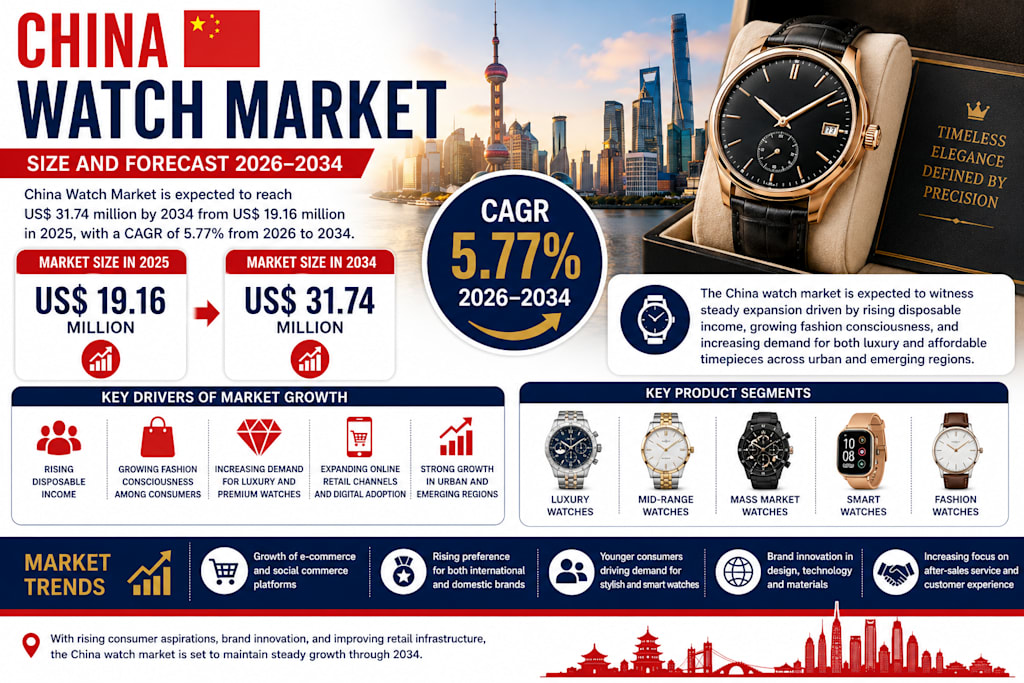
According to Renub Research, the China Watch Market is projected to grow from US$ 19.16 billion in 2025 to US$ 31.74 billion by 2034, expanding at a compound annual growth rate (CAGR) of 5.77% from 2026 to 2034. The market's growth is being fueled by rising purchasing power, increasing fashion consciousness, strong e-commerce penetration, and growing demand for both luxury and affordable watches across urban and emerging regions.
As consumer lifestyles continue evolving, watches are becoming more than simple accessories—they are increasingly viewed as personal statements that blend tradition, fashion, and modern aspirations.
Watches Have Evolved Beyond Their Traditional Purpose
The role of watches in China has changed dramatically over the past decade.
Historically, watches were purchased primarily for timekeeping. Today, however, consumers increasingly view them as fashion items and symbols of personal achievement. A watch often reflects an individual's style, profession, social standing, and lifestyle preferences.
The market now offers products across every price segment, allowing consumers to choose timepieces that align with their budgets and aspirations. Luxury buyers seek exclusivity and craftsmanship, while younger consumers often prioritize design, versatility, and brand identity.
This shift from utility-driven purchases to lifestyle-oriented buying behavior has significantly expanded opportunities for manufacturers and retailers operating within the Chinese market.
As fashion and personal branding continue influencing purchasing decisions, watches remain highly relevant despite rapid technological change.
Rising Disposable Income Is Creating New Opportunities
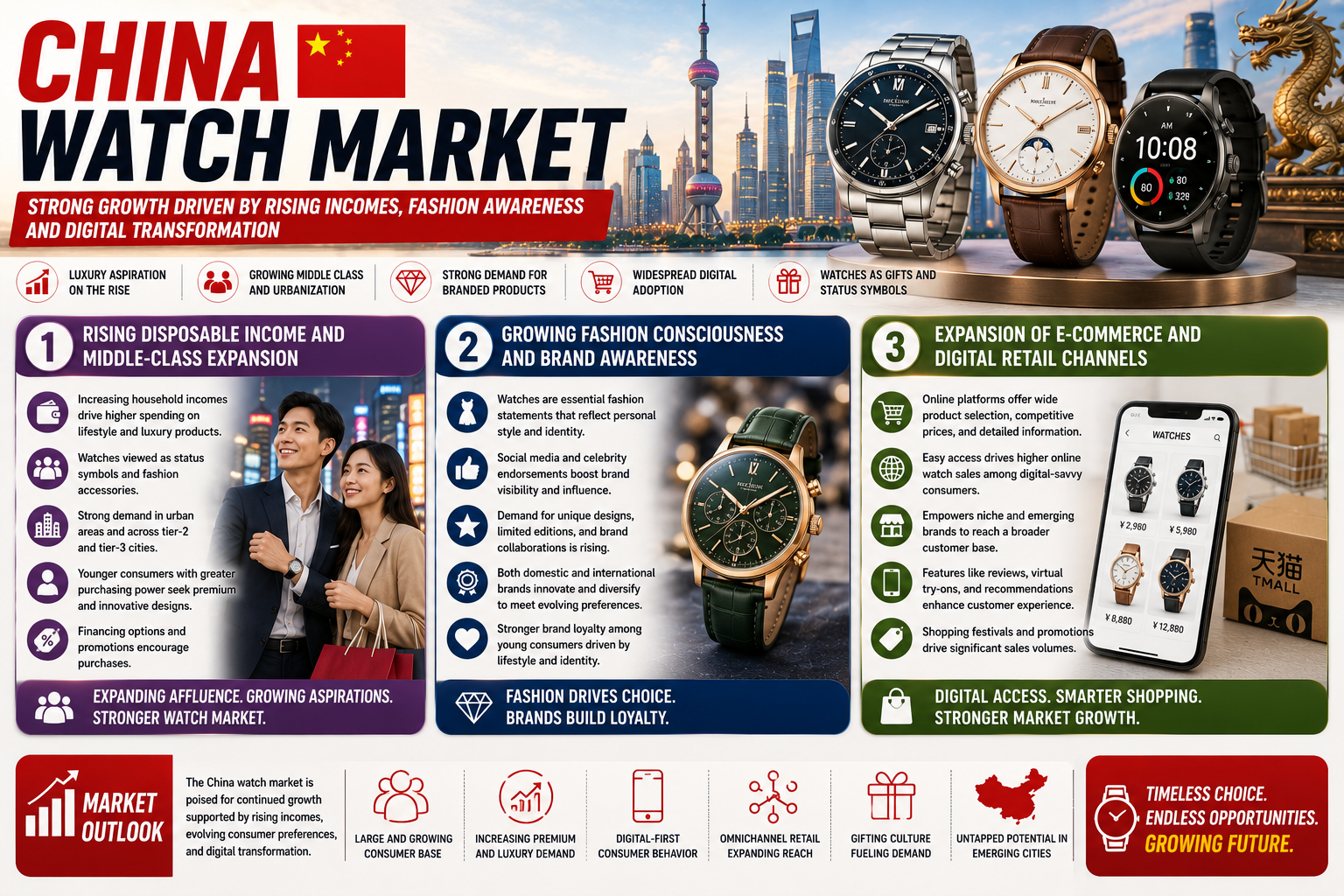
One of the strongest drivers behind the growth of China's watch market is the continued expansion of household incomes.
Economic development has created a rapidly growing middle class with greater purchasing power and increasing willingness to spend on lifestyle products. Watches have become popular purchases among consumers seeking products that combine functionality with prestige and style.
Urban consumers, in particular, are increasingly allocating discretionary income toward premium accessories and branded products. Watches often serve as visible indicators of success, making them attractive purchases for professionals, entrepreneurs, and aspirational consumers.
Growth is also expanding beyond major metropolitan areas. Tier-2 and Tier-3 cities are experiencing rising incomes and improving access to premium brands, creating new opportunities for market participants.
As economic development continues across the country, demand for both luxury and non-luxury watches is expected to strengthen further.
Fashion Consciousness Is Driving Consumer Demand
Chinese consumers have become increasingly fashion-conscious, significantly influencing the watch industry.
Watches are now viewed as essential fashion accessories capable of enhancing personal style and complementing different outfits and occasions. Consumers often select timepieces based on design aesthetics, brand reputation, and lifestyle alignment rather than functionality alone.
Social media platforms have played a major role in accelerating this trend. Influencers, celebrities, fashion bloggers, and digital campaigns regularly showcase luxury and designer watches, encouraging consumers to explore new styles and brands.
Limited-edition collections, fashion collaborations, and unique designs have become especially popular among younger buyers seeking individuality and exclusivity.
As fashion awareness continues growing, demand for aesthetically appealing and brand-driven watches is expected to remain strong.
Luxury Watches Continue to Capture Consumer Interest
China remains one of the world's most important markets for luxury watches.
Affluent consumers increasingly view luxury timepieces as symbols of achievement, sophistication, and prestige. Mechanical craftsmanship, brand heritage, exclusivity, and investment potential all contribute to the appeal of luxury watches.
International brands continue to dominate this segment by offering premium materials, advanced engineering, and distinctive designs that resonate with high-income consumers.
Luxury watches are often purchased for important life milestones, business achievements, and gifting occasions. In many cases, they serve as long-term investments as well as personal accessories.
As wealth creation continues across China, luxury watches are expected to remain a major contributor to overall market value.
E-Commerce Is Transforming the Way Consumers Buy Watches
China's advanced e-commerce ecosystem has fundamentally reshaped the watch-buying experience.
Online platforms provide consumers with access to thousands of products from domestic and international brands. Buyers can compare prices, review specifications, read customer feedback, and evaluate product options without visiting physical stores.
This convenience has significantly expanded market accessibility, particularly for consumers living outside major urban centers.
Digital innovations such as virtual try-on technology, personalized recommendations, live-stream shopping events, and interactive product demonstrations have further enhanced the online shopping experience.
Major online shopping festivals and promotional events also generate substantial sales volumes, helping brands reach broader audiences and strengthen customer engagement.
The continued growth of digital commerce will remain one of the most influential factors shaping the future of China's watch market.
Quartz Watches Remain Popular Among Everyday Consumers
Quartz watches continue to represent a significant portion of China's watch market.
Consumers appreciate these products for their affordability, accuracy, reliability, and low maintenance requirements. Quartz models appeal to students, working professionals, and budget-conscious consumers seeking practical everyday accessories.
Domestic manufacturers play an important role within this segment by offering diverse product ranges across multiple price points.
Although competition from smart devices continues, quartz watches maintain strong demand due to their simplicity, durability, and value for money.
Manufacturers are increasingly incorporating stylish designs and contemporary aesthetics to attract younger consumers while preserving the segment's traditional strengths.
Mechanical Watches Appeal to Premium Buyers
Mechanical watches continue attracting consumers who value craftsmanship, heritage, and exclusivity.
These products are often associated with luxury, precision engineering, and traditional watchmaking expertise. Buyers frequently view mechanical watches as collectible assets that reflect personal achievement and refined taste.
International luxury brands dominate much of this segment, although several domestic manufacturers are gradually improving quality and brand recognition.
Limited-edition releases, customized designs, and premium materials continue enhancing consumer interest in mechanical timepieces.
While the segment serves a relatively specialized audience, it remains highly valuable due to its premium pricing and strong brand loyalty.
Women's Watches Are Becoming an Important Growth Segment
The women's watch market in China is experiencing notable expansion.
Increasing female workforce participation, rising disposable income, and growing fashion awareness have encouraged greater spending on accessories and personal style products. Watches are increasingly viewed as expressions of individuality and sophistication.
Manufacturers are responding by introducing collections featuring elegant designs, lightweight materials, customizable features, and fashion-forward aesthetics.
Social media influence and evolving lifestyle trends continue shaping purchasing decisions among female consumers.
The growing emphasis on self-expression and personal style is expected to support long-term growth within this segment.
Non-Luxury Watches Continue to Dominate Sales Volume
Despite strong luxury demand, non-luxury watches remain the largest segment in terms of unit sales.
These products appeal to students, young professionals, and value-conscious consumers seeking affordable and dependable timepieces. Broad availability through both online and offline channels ensures strong market penetration across multiple demographic groups.
Manufacturers continue enhancing product quality, design, and functionality to remain competitive while maintaining attractive pricing.
Promotional campaigns, discounts, and seasonal sales events further support demand throughout the segment.
As affordability remains an important consideration for many consumers, non-luxury watches will continue playing a central role in market development.
Smartwatch Adoption Creates Competitive Challenges
While the watch market continues growing, the increasing popularity of smartwatches presents a notable challenge.
Younger consumers increasingly seek multifunctional devices capable of providing fitness tracking, health monitoring, notifications, and connectivity features. These products often compete directly with traditional watches for consumer attention and spending.
As technology continues evolving, traditional manufacturers face pressure to innovate and adapt. Some brands are incorporating digital features into their products, while others are emphasizing heritage, craftsmanship, and luxury positioning to differentiate themselves.
Successfully balancing traditional watchmaking with modern consumer expectations will remain a key challenge for industry participants.
Beijing and Shanghai Lead Market Demand
Beijing and Shanghai represent two of the most influential watch markets in China.
Beijing's affluent consumer base, strong luxury retail presence, and emphasis on prestige products support significant demand for premium and luxury watches. Consumers in the city are highly brand-conscious and often prioritize internationally recognized labels.
Shanghai, meanwhile, serves as one of China's most fashion-forward markets. As a global financial and fashion hub, the city attracts consumers who actively seek innovative designs, luxury products, and emerging trends. Demand for both premium and fashion-oriented watches remains particularly strong.
These cities continue shaping national trends while serving as important centers for brand visibility and market expansion.
Emerging Regions Are Supporting Future Growth
Regions such as Jiangsu, Fujian, Zhejiang, Guangdong, Hubei, Tianjin, Inner Mongolia, and Chongqing are increasingly contributing to market growth.
Economic development, rising disposable incomes, expanding retail infrastructure, and growing e-commerce adoption are creating favorable conditions for watch sales across these areas.
As consumers in emerging regions gain greater access to branded products and lifestyle accessories, demand is expected to diversify geographically and support broader market expansion.
This regional growth represents one of the most important long-term opportunities for manufacturers and retailers.
Leading Companies Competing in the Market
The China watch market includes a diverse range of international and domestic competitors. Major companies operating within the market include Seiko Holdings Corporation, Casio Computer Co. Ltd, Timex Group, Rolex SA, Compagnie Financière Richemont S.A., The Swatch Group Ltd, Citizen Watch Co. Ltd., Fossil Group Inc., and Google LLC through Fitbit. These organizations continue investing in innovation, branding, retail expansion, and customer engagement to strengthen their competitive positions.
Final Thoughts
The China Watch Market continues to demonstrate strong resilience and adaptability despite changing technology and evolving consumer preferences. Watches have successfully transitioned from simple timekeeping tools into fashion accessories, status symbols, and lifestyle products that reflect personal identity and aspirations.
With the market projected to grow from US$ 19.16 billion in 2025 to US$ 31.74 billion by 2034, opportunities remain substantial for brands capable of combining design innovation, quality craftsmanship, digital engagement, and strong brand positioning.
As China's consumers continue embracing fashion, luxury, and self-expression, watches are expected to remain a powerful and enduring part of the country's evolving consumer landscape.
About the Creator
Enjoyed the story? Support the Creator.
Subscribe for free to receive all their stories in your feed.
Comments
There are no comments for this story
Be the first to respond and start the conversation.