
Why Are Smartwatches and Luxury Timepieces Fueling Growth in Australia's Watch Market?
How Health Awareness, Premium Lifestyle Trends, and Digital Retail Expansion Are Transforming the Australia Watch Market

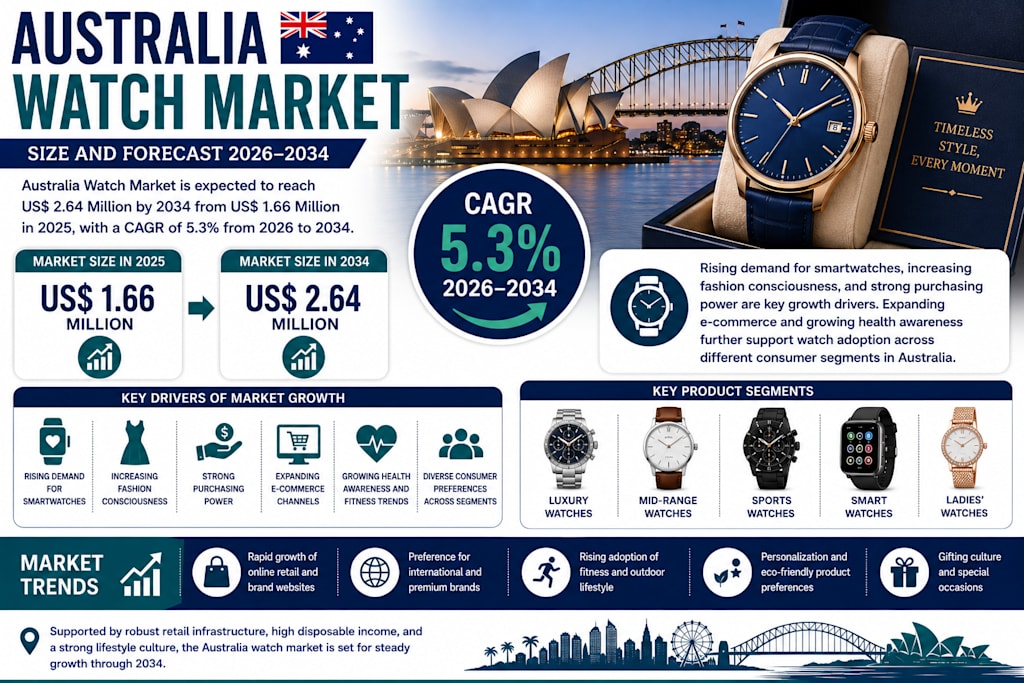
Australia's watch industry is experiencing a period of steady transformation as consumers increasingly view watches as more than simple timekeeping devices. Today, watches represent a unique blend of fashion, technology, personal expression, and lifestyle enhancement. From luxury Swiss timepieces and designer watches to feature-rich smartwatches equipped with health-monitoring capabilities, Australian consumers are embracing a diverse range of products that align with modern lifestyles.
The growing popularity of wearable technology, rising health consciousness, and strong purchasing power are creating significant opportunities for manufacturers and retailers across the country. Consumers are increasingly seeking products that combine style, functionality, durability, and advanced technology, resulting in strong demand across both traditional and digital watch categories.
According to Renub Research, the Australia Watch Market is projected to grow from US$ 1.66 billion in 2025 to US$ 2.64 billion by 2034, registering a compound annual growth rate (CAGR) of 5.3% from 2026 to 2034. Rising smartwatch adoption, growing fashion awareness, increasing health and wellness focus, and expanding e-commerce accessibility are among the primary factors driving market growth.
As Australian consumers continue embracing technology-enabled lifestyles while maintaining strong interest in premium fashion accessories, the watch industry is poised for sustained expansion over the coming decade.

Watches Have Evolved Beyond Traditional Timekeeping
The role of watches has changed significantly over the years.
Historically, watches served one primary purpose: displaying the time. Today, however, they fulfill a much broader range of functions. Modern consumers view watches as fashion statements, status symbols, fitness companions, and lifestyle accessories that complement both professional and personal identities.
The Australian market offers a wide variety of products, including quartz watches, mechanical watches, electronic watches, luxury timepieces, and advanced smartwatches. This diversity enables consumers to select products based on their individual preferences, budgets, and lifestyle needs.
Luxury buyers often prioritize craftsmanship, prestige, and exclusivity, while younger consumers increasingly seek technology integration, health tracking, and connectivity features. This broad spectrum of consumer demand continues supporting growth across multiple market segments.
As watches become increasingly integrated into daily life, their relevance extends far beyond simple functionality.
Smartwatches Are Reshaping Consumer Preferences
One of the strongest drivers of growth within Australia's watch industry is the rising popularity of smartwatches.
Consumers increasingly seek multifunctional devices capable of supporting everyday activities while providing valuable health and fitness insights. Features such as heart-rate monitoring, sleep analysis, activity tracking, smartphone notifications, GPS navigation, and workout monitoring have transformed smartwatches into essential lifestyle tools.
Younger consumers, in particular, are highly receptive to wearable technology due to its convenience and integration with broader digital ecosystems. Smartwatches help users stay connected, monitor wellness goals, and manage daily tasks from a single device.
The availability of products across multiple price points has also expanded accessibility. Premium brands offer sophisticated designs and advanced features, while affordable alternatives provide essential functionality for budget-conscious consumers.
As wearable technology continues evolving, smartwatches are expected to remain one of the most dynamic categories within the Australian watch market.
Health and Wellness Trends Are Driving Demand
Australia's growing emphasis on health and fitness is significantly influencing watch purchasing decisions.
Consumers are becoming increasingly proactive about managing their well-being, leading to greater adoption of devices capable of tracking physical activity and health metrics. Smartwatches equipped with step counters, calorie trackers, heart-rate monitors, sleep analysis tools, and fitness applications are becoming increasingly popular among both dedicated athletes and casual users.
The ability to monitor health data in real time provides users with valuable insights that support healthier lifestyles and long-term wellness goals. Integration with smartphone applications further enhances user engagement and encourages regular use.
As preventive healthcare becomes more important, consumers are increasingly investing in wearable technologies that support active and health-conscious lifestyles.
This trend is expected to continue driving demand for technologically advanced watches throughout the forecast period.
Strong Purchasing Power Supports Premiumization
Australia's relatively high disposable income levels create favorable conditions for premium and luxury watch sales.
Consumers are often willing to invest in products that combine durability, craftsmanship, brand reputation, and aesthetic appeal. Watches are frequently perceived as status symbols and personal style statements, encouraging demand across premium and luxury categories.
Many consumers purchase watches for multiple occasions, including professional settings, formal events, casual wear, and special celebrations. Gifting also represents an important source of demand, with watches remaining popular choices for birthdays, anniversaries, graduations, and corporate recognition programs.
Luxury brands continue benefiting from consumers' desire for exclusivity, prestige, and long-term value. As purchasing power remains strong, premiumization is expected to continue shaping market growth.
Fashion Consciousness Continues to Influence Purchases
Fashion plays a significant role in Australia's watch market.
Consumers increasingly select watches based not only on functionality but also on how well products complement personal style and wardrobe choices. Watches have become essential fashion accessories capable of enhancing both casual and formal appearances.
Social media platforms, lifestyle influencers, celebrities, and fashion-focused content creators continue influencing purchasing behavior. Consumers frequently seek products that reflect current trends while maintaining versatility and practicality.
Manufacturers are responding by introducing diverse collections featuring contemporary designs, customizable features, and premium materials that appeal to style-conscious buyers.
The growing importance of self-expression and personal branding continues supporting demand across multiple watch categories.
E-Commerce Is Expanding Market Accessibility
Digital commerce has transformed the way Australians discover and purchase watches.
Online platforms provide consumers with access to extensive product selections from both domestic and international brands. Shoppers can compare specifications, review pricing, read customer feedback, and evaluate products from virtually anywhere.
The growth of e-commerce has significantly improved accessibility, particularly for consumers living outside major metropolitan areas. Digital retail channels also allow brands to reach broader audiences while offering personalized shopping experiences through targeted recommendations and promotional campaigns.
Many companies now adopt omnichannel strategies that combine online convenience with traditional retail experiences. Consumers can research products online before visiting physical stores or complete purchases directly through digital platforms.
As online shopping continues growing, e-commerce will remain a critical component of market expansion.
Quartz Watches Maintain Broad Consumer Appeal
Despite the growing popularity of smartwatches, quartz watches continue to represent a significant segment of the Australian market.
Consumers appreciate quartz watches for their affordability, reliability, precision, and low maintenance requirements. These products appeal to a broad demographic, including students, professionals, and individuals seeking dependable everyday accessories.
Manufacturers continue introducing modern designs and updated aesthetics to keep quartz watches relevant within an increasingly competitive marketplace.
Their combination of practicality and affordability ensures ongoing demand across multiple consumer groups.
Mechanical Watches Attract Enthusiasts and Collectors
Mechanical watches continue to occupy an important position within the premium segment.
These timepieces appeal to consumers who appreciate traditional craftsmanship, engineering excellence, and heritage watchmaking techniques. Mechanical watches are often viewed as luxury products that offer emotional value alongside practical functionality.
Collectors and enthusiasts frequently seek limited-edition releases, premium materials, and distinctive designs that reflect exclusivity and craftsmanship.
Although the segment serves a smaller audience compared to quartz watches and smartwatches, its higher price points contribute significantly to overall market value.
Unisex Watches Reflect Changing Consumer Preferences
Modern consumers increasingly favor versatile accessories that transcend traditional gender distinctions.
Unisex watches have gained popularity due to their adaptability, minimalist aesthetics, and broad appeal. Many buyers appreciate products that can be worn across various occasions without being confined to traditional men's or women's categories.
Manufacturers continue expanding unisex collections featuring contemporary designs, neutral color schemes, and flexible styling options.
As consumer preferences evolve toward greater inclusivity and personalization, demand for unisex watches is expected to continue growing.
Challenges Facing the Australia Watch Market
Despite strong growth prospects, the industry faces several important challenges.
One major challenge is intense competition. Consumers have access to a vast array of domestic and international brands across multiple price segments. This competitive environment makes product differentiation increasingly difficult while placing pressure on pricing and profitability.
The smartwatch segment is particularly competitive, with manufacturers continuously introducing new models featuring enhanced capabilities and improved performance. Brands must invest heavily in research, development, and marketing to maintain relevance.
Another challenge involves rapid technological obsolescence. Smartwatch technology evolves quickly, resulting in shorter product lifecycles and increasing pressure on manufacturers to release updated models regularly.
Retailers must also carefully manage inventory to avoid losses associated with outdated products. Successfully addressing these challenges will be critical for long-term growth and profitability.
New South Wales Leads Market Demand
New South Wales represents the largest watch market in Australia.
Sydney's large population, strong economy, and affluent consumer base support significant demand across both luxury and smartwatch categories. Consumers in the state are highly fashion-conscious and often seek premium products that combine style with functionality.
The presence of luxury retail destinations, shopping centers, and branded outlets further strengthens market activity. Additionally, high levels of health awareness contribute to growing smartwatch adoption.
Strong e-commerce penetration ensures consumers have access to a broad selection of products across multiple price points.
Victoria Benefits from Strong Fashion Culture
Victoria, particularly Melbourne, remains a key contributor to market growth.
The state's vibrant fashion culture encourages demand for stylish and designer watches. Consumers frequently seek products that combine aesthetic appeal with practical functionality, driving growth across both traditional and smart categories.
A large population of students, professionals, and fashion-conscious consumers supports demand across multiple market segments.
Retail expansion and widespread digital adoption further contribute to Victoria's importance within the national market.
Queensland and Western Australia Continue Supporting Growth
Queensland benefits from an active outdoor lifestyle that encourages demand for fitness-focused and durable smartwatches. Features such as GPS tracking, water resistance, and activity monitoring are particularly attractive to consumers throughout the state.
Meanwhile, Western Australia's strong economic activity and relatively affluent population support demand for premium watches and technologically advanced wearable devices. Consumers often prioritize reliability, durability, and long-term value when making purchasing decisions.
Together, these states represent important contributors to the continued expansion of Australia's watch market.
Recent Industry Developments Highlight Market Momentum
Recent developments demonstrate continued innovation and investment within Australia's watch industry.
In February 2025, Australian watch media company Time+Tide announced plans to raise private funding to support expansion into New York, building on successful ventures in Melbourne and London.
In February 2024, Habring² collaborated with Define Watches to launch a highly limited mono-pusher chronograph featuring a hand-wound movement, anti-magnetic escapement, and distinctive design elements aimed at watch enthusiasts and collectors.
These developments highlight the ongoing vitality and innovation within the broader watch ecosystem.
Leading Companies Competing in the Market
The Australia watch market includes a diverse mix of globally recognized manufacturers and premium brands. Major companies operating within the market include Seiko Holdings Corporation, Casio Computer Co. Ltd, Timex Group, Rolex SA, Compagnie Financière Richemont S.A., The Swatch Group Ltd, Citizen Watch Co. Ltd., Fossil Group Inc., and Google LLC through Fitbit. These companies continue investing in innovation, product development, digital engagement, and retail expansion to strengthen their competitive positions.
Final Thoughts
The Australia Watch Market is evolving rapidly as consumers increasingly seek products that combine fashion, technology, health monitoring, and lifestyle functionality. Rising smartwatch adoption, strong purchasing power, growing health awareness, and expanding digital retail channels are creating favorable conditions for long-term growth.
With the market projected to increase from US$ 1.66 billion in 2025 to US$ 2.64 billion by 2034, manufacturers and retailers have significant opportunities to capitalize on changing consumer preferences and technological innovation.
As watches continue transitioning from traditional accessories into connected lifestyle devices, Australia's watch industry is well-positioned to thrive in an increasingly digital and health-conscious future.
About the Creator
Enjoyed the story? Support the Creator.
Subscribe for free to receive all their stories in your feed.
Comments
There are no comments for this story
Be the first to respond and start the conversation.