
Why Are Smart Toilets Becoming the Next Big Revolution in British Homes and Commercial Spaces?
Rising Hygiene Expectations, Water Conservation Goals, and Smart-Home Adoption Are Transforming the United Kingdom Smart Toilet Market Faster Than Ever Before

The way people think about bathrooms is changing dramatically across the United Kingdom. Once viewed simply as functional spaces, bathrooms are now becoming important components of modern smart homes, offering greater comfort, improved hygiene, enhanced accessibility, and significant environmental benefits. As technology continues to reshape daily life, smart toilets are emerging as one of the fastest-growing innovations in residential and commercial building design.
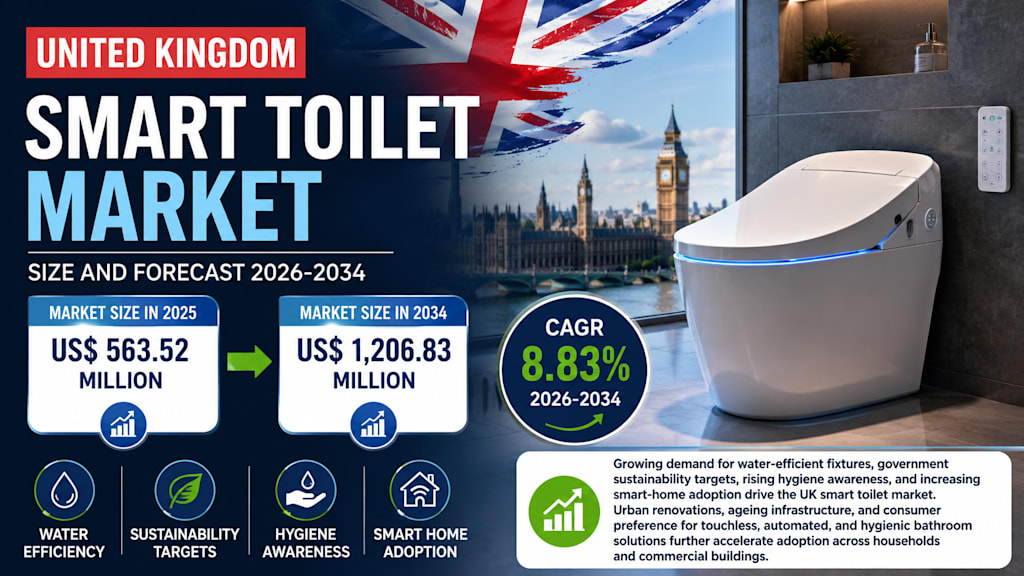
According to Renub Research, the United Kingdom Smart Toilet Market is expected to grow from US$ 563.52 million in 2025 to US$ 1,206.83 million by 2034, expanding at a compound annual growth rate (CAGR) of 8.83% from 2026 to 2034. This strong growth trajectory reflects increasing consumer awareness regarding hygiene, growing demand for water-efficient solutions, rising smart-home adoption, and continuous investments in property modernization throughout the country.
What was once considered a luxury feature found primarily in high-end hotels and premium residences is gradually becoming a practical and desirable household solution. Smart toilets are no longer just symbols of luxury; they are increasingly viewed as valuable investments that improve convenience, support sustainability goals, and enhance everyday living experiences.
Understanding the Evolution of Smart Toilets
A smart toilet is far more advanced than a traditional bathroom fixture. These innovative systems combine intelligent technologies with practical functionality to create a cleaner, more comfortable, and more efficient bathroom environment. Modern smart toilets often include touchless flushing, automatic lid operation, integrated bidets, heated seats, self-cleaning functions, air purification systems, water-saving technologies, and personalized settings that can be controlled through smartphone applications or integrated smart-home platforms.
The appeal of these products extends beyond convenience. Smart toilets help households reduce water consumption, improve sanitation standards, and increase accessibility for elderly individuals and people with mobility limitations. By integrating advanced technology into everyday routines, smart toilets represent a significant step forward in the evolution of residential and commercial bathroom design.
As British consumers continue embracing connected lifestyles, smart bathroom technologies are becoming natural extensions of broader smart-home ecosystems.
Why Hygiene Awareness Is Driving Market Growth
One of the most important factors fueling the growth of the UK smart toilet market is the increasing emphasis on hygiene and cleanliness. Consumer attitudes toward sanitation changed significantly following the global pandemic, creating stronger demand for products that minimize physical contact and reduce the risk of germ transmission.
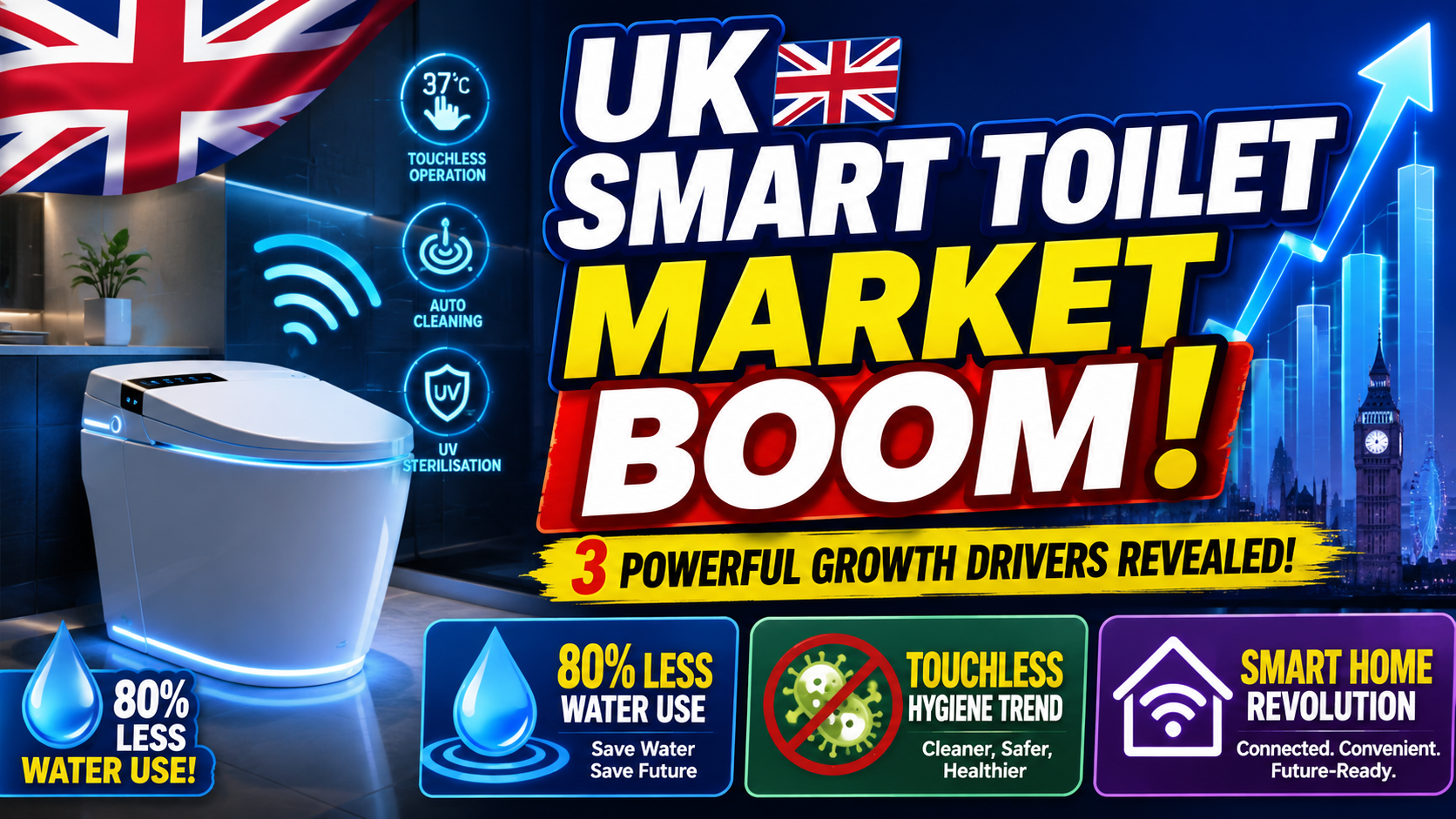
Smart toilets directly address these concerns through touchless flushing systems, sensor-operated lids, automatic cleaning technologies, and ultraviolet sterilization capabilities. These features help maintain cleaner bathroom environments while reducing the need for direct contact with frequently touched surfaces.
Businesses are also responding to growing hygiene expectations. Hotels, airports, healthcare facilities, restaurants, shopping centers, and office buildings are investing in advanced bathroom technologies to improve visitor confidence and demonstrate their commitment to cleanliness. Enhanced sanitation measures have become important competitive advantages in many industries, making smart toilets attractive investments for commercial property owners.
In residential settings, families appreciate the additional convenience and peace of mind offered by automated hygiene features. This widespread shift toward cleaner, touch-free environments continues to support long-term demand for smart bathroom solutions throughout the United Kingdom.
Sustainability and Water Efficiency Are Becoming National Priorities
Environmental sustainability has become a major focus for policymakers, businesses, and consumers across the United Kingdom. Concerns surrounding climate change, population growth, and water scarcity are encouraging greater adoption of technologies that reduce resource consumption and improve efficiency.
Smart toilets align closely with these objectives. Many advanced models incorporate precision flushing systems, leak detection technology, dual-flush mechanisms, and intelligent water management features that significantly reduce water usage compared with conventional toilets.
The UK government has established ambitious goals aimed at lowering average water consumption to approximately 110 litres per person per day by 2050. Smart toilets contribute directly to achieving these targets by helping households and businesses use water more responsibly.
Property developers are increasingly incorporating water-efficient fixtures into new residential and commercial projects, while homeowners undertaking renovations are seeking environmentally friendly upgrades that reduce utility costs and support sustainability goals. As environmental awareness continues to grow, smart toilets are expected to play an increasingly important role in creating greener buildings throughout the country.
The Smart-Home Revolution Reaches the Bathroom
Smart-home technology has transformed the way people interact with their living spaces. Connected devices now control lighting, heating, security systems, entertainment platforms, and household appliances. Bathrooms are becoming the next frontier in this technological transformation.
Smart toilets fit naturally within connected home ecosystems by offering personalized settings, app-based controls, automated operation, and integration with voice assistants. These capabilities appeal particularly to younger consumers who prioritize convenience, efficiency, and technological innovation when making purchasing decisions.
Millennials and Generation Z homeowners increasingly view smart technology as an essential component of modern living rather than a luxury feature. As a result, demand for intelligent bathroom fixtures continues to rise alongside broader smart-home adoption trends.
The growing popularity of connected lifestyles is helping smart toilets transition from niche products into mainstream home-improvement solutions across the United Kingdom.
Home Renovation Trends Support Market Expansion
The UK's home improvement sector continues to experience strong activity, particularly in bathroom renovation projects. Many homeowners recognize that upgrading bathrooms can enhance property value while improving daily comfort and functionality.
Modern consumers increasingly seek contemporary designs, energy-efficient systems, space-saving fixtures, and advanced technologies that elevate the overall living experience. Smart toilets satisfy these expectations by combining innovative features with sleek aesthetics and environmental benefits.
Developers are also integrating smart bathroom fixtures into luxury apartments, build-to-rent properties, and premium residential developments. These features help differentiate projects in competitive housing markets while appealing to technology-oriented buyers and renters.
As renovation activity remains strong across urban and suburban areas, demand for smart toilets is expected to continue growing steadily.
Challenges Limiting Widespread Adoption
Despite strong growth prospects, several obstacles continue to influence market adoption rates.
The most significant challenge remains the relatively high cost of smart toilets compared with traditional alternatives. Premium models often require substantial upfront investment, while installation may involve electrical upgrades, plumbing modifications, and professional technical support.
Many older UK homes present additional complications because they were not originally designed to accommodate advanced bathroom technologies. Retrofitting older properties can be expensive and disruptive, discouraging some homeowners from making the transition.
Consumer awareness also remains a challenge. Although interest is increasing, many people still perceive smart toilets as luxury products rather than practical solutions offering genuine benefits in water conservation, hygiene, and accessibility.
As prices gradually become more competitive and awareness improves, these barriers are expected to diminish over time.
London Continues to Lead the Market
London remains the largest and most mature smart toilet market within the United Kingdom. High disposable incomes, extensive smart-home adoption, and continuous residential and commercial development create ideal conditions for market growth.
Luxury residential projects, premium hotels, upscale retail destinations, and modern office buildings increasingly incorporate smart bathroom technologies to enhance user experiences and support sustainability objectives.
Affluent areas such as Kensington, Chelsea, and Canary Wharf continue driving demand for high-end smart fixtures. International travelers and global business visitors also influence expectations regarding modern amenities, encouraging commercial establishments to invest in advanced bathroom solutions.
Emerging Opportunities in Manchester, Birmingham, and Leeds
Outside London, several major cities are demonstrating strong growth potential.
Manchester's expanding residential sector, thriving technology community, and extensive urban regeneration projects are creating favorable conditions for smart toilet adoption. Developers increasingly use intelligent bathroom technologies to attract younger professionals and tech-savvy renters.
Birmingham benefits from significant regeneration initiatives, new housing developments, and growing commercial investments. Modern office buildings, hotels, and retail centers are increasingly embracing touchless sanitation technologies to meet evolving consumer expectations.
Leeds is also emerging as an important regional market. New residential projects, expanding business districts, and sustainability-focused development initiatives are contributing to growing demand for water-efficient and technologically advanced bathroom solutions.
Together, these cities represent significant opportunities for future market expansion beyond the capital.
Innovation Continues to Shape the Competitive Landscape
Competition among manufacturers continues to drive innovation within the smart toilet industry. Companies are investing heavily in research and development to introduce new features that improve convenience, hygiene, and sustainability.
A notable example occurred in October 2024 when TOTO introduced the NEOREST NX, a premium smart toilet featuring automatic flushing, heated seating, air purification, self-cleaning functionality, and the company's advanced eWater+ sanitization technology.
Leading companies competing within the UK market include Kohler Co., TOTO Ltd., Xiaomi, Roca Sanitario S.A.U., LIXIL Corporation, Duravit AG, Masco Corporation, Wellis Inc., Villeroy & Boch Group, and JOMOO Kitchen & Bath Co. Ltd.
As innovation accelerates, consumers can expect increasingly sophisticated products offering improved performance, enhanced user experiences, and greater affordability.
Final Thoughts
The United Kingdom Smart Toilet Market is entering a transformative phase characterized by rising consumer awareness, increasing environmental responsibility, expanding smart-home adoption, and continuous technological innovation. With the market projected to grow from US$ 563.52 million in 2025 to US$ 1,206.83 million by 2034, smart toilets are steadily moving beyond their luxury image and becoming practical solutions for modern living.
As hygiene, sustainability, and convenience continue shaping purchasing decisions, smart toilets are likely to become standard features in many future homes and commercial buildings. The bathroom of tomorrow is already taking shape today, and intelligent sanitation technology is leading that transformation.
About the Creator
Enjoyed the story? Support the Creator.
Subscribe for free to receive all their stories in your feed.
Comments
There are no comments for this story
Be the first to respond and start the conversation.