
Why Are Powder Dietary Supplements Becoming the Preferred Choice for Health-Conscious Consumers Across Asia Pacific?
How Preventive Healthcare, Fitness Trends, and Digital Commerce Are Fueling the Rapid Growth of the Asia Pacific Powder Dietary Supplements Market

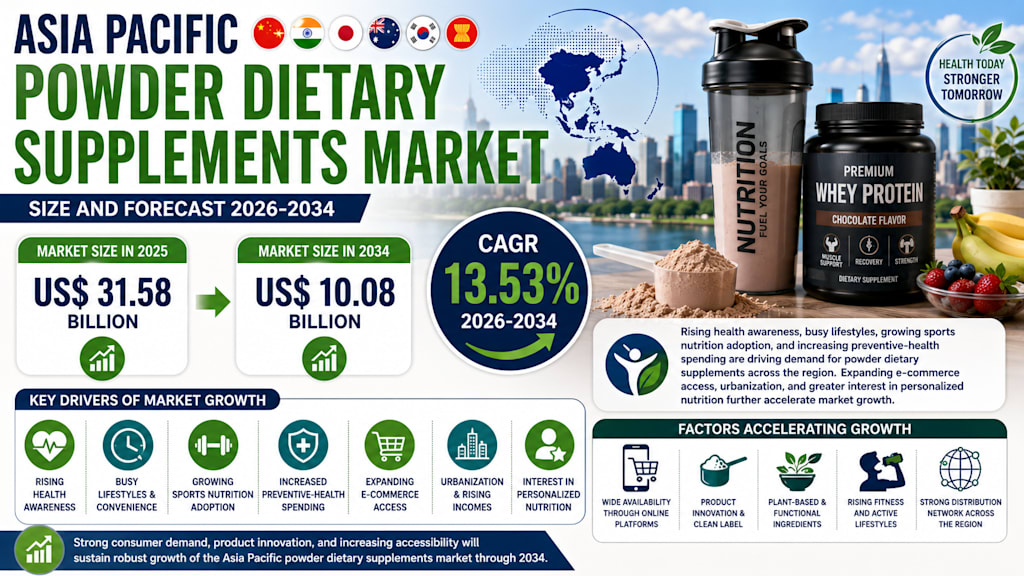
The health and wellness industry across Asia Pacific is undergoing a remarkable transformation. Consumers are becoming increasingly proactive about their health, focusing on prevention rather than treatment and seeking nutritional solutions that fit seamlessly into their busy lifestyles. As a result, powder dietary supplements have emerged as one of the fastest-growing segments within the broader nutritional products market.
From protein powders and probiotics to vitamins, minerals, and herbal blends, consumers throughout the region are embracing powder-based supplements as convenient tools for supporting immunity, fitness, digestive health, energy levels, and overall wellness. The flexibility, ease of consumption, and customizable nature of powder formulations have made them especially appealing among modern consumers looking for practical health solutions.
According to Renub Research, the Asia Pacific Powder Dietary Supplements Market is projected to experience substantial growth through 2034, driven by rising health awareness, growing sports nutrition adoption, urbanization, expanding e-commerce channels, and increasing demand for personalized nutrition solutions.
As consumers across countries such as China, Japan, India, South Korea, and Australia prioritize wellness and preventive healthcare, powder dietary supplements are becoming an essential part of everyday health routines.
Understanding the Rising Popularity of Powder Dietary Supplements
Powder dietary supplements are concentrated nutritional formulations designed to support specific health and wellness goals. These products typically contain vitamins, minerals, proteins, amino acids, herbal extracts, probiotics, fatty acids, and other specialty nutrients that can be mixed with water, milk, juices, or smoothies.
Unlike traditional tablets or capsules, powder supplements offer greater flexibility in dosing and consumption. Consumers can easily adjust serving sizes based on their individual needs while often benefiting from faster absorption and easier digestion.
The versatility of powder supplements has contributed significantly to their popularity. They are commonly used for muscle recovery, sports performance, immunity enhancement, digestive support, weight management, beauty nutrition, and general wellness.
As modern consumers increasingly seek convenient and customizable health solutions, powder dietary supplements have become a preferred choice across diverse demographic groups.
Preventive Healthcare Is Reshaping Consumer Behavior
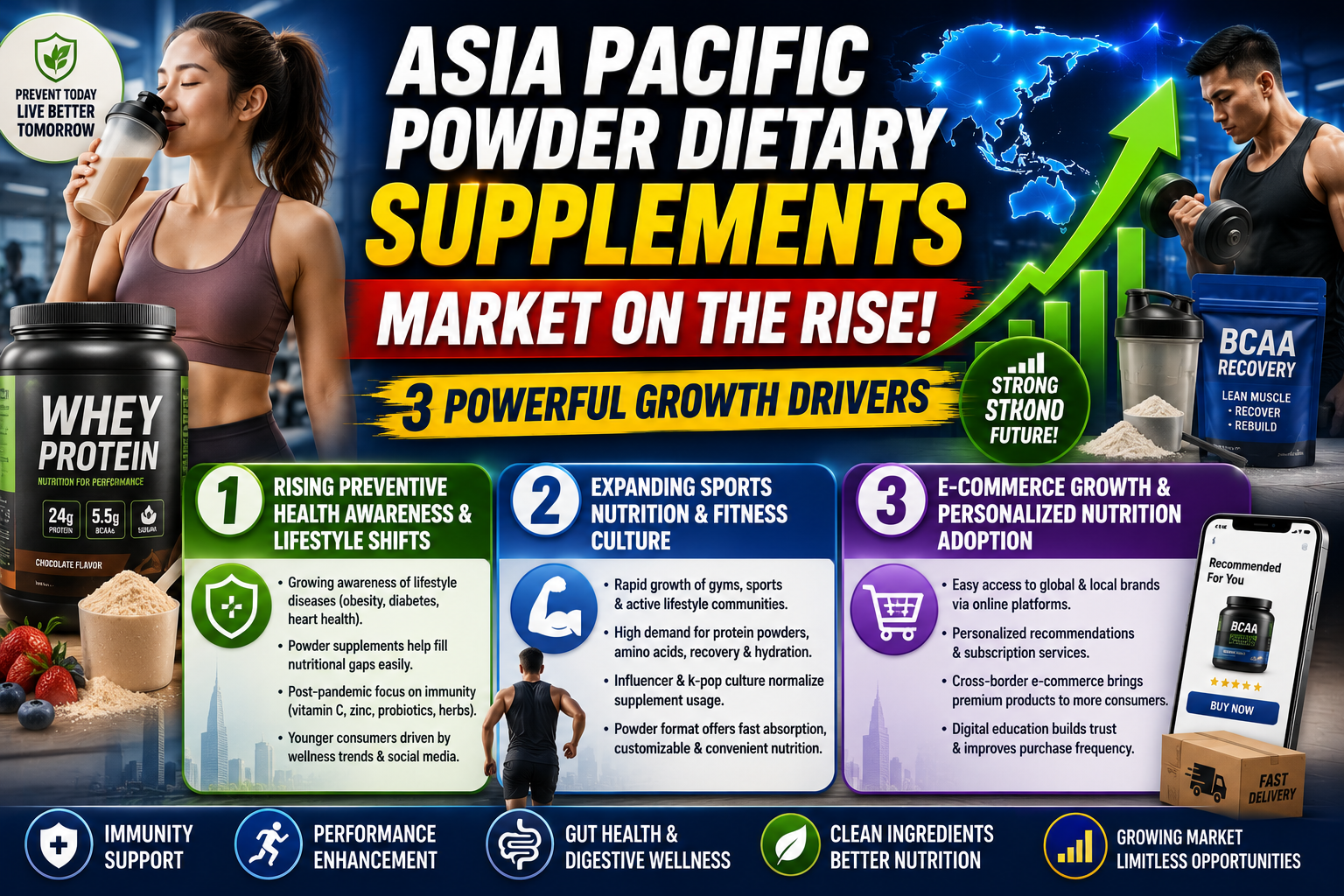
One of the most significant drivers behind the growth of the powder dietary supplements market is the increasing emphasis on preventive healthcare.
Consumers throughout Asia Pacific are becoming more aware of the long-term impact of nutrition on overall health. Rising rates of obesity, diabetes, cardiovascular diseases, and other lifestyle-related conditions have encouraged individuals to adopt healthier habits and invest in nutritional support products.
Rather than waiting for health issues to arise, many consumers now focus on maintaining wellness through balanced nutrition and supplementation. Powder supplements provide an accessible way to address nutritional deficiencies and support specific health goals without requiring major dietary changes.
The pandemic further accelerated this trend by increasing awareness of immune health and preventive nutrition. Nutrients such as vitamin C, zinc, probiotics, and herbal formulations experienced particularly strong demand as consumers sought products that could help strengthen immune function.
As preventive healthcare becomes increasingly integrated into daily life, powder dietary supplements are expected to remain a key component of modern wellness strategies.
Urban Lifestyles Are Increasing Demand for Convenient Nutrition
Rapid urbanization across Asia Pacific has significantly influenced dietary habits and consumer behavior.
Many individuals now lead fast-paced lifestyles characterized by long work hours, commuting challenges, and limited time for meal preparation. These changing routines have increased demand for convenient nutritional solutions that can be consumed quickly and easily.
Powder supplements fit perfectly into this environment. They require minimal preparation, can be consumed on the go, and provide concentrated nutrition without the need for extensive planning.
Working professionals often use protein powders, meal replacement formulas, and energy-support supplements to complement busy schedules. Students, entrepreneurs, and travelers also appreciate the portability and convenience of powder-based products.
As urban populations continue expanding throughout the region, demand for practical nutrition solutions is likely to grow further.
Fitness and Sports Nutrition Are Driving Market Expansion
The rapid growth of fitness culture across Asia Pacific has become another powerful driver of demand for powder dietary supplements.
Health clubs, gyms, fitness studios, recreational sports programs, and wellness communities are expanding rapidly throughout major cities. Increasing participation in physical activities has created strong demand for sports nutrition products designed to support performance, recovery, and muscle development.
Protein powders remain among the most popular supplement categories due to their effectiveness and versatility. Athletes, fitness enthusiasts, and recreational exercisers regularly incorporate protein supplements into their daily routines to support muscle recovery and strength development.
Other products such as amino acid blends, hydration formulas, recovery supplements, and pre-workout powders are also experiencing growing demand.
Social media has played an important role in accelerating this trend. Fitness influencers, athletes, wellness coaches, and digital creators regularly promote supplement use as part of healthy lifestyles, encouraging younger consumers to adopt similar habits.
As fitness continues evolving from a niche activity into a mainstream lifestyle choice, demand for sports nutrition products is expected to increase significantly.
Personalized Nutrition Is Creating New Opportunities
Modern consumers increasingly seek health solutions tailored to their individual needs and lifestyles.
This demand for personalization has become a major trend within the dietary supplements industry. Consumers are no longer satisfied with generic products; instead, they want formulations that address specific goals such as weight management, immunity support, digestive wellness, healthy aging, beauty enhancement, and athletic performance.
Powder supplements are particularly well-suited for personalized nutrition because they allow flexible dosing and ingredient customization. Consumers can easily combine different products or adjust serving sizes based on personal requirements.
Digital health tools, wellness applications, and online assessments are also helping consumers identify nutritional needs more accurately, further supporting demand for personalized supplement solutions.
As technology and nutritional science continue advancing, personalized wellness products are expected to become increasingly important within the market.
E-Commerce Is Transforming Product Accessibility
The rapid expansion of e-commerce has fundamentally changed how consumers discover and purchase dietary supplements.
Online platforms provide access to a vast selection of local and international brands, allowing consumers to compare products, read reviews, research ingredients, and make informed purchasing decisions.
Digital marketplaces have significantly expanded supplement availability beyond major urban centers. Consumers in smaller cities and rural areas can now access premium products that were previously difficult to obtain through traditional retail channels.
Subscription programs, influencer marketing campaigns, personalized product recommendations, and educational content further enhance the online shopping experience.
The convenience of online purchasing, combined with growing digital payment adoption and fast delivery services, continues encouraging repeat purchases and higher consumer engagement.
For manufacturers, e-commerce provides cost-effective access to broader customer bases while supporting direct-to-consumer business models.
Product Innovation Continues to Fuel Industry Growth
Innovation remains a central component of growth within the powder dietary supplements market.
Manufacturers are continually developing new formulations that address evolving consumer needs. Clean-label ingredients, plant-based proteins, sugar-free options, probiotic blends, herbal formulations, and multifunctional products are becoming increasingly common.
Consumers are showing strong interest in products that combine multiple benefits within a single formulation. Supplements that support immunity, digestion, energy, hydration, and cognitive performance simultaneously are attracting significant attention.
The industry is also witnessing growing demand for scientifically validated products backed by research and clinical evidence. Companies investing in product development and ingredient innovation are often better positioned to build consumer trust and differentiate themselves in increasingly competitive markets.
As nutritional science continues evolving, innovation will remain a major factor driving market expansion.
Challenges Facing the Powder Dietary Supplements Industry
Despite strong growth opportunities, the industry faces several important challenges.
One major concern is regulatory fragmentation across Asia Pacific. Different countries maintain unique requirements regarding ingredient approvals, labeling standards, product registration processes, and health claims.
These varying regulations create compliance complexities for manufacturers seeking to operate across multiple markets. Smaller companies may face particular difficulties navigating diverse regulatory frameworks while maintaining profitability.
Another challenge involves price sensitivity, especially in developing economies. Although health awareness is increasing, many consumers continue to view premium supplements as discretionary purchases.
Local brands often compete aggressively on price, creating pressure on international companies attempting to maintain premium positioning. Manufacturers must therefore balance affordability with product quality and innovation.
Consumer education also remains important. Many buyers still lack a clear understanding of ingredient quality, dosage effectiveness, and product differentiation, making purchasing decisions highly price-driven.
China Leads Regional Market Development
China represents the largest and most influential powder dietary supplements market in Asia Pacific.
Rising disposable incomes, urbanization, and growing interest in preventive healthcare have significantly increased demand for nutritional products. Consumers actively seek protein supplements, herbal formulations, immunity-support products, and functional nutrition solutions.
China's advanced digital ecosystem further accelerates growth by enabling widespread product discovery through e-commerce platforms, social media channels, and influencer marketing.
The country's expanding middle class and strong wellness culture position it as a major force shaping regional supplement trends.
Japan Benefits from an Aging Population
Japan's market is characterized by high consumer awareness and strong demand for products supporting healthy aging.
The country's aging population actively seeks supplements that promote joint health, immunity, digestion, cognitive function, and overall longevity. Consumers are highly receptive to functional foods and evidence-based nutritional solutions.
Strict quality standards contribute to strong consumer trust while encouraging manufacturers to maintain high product standards.
Premiumization trends continue strengthening demand throughout the Japanese market.
India Emerges as a High-Growth Market
India represents one of the fastest-growing opportunities within the Asia Pacific supplement industry.
Increasing health awareness, rising disposable incomes, expanding fitness culture, and growing e-commerce penetration are driving demand across multiple product categories.
Protein powders, herbal supplements, immunity boosters, and weight-management formulations are particularly popular among Indian consumers.
While price sensitivity remains a challenge, the country's enormous population and rapidly expanding middle class create significant long-term growth potential.
South Korea Combines Beauty and Wellness Trends
South Korea's supplement market is heavily influenced by its advanced beauty and wellness culture.
Consumers actively seek collagen powders, probiotics, protein blends, detox formulations, and beauty-focused nutritional products. The country's highly connected digital environment supports rapid adoption of emerging health trends and innovative product concepts.
Premium branding, clean-label ingredients, and scientifically supported formulations perform particularly well among South Korean consumers.
The integration of beauty, health, and nutrition continues creating unique opportunities within the market.
Strategic Investments Strengthen Industry Development
Corporate acquisitions and strategic investments continue shaping the competitive landscape.
In January 2024, Dr. Reddy's expanded its women's health portfolio through the acquisition of MenoLabs, strengthening its position within the menopause and perimenopause supplement segment.
In April 2023, Kirin Holdings acquired Australian vitamin manufacturer Blackmores for approximately USD 1.2 billion, marking a significant expansion into the broader health and wellness sector.
These developments highlight the growing importance of dietary supplements within global healthcare and wellness strategies.
Major companies operating within the Asia Pacific powder dietary supplements market include Abbott Laboratories, Bayer AG, GlaxoSmithKline, Amway Corporation, NOW Health Group, Pfizer, Herbalife, Cipla, and Dabur India.
Final Thoughts
The Asia Pacific Powder Dietary Supplements Market is experiencing exceptional growth as consumers increasingly prioritize preventive healthcare, fitness, personalized nutrition, and long-term wellness. Rising health awareness, urbanization, digital commerce expansion, and evolving consumer preferences are creating favorable conditions for sustained market development.
As individuals across the region continue embracing proactive health management, powder dietary supplements are becoming integral components of everyday wellness routines. Companies that focus on innovation, quality, transparency, and consumer education will be best positioned to capitalize on the tremendous opportunities emerging throughout this dynamic and rapidly evolving market.
About the Creator
Enjoyed the story? Support the Creator.
Subscribe for free to receive all their stories in your feed.
Comments
There are no comments for this story
Be the first to respond and start the conversation.