
Why Are Powder Dietary Supplements Becoming a Daily Wellness Essential Across Europe?
How Preventive Healthcare, Clean-Label Nutrition, and Digital Innovation Are Driving the Rapid Growth of the Europe Powder Dietary Supplements Market

The health and wellness movement sweeping across Europe is changing how consumers think about nutrition. Rather than relying solely on traditional healthcare systems to address health concerns, millions of Europeans are taking a more proactive approach by investing in products that support long-term wellness, immunity, fitness, and healthy aging. This shift has significantly increased demand for dietary supplements, particularly powder-based formulations that offer flexibility, convenience, and personalized nutrition benefits.
Powder dietary supplements have become increasingly popular among athletes, working professionals, older adults, and health-conscious consumers seeking effective ways to improve their daily nutritional intake. Whether used for muscle recovery, digestive support, immunity enhancement, energy management, or overall wellness, these products are becoming a central part of modern health routines.
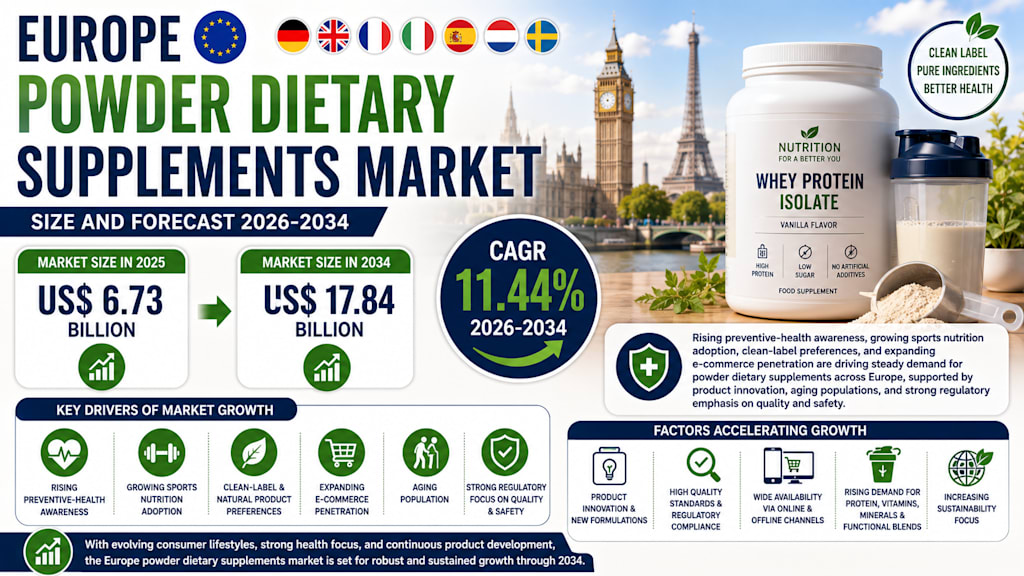
According to Renub Research, the Europe Powder Dietary Supplements Market is expected to grow from US$ 6.73 billion in 2025 to US$ 17.84 billion by 2034, registering a robust compound annual growth rate (CAGR) of 11.44% between 2026 and 2034. This remarkable growth is driven by rising preventive-health awareness, expanding sports nutrition adoption, increasing demand for clean-label products, and rapid growth in e-commerce accessibility.
As consumers become more informed about nutrition and wellness, powder dietary supplements are emerging as one of the most dynamic categories within Europe's broader health and nutrition industry.
Understanding the Growing Appeal of Powder Dietary Supplements
Powder dietary supplements are concentrated nutritional products designed to provide essential vitamins, minerals, proteins, amino acids, probiotics, herbal extracts, fatty acids, and other functional ingredients. These supplements are typically mixed with water, milk, smoothies, or other beverages, allowing for convenient and flexible consumption.
One of the key advantages of powder supplements is their versatility. Unlike tablets and capsules, powders often offer faster absorption, easier digestion, and adjustable serving sizes. Consumers can tailor their intake according to specific health goals, making powders particularly attractive in an era increasingly focused on personalized nutrition.
These products support a wide range of wellness objectives, including immune health, muscle recovery, weight management, digestive wellness, energy enhancement, cognitive performance, and healthy aging. Their ability to accommodate vegan, sugar-free, allergen-friendly, and clean-label formulations further strengthens their appeal among modern consumers.
As nutrition becomes more individualized and wellness-focused, powder supplements continue gaining popularity across Europe.
Preventive Healthcare Is Driving Consumer Demand
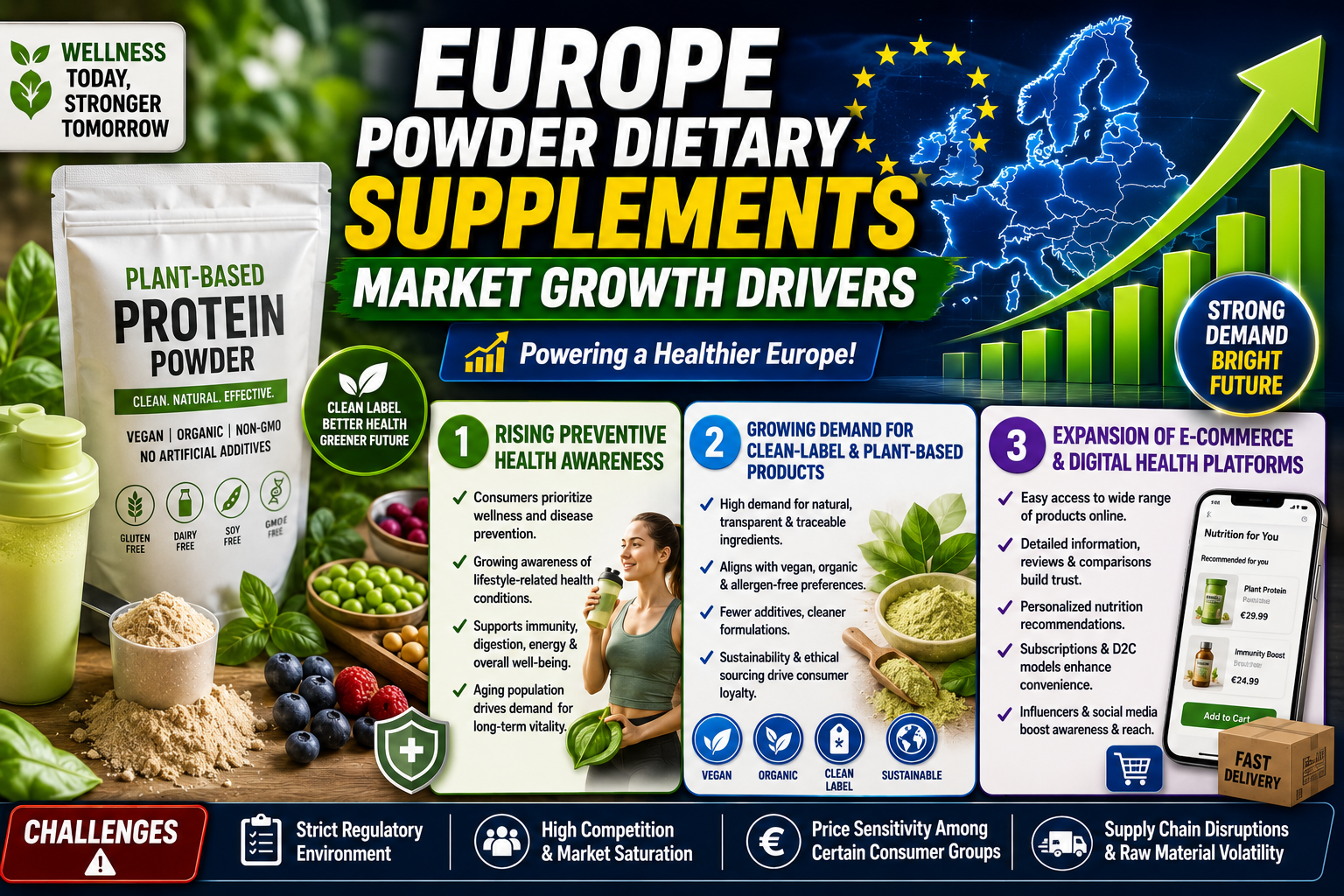
One of the strongest growth drivers within the European powder dietary supplements market is the growing emphasis on preventive healthcare.
Consumers are increasingly shifting their focus from treating illnesses after they occur to maintaining health through proactive lifestyle choices. Rising awareness of lifestyle-related conditions such as obesity, diabetes, cardiovascular diseases, and nutritional deficiencies has encouraged individuals to adopt wellness-oriented habits.
Powder supplements provide an accessible and convenient way to support daily nutritional needs while helping address common health concerns. Many consumers now incorporate vitamins, probiotics, protein blends, and herbal formulations into their routines as part of broader preventive health strategies.
Europe's aging population further contributes to this trend. Older adults actively seek products that support mobility, immunity, cognitive function, bone strength, and overall vitality. Powder formulations offer a practical solution due to their ease of consumption and customizable dosing options.
As healthcare awareness continues growing, preventive nutrition is expected to remain a major driver of market expansion.
Clean-Label Products Are Becoming a Consumer Priority
European consumers have developed a strong preference for transparency, sustainability, and natural ingredients. This shift has created significant demand for clean-label dietary supplements.
Today's buyers carefully evaluate product labels, looking for formulations free from artificial additives, synthetic preservatives, excessive sugars, and unnecessary fillers. Many consumers actively seek products that feature recognizable ingredients and clear sourcing information.
Powder dietary supplements are particularly well-positioned to benefit from this trend because they often contain simpler ingredient lists and can easily accommodate vegan, organic, non-GMO, and allergen-free formulations.
Environmental awareness also influences purchasing behavior. Consumers increasingly support brands that prioritize sustainable sourcing, ethical production practices, and environmentally responsible packaging solutions.
This growing focus on transparency and natural wellness continues encouraging manufacturers to develop products that align with evolving consumer values.
Sports Nutrition Culture Continues to Expand
Europe's well-established sports and fitness culture has become another important growth driver for powder dietary supplements.
Across the region, participation in fitness activities, recreational sports, gym memberships, and wellness programs continues to increase. As a result, demand for sports nutrition products such as protein powders, amino acid blends, recovery formulas, hydration supplements, and performance-enhancing nutrition has grown substantially.
Athletes and fitness enthusiasts rely on powder supplements due to their convenience, rapid absorption, and ability to deliver targeted nutritional support. Protein powders remain especially popular among consumers focused on muscle development, recovery, and physical performance.
The increasing popularity of home workouts, endurance sports, fitness applications, and wearable health technology has further normalized supplement use among mainstream consumers.
As fitness becomes an integral component of modern lifestyles, demand for powder-based sports nutrition products is expected to continue rising throughout Europe.
Personalized Nutrition Is Creating New Opportunities
Modern consumers increasingly expect nutrition solutions tailored to their specific needs and health goals.
This demand for personalization is driving innovation throughout the powder dietary supplements industry. Manufacturers are introducing products targeting specific demographics, lifestyles, and health concerns, ranging from immunity support and digestive health to beauty nutrition and healthy aging.
Powder formats are particularly suited for personalized nutrition because they allow consumers to adjust serving sizes and combine products based on individual requirements. This flexibility appeals to consumers seeking customized wellness routines rather than one-size-fits-all solutions.
Advances in nutritional science, digital health technologies, and consumer health assessments are further supporting personalized supplement recommendations.
As consumers become more engaged in managing their health, personalized nutrition is expected to become an increasingly important component of market growth.
E-Commerce Is Transforming Product Accessibility
The rapid growth of e-commerce has fundamentally changed how Europeans discover, evaluate, and purchase dietary supplements.
Online retail platforms provide access to an extensive selection of products from both domestic and international brands. Consumers can easily compare ingredients, read reviews, research health benefits, and make informed purchasing decisions.
Digital health platforms also contribute to market growth by offering personalized product recommendations based on individual health objectives. Subscription services, direct-to-consumer models, and wellness applications further enhance convenience and customer engagement.
Social media influencers, fitness professionals, nutrition experts, and online wellness communities play an increasingly important role in educating consumers and shaping purchasing behavior.
The continued expansion of digital commerce is expected to strengthen market accessibility and support long-term industry growth.
Product Innovation Remains a Key Growth Catalyst
Innovation continues to drive excitement within the European powder dietary supplements industry.
Manufacturers are investing heavily in research and development to create products that address evolving consumer preferences. Emerging categories include collagen powders, plant-based proteins, advanced probiotic formulations, immunity blends, beauty supplements, and multifunctional nutritional products.
Consumers increasingly seek products offering multiple health benefits within a single formulation. This trend encourages the development of supplements that support immunity, digestion, energy, hydration, and cognitive function simultaneously.
Companies are also focusing on improving taste, texture, mixability, and ingredient quality to enhance user experiences.
As scientific understanding of nutrition continues advancing, innovation will remain a critical factor supporting industry expansion.
Challenges Facing the European Powder Dietary Supplements Market
Despite strong growth opportunities, the market faces several challenges.
One major obstacle is Europe's highly complex regulatory environment. Regulations governing ingredient approvals, health claims, labeling requirements, safety testing, and product marketing vary across countries and often require extensive compliance efforts.
While these regulations help protect consumers and maintain product quality, they also increase operational costs and create barriers for smaller companies seeking market entry.
Another challenge involves growing price sensitivity among consumers. Economic uncertainty, inflationary pressures, and rising living costs have encouraged many consumers to scrutinize discretionary spending more carefully.
Premium supplement brands must therefore balance innovation, quality, and affordability while maintaining competitive positioning.
Companies that successfully communicate product value and scientific credibility are likely to perform best in this evolving marketplace.
France Embraces Natural and Science-Backed Wellness Solutions
France represents one of Europe's most influential markets for powder dietary supplements.
Consumers place strong emphasis on preventive health, digestive wellness, and natural nutrition solutions. Probiotics, botanical extracts, collagen products, and immunity-support supplements are particularly popular.
French consumers also value scientific validation and ingredient traceability, encouraging manufacturers to invest in research and transparent sourcing practices.
Pharmacies remain a dominant sales channel, helping reinforce consumer trust and product credibility.
Germany Leads in Scientific Nutrition and Fitness Culture
Germany is widely regarded as one of Europe's most mature supplement markets.
Consumers demonstrate strong confidence in clinically tested and scientifically supported products. Demand remains particularly strong for protein powders, amino acid supplements, probiotics, and immunity-support formulations.
The country's active fitness culture further contributes to high adoption rates of sports nutrition products.
German consumers also favor vegan, clean-label, and allergen-conscious formulations, encouraging continued product innovation throughout the market.
Italy Combines Traditional Wellness with Modern Innovation
Italy's powder dietary supplements market benefits from a long-standing appreciation for natural remedies and holistic wellness practices.
Consumers actively seek products supporting digestive health, immunity, beauty, and general wellness. Herbal supplements and botanical formulations remain especially popular due to the country's phytotherapy traditions.
At the same time, modern innovations in probiotics, proteins, and advanced nutritional science continue attracting younger consumers.
This combination of tradition and innovation creates a unique and dynamic market environment.
Spain Benefits from Growing Health Awareness
Spain's supplement market continues expanding as consumers become more focused on fitness, wellness, and preventive healthcare.
Protein powders, probiotics, electrolyte blends, and digestive-health supplements are among the most popular categories. Younger consumers increasingly rely on digital channels and social media influencers for product discovery and education.
Although economic factors influence purchasing decisions, demand remains strong for products that combine convenience, effectiveness, and affordability.
The country's growing wellness culture continues supporting steady market growth.
Strategic Developments Strengthen Industry Momentum
Industry participants continue investing in product development and market expansion.
In April 2024, Naturacare announced plans to introduce several new products, including Vital Extend, Bacti Serenity, Electrolytes, and Ovo Immune, during Vitafoods Europe 2024. These launches highlight the company's focus on innovation and advanced nutritional solutions.
In February 2023, Italian company Comple.med introduced Lactoflor Immuno 200, becoming the first European supplement to incorporate IMMUSE technology. The product combines IMMUSE with lactoferrin and vitamin D3, demonstrating the industry's commitment to science-driven wellness solutions.
Major companies operating within the European powder dietary supplements market include Abbott Laboratories, Amway Corporation, Nestlé Health Science, Glanbia plc, THG Nutrition, Maxinutrition, Herbalife Nutrition, NOW Foods, and Nutrend.
Final Thoughts
The Europe Powder Dietary Supplements Market is experiencing strong momentum as consumers increasingly prioritize preventive healthcare, fitness, clean-label nutrition, and personalized wellness solutions. With the market projected to grow from US$ 6.73 billion in 2025 to US$ 17.84 billion by 2034, powder supplements are becoming a central component of modern health management strategies across the region.
Driven by rising health awareness, digital transformation, product innovation, and evolving consumer expectations, the industry is positioned for sustained long-term growth. As Europeans continue seeking convenient, effective, and science-backed ways to support their well-being, powder dietary supplements will remain at the forefront of the region's wellness revolution.
About the Creator
Enjoyed the story? Support the Creator.
Subscribe for free to receive all their stories in your feed.
Comments
There are no comments for this story
Be the first to respond and start the conversation.