
Why Are Meat Snacks Becoming Europe’s Favorite High-Protein On-the-Go Food?
How Fitness Trends, Premium Product Innovation, Expanding Retail Channels, and Convenient Nutrition Are Driving Growth in the Europe Meat Snacks Market

Europe's snacking habits are undergoing a major transformation as consumers increasingly seek foods that deliver both convenience and nutritional value. Traditional snack options such as chips, crackers, and sugary treats are facing growing competition from protein-rich alternatives, with meat snacks emerging as one of the fastest-growing categories in the region.
Consumers today are more health-conscious than ever before. Busy lifestyles, rising fitness awareness, and growing interest in high-protein diets are encouraging individuals to choose snacks that provide sustained energy, support muscle health, and promote satiety. Meat snacks, including jerky, meat sticks, sausages, dried meat strips, and cured products, fit perfectly into these changing preferences.
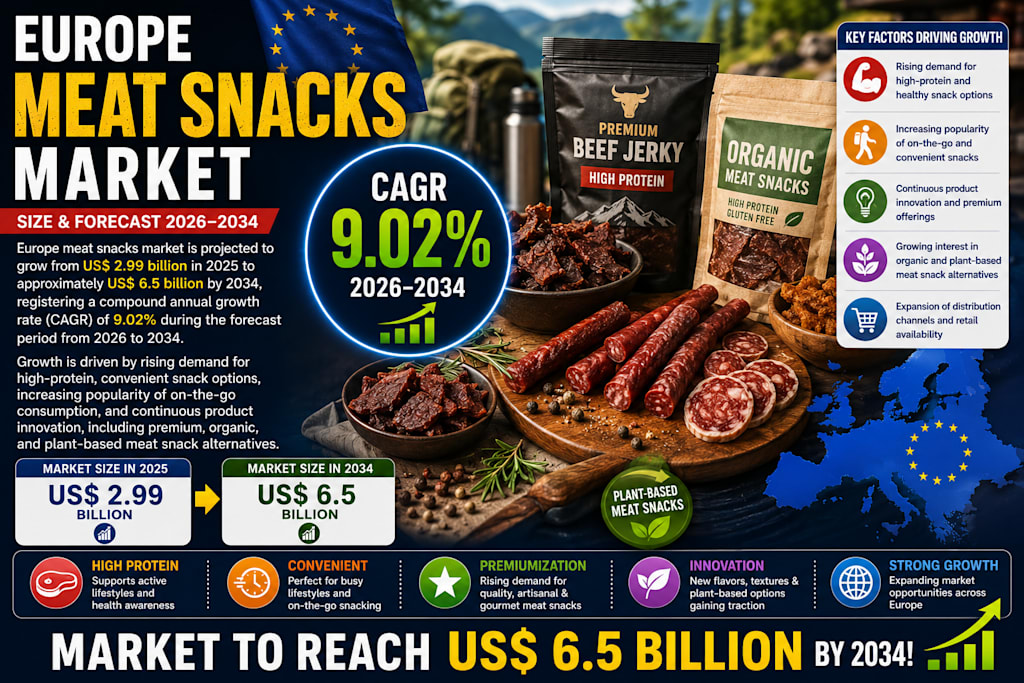
According to Renub Research, the Europe Meat Snacks Market is projected to grow from US$ 2.99 billion in 2025 to approximately US$ 6.5 billion by 2034, registering a compound annual growth rate (CAGR) of 9.02% during the forecast period from 2026 to 2034. Rising demand for convenient high-protein foods, expanding retail availability, and continuous product innovation are among the primary factors driving market growth.
As consumers increasingly prioritize healthier snacking habits, meat snacks are becoming a mainstream food category across Europe.
Meat Snacks Combine Nutrition and Convenience
Meat snacks are ready-to-eat food products manufactured from processed or preserved meats and designed for convenient consumption.
Popular varieties include jerky, meat sticks, dried meat strips, pickled meats, sausages, salami, chorizo, and other cured products. These snacks are typically prepared through drying, curing, smoking, or preservation techniques that extend shelf life while enhancing flavor and texture.
Their portability, high protein content, and long-lasting freshness make them attractive to consumers seeking practical meal alternatives and between-meal snacks.
Across Europe, meat snacks benefit from strong culinary traditions and regional specialties that have existed for generations. Countries such as Spain, Italy, Germany, and France have particularly deep cultural connections to cured and preserved meat products.
Today, these traditional products are finding new relevance among modern consumers seeking convenient nutrition.
High-Protein Diets Are Fueling Market Expansion
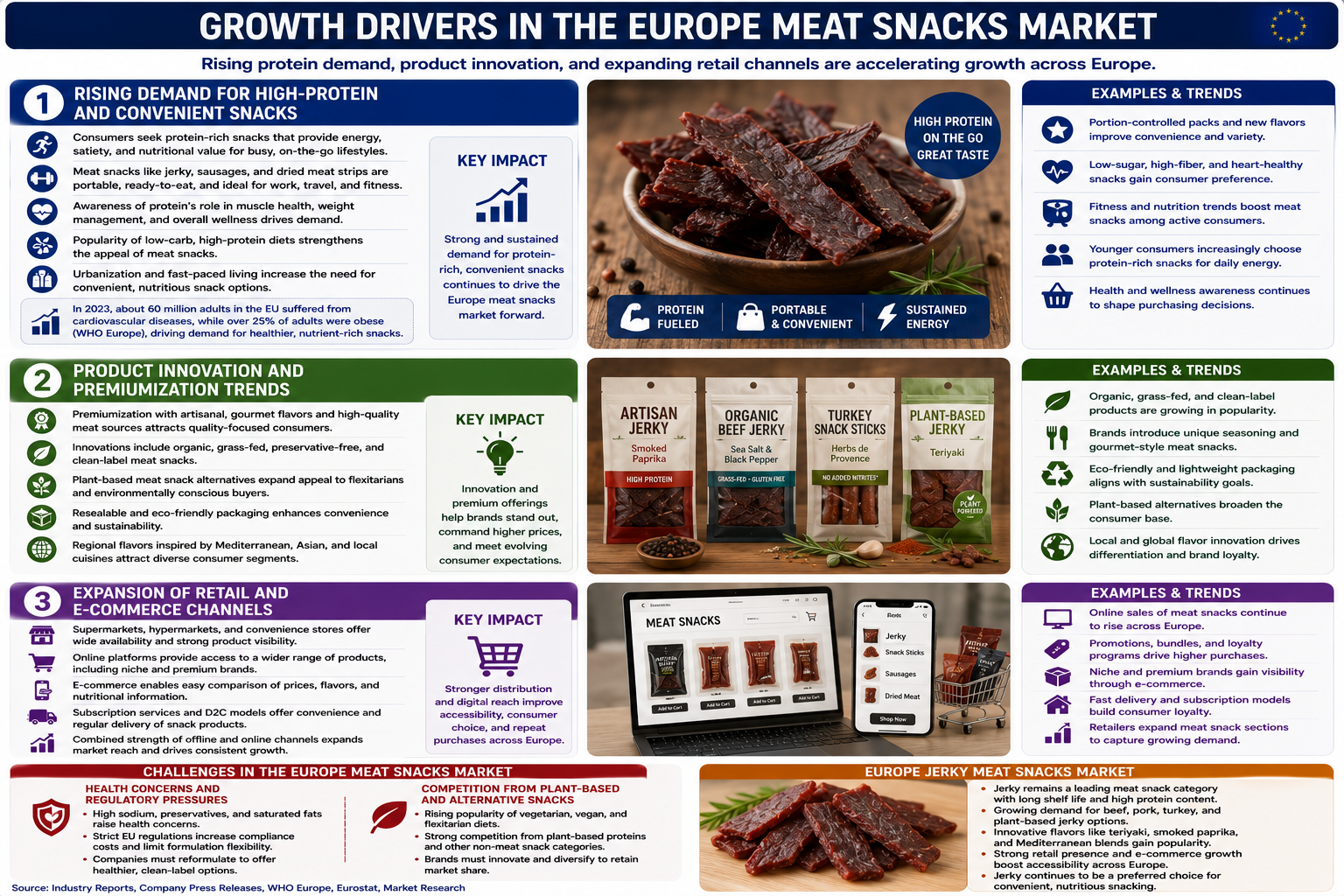
One of the most significant growth drivers within the Europe meat snacks market is the increasing popularity of high-protein diets.
Consumers are becoming more aware of protein's role in muscle development, weight management, energy maintenance, and overall wellness. As a result, many individuals actively seek snacks that provide meaningful nutritional benefits rather than empty calories.
Meat snacks naturally align with these preferences because they deliver concentrated protein in portable formats. Athletes, fitness enthusiasts, busy professionals, and health-conscious consumers increasingly view meat snacks as practical dietary solutions.
The growing popularity of low-carbohydrate, ketogenic, and protein-focused eating plans has further accelerated demand.
As health awareness continues expanding, protein-rich snacks are expected to remain a major contributor to market growth.
Busy Lifestyles Are Increasing Demand for Convenient Foods
Convenience remains one of the strongest advantages of meat snacks.
Modern consumers often balance demanding schedules, commuting, travel, work responsibilities, and fitness routines. This creates strong demand for foods that require little or no preparation while delivering nutritional value.
Meat snacks provide a practical solution because they are easy to carry, consume quickly, and store for extended periods.
Single-serve packaging formats, portion-controlled products, and resealable packaging innovations have further improved convenience.
As urbanization and fast-paced living continue expanding throughout Europe, demand for portable snack solutions is expected to remain strong.
Health Awareness Is Reshaping Snacking Preferences
European consumers are increasingly paying attention to nutritional content when selecting snacks.
According to regional health statistics, cardiovascular disease affects millions of adults across Europe, while obesity rates continue presenting significant public health challenges. These concerns are encouraging consumers to seek nutrient-rich foods that align with healthier dietary habits.
Meat snacks often appeal to consumers because they provide protein, satiety, and lower carbohydrate content compared with many traditional snack alternatives.
Manufacturers are also introducing products with reduced sodium levels, cleaner ingredient labels, and improved nutritional profiles to satisfy health-conscious buyers.
As wellness trends continue influencing food purchases, healthier meat snack formulations are expected to attract increasing consumer interest.
Product Innovation Is Driving Consumer Engagement
Innovation has become a major growth engine within the European meat snacks market.
Manufacturers are continually introducing new flavors, ingredients, packaging formats, and product concepts to appeal to evolving consumer preferences. Premium products featuring artisanal recipes, gourmet seasoning blends, organic ingredients, and specialty meats are becoming increasingly popular.
Consumers increasingly seek unique flavor experiences inspired by regional and international cuisines.
Mediterranean spices, smoked flavors, Asian-inspired seasonings, and local European culinary traditions are all influencing product development strategies.
Innovation allows brands to differentiate themselves while attracting new consumer segments seeking both quality and variety.
Premiumization Is Transforming the Category
Premiumization continues reshaping the European meat snacks industry.
Consumers increasingly demonstrate willingness to pay higher prices for products that offer superior ingredients, ethical sourcing, organic certification, and enhanced nutritional value.
Premium meat snacks frequently emphasize grass-fed meats, natural seasonings, preservative-free recipes, and transparent sourcing practices.
This trend mirrors broader developments throughout the food industry, where quality and authenticity are becoming increasingly important purchasing considerations.
As disposable incomes and consumer expectations continue rising, premium meat snacks are expected to capture a larger share of market demand.
Retail Expansion Is Improving Market Accessibility
The expansion of retail distribution channels has significantly increased product visibility and consumer access.
Supermarkets, hypermarkets, grocery stores, convenience stores, and specialty food retailers now dedicate substantial shelf space to meat snack products. Dedicated snack sections and promotional campaigns help drive consumer awareness and impulse purchases.
Retailers increasingly introduce private-label meat snack offerings alongside established brands, expanding product variety and affordability.
Enhanced retail presence continues playing an important role in supporting market growth across Europe.
E-Commerce Is Accelerating Sales Growth
Online shopping has become an increasingly important channel for meat snack manufacturers.
Digital platforms provide consumers with access to a broader range of products, including specialty brands, premium offerings, and niche dietary options that may not be available in traditional retail stores.
Consumers benefit from product reviews, nutritional information, price comparisons, and subscription services that simplify repeat purchases.
Direct-to-consumer sales models also allow brands to build stronger relationships with customers while expanding geographic reach.
As digital commerce continues growing across Europe, online sales channels are expected to contribute significantly to future market expansion.
Jerky Remains a Leading Product Category
Jerky continues to be one of the most popular segments within the Europe meat snacks market.
Traditionally made from beef, jerky products are increasingly available in alternative formats featuring pork, turkey, chicken, and even plant-based ingredients. Consumers appreciate jerky because it combines portability, long shelf life, and high protein content.
Manufacturers continue introducing innovative flavor profiles such as teriyaki, smoked paprika, barbecue, chili, and Mediterranean-inspired seasonings.
Improved retail availability and expanding e-commerce distribution further support category growth.
As demand for convenient protein snacks continues rising, jerky is expected to maintain its leading position within the market.
Ham Sausage Snacks Benefit from Culinary Traditions
Ham sausage snacks represent another important product category throughout Europe.
These products enjoy particularly strong popularity in countries such as Spain and Germany, where cured meats form an important part of culinary traditions.
Consumers appreciate their rich flavor profiles, protein content, and convenient packaging formats.
Manufacturers increasingly offer reduced-sodium, preservative-free, and clean-label variants to align with modern health preferences.
By combining traditional appeal with contemporary nutritional improvements, ham sausage snacks continue attracting a broad consumer base.
Organic Meat Snacks Are Expanding Rapidly
Organic meat snacks are experiencing strong growth as consumers increasingly prioritize sustainability, animal welfare, and clean-label products.
These snacks are typically produced using grass-fed, hormone-free, and antibiotic-free meat sourced according to strict organic standards.
Although organic products often command premium prices, many consumers view them as healthier and more environmentally responsible choices.
Growing awareness of sustainable food production continues supporting demand within this segment.
As environmental and ethical concerns become increasingly important, organic meat snacks are expected to gain further market share.
Conventional Products Continue Dominating Sales
Despite the growth of premium and organic alternatives, conventional meat snacks continue accounting for the largest portion of market demand.
Traditional products such as beef jerky, pork cracklings, meat sticks, and cured sausages remain highly popular because of their affordability, flavor variety, and widespread availability.
Manufacturers continue improving formulations by reducing artificial additives and enhancing nutritional quality without significantly increasing costs.
This balance between affordability and convenience ensures continued consumer appeal.
Conventional products remain a cornerstone of the European meat snacks industry.
Convenience Stores Play a Vital Distribution Role
Convenience stores remain one of the most important sales channels for meat snacks.
Their strategic locations and focus on impulse purchases make them ideal outlets for portable snack products. Single-serve packaging formats are particularly popular among commuters, travelers, and busy professionals.
Retailers frequently collaborate with manufacturers to introduce exclusive flavors, promotional campaigns, and limited-edition products designed to drive customer engagement.
As on-the-go consumption continues increasing, convenience stores are expected to remain crucial contributors to market growth.
Health Concerns Present Ongoing Challenges
Despite strong demand, health-related concerns remain a significant challenge for the industry.
Many traditional meat snacks contain elevated levels of sodium, preservatives, and saturated fats. Health-conscious consumers increasingly scrutinize ingredient lists and nutritional content before making purchasing decisions.
Manufacturers must balance taste, shelf life, and convenience while addressing these concerns through product reformulation and cleaner ingredient profiles.
Regulatory requirements across Europe further increase the importance of transparency and nutritional compliance.
Successfully addressing health concerns will remain essential for long-term market success.
Competition from Plant-Based Snacks Is Intensifying
The growing popularity of plant-based diets represents another major challenge.
Consumers increasingly adopt vegetarian, vegan, and flexitarian lifestyles due to health, environmental, and ethical considerations. This trend has fueled demand for alternative protein snacks derived from legumes, grains, nuts, and plant-based meat substitutes.
Plant-based meat snack products are becoming particularly competitive because they aim to replicate the flavor and texture of traditional meat snacks.
To remain competitive, traditional manufacturers must continue innovating while expanding product portfolios to accommodate evolving consumer preferences.
The ability to adapt to changing dietary trends will significantly influence future market performance.
France Leads Gourmet Meat Snack Innovation
France remains an influential market characterized by strong demand for gourmet and artisanal meat snacks.
Traditional charcuterie products continue performing well, while consumers increasingly seek healthier formulations featuring natural ingredients and reduced fat content.
Manufacturers actively combine culinary heritage with modern nutritional expectations.
Recent product launches highlight growing interest in plant-based alternatives and innovative protein solutions alongside traditional offerings.
Germany, United Kingdom, and Spain Continue Driving Growth
Germany benefits from a strong meat consumption culture and increasing interest in fitness-oriented, high-protein foods. Traditional products such as beef jerky and sausage snacks remain highly popular while alternative protein innovations gain traction.
The United Kingdom continues experiencing rapid growth as consumers increasingly adopt protein-focused dietary trends such as keto and paleo eating plans. Product innovation and e-commerce expansion further support market development.
Spain's deep-rooted tradition of cured meats such as chorizo and jamón continues supporting strong demand. At the same time, manufacturers increasingly introduce snack-sized formats and alternative protein products designed for modern lifestyles.
Together, these countries remain among the most important contributors to regional market expansion.
Leading Companies Competing in the Market
Major participants in the Europe meat snacks market include Meatsnacks Group, Cremonini S.p.A., Jack Links EU, Kingselitesnacks, Danish Crown, Kerry Group plc., Campofrio Food Group, Espuña, Giuseppe Citterio S.p.A., and Bell Food Group AG. These organizations continue investing in flavor innovation, premium product development, sustainable sourcing, and expanded distribution networks to strengthen their competitive positions.
Final Thoughts
The Europe Meat Snacks Market is benefiting from powerful consumer trends centered on convenience, protein-rich nutrition, premium food experiences, and evolving dietary preferences.
With the market projected to grow from US$ 2.99 billion in 2025 to approximately US$ 6.5 billion by 2034, manufacturers have significant opportunities to capitalize on growing demand for healthy snacking solutions, innovative flavors, premium ingredients, and sustainable product offerings.
As European consumers continue seeking nutritious and convenient foods that fit increasingly busy lifestyles, meat snacks are expected to remain one of the fastest-growing categories within the region's food industry.
About the Creator
Enjoyed the story? Support the Creator.
Subscribe for free to receive all their stories in your feed.
Comments
There are no comments for this story
Be the first to respond and start the conversation.