
Why Are Luxury Handbags Remaining One of America’s Most Desired Fashion Investments?
How Premium Fashion Demand, Digital Luxury Retail, Sustainability Trends, and Rising Consumer Spending Are Driving Growth in the United States Luxury Handbag Market

Luxury handbags have evolved far beyond their traditional role as fashion accessories. Today, they serve as symbols of personal style, social status, craftsmanship, and long-term value. Across the United States, consumers increasingly view luxury handbags not only as functional products but also as lifestyle statements that reflect identity, prestige, and fashion awareness.
The growing influence of social media, celebrity culture, luxury retail expansion, and digital shopping platforms has significantly transformed how consumers discover and purchase designer handbags. At the same time, sustainability, personalization, and limited-edition collections are creating new opportunities for luxury brands to attract younger generations of shoppers.
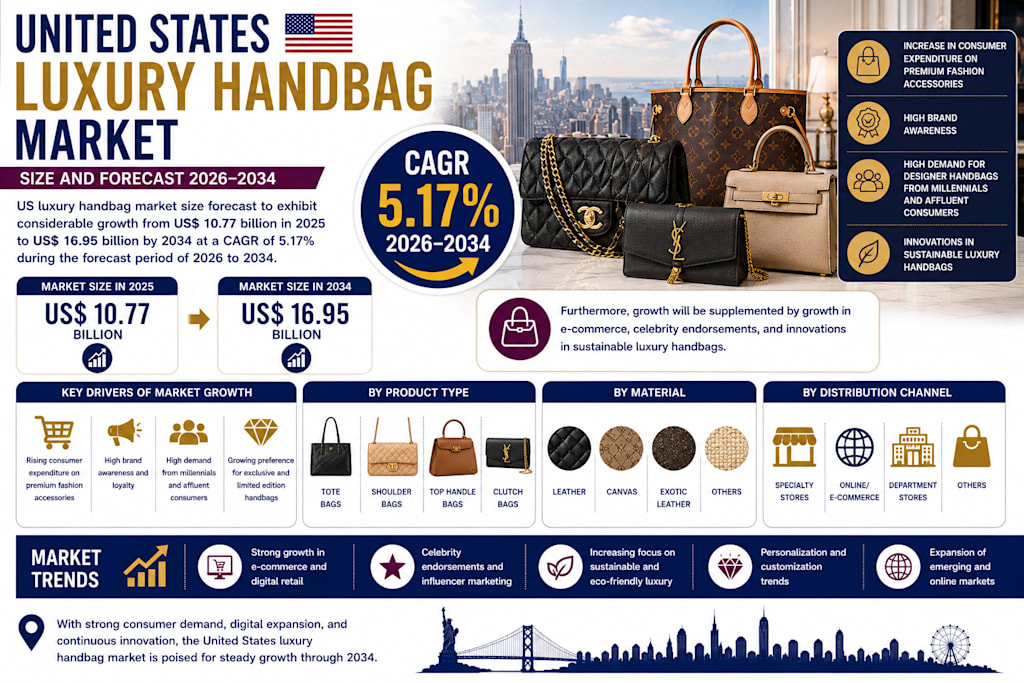
According to Renub Research, the United States Luxury Handbag Market is expected to grow from US$ 10.77 billion in 2025 to US$ 16.95 billion by 2034, registering a compound annual growth rate (CAGR) of 5.17% from 2026 to 2034. Rising consumer spending on premium fashion accessories, growing brand awareness, increasing demand among millennials and affluent consumers, and the rapid expansion of luxury e-commerce platforms are among the major factors driving market growth.
As luxury fashion continues evolving, designer handbags remain among the most influential and sought-after categories within the American luxury goods market.
Luxury Handbags Represent More Than Fashion
Luxury handbags have become powerful symbols of status, success, and individuality.
Unlike ordinary accessories, luxury handbags are crafted using premium materials such as fine leather, suede, canvas, and exotic skins. Their appeal often extends beyond functionality, as consumers view these products as expressions of taste, exclusivity, and personal achievement.
Designer handbags are available in numerous styles, including tote bags, satchels, shoulder bags, clutch bags, backpacks, crossbody bags, and wallet handbags. This diversity enables consumers to choose products that align with both practical needs and fashion preferences.
The enduring popularity of luxury handbags reflects their ability to combine craftsmanship, utility, and prestige in a single product category.
Premium Fashion Spending Continues to Rise
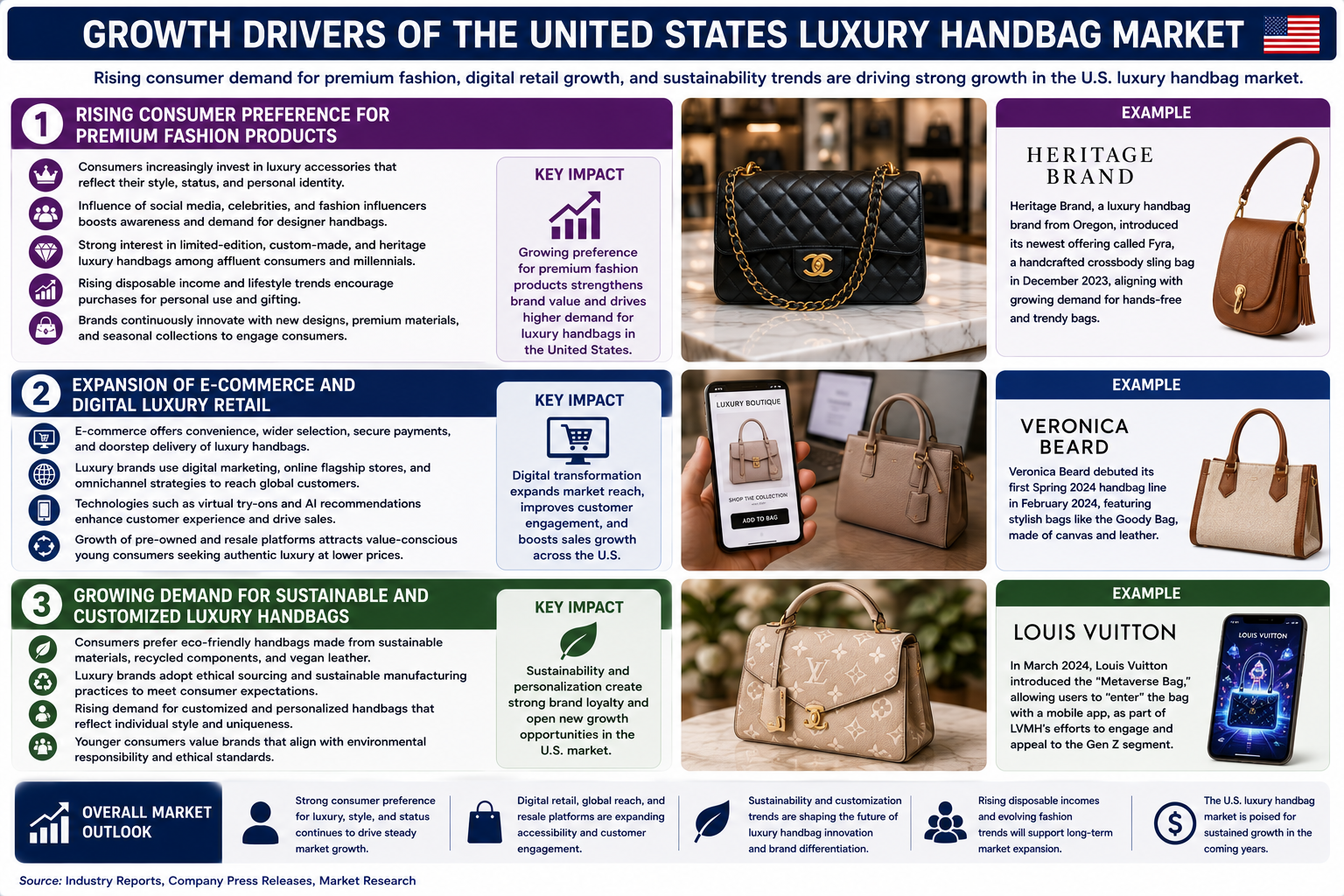
One of the strongest drivers of market growth is the increasing willingness of consumers to invest in premium fashion products.
Luxury handbags are often viewed as aspirational purchases that provide emotional satisfaction alongside practical value. Many consumers consider designer handbags long-term investments due to their durability, timeless appeal, and strong brand recognition.
Affluent households continue allocating larger portions of discretionary income toward luxury fashion products, while millennials increasingly embrace premium accessories as part of their lifestyle and identity.
The growth of luxury consumption is particularly evident in states with high per-capita spending levels, including Massachusetts, Connecticut, New Jersey, New York, California, Maryland, Washington, Colorado, Virginia, and New Hampshire. Strong household purchasing power in these regions continues supporting luxury fashion demand.
As luxury goods become increasingly integrated into consumer lifestyles, demand for premium handbags is expected to remain strong.
Millennials and Gen Z Are Reshaping Luxury Consumption
Younger consumers are playing a transformative role within the luxury handbag industry.
Millennials and Generation Z shoppers increasingly prioritize products that combine exclusivity, authenticity, craftsmanship, and social relevance. Unlike previous generations, younger luxury consumers often discover products through digital platforms, influencers, and social media communities.
Luxury handbags have become particularly popular among younger consumers seeking products that reflect individuality and personal style. Limited-edition collections, collaborations, customized designs, and sustainable products are especially attractive to these demographics.
Social media platforms continue amplifying demand by enabling consumers to engage directly with luxury brands, celebrities, and fashion influencers.
As younger generations gain purchasing power, their preferences will continue influencing market direction.
Digital Retail Is Transforming Luxury Shopping
The rapid expansion of e-commerce has fundamentally changed the luxury handbag purchasing experience.
Consumers increasingly appreciate the convenience of browsing collections, comparing products, and completing purchases online. Digital retail platforms provide access to global luxury brands regardless of geographic location, helping expand market reach.
Luxury brands are investing heavily in digital transformation strategies that include personalized shopping experiences, artificial intelligence recommendations, virtual consultations, and enhanced mobile commerce capabilities.
Consumers also benefit from secure payment systems, fast delivery services, detailed product information, and seamless customer support.
The continued growth of online luxury retail is expected to remain one of the most important drivers of market expansion.
Sustainable Luxury Is Becoming a Competitive Advantage
Sustainability has become increasingly important within the luxury fashion industry.
Consumers, particularly younger shoppers, are paying closer attention to environmental responsibility, ethical sourcing, and sustainable manufacturing practices. As a result, luxury brands are investing in eco-friendly materials, responsible production processes, and circular fashion initiatives.
Many consumers now actively seek handbags made from recycled materials, vegan leather, and sustainably sourced components. Ethical manufacturing and transparency have become influential purchasing considerations.
Luxury brands that successfully combine sustainability with exclusivity are gaining competitive advantages in an increasingly environmentally conscious marketplace.
The growing emphasis on responsible consumption is expected to continue shaping future product development strategies.
Personalization Trends Are Creating New Opportunities
Customization has emerged as a powerful trend within the luxury handbag market.
Consumers increasingly seek products that reflect individual tastes and unique identities. Personalized luxury handbags allow customers to select colors, materials, monograms, hardware finishes, and design elements tailored to personal preferences.
Limited-edition collections and bespoke products further enhance exclusivity while strengthening emotional connections between consumers and brands.
Luxury companies continue expanding personalization services as a way to differentiate offerings and increase customer loyalty.
As consumers place greater value on individuality, customized luxury handbags are expected to experience continued growth.
Tote Bags Continue Leading Consumer Demand
Luxury tote bags remain among the most popular product categories within the market.
Consumers appreciate tote bags because they combine functionality, versatility, and sophisticated design. Their spacious interiors make them suitable for work, travel, shopping, and daily activities, while premium materials and craftsmanship enhance their fashion appeal.
Professional women, business travelers, and urban consumers frequently choose luxury tote bags because they offer both practicality and elegance.
Manufacturers continue introducing innovative designs, lightweight materials, and multifunctional features that strengthen consumer demand.
As lifestyles become increasingly dynamic, tote bags are expected to remain a dominant segment within the luxury handbag industry.
Luxury Clutches Continue Thriving in Formal Fashion
Luxury clutch handbags continue attracting strong demand, particularly for formal occasions and special events.
Consumers often purchase designer clutch bags to complement evening wear, wedding attire, gala outfits, and luxury social event ensembles. Premium materials, intricate detailing, and distinctive branding contribute significantly to their appeal.
Celebrity appearances, red-carpet events, fashion shows, and influencer marketing campaigns continue driving interest in luxury clutches.
The growing demand for personalized and limited-edition designs is further enhancing the segment's attractiveness among affluent consumers.
Luxury Backpacks Appeal to Modern Lifestyles
Luxury backpacks have emerged as one of the fastest-growing product categories.
Modern consumers increasingly seek products that combine convenience, functionality, and contemporary style. Luxury backpacks satisfy these needs while appealing to professionals, students, travelers, and fashion-conscious consumers.
Manufacturers are incorporating premium materials, smart storage features, sustainable fabrics, and innovative designs to enhance product appeal.
The rise of casual luxury and travel-focused lifestyles has significantly increased demand for designer backpacks across multiple demographic groups.
As consumers prioritize versatility and mobility, luxury backpacks are expected to continue gaining market share.
Online Luxury Resale Platforms Are Expanding the Market
The emergence of luxury resale platforms has created new growth opportunities.
Consumers increasingly purchase certified pre-owned luxury handbags as a way to access premium brands at more affordable price points. This trend is particularly popular among younger consumers who value both sustainability and affordability.
Resale platforms also extend product lifecycles while supporting circular fashion principles.
Luxury brands are increasingly recognizing the importance of the secondary market and exploring partnerships, authentication services, and resale initiatives.
The growing popularity of pre-owned luxury goods is expanding overall market participation while introducing new consumers to premium fashion products.
Counterfeit Products Remain a Major Challenge
Despite favorable growth prospects, counterfeit products continue posing significant challenges for luxury brands.
Imitation handbags are widely distributed through unauthorized online marketplaces, counterfeit retailers, and informal sales channels. These products undermine brand value, reduce consumer trust, and negatively impact revenue generation.
Luxury companies are investing heavily in anti-counterfeiting technologies such as RFID chips, blockchain authentication systems, serial number tracking, and advanced packaging solutions.
However, combating counterfeit distribution remains an ongoing challenge due to the global nature of online commerce.
Protecting brand integrity will remain a critical priority across the luxury handbag industry.
Economic Uncertainty Influences Consumer Behavior
Luxury handbags are highly sensitive to changes in economic conditions.
Inflation, rising interest rates, and broader economic uncertainty can influence consumer spending decisions, particularly for discretionary purchases. During periods of financial uncertainty, some consumers may postpone luxury purchases or seek more affordable alternatives.
Additionally, changing fashion trends and minimalist lifestyle movements can affect demand for specific product categories.
Luxury brands must remain agile and responsive to evolving consumer preferences while maintaining exclusivity and premium positioning.
Successfully navigating economic fluctuations will remain essential for long-term growth.
California Leads Luxury Fashion Consumption
California remains the largest luxury fashion market in the United States.
The state's combination of high disposable income, celebrity influence, luxury tourism, and premium retail concentration creates ideal conditions for luxury handbag sales. Cities such as Los Angeles, Beverly Hills, and San Francisco serve as major centers for luxury shopping and fashion culture.
Consumers in California are particularly receptive to designer handbags, sustainable luxury products, and personalized fashion experiences.
The state's strong social media influence and luxury lifestyle culture further support market growth.
New York, Texas, and Florida Continue Driving Demand
New York remains one of the world's most influential luxury fashion centers. International tourism, high-end retail districts, fashion events, and affluent consumers continue supporting strong handbag demand throughout the state.
Texas has emerged as a rapidly growing luxury market due to rising wealth levels, luxury retail expansion, and increasing consumer interest in premium fashion products across cities such as Dallas, Houston, Austin, and San Antonio.
Florida benefits from affluent residents, luxury tourism, premium shopping destinations, and strong demand for designer accessories among both local consumers and international visitors.
Together, these states represent some of the most influential markets shaping luxury handbag consumption across the country.
Leading Companies Competing in the Market
The United States luxury handbag market is highly competitive and includes many of the world's most prestigious fashion houses. Major participants include Louis Vuitton, Hermès, Chanel, Gucci, Prada, Dior, Fendi, Burberry, Michael Kors, and Tory Burch. These companies continue investing in craftsmanship, sustainability, digital retail, personalization, and brand innovation to strengthen their market positions.
Final Thoughts
The United States Luxury Handbag Market continues evolving as consumers seek products that combine style, exclusivity, craftsmanship, and personal expression.
With the market expected to grow from US$ 10.77 billion in 2025 to US$ 16.95 billion by 2034, luxury brands have significant opportunities to capitalize on rising premium fashion spending, digital retail expansion, sustainability initiatives, and growing demand from younger consumers.
As technology, personalization, and ethical luxury continue shaping the future of fashion, luxury handbags are expected to remain among the most desirable and influential products within the global luxury goods industry.
About the Creator
Enjoyed the story? Support the Creator.
Subscribe for free to receive all their stories in your feed.
Comments
There are no comments for this story
Be the first to respond and start the conversation.