
Why Are Food Cans Remaining a Vital Packaging Solution Across Europe?
How Convenience, Sustainability, Long Shelf Life, and Packaging Innovation Are Driving Growth in the Europe Food Cans Market

As consumer lifestyles become increasingly fast-paced and sustainability concerns continue shaping purchasing decisions, food cans are proving that traditional packaging solutions can remain highly relevant in a modern marketplace. Across Europe, food manufacturers, retailers, and consumers are embracing canned foods not only for their convenience and long shelf life but also for their strong environmental credentials.
Food cans have evolved far beyond their traditional image. Today's canned food products include premium ready meals, organic vegetables, gourmet seafood, nutritious pet food, and clean-label packaged meals designed to satisfy modern consumer expectations. Combined with innovations in recyclable materials and sustainable manufacturing practices, food cans continue to play a critical role in Europe's food packaging ecosystem.
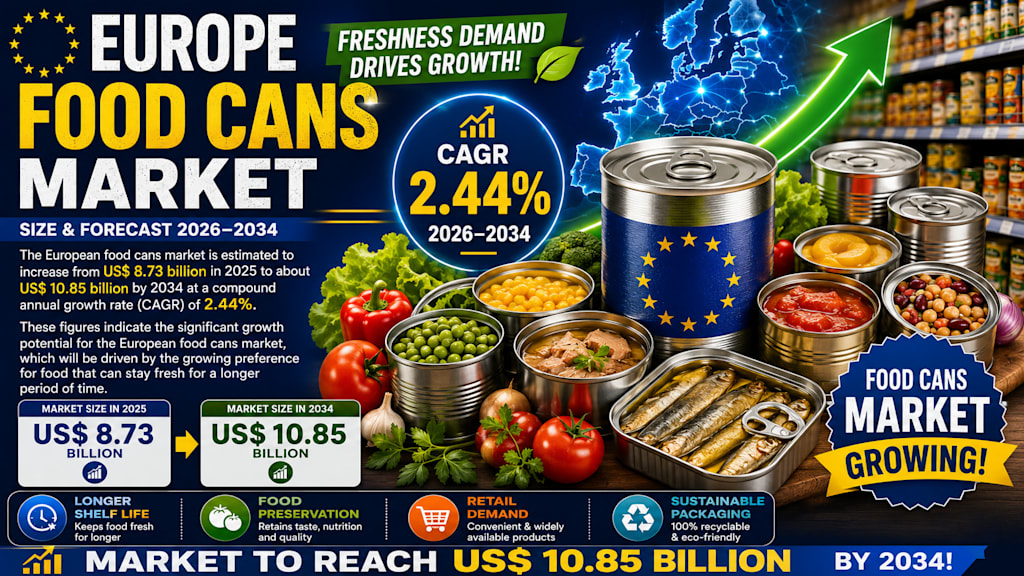
According to Renub Research, the Europe Food Cans Market is expected to increase from US$ 8.73 billion in 2025 to approximately US$ 10.85 billion by 2034, growing at a compound annual growth rate (CAGR) of 2.44% from 2026 to 2034. The market's expansion is supported by increasing demand for long shelf-life foods, sustainability initiatives, packaging innovations, and the growing popularity of convenient meal solutions.
As consumers increasingly seek practical, affordable, and environmentally responsible food packaging options, food cans continue to demonstrate their long-term value across Europe.
Food Cans Continue Supporting Modern Food Preservation
Food cans remain one of the most effective packaging formats for preserving food quality over extended periods.
These metal containers create airtight environments that protect food products from exposure to air, moisture, light, and harmful microorganisms. Through heat treatment and sealing processes, food cans allow products to remain safe and consumable for months or even years without requiring refrigeration.
Canned products commonly include vegetables, fruits, seafood, meat, soups, ready meals, pet food, and powdered products. Their ability to preserve nutritional value while minimizing spoilage makes them highly attractive to both consumers and food manufacturers.
As food security and waste reduction become increasingly important priorities, food cans continue offering practical advantages that support long-term market demand.
Convenience Is Driving Consumer Preference
One of the strongest growth drivers within the European food cans market is increasing demand for convenient food solutions.
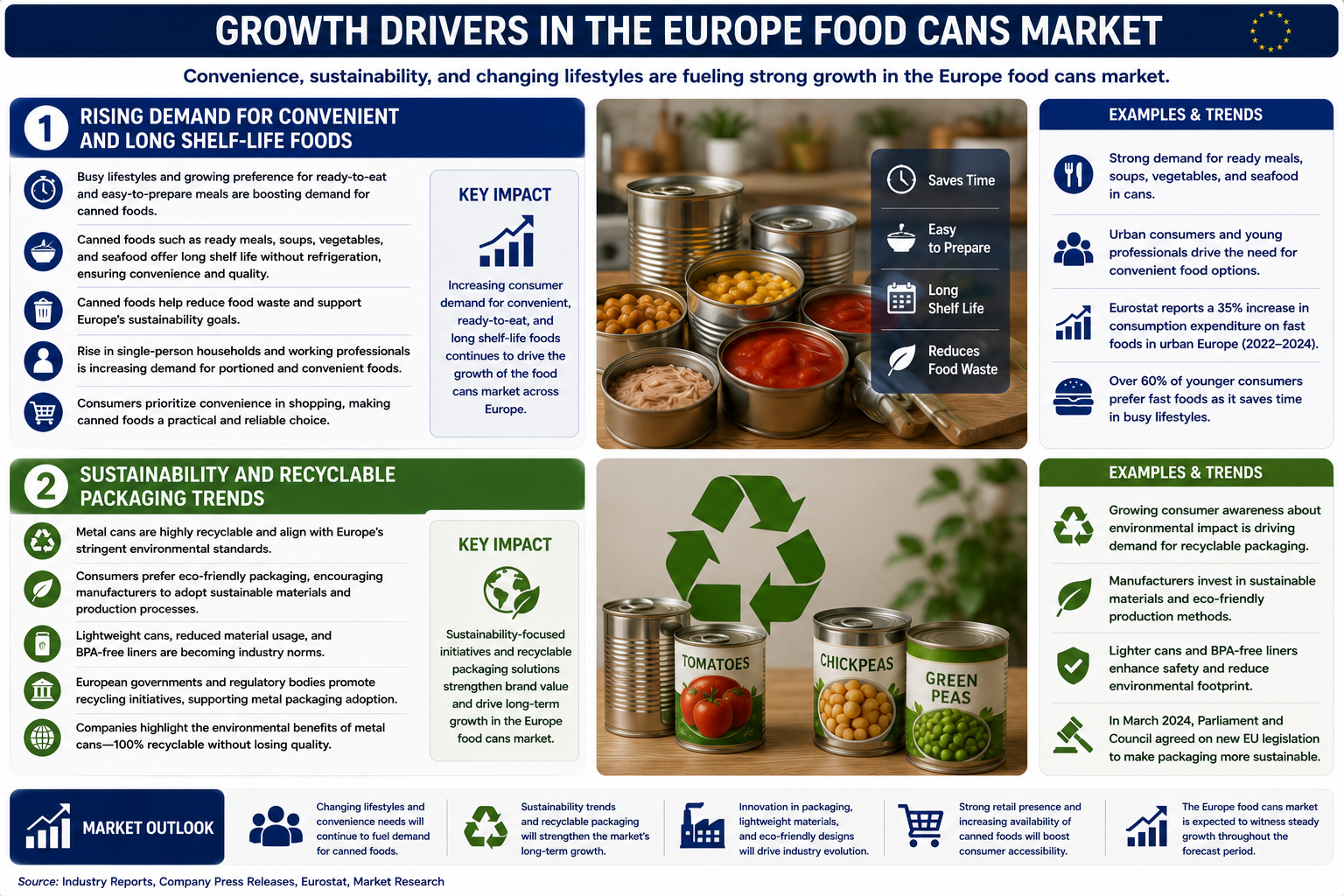
Modern consumers often balance demanding work schedules, family responsibilities, and busy lifestyles, creating strong demand for products that are easy to store, prepare, and consume. Canned foods meet these needs by offering ready-to-eat or easy-to-prepare meal options with extended shelf lives.
Products such as soups, vegetables, seafood, ready meals, and meat products provide consumers with practical solutions that reduce meal preparation time without sacrificing accessibility.
The growing number of single-person households and working professionals across Europe is further strengthening demand for portion-controlled and convenient food products.
As convenience continues shaping purchasing behavior, canned foods remain highly relevant within the modern food industry.
Long Shelf Life Supports Food Waste Reduction
Food waste reduction has become a major focus throughout Europe, benefiting the food cans market significantly.
Unlike many fresh food products, canned foods can remain usable for extended periods, reducing spoilage and helping consumers manage household food inventories more effectively. This advantage aligns closely with European sustainability objectives and consumer efforts to minimize waste.
Long shelf life also improves supply chain efficiency by reducing product losses during transportation, storage, and retail distribution.
Consumers increasingly appreciate the ability to stock canned foods for emergency preparedness, budget management, and long-term meal planning.
As sustainability concerns continue influencing food purchasing decisions, food cans offer a practical solution that supports waste reduction goals.
Sustainability Is Strengthening Market Growth
Environmental sustainability has become one of the most important factors driving the European food cans market.
Metal cans are highly recyclable and can be repeatedly reused through recycling processes without significant loss of quality. This characteristic aligns closely with Europe's ambitious circular economy initiatives and environmental regulations.
Manufacturers increasingly invest in lightweight can designs, BPA-free coatings, and energy-efficient production methods to reduce environmental impact further.
Governments and regulatory bodies across Europe continue promoting recycling programs and sustainable packaging initiatives, creating favorable conditions for metal packaging solutions.
In March 2024, European policymakers reached an agreement on new legislation designed to improve packaging sustainability throughout the European Union.
As environmental awareness continues growing, recyclable food cans are expected to remain attractive to both consumers and manufacturers.
Premiumization Is Transforming Canned Food Perceptions
The perception of canned food is changing significantly.
Manufacturers are increasingly introducing premium products that combine convenience with quality, nutrition, and culinary sophistication. Gourmet seafood, organic vegetables, international cuisines, premium ready meals, and specialty food products are becoming increasingly common within canned food categories.
Consumers no longer view canned food solely as an economical option. Many now seek premium products that deliver superior taste, nutritional value, and convenience.
Packaging innovation, transparent labeling, clean ingredients, and premium branding strategies continue helping transform consumer perceptions.
As premiumization expands across food categories, canned food products are increasingly appealing to health-conscious and quality-focused consumers.
Product Innovation Continues Supporting Expansion
Innovation remains a major growth catalyst within the market.
Manufacturers are introducing products with reduced sodium content, cleaner ingredient labels, organic certifications, improved nutritional profiles, and enhanced convenience features. Easy-open lids, resealable packaging, and user-friendly designs improve functionality and consumer satisfaction.
The emphasis on healthier formulations helps address traditional concerns associated with processed foods while attracting new customer segments.
In June 2024, Sonoco Products Company completed the acquisition of Eviosys, strengthening its position within the European food can manufacturing sector and highlighting ongoing industry investment in innovation and expansion.
As consumer expectations continue evolving, innovation will remain essential for maintaining competitiveness and supporting growth.
Aluminum Cans Continue Gaining Popularity
Aluminum cans represent one of the most important product categories within the European food cans market.
Their lightweight design, corrosion resistance, durability, and recyclability make them highly attractive for packaging a wide range of food products. Aluminum cans help maintain freshness while supporting sustainability objectives through efficient recycling systems.
Manufacturers continue investing in lightweight aluminum technologies designed to reduce material usage and carbon emissions.
In January 2024, Ball Corporation expanded efforts focused on sustainable aluminum packaging through the development of lighter-weight cans aimed at reducing environmental impact.
As sustainability priorities continue growing, aluminum packaging is expected to remain a key market segment.
Steel Cans Remain Essential for Food Protection
Steel cans continue serving a critical role within the European food packaging industry.
Products such as meats, vegetables, pet foods, and prepared meals frequently utilize steel packaging due to its exceptional strength and protective properties. Steel cans effectively block oxygen and light, helping preserve food quality over extended periods.
Manufacturers increasingly introduce lightweight steel designs and BPA-free protective coatings to improve safety and sustainability.
In March 2024, Ardagh Group introduced new steel can solutions featuring advanced protective coatings.
The durability and performance advantages of steel ensure its continued importance within the market.
Ready Meals Are Expanding Demand
Ready meals represent one of the fastest-growing application segments within the food cans market.
Consumers increasingly seek meal solutions that provide convenience without requiring extensive preparation. Canned soups, pasta dishes, ethnic cuisines, and complete meal options offer practical alternatives for busy households.
Urbanization, changing work patterns, and growing demand for convenience continue supporting this category's growth.
Manufacturers are also enhancing recipe quality, ingredient transparency, and nutritional profiles to appeal to health-conscious consumers.
As lifestyles become increasingly fast-paced, canned ready meals are expected to remain a significant growth driver.
Canned Vegetables Continue Supporting Healthy Diets
Vegetable products remain among the most popular categories within the European canned food market.
Consumers appreciate canned vegetables for their affordability, year-round availability, convenience, and nutritional value. They provide practical alternatives to fresh produce while minimizing spoilage and waste.
Demand for organic vegetables, reduced-sodium products, and preservative-free formulations continues increasing.
In April 2024, Bonduelle introduced a new range of canned vegetables featuring reduced sodium levels and sustainable packaging solutions.
Health-conscious consumer behavior continues supporting strong demand within this category.
Pet Food Is Creating Significant Opportunities
The pet food sector has become a major contributor to market growth.
Increasing pet ownership and the growing humanization of pets have significantly expanded demand for premium canned pet food products. Consumers increasingly seek nutritious, natural, and high-quality food options for their pets.
Canned pet food offers benefits including moisture retention, product freshness, and nutritional preservation.
In May 2024, Nestlé Purina introduced new premium canned pet food products emphasizing natural ingredients and balanced nutrition.
As pet care spending continues increasing, canned pet food is expected to remain an important growth segment.
Competition from Alternative Packaging Remains a Challenge
Despite strong market fundamentals, competition from alternative packaging formats presents ongoing challenges.
Flexible pouches, plastic containers, and glass jars increasingly attract consumers due to features such as resealability, lightweight design, microwave compatibility, and perceived convenience.
Some consumers also view glass packaging as more premium or healthier than metal alternatives.
Manufacturers must continue improving can design, convenience features, and sustainability messaging to remain competitive.
Successfully communicating the environmental benefits of metal packaging will remain important for future growth.
Health Concerns Continue Influencing Consumer Perceptions
Consumer concerns regarding processed foods represent another significant challenge.
Some shoppers continue associating canned foods with excessive sodium, preservatives, and lower nutritional quality. Concerns regarding packaging liners and chemical exposure have also influenced purchasing behavior.
Manufacturers are responding by introducing cleaner labels, organic formulations, reduced-sodium recipes, and BPA-free packaging technologies.
Educational efforts highlighting nutritional improvements and safety advancements remain important.
Addressing health-related concerns will continue shaping product development strategies throughout the market.
France Leads Premium Food Can Consumption
France remains one of Europe's most important food can markets.
Strong consumer demand for canned vegetables, seafood, and ready meals continues supporting market growth. Premium and gourmet canned food categories have gained particular popularity as consumers seek convenience without sacrificing quality.
France's commitment to sustainable packaging and recycling initiatives further strengthens market development.
Demand for organic and clean-label products also continues increasing throughout the country.
Germany, United Kingdom, and Spain Continue Supporting Market Expansion
Germany's advanced food processing sector and strong environmental regulations continue driving demand for recyclable food cans and sustainable packaging solutions. Consumers increasingly prefer healthier canned food products with fewer preservatives.
The United Kingdom benefits from growing demand for convenient meal solutions and sustainable packaging alternatives. Retailers continue expanding canned food offerings that emphasize clean-label ingredients and environmental responsibility.
Spain remains a major market due to strong consumer demand for canned fish, vegetables, olives, and traditional food products. Improved canning technologies and export opportunities continue supporting growth.
Together, these countries remain central to the development of Europe's food cans industry.
Leading Companies Competing in the Market
Major participants in the Europe food cans market include Ardagh Group, Ball Corporation, Can-Pack S.A., CPMC Holdings Limited, Crown Holdings Inc., Nestlé S.A., Zwanenberg Food Group, Silgan Holdings Inc., Lucky Star Ltd., and Sarten Romania SRL. These organizations continue investing in sustainable packaging technologies, product innovation, recycling initiatives, and premium food solutions to strengthen their positions within the market.
Final Thoughts
The Europe Food Cans Market continues demonstrating resilience and relevance as consumers increasingly prioritize convenience, sustainability, food preservation, and affordability.
With the market projected to grow from US$ 8.73 billion in 2025 to approximately US$ 10.85 billion by 2034, opportunities remain strong for manufacturers capable of delivering innovative, environmentally responsible, and consumer-focused packaging solutions.
As Europe advances toward a more sustainable and circular economy, food cans are expected to remain one of the most important packaging formats supporting both food security and environmental responsibility.
About the Creator
Enjoyed the story? Support the Creator.
Subscribe for free to receive all their stories in your feed.
Comments
There are no comments for this story
Be the first to respond and start the conversation.