
Why Are AI-Powered Security Cameras Becoming Essential for Modern Homes Across North America?
How Smart Home Adoption, Remote Monitoring, Advanced AI Features, and Rising Security Concerns Are Driving Growth in the North America Smart Home Security Camera Market

Home security is undergoing a major transformation across North America as consumers increasingly embrace connected technologies that provide greater control, visibility, and peace of mind. Among the most rapidly expanding categories within the smart home ecosystem are smart home security cameras, which have evolved from basic monitoring devices into intelligent systems powered by artificial intelligence, cloud computing, and mobile connectivity.
Modern homeowners want more than simple video recording capabilities. They increasingly seek real-time alerts, facial recognition, motion detection, cloud storage, remote access, and seamless integration with broader smart home systems. As a result, smart security cameras are becoming a core component of connected households throughout the region.
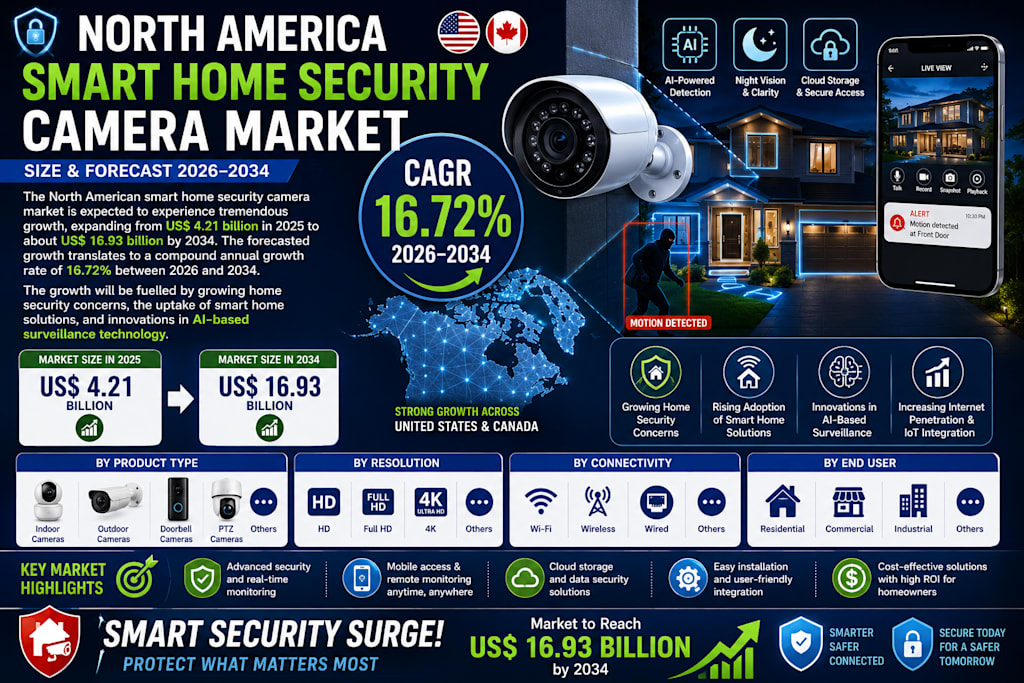
According to Renub Research, the North America Smart Home Security Camera Market is projected to grow from US$ 4.21 billion in 2025 to US$ 16.93 billion by 2034, expanding at a remarkable compound annual growth rate (CAGR) of 16.72% between 2026 and 2034. Growing security concerns, increasing smart home adoption, advancements in AI-powered surveillance technology, and rising demand for remote monitoring solutions are major factors driving market expansion.
As consumers increasingly prioritize convenience, safety, and digital connectivity, smart home security cameras are becoming one of the fastest-growing segments of the North American smart home industry.
Smart Security Cameras Are Transforming Home Protection
Smart home security cameras are internet-connected surveillance devices designed to monitor residential properties through advanced digital technologies.
Unlike traditional security cameras, modern smart cameras provide real-time video streaming, cloud-based storage, instant alerts, mobile app integration, and artificial intelligence-powered analytics. Many systems also feature night vision, two-way audio communication, facial recognition, and smart home compatibility.
These capabilities allow homeowners to monitor their properties remotely while receiving immediate notifications regarding suspicious activity, package deliveries, visitors, pets, or family members.
As connected living becomes increasingly common, smart security cameras are evolving into comprehensive home monitoring solutions rather than simple surveillance tools.
Home Security Concerns Continue Driving Demand
One of the most significant factors supporting market growth is rising awareness regarding home security and personal safety.
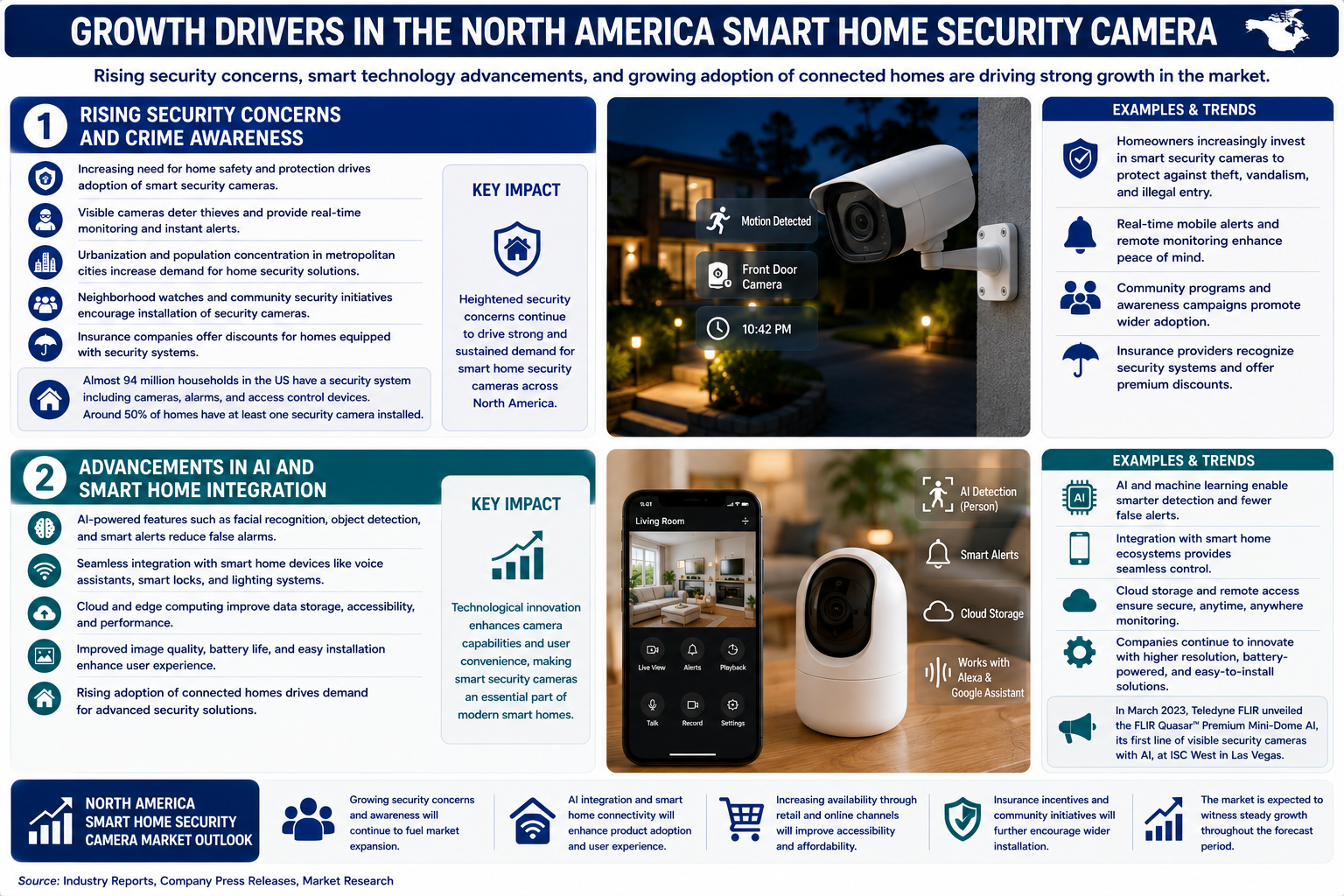
Homeowners are increasingly investing in security technologies to protect against burglary, vandalism, package theft, and unauthorized access. The visible presence of security cameras often serves as a deterrent, reducing the likelihood of criminal activity while providing valuable evidence if incidents occur.
Urbanization and increasing population density in metropolitan regions have further heightened demand for residential surveillance systems. Neighborhood watch initiatives, community safety programs, and growing public awareness regarding crime prevention also contribute to market expansion.
Insurance companies increasingly recognize the value of home security technologies and may offer incentives or discounts for homeowners who install approved security systems.
As safety remains a top priority, smart security camera adoption is expected to continue accelerating.
Smart Home Adoption Is Creating New Opportunities
The rapid growth of smart home ecosystems is significantly boosting demand for intelligent security cameras.
Consumers increasingly prefer connected devices that work seamlessly together through centralized platforms and mobile applications. Smart cameras can now integrate with voice assistants, smart locks, lighting systems, alarms, sensors, and other connected home devices.
This interoperability allows homeowners to create automated security routines that enhance convenience and efficiency. For example, cameras can trigger lighting systems, lock doors, or send notifications when unusual activity is detected.
The broader expansion of smart home technology throughout North America continues creating favorable conditions for security camera adoption.
As connected living becomes more mainstream, smart cameras are increasingly viewed as essential components of modern homes.
Artificial Intelligence Is Revolutionizing Home Surveillance
Artificial intelligence is becoming one of the most influential innovations within the smart home security market.
Modern AI-powered cameras can identify faces, distinguish between people and animals, recognize vehicles, detect packages, and generate intelligent alerts based on specific activity patterns. These capabilities significantly reduce false alarms while improving surveillance accuracy.
Many homeowners increasingly value AI-powered features because they provide more relevant information and reduce unnecessary notifications.
Consumer interest in facial recognition technology continues growing despite ongoing discussions regarding privacy concerns. Advanced analytics also enable smarter monitoring and more efficient management of security footage.
As AI technology becomes increasingly sophisticated, it is expected to remain a major driver of market growth and product differentiation.
Remote Monitoring Is Reshaping Consumer Expectations
The ability to monitor homes remotely has become one of the most attractive features of smart security cameras.
Consumers increasingly expect real-time access to live video feeds, recorded footage, and instant alerts through smartphones, tablets, and other connected devices. Remote monitoring provides reassurance whether homeowners are traveling, working, or simply away from home.
The growing popularity of hybrid and remote work arrangements has further increased demand for flexible monitoring solutions.
Cloud-based services allow users to access video histories, review incidents, and manage settings from virtually any location.
As mobile connectivity continues improving, remote monitoring capabilities are expected to remain a key factor influencing purchasing decisions.
The United States Leads Security Camera Adoption
The United States remains the largest smart home security camera market in North America.
Recent industry data reveals that approximately 61% of American households now own at least one security camera, compared with 52% in 2024. Nearly 74.9 million households currently utilize indoor or outdoor security cameras, demonstrating the widespread adoption of home surveillance technology.
The popularity of DIY installation continues increasing, with self-installed systems now surpassing professionally installed solutions. Consumers appreciate the affordability, convenience, and flexibility associated with modern DIY security products.
Growing interest in AI-powered capabilities, facial recognition technology, and smart home integration further supports market expansion.
The United States is expected to remain the dominant force shaping industry innovation and consumer adoption trends.
Wireless Cameras Continue Gaining Market Share
Wireless smart security cameras represent one of the fastest-growing product categories within the market.
Consumers increasingly favor wireless systems because they are easy to install, flexible to position, and highly compatible with modern smart home environments. Unlike wired systems, wireless cameras typically rely on Wi-Fi connectivity and battery power, making them attractive options for renters and homeowners seeking simple installation processes.
Enhanced battery performance, cloud storage capabilities, and advanced mobile applications have further improved their appeal.
The growing popularity of remote work and travel also increases demand for flexible surveillance solutions that can be monitored from anywhere.
As convenience continues influencing consumer behavior, wireless cameras are expected to experience substantial growth.
Wired Systems Remain Important for Long-Term Security
Despite the popularity of wireless solutions, wired smart security cameras continue serving an important role.
Many consumers prefer wired systems because they offer uninterrupted power, stable connectivity, and reliable long-term performance. These systems are often selected for permanent residential installations where continuous operation is critical.
Wired cameras are generally less susceptible to battery-related limitations and wireless interference issues.
Although installation may require professional assistance, many homeowners consider wired systems worthwhile investments due to their reliability and consistent performance.
As consumers evaluate different security requirements, wired systems will continue maintaining a meaningful presence within the market.
Doorbell Cameras Are Changing Front-Door Security
Smart doorbell cameras have become one of the most popular security products in North America.
These devices allow homeowners to see, hear, and communicate with visitors remotely using smartphones and connected devices. Features such as motion detection, package monitoring, visitor identification, and two-way communication have significantly increased their usefulness.
The growth of online shopping and home deliveries has further accelerated adoption by helping consumers monitor package arrivals and deter theft.
Doorbell cameras also integrate seamlessly with broader smart home ecosystems, enhancing overall security management.
As e-commerce continues expanding, demand for smart doorbell solutions is expected to remain strong.
Indoor Cameras Support Family and Pet Monitoring
Indoor security cameras are increasingly used for purposes beyond traditional security.
Many consumers utilize indoor cameras to monitor children, elderly family members, caregivers, and pets while away from home. Features such as motion detection, AI-powered alerts, voice communication, and night vision improve functionality and convenience.
Parents often use indoor cameras as baby monitoring systems, while pet owners appreciate the ability to check on animals remotely.
The affordability and simplicity of modern indoor cameras continue expanding their appeal among a wide range of consumers.
As smart home adoption grows, indoor cameras are becoming standard components of connected households.
Outdoor Cameras Deliver Comprehensive Property Protection
Outdoor security cameras provide critical surveillance coverage for entrances, driveways, backyards, garages, and perimeter areas.
These devices are designed to withstand varying weather conditions while delivering high-quality video performance. Advanced features such as infrared night vision, facial recognition, vehicle detection, and customizable activity zones enhance effectiveness.
Growing concerns regarding trespassing, vandalism, and property crime continue encouraging homeowners to invest in outdoor monitoring systems.
Real-time alerts and remote management capabilities further strengthen their value.
As security awareness increases, outdoor camera installations are expected to remain a key market segment.
Privacy Concerns Remain a Significant Challenge
Despite strong growth prospects, privacy and data security concerns remain important challenges for the industry.
Because smart cameras collect, store, and transmit video data through internet-connected platforms, consumers often worry about hacking, unauthorized access, and misuse of personal information.
Reports involving compromised cameras and leaked footage have increased public awareness regarding cybersecurity risks.
Manufacturers must continually invest in encryption technologies, secure authentication systems, software updates, and privacy-focused features to maintain consumer trust.
Successfully addressing privacy concerns will remain critical to long-term market growth.
Subscription Costs Can Limit Adoption
Many advanced smart camera systems rely on subscription-based business models.
Although hardware prices have become more affordable, cloud storage services, video history access, AI analytics, and premium monitoring features often require recurring monthly or annual fees.
These ongoing costs may discourage some budget-conscious consumers from adopting premium security solutions.
Manufacturers continue exploring alternative pricing models and value-added service packages to improve affordability and attract broader customer segments.
Balancing innovation with cost accessibility remains an important challenge for the industry.
Canada and Mexico Are Emerging Growth Markets
Canada's smart home security camera market continues expanding due to urbanization, growing smart home adoption, and increasing awareness regarding residential security. Consumers often prioritize weather-resistant cameras capable of performing effectively in challenging climate conditions. Privacy-conscious buyers also show strong interest in local storage solutions.
Mexico is experiencing steady market growth driven by rising security concerns, improving internet connectivity, expanding smartphone adoption, and increasing availability of affordable smart surveillance products. Residential and small business users increasingly utilize smart cameras for crime prevention and property monitoring.
Together, these countries are contributing significantly to regional market development.
Leading Companies Competing in the Market
Major participants in the North America smart home security camera market include Vivint Smart Home, Inc., ADT LLC, Monitronics International, Inc., SimpliSafe, Inc., Brinks Home Security, iSmart Alarm, Inc., LiveWatch Security LLC, Skylinkhome, Protect America, Inc., and Samsung Electronics Co., Ltd.. These companies continue investing in AI innovation, cloud services, cybersecurity, smart home integration, and user-friendly installation solutions to strengthen their competitive positions.
Final Thoughts
The North America Smart Home Security Camera Market is experiencing exceptional growth as homeowners increasingly embrace connected technologies that enhance safety, convenience, and peace of mind.
With the market projected to expand from US$ 4.21 billion in 2025 to US$ 16.93 billion by 2034, opportunities remain substantial for manufacturers capable of delivering advanced AI capabilities, reliable remote monitoring, enhanced privacy protection, and seamless smart home integration.
As connected living continues becoming the norm, smart security cameras are expected to play an increasingly central role in protecting homes and supporting the next generation of intelligent residential environments.
About the Creator
Enjoyed the story? Support the Creator.
Subscribe for free to receive all their stories in your feed.
Comments
There are no comments for this story
Be the first to respond and start the conversation.