
Why Algae Products Are Emerging as the Future of Sustainable Nutrition and Green Innovation
Algae Products Market, Sustainable Nutrition, Plant-Based Foods, Biofuels, Nutraceuticals, Green Technology, Functional Foods, Natural Ingredients, Environmental Sustainability, Biotechnology

However, what was once viewed as a simple aquatic organism is rapidly becoming one of the most valuable resources in the global sustainability movement. Across industries ranging from food and beverages to pharmaceuticals, cosmetics, renewable energy, and environmental management, algae-based products are gaining remarkable attention.
Scientists, manufacturers, and governments increasingly recognize algae as a highly versatile and sustainable resource capable of addressing some of the world's biggest challenges. From improving nutrition and supporting plant-based diets to producing renewable fuels and environmentally friendly materials, algae are proving that small organisms can create enormous opportunities.
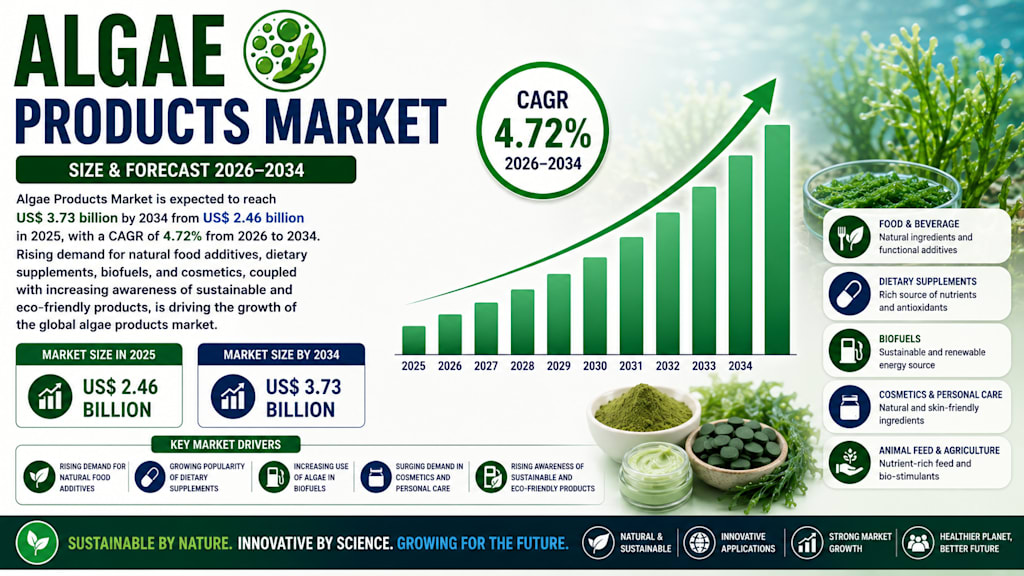
According to Renub Research, the global Algae Products Market is expected to grow from US$ 2.46 billion in 2025 to US$ 3.73 billion by 2034, expanding at a compound annual growth rate (CAGR) of 4.72% between 2026 and 2034. Rising demand for natural food additives, dietary supplements, biofuels, cosmetics, and sustainable industrial applications is fueling this growth worldwide.
As consumers and industries increasingly seek environmentally responsible solutions, algae products are positioning themselves at the center of the next generation of sustainable innovation.
What Makes Algae So Valuable?
Algae are among the most versatile biological resources on Earth.
They include both microalgae and macroalgae, commonly known as seaweed, and contain an impressive range of nutrients and bioactive compounds. These organisms are rich in proteins, vitamins, minerals, antioxidants, pigments, amino acids, and essential fatty acids that support various commercial applications.
Unlike many traditional agricultural crops, algae can be cultivated using relatively limited land resources and can often thrive in environments unsuitable for conventional farming.
This makes algae particularly attractive in a world facing increasing pressure on agricultural land, water resources, and food systems.
Their versatility allows them to serve multiple industries simultaneously, creating opportunities that extend far beyond food production.
Today, algae-based products can be found in nutritional supplements, skincare formulations, pharmaceutical ingredients, animal feed, fertilizers, renewable fuels, and even biodegradable materials.
The Rise of Health-Conscious Consumers
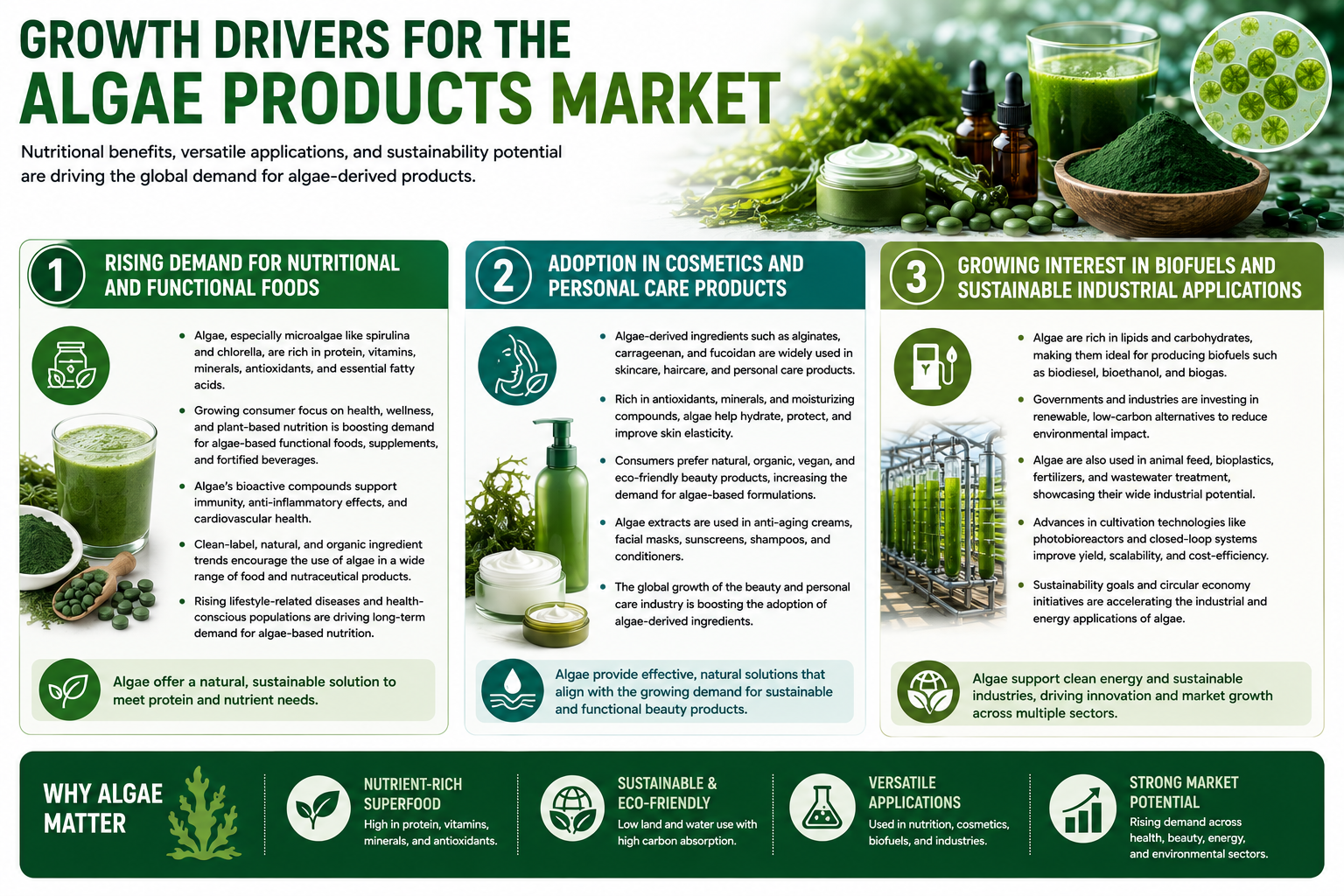
One of the strongest drivers behind the growth of the algae products market is increasing consumer interest in health and wellness.
Modern consumers are paying closer attention to nutrition than ever before. Rising awareness of lifestyle-related diseases, growing interest in preventive healthcare, and demand for natural ingredients are reshaping purchasing decisions worldwide.
Algae fit perfectly within these trends.
Microalgae such as spirulina and chlorella are widely recognized for their impressive nutritional profiles. They provide high-quality protein, essential vitamins, minerals, antioxidants, and other beneficial compounds that support overall health.
Consumers seeking plant-based nutrition often view algae as an attractive alternative to traditional animal-derived proteins.
The popularity of functional foods and dietary supplements has further accelerated demand. Algae-derived ingredients are increasingly incorporated into products designed to support immunity, cardiovascular health, energy levels, and general wellness.
As health-conscious lifestyles continue gaining momentum, algae-based nutritional products are expected to experience sustained growth.
Functional Foods Are Creating New Opportunities
The food industry is undergoing a significant transformation.
Consumers increasingly want foods that offer benefits beyond basic nutrition. Functional foods that support specific health outcomes are becoming increasingly popular, creating opportunities for innovative ingredients.
Algae provide a natural solution.
Their nutrient density makes them ideal for incorporation into protein powders, nutritional beverages, fortified snacks, meal replacement products, and dietary supplements.
Manufacturers appreciate algae because they help address multiple consumer demands simultaneously. They support plant-based diets, align with clean-label trends, and provide valuable nutritional benefits without relying on synthetic additives.
The growing popularity of vegan and vegetarian lifestyles has further strengthened this trend.
As more consumers seek sustainable protein alternatives, algae-based ingredients are becoming increasingly attractive to food manufacturers worldwide.
Clean Beauty Is Driving Cosmetic Applications
The cosmetics and personal care industry has become another major growth area for algae products.
Consumers increasingly scrutinize ingredient labels and prefer products made from natural, sustainable, and environmentally responsible sources. This shift has encouraged manufacturers to explore alternatives to synthetic compounds.
Algae-derived ingredients offer several advantages.
Compounds such as alginates, carrageenan, and fucoidan possess moisturizing, antioxidant, anti-aging, and skin-protective properties. These characteristics make them valuable components in skincare, haircare, facial masks, and beauty formulations.
Premium cosmetic brands increasingly incorporate algae extracts into products designed to improve hydration, reduce signs of aging, and protect against environmental stress.
The rise of vegan beauty products has further expanded opportunities for algae-derived ingredients.
As consumer interest in clean beauty continues growing, algae are expected to become even more prominent within personal care formulations.
Sustainability Is Reshaping Industrial Demand
Environmental sustainability has become a central concern for businesses, governments, and consumers alike.
Organizations across industries are actively seeking alternatives to fossil fuels, synthetic chemicals, and resource-intensive materials. Algae offer a compelling solution due to their renewable nature and environmental benefits.
Unlike many traditional resources, algae can be cultivated efficiently while absorbing carbon dioxide during growth.
This unique characteristic has attracted interest from industries seeking to reduce environmental impact and improve sustainability performance.
Algae-based materials are increasingly being explored for applications such as bioplastics, fertilizers, wastewater treatment, and environmentally friendly industrial products.
As sustainability becomes a competitive advantage, demand for algae-derived solutions is expected to increase significantly.
Biofuels Represent a Major Growth Opportunity
One of the most exciting applications of algae lies in renewable energy production.
Algae contain substantial quantities of lipids and carbohydrates that can be converted into biodiesel, bioethanol, biogas, and other renewable fuel products. These capabilities have positioned algae as a promising alternative to traditional fossil fuels.
Governments and private organizations worldwide are investing heavily in cleaner energy technologies.
Algae-based biofuels offer several potential advantages, including reduced greenhouse gas emissions and improved sustainability compared with conventional fuels.
Research continues focusing on improving cultivation efficiency, reducing production costs, and enhancing commercial viability.
Although challenges remain, many industry experts view algae as an important component of future renewable energy strategies.
As global efforts to reduce carbon emissions accelerate, algae-derived fuels may play an increasingly important role.
Technology Is Improving Production Efficiency
Technological innovation is helping unlock the full potential of the algae products industry.
Historically, large-scale algae production faced challenges related to consistency, scalability, and cost. However, advances in cultivation and processing technologies have significantly improved industry capabilities.
Modern production methods include photobioreactors, closed-loop cultivation systems, and advanced harvesting technologies.
These systems provide greater control over growing conditions while improving productivity and product quality.
Innovative extraction techniques are also enabling more efficient recovery of valuable compounds such as proteins, pigments, oils, and bioactive ingredients.
As technology continues advancing, production costs are expected to decline while commercial applications expand.
These improvements are helping make algae-derived products increasingly competitive across multiple industries.
Regulatory Support Is Encouraging Innovation
Governments around the world are recognizing the potential benefits of algae-based products.
Many countries have introduced initiatives designed to encourage renewable resources, sustainable manufacturing, and environmentally friendly technologies. Research funding, innovation programs, and regulatory support are helping accelerate industry development.
Recent approvals highlight this momentum.
In May 2025, the U.S. Food and Drug Administration approved Galdieria extract blue as a certification-exempt natural color additive, expanding opportunities for algae-derived ingredients within the food industry.
Similarly, the European Commission approved beta-glucan derived from Euglena gracilis microalgae for use in selected food products, further supporting the commercialization of algae-based functional ingredients.
These developments demonstrate growing regulatory confidence in algae-derived solutions.
High Costs Remain a Challenge
Despite strong growth potential, the algae products market faces several challenges.
One of the most significant barriers is production cost.
Cultivating algae on a commercial scale often requires specialized equipment, controlled environments, nutrient-rich water systems, and advanced processing technologies. These requirements contribute to relatively high operational expenses.
Extraction and purification processes can also be energy-intensive.
As a result, some algae-derived products remain more expensive than traditional alternatives.
While technological improvements are gradually reducing costs, achieving large-scale affordability remains a key priority for industry participants.
Continued innovation will be essential for improving competitiveness and expanding adoption.
Regulatory Complexity Can Slow Growth
Regulatory compliance presents another challenge.
Different countries maintain varying standards regarding food safety, dietary supplements, cosmetics, biofuels, and environmental practices. Navigating these regulations can be time-consuming and costly.
Manufacturers often must invest heavily in testing, documentation, certifications, and quality assurance programs.
In addition, the absence of universal standards for algae-derived products can create inconsistencies across markets.
Establishing greater standardization may help improve consumer confidence while facilitating international trade.
Addressing these issues will remain important as the industry continues expanding globally.
Regional Markets Driving Growth
The United States remains one of the most important markets for algae products.
Strong demand for functional foods, dietary supplements, plant-based nutrition, cosmetics, and sustainable industrial solutions continues supporting market expansion. Government support for renewable resources and technological innovation further strengthens industry growth.
The United Kingdom is also experiencing growing demand due to increasing interest in health-conscious lifestyles, plant-based diets, and natural ingredients. Consumer preference for clean-label products is helping drive adoption across food, beverage, and personal care sectors.
India represents one of the fastest-growing opportunities.
Rising health awareness, expanding nutraceutical consumption, and increasing interest in sustainable solutions are encouraging adoption of algae-derived products across multiple industries.
Meanwhile, the United Arab Emirates is benefiting from growing demand for sustainable products, renewable resources, and premium health-focused consumer goods. Government initiatives promoting environmental sustainability continue supporting market development.
Looking Toward the Future
The future of the algae products market appears increasingly promising.
Advances in biotechnology, cultivation systems, extraction methods, and product innovation are expected to unlock new applications and improve commercial viability. Continued growth in plant-based nutrition, renewable energy, sustainable materials, and natural personal care products will further strengthen demand.
Research into bioactive compounds, functional ingredients, and pharmaceutical applications may create entirely new market opportunities.
At the same time, rising consumer awareness of environmental sustainability and health benefits will continue supporting adoption.
Algae are no longer viewed simply as aquatic organisms. They are increasingly recognized as strategic resources capable of contributing to food security, environmental sustainability, and industrial innovation.
Final Thoughts
The global algae products market represents one of the most exciting intersections of health, sustainability, and technological innovation. What began as a niche segment has evolved into a rapidly expanding industry serving food, nutraceutical, cosmetic, pharmaceutical, energy, and industrial markets.
With the market projected to grow from US$ 2.46 billion in 2025 to US$ 3.73 billion by 2034, significant opportunities exist for manufacturers, investors, researchers, and entrepreneurs.
As consumers increasingly prioritize natural ingredients, plant-based nutrition, renewable energy, and environmentally responsible products, algae-derived solutions are becoming more relevant than ever. In a world seeking sustainable answers to complex challenges, algae may prove to be one of nature's most valuable resources.
About the Creator
Enjoyed the story? Support the Creator.
Subscribe for free to receive all their stories in your feed.
Comments
There are no comments for this story
Be the first to respond and start the conversation.