
What If You Had Put $1,000 Into Gold Ten Years Ago?
What If You Had Put $1,000 Into Gold Ten Years Ago?

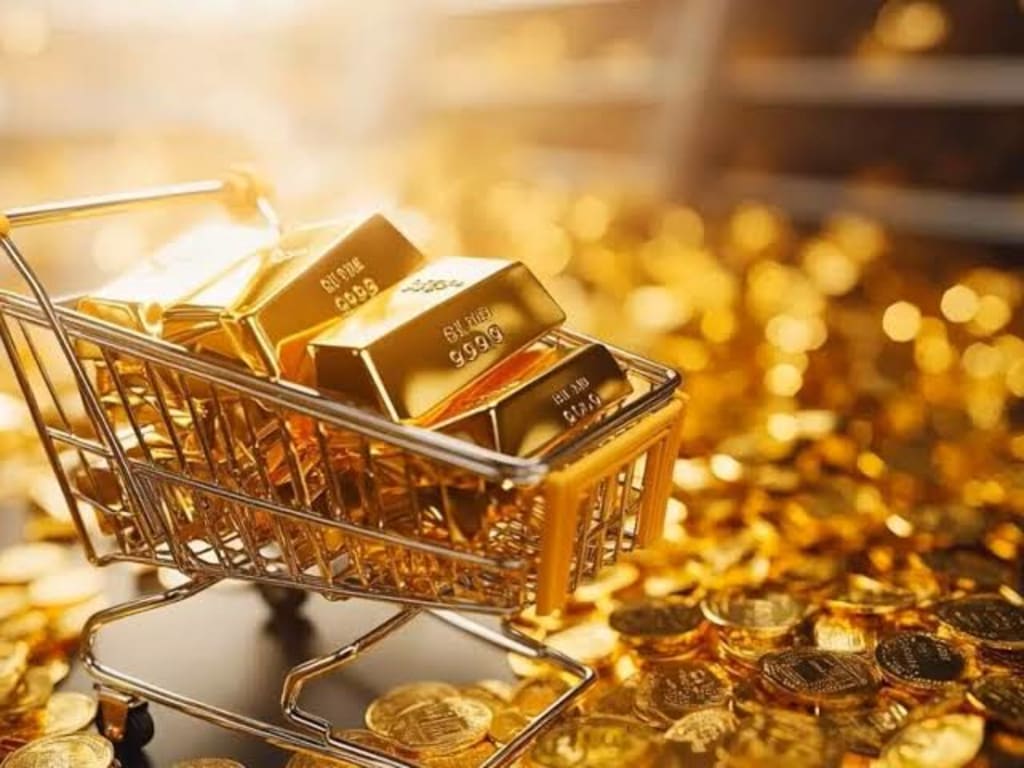
A thousand dollars into physical gold in the summer of 2016 would have bought roughly three quarters of a one-ounce coin, at a spot price hovering around $1,340 an ounce. Ten years later, with gold trading near $4,200 an ounce in early August 2026, that same metal is worth somewhere in the neighborhood of $3,100.
Roughly a tripling. Somewhere close to 12 percent compounded annually, before premiums, storage, and the tax the government will want on a “gain” that is largely just the dollar shrinking.
That is the arithmetic. But the arithmetic is the least interesting part of the story, and if you stop there you will draw the wrong lesson.
The Decade That Made the Case Better Than Any Sales Pitch
Consider what the person who bought in 2016 sat through.
They watched gold go essentially nowhere for two years while the financial press explained that the metal was a relic, that inflation was dead, and that a diversified basket of equities was all anyone sensible needed. They watched a pandemic and the largest peacetime monetary expansion in American history.
They watched officials at the Federal Reserve describe the resulting price increases as “transitory,” then quietly retire the word. They watched central banks around the world buy gold at a pace not seen in half a century, which is a curious thing for institutions to do with a relic.
And through all of it, the metal in their safe did not need a single thing from anyone. It did not require a broker to stay solvent, an exchange to stay open, a counterparty to stay honest, or an app to stay online. It sat there being gold.
The thousand dollars that went into a savings account over the same stretch is worth about a thousand dollars, minus whatever purchasing power the last ten years quietly removed from it. That is the comparison that matters. Not gold against the S&P, but gold against the currency you are actually keeping score in.
What the Historical Return Does and Does Not Tell You
Here is the correction that has to be made, because the “$1,000 ten years ago” framing invites a mistake.
Backward-looking returns are the worst possible reason to buy gold. Anyone who buys because the chart went up is buying for the same reason people pile into anything after it has already run, and that instinct has a long history of arriving late. The naysayers who spent this decade ridiculing gold owners will now spend the next one insisting the top is in, and they will be as confident as they were wrong.
So use the number for what it is actually good for.
It tells you gold works over a decade, not a quarter. The ten-year window looks clean. Zoom in on any twelve-month slice and you will find drawdowns that would have shaken out anyone treating this as a trade.
It tells you the reference point is the currency. Gold did not become three times more useful, scarce, or beautiful since 2016. The unit of measurement got smaller. Understanding that inverts how you read every gold chart you will ever see.
It does not tell you what the next ten years hold. Nobody has that. Anyone who claims a specific future price is selling something, and any forecast worth repeating comes with a named institution attached and a stated set of assumptions.
Key Factors Behind the Move
For someone deciding whether this decade tells them anything useful, four forces are worth understanding.
Central bank demand. Official sector buying has run at multi-decade highs in recent years, driven substantially by countries reducing exposure to reserves that can be frozen by the issuer. Whatever one thinks of the geopolitics, sustained institutional demand for physical metal is a different kind of support than speculative flows.
Monetary expansion. Money supply growth over this period was extraordinary by any historical standard. Gold has no earnings, no yield, and no management. Its price is substantially a statement about the currency it is quoted in.
Real interest rates. Gold historically loves an environment where rates fail to keep pace with inflation, because the opportunity cost of holding a non-yielding asset collapses. Much of the last decade delivered exactly that.
Supply. Mine production has been effectively flat for years. Grades are declining, permitting is slow, and the industry’s capital discipline means new supply does not arrive quickly when prices rise. Whatever demand does, supply is not going to sprint to meet it.
A Framework for Someone Looking at This Chart Now
If you own no physical metal at all: the ten-year number is not a reason to buy, but the absence of any position is worth examining on its own terms. A modest allocation, commonly cited in the 5 to 10 percent range, functions as insurance on the rest of a portfolio. You do not buy insurance because of last year’s claims history.
If you are worried about buying at a high: dollar cost average. Buy a fixed dollar amount on a fixed schedule and stop trying to time an asset that does not reward timing. This mechanically buys more ounces when the price falls and fewer when it rises, which is the correct behavior and the opposite of what emotion produces.
If you are worried about premiums: stick to common, high-liquidity products. Standard one-ounce sovereign coins and bars from recognized refiners carry the lowest premiums over spot and sell most easily later. Exotic, limited-mintage, or heavily marketed “collectible” pieces carry premiums that are effectively a permanent loss the moment you buy.
Whatever you decide: settle storage before the metal arrives, not after. Home safe with a burglary and fire rating, bolted down, plus a written inventory kept elsewhere.
Or insured, allocated, segregated depository storage where your specific serial numbers are recorded in your name. Pooled or unallocated arrangements make you a creditor rather than an owner, which defeats the point entirely.
Concerns Worth Addressing Honestly
“Am I too late?” This is the question everyone asks and nobody can answer with certainty. What can be said is that the same question was asked at $1,340, at $2,000, and at $3,000, and each time the person asking it was told by the financial establishment that the answer was yes. What can also be said is that gold is not a growth asset and never has been. It is a store of value. If you hold it expecting a tripling every decade you have misunderstood the instrument.
“What if the price drops right after I buy?” It may well. Physical metal held for wealth preservation is meant to be measured in years, not months. The correct hedge against this concern is position sizing, not timing. Buy an amount whose short-term movement will not tempt you into selling.
“Would I actually be able to sell it?” Recognizable bullion in standard sizes is among the most liquid assets in existence, with a global two-sided market. This is precisely why product selection matters more than most new buyers realize. Common products sell in any market. Obscure products require you to find a buyer and explain yourself.
“What about the tax on all that gain?” Physical gold is treated as a collectible, with long-term gains taxed at up to 28 percent rather than the standard long-term capital gains rate. It is an unfair treatment of an asset whose nominal gain largely reflects currency debasement, and it is a real cost you should build into any expectation.
The Bottom Line
A thousand dollars in gold ten years ago would be roughly three thousand today. That number is a useful piece of history and a terrible investment thesis on its own.
The lesson the last decade actually offers is quieter than the headline return. It is that an asset with no counterparty, no yield, and no management outlasted a pandemic, a monetary experiment, a burst of inflation the authorities did not see coming, and a great deal of confident commentary insisting it had no place in a modern portfolio. It did that by doing nothing at all, which is exactly what it is supposed to do.
About the Creator
Stefan Gleason
Stefan Gleason is President and CEO of Money Metals, the company recently named "Best Overall Online Precious Metals Dealer" by Investopedia. A graduate of the University of Florida, Gleason is a seasoned business leader and investor.
Enjoyed the story? Support the Creator.
Subscribe for free to receive all their stories in your feed.
Comments
There are no comments for this story
Be the first to respond and start the conversation.